Surviving Hurricane Katrina: Bodies, water and the kindness of strangers | Opinion
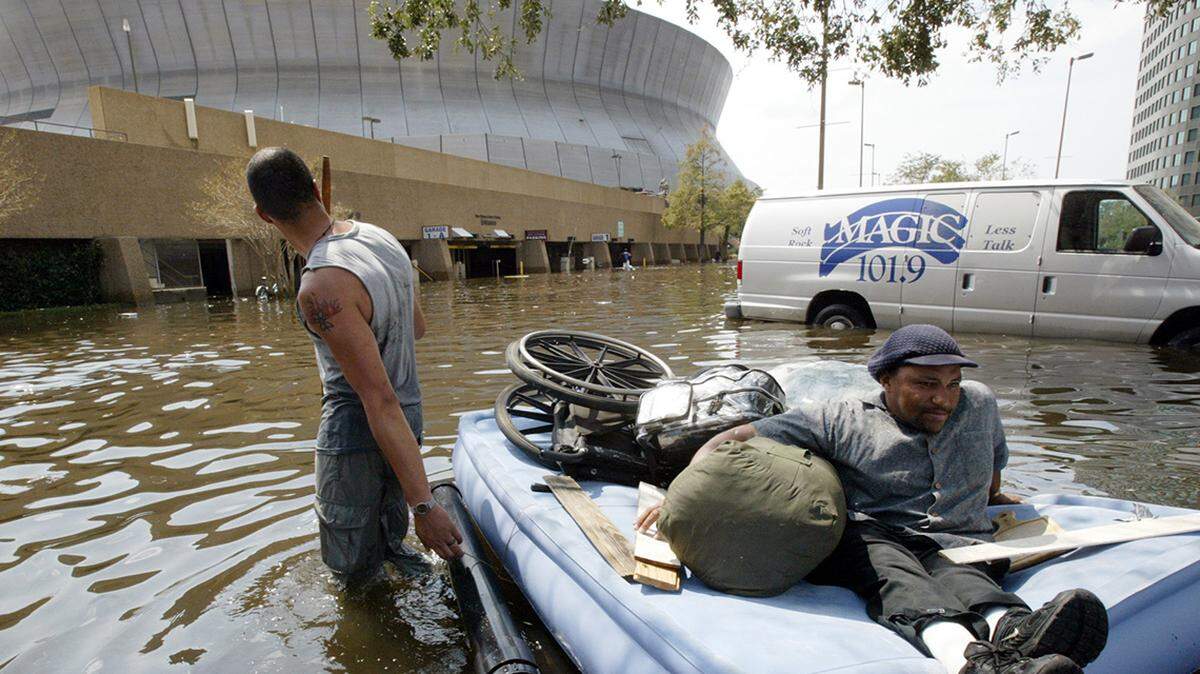
Twenty years ago this week, I was in the Kansas City Star newsroom on 18th and Grand, looking up at a television perched above our desks. A storm in New Orleans was on the screen, and I felt a kind of powerlessness that I’d never felt before.
My niece, Ashlie Washington, was a rising senior at Dillard University majoring in psychology. Because she had been in New Orleans several semesters already, her mother and I were used to the late-summer hurricane threats. Those other years, we had brought her home and nothing serious had happened to the city.
This year, we all decided that she would ride it out. 2005, the year of Hurricane Katrina.
Watching the news, at first, I thought she’d be safe. CNN’s “Reliable Sources” reflected on the disaster’s 10-year anniversary: “Katrina made landfall in the morning August 29, 2005. And throughout that first day, August 29, it was widely reported that New Orleans had been spared the worst, widely and prematurely.”
Thinking about it now takes me to a kind of “It’s a Wonderful Life” dream in my mind. Today, Ashlie is an accomplished chef in Denver, where she cooks in a corporate dining room and makes people happy both with her food and her wonderful personality. But what if she hadn’t made it?
She did, but nearly 1,500 others didn’t.
The other thing I’ve thought about this week was the kindness of strangers. Regular people, not officials.
I’ve lived in several states that have severe storms and tornadoes, and when these happen, I find that people pull together and help each other. Having lived in Oklahoma for 17 years, we called it The Oklahoma Standard. But it doesn’t just happen in Oklahoma. It happened in New Orleans in 2005, and it also happened to me in Kansas City.
Many Americans watched the news a lot in the days leading up to that Monday when the forecast got worse and worse and the levee system broke, flooding most of New Orleans. When it was too late to get Ashlie out, her mother and I knew we had made a bad decision.
Hurricane Katrina is the costliest hurricane ever to hit the United States, according to the National Weather Service, and was responsible for about 1,400 fatalities (reduced from earlier numbers) and approximately $108 billion in damage (in 2005 dollars).
My niece, then in her early 20s, has remained a resilient young woman. I don’t know if she got that from what she experienced that August, but I know she has weathered the worst, no pun intended, and has bounced back.
‘Felt like there was a body in that water’
I’ll let Ashlie tell you her story:
“The day the storm actually hit, we still had power and we pretty much watched on the news how it was moving. It was just a normal, heavy storm, just what you would expect. That next day, Tuesday morning, is when we lost power. And that was when we noticed the water in the streets just rising.
“We had to leave the house because water was starting to come into our single-floor shotgun (house). We were Uptown; the Audubon Zoo was probably a couple miles away. We started wading in the water, which was above our waists at that point. Luckily, we did see a little church, where there was a canoe and an oar.
“We paddled around the area to see where we could walk. The water was dark, and there were certain parts where the oil from the cars had seeped into the water. One time we actually got out of the canoe, it felt like there was a body in that water. We brushed by lots of things that felt like hair and bodies.
“We were probably in that canoe for a couple hours when we came across a house and that was where we met this gentleman. His landline was still working and he allowed us to call our family to let them know that we were okay.”
Ashlie paused to say she wishes she could thank this man, and another I’ll mention below, because they really helped her that day.
“At some point we ditched the canoe, and that was the start of our long walk. It felt like miles and miles. It was still daytime but we began to realize that we had to figure something out. We hadn’t found any help, even with all the walking that we had done.
“We came across some military people in trucks. I’ll never forget the expressions on those guys’ faces when we asked for help. They looked at us and just shrugged their shoulders like they had nothing to share.”
Bad advice to shelter at Superdome
While all this was going on, I didn’t know what to do. I was her aunt, and I had happily stepped into the role of helper and protector. But at that moment, I could be neither. I even remember her giving her some terrible advice when trying to figure out what to do and how to keep her safe.
“I’m hearing that they’re sending people over to the Superdome. Can you get there?”
Thank God she did not do that. The stories I would hear later about what happened in the Superdome, (one reporter called it “a place of mass suffering”) turned my stomach and brought me to tears, thinking I might have directed her into that hellscape.
But she listened to her roommate, and her own intuition. That was something her grandmother, my mother, had always taught us to do. And so she took that canoe and went in the opposite direction to get out of town.
Here’s where an angel in Kansas City appears. You might know her. Angela Milam Curry, a former Star columnist, heard about what was going on with my niece and told me, “If she can get to Baton Rouge, someone will pick her up and take her to Shreveport, where my sister lives.”
Somehow, Ashlie’s phone had just enough battery left for me to get that message to her. We were texting by then because no calls were going through. I texted, “get to this address in Baton Rouge, and I’m coming to get you.”
Getting out of New Orleans
Ashlie continues:
“We heard there was a convoy helping at a hospital, and we found it, but officials were only transporting patients and family members. But there was a gentleman who took us to Baton Rouge and let us ride with his family. At first he didn’t want to do it.
“He said that if this was any other circumstance, he would do it. But he was just so distraught with everything that was going on — his wife’s condition, and he had children with him. He looked at us and it was getting dark and that was the one time that I cried.
I did not cry that whole time. But when I saw how far I was from home, just the thought of sleeping outside during all of this — and that’s when I teared up. He had a young daughter, and I don’t know what that baby girl said to him, but she must have seen me and she asked her dad. She said something to him because that’s when he came over and he told us to ‘come on.’ That was a quiet drive.”
Ashlie said he dropped them off in front of Tiger Stadium at Louisiana State University, “right in front of the grassy emblem.” Angela Curry’s sister had arranged for a friend in Baton Rouge to bring her to Shreveport, where the sister lived.
Displaced students get help
Back to Kansas City and the next angel, a good friend of mine with a truck, told me without reservation: ”Yvette, we’re going to bring her home.” And that’s what happened.
We drove down to Shreveport the next day, two days after Hurricane Katrina first landed, went to the address Angela gave us and found her. I don’t know what I expected, but there she was in clean clothes supplied by her rescuer. She looked tired and a little worse for wear.
We stayed the night and turned around the next day to come back to Kansas City. Many decisions had to be made after that. Where would she stay? Would she go back to her native Chicago? Would she go to a college in Kansas City?
Something else happening at the time that continues to amaze me is the reception by many colleges for these students who had been displaced by Katrina. One in particular, Oklahoma State, literally opened its doors to receive these students for free. They even helped them find free housing with volunteer families. After some discussion, we agreed that was the best place for her.
A lot happened for Ashlie in Oklahoma, and it was there she found her love for the culinary arts. She gave up plans to become a psychologist (although what cook or bartender isn’t one?) and decided to work in food service full-time.
My ‘what if’ moment
My most recent “It’s a Wonderful Life” nightmare came when I thought about what would have happened to our family if Ashlie hadn’t made it.
My sister, Karen Walker, developed kidney disease and other terrible complications, and needed full-time care. She passed in December 2024, but Ashlie, her daughter, was her caretaker years before the worst of it. I can’t imagine what would have happened to Karen if she didn’t have Ashlie. Seriously, I don’t want to think about it.
Ashlie is a beautiful soul and I’m happy that so many angels came her way to help her in that terrible time. I know Ashlie is not unique and there were lots of other people who helped each other in New Orleans and around the country, caring for the displaced.
I also know there were many who suffered and died during that hurricane without the care and support of government officials. Many mistakes were made and I’m not going to explore them in this column. You can find several well-written pieces here and here, and a new documentary airing on Netflix this week. (Ashlie told me she did not plan to watch it.)
But I want to take this moment to thank the people who helped these students at probably the worst time of their lives. I was talking to a friend about writing this column and she asked, “Has it been 20 years already?” Yes, it has. But bad things can happen every day.
Chaos never remains in the past. It stays with us. We must remember The Standard, and to treat each other with kindness and respect in the midst of it.
This story was originally published August 28, 2025 at 8:08 AM with the headline "Surviving Hurricane Katrina: Bodies, water and the kindness of strangers | Opinion."