NC Republicans have their candidate for Senate. They may face an uphill battle | Opinion
AI-generated summary reviewed by our newsroom.
- Michael Whatley will run for Senate with Trump's backing, likely avoiding a messy primary.
- Midterm dynamics pose challenges for Whatley's bid.
- Roy Cooper's high approval and past success may aid Democrats in flipping the seat.
After U.S. Sen. Thom Tillis abruptly announced he wouldn’t run for reelection, Republicans had a big choice to make: who would run in his place?
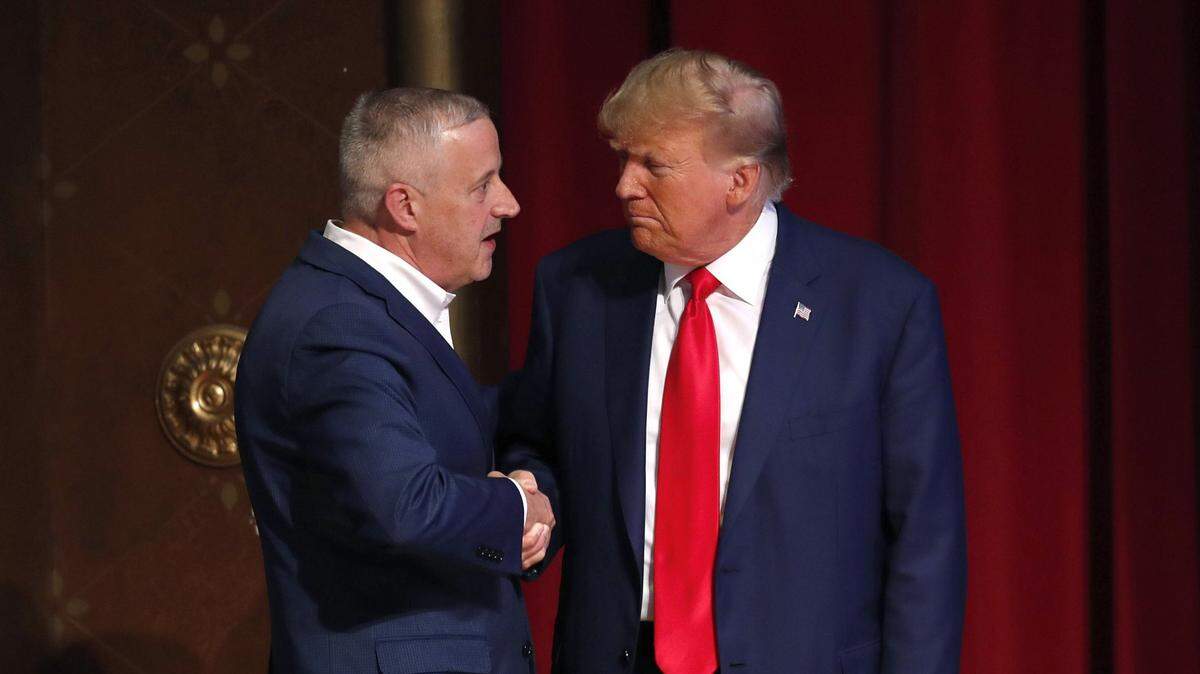
The most popular choice, at least among prospective voters, was Lara Trump, President Donald Trump’s daughter-in-law, who was born and raised in North Carolina. But the news broke Thursday that it would instead be Michael Whatley, the former chairman of the North Carolina Republican Party who eventually became co-chair of the Republican National Committee alongside Lara Trump.
Lara Trump, who the president said would be his “first choice” for the seat, reportedly chose not to run. Whatley is expected to have Trump’s endorsement, thereby avoiding a messy and drawn-out primary.
In some ways, Whatley may be a better choice for Republicans than Lara Trump, who would have carried a lot of baggage in a general election just by having the Trump name. That was a concern shared by Tillis himself, who expressed hesitation last week about having a Trump on the ballot in an election that will likely be a referendum of sorts on the president himself.
“After a president gets elected, generally speaking, in the off-year election, it’s a negative environment for that president in power. So it’s already enough to think that historically, it’s going to be a negative environment.” Tillis said in an appearance on WBT radio last week.
Tillis continued: “So if you have headwinds against an incumbent Republican administration that happens to be named Trump, and you put somebody on the ballot who hasn’t lived here for years and would have to change their residency to run, and their last name happens to be Trump, I’m not a political expert, but I’m thinking that that may be a little bit of a challenge next year.”
Tillis is right: the incumbent president’s party almost always struggles in midterm elections. That was true in 2018, during Trump’s first presidency, when Democrats enjoyed a “blue wave” election that ended unified GOP control of Congress.
Having a Trump on the ballot would have perhaps exacerbated the issue, but Republicans will still have to battle those trends with Whatley. David McLennan, a political scientist at Meredith College who is director of the Meredith Poll, said that the struggles Tillis mentioned may be true for Republicans regardless of who is on the ballot. Couple that with the fact that recent polls have the president’s approval rating at around 42% in North Carolina.
“That isn’t good for whoever the Republican nominee is, because the strongest predictor of how well the party does in a midterm election is the current president’s approval rating,” McLennan said.
McLennan also mentioned that Republican turnout in North Carolina tends to be lower in midterm elections compared to presidential ones. A turnout decrease of even just 2 to 3 percent among Republicans could help Democrats flip the seat, McLennan said. The Democratic candidate is also expected to be former Gov. Roy Cooper, who outperformed Trump on the ballot in 2016 and 2020 and enjoys a high approval rating in the state.
Whatley may not be a member of the president’s family, but he’s as close of an ally as anyone. He will have the president’s endorsement, and Trump will likely campaign on his behalf. Whatley will carry his own baggage, too, from his years as NC GOP chairman. He was a top promoter of Trump’s false claims that the 2020 election was stolen and helped intensify the party’s “election integrity” efforts even before that, including the push to challenge election outcomes through legal avenues. And as Trump’s hand-picked head of the RNC, he can be directly tied to much of the president’s agenda.
Democrats already seem to be hitting that angle hard. In a statement, the North Carolina Democratic Party said Lara Trump’s decision not to run drives Republicans “further into chaos and closer to losing this seat.”
“Now, they are stuck with Michael Whatley, who gave a ringing endorsement to extremist Mark Robinson and is a staunch supporter of the cruel Medicaid cuts that gut health care for over 650,000 North Carolinians while delivering tax giveaways to billionaires — an agenda so toxic it forced Thom Tillis into retirement,” the statement said.
With Whatley’s announcement, the race has lost some of the drama that would have come from a faceoff between two big names like Lara Trump and Cooper. But this is still North Carolina, where nearly every U.S. Senate race is competitive regardless of who is on the ballot. Like those before it, this race is likely to be a closely-watched, expensive and nationalized affair, so this is just the beginning.
This story was originally published July 24, 2025 at 10:50 AM with the headline "NC Republicans have their candidate for Senate. They may face an uphill battle | Opinion."