NYC’s Zohran Mamdani shows how to be a change candidate who wins | Opinion
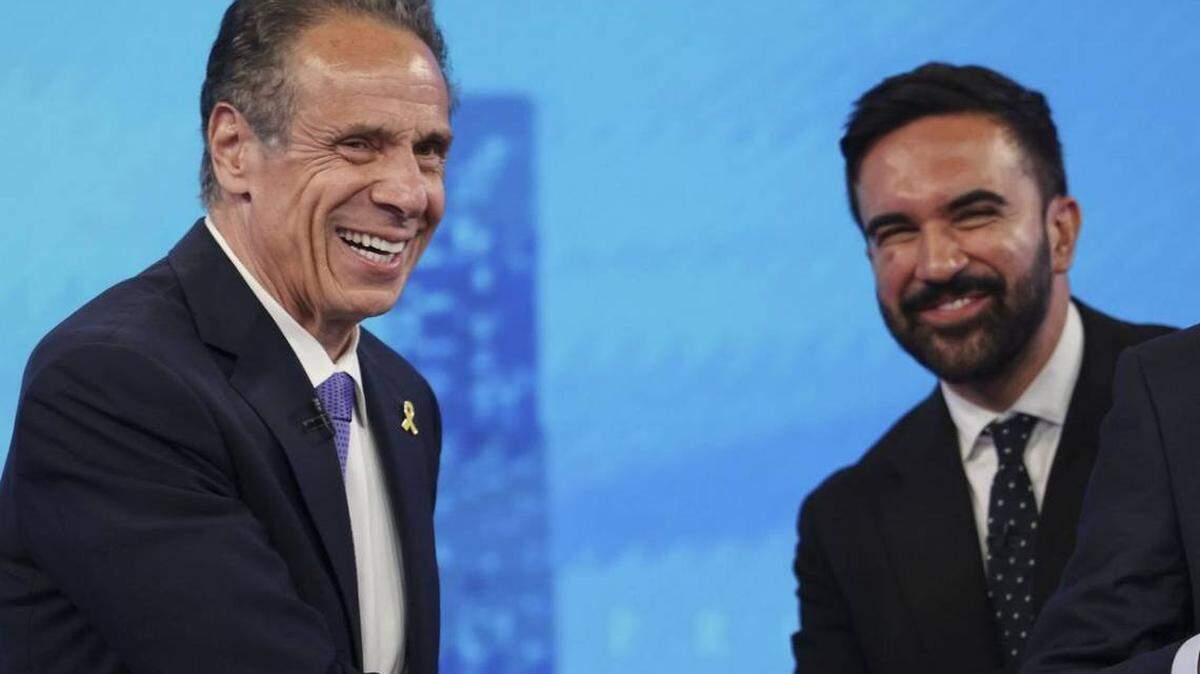
When I applied for this job, I foregrounded my portfolio with a 2020 column where I took a pause from my sportswriting role to slam my former governor’s handling of the pandemic before it was cool. Because, like the short rapper from Compton hates a certain singing Canadian, I am Andrew Cuomo’s biggest hater.
I hate that Cuomo abused his office and sexually harassed all those women. I hate that he delayed thousands of New Yorkers from receiving sorely needed COVID-19 vaccines by slow-walking a mass vaccination clinic at Citi Field (the Mets’ home ballpark), and I hate that he did it just to one-up the former mayor, Bill de Blasio. I hate Cuomo’s lazy reliance on AI to write his housing platform.
I hate that he tried to hide the number of people who died because he put COVID-positive patients in nursing homes. I hate his ridiculous fixation on memorializing Christopher Columbus, the European explorer who beta tested the systemic rape and murder of my ancestors so much that I’d prefer he celebrate literally any other Italian, even if that meant Andrew Cuomo. Relatedly, I hate that he thought he could say the worst slur used to denigrate Black people.
So, I won’t attempt to hide my biases, which also include an affinity for Zohran Mamdani, the insurgent state lawmaker who, on Tuesday night, toppled the heir to a Democratic Party dynasty. Even the rosiest and most sympathetic predictions envisioned Mamdani, who polled near 0% as recently as October, winning by fewer than 2,000 votes. Nope.
Despite Cuomo outspending him four times to one through his a record-shattering Super-PAC, and despite a notable rightward shift across the city during the 2024 presidential election that the failed mayoral candidate expected to seize, Mamdani trounced the former governor and turned New York’s unique ranked choice system (voters can list their top five candidates in order of preference) into an almost-unnecessary formality. However, beyond his affable, telegenic style and sleek, genuinely hilarious videos, Mamdani provided anyone interested in challenging moneyed, machine-powered rulers with a blueprint to victory.
Zohran Mamdani campaigned on big, memorable ideas
The key planks in Mamdani’s platform — a rent freeze for millions of tenants, “fast and free buses” and child care for all New York families with a child six weeks and older, are notable by the sheer grandness of their scope.
Mamdani didn’t shy away from detailed explanations elsewhere — such as his optimistic analysis of a free bus pilot he won as a state lawmaker or explaining how New York’s rent-stabilization laws allow its mayor considerable ability to dictate how much rent increases year-over-year — but, he distilled the ideas into slogans fans and critics could recite at ease.
Through his platform, Mamdani concisely articulated that he was not going to tinker at the margins of how government is usually performed. Instead, he pledged to activate a muscular government and smash the limited expectations of what is possible. Though his policies are socialist-coded, a label Mamdani readily embraced, these plans became nonideological at the ballot box.
The result: a decisively anti-establishment message that puts electeds to defend what is, even at their best, slow moving, hardly discernible maintenance of a quality of life in gradual decline.
Relentless focus on cost-of-living issues like housing
Mamdani is an immigrant, a Muslim and an avowed socialist — all potential slurs depending on the room he walks in. He never denied his background, showing up regularly at mosques, using his historic ground game to canvass immigrant-heavy neighborhoods, and activating an electorate with fresh reasons to vote for someone with a platform that valued their interests. But Mamdani’s message never wavered from reiterating his desire to build a New York that everyone could afford, exemplified by those aforementioned big swings on rent and transportation.
New York is a famously expensive city, but cost of living is at the forefront of nearly every working person’s mind. We are not far removed from a months-long discourse about the prices of groceries – naturally, Mamdani has a plan for that, too – while housing prices skyrocket nationwide. Even in, for example, low-tax and high-supply Texas, 34% of households are cost-burdened, meaning that they spend at least 30% of their income on housing.
These issues are important to everyone and while the solutions may skew ideological, the problem is felt universally. And the type of politician, Democrat or Republican, who defends incremental improvements to an unlivable status quo is vulnerable to candidates who constructively address their community’s issues.
But despite having a policy-first, economics-heavy platform, Mamdani didn’t shy away from his relative otherness. As Cuomo condemned Mamdani’s support for Palestinian liberation or his disinterest in visiting Israel, Mamdani repeated his plans on addressing antisemitism while refusing to budge on Israel’s right to exist so long as it provided “equal rights for all” and “in compliance with international law.” The framing complemented his approach by showing that everyone, Jewish and Muslim, from Brooklyn to Tel Aviv, deserves to live comfortably in their homeland.
Mamdani identified the false choice between economics and values in his victory speech. “In desperation, they chose to sacrifice liberty in the hope of getting something to eat,” Mamdani said, quoting Franklin Delano Roosevelt. “New York, if we have made one thing clear over these past months, it is that we need not choose between the two.”
Don’t deny your beliefs. Defend them.
In a recent moment on the campaign trail, Mamdani hit The Breakfast Club, the popular weekday hip hop radio show heard by working-class, minority drivers, and told his listeners why he wanted to continue a moderately unpopular tax to their morning commute. Where it is so tempting to hedge, moderate, or even deny based on the audience. How Mamdani starts his sales pitch is more remarkable than the pitch itself.
“I believe the one thing New Yorkers hate more than a politician they don’t agree with is a one they can’t trust,” Mamdani told show host DJ Envy. “So I’mma tell you the answer I say in every room.”
Mamdani showed he keenly understood that people must believe he means what he says if he expects to earn their vote. This fairly simple epiphany eludes how the Democratic Party operates. Kamala Harris’s multiple failed presidential campaigns illustrate this problem. First, as a California senator, Harris modeled her 2020 presidential platform after Bernie Sanders, a strident establishment critic (and now, Mamdani forerunner) who ran on economic justice issues such as Medicare For All.
By 2024, Harris ran a campaign that abruptly stopped attacking big business and openly courted the interest of billionaires. The right remembered her past. The left did, too. On Election Day, neither side was sufficiently satisfied.
Mamdani is no stranger to adjusting his stances — his shift from prior calls to reduce police funding is a prime example. But, instead of avoiding the subject outright, he instead explained in detail about his alternative approach to pursue public safety.
Holding fast to his convictions amid differences of opinion, something Mamdani flexed regularly during his energetic campaign, he was able to convince a weary electorate rightfully suspicious of politicians to believe that he might actually be able to back up his big promises. Mamdani may not fulfill every plan. That’s a near inevitability in the grind and compromise inherent to politics in a democracy. But listeners can feel assured that even if he falls short, it’s not because he’s lied.
Mamdani’s approach stress-tested an axiom from former New York Mayor Ed Koch: “If you agree with me on 9 out of 12 issues, vote for me. If you agree with me on 12 out of 12 issues, see a psychiatrist.” Most voters skipped a visit to a shrink on their way to the polls.
This story was originally published June 25, 2025 at 4:10 PM with the headline "NYC’s Zohran Mamdani shows how to be a change candidate who wins | Opinion."