
Trump must balance support for Israel, desire to keep out of difficult wars | Opinion
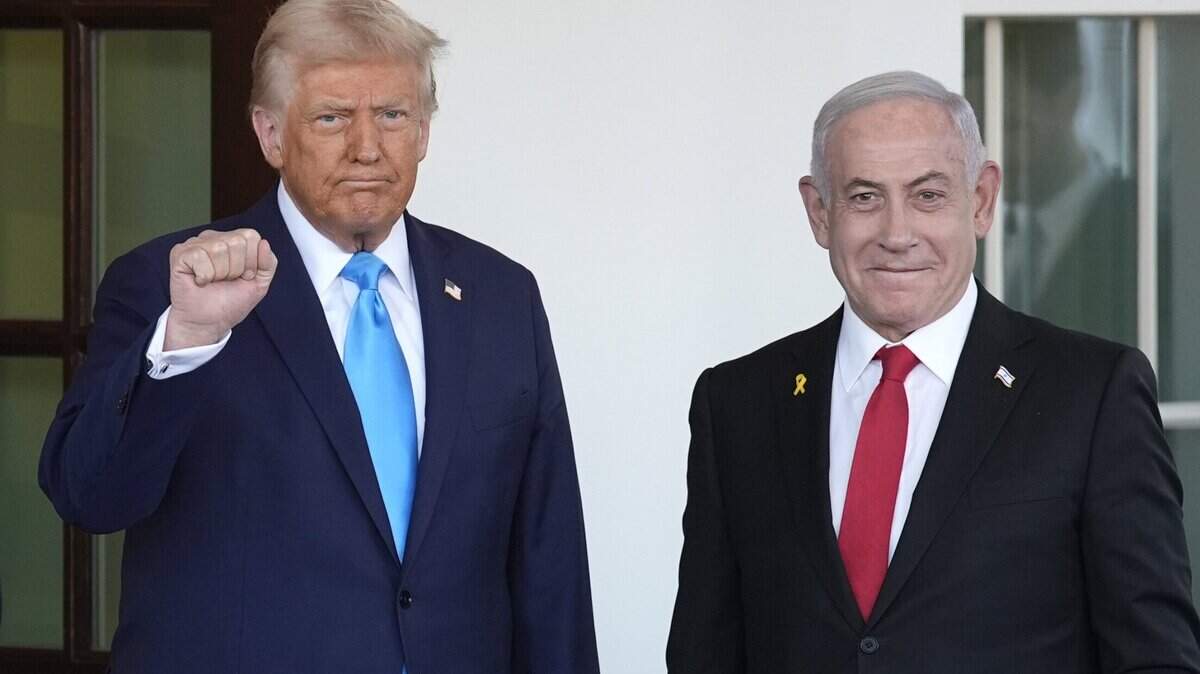
Figuring out the good guys and bad guys in Iran versus Israel should not be hard. Israel is our ally, long threatened by the theocratic regime in power in Iran for nearly 50 years. That regime, which held U.S. hostages for more than a year as it took power, has been continuously responsible for various acts of terrorism ever since, taking many American lives.
Our interest in this conflict is obvious. The matter of how deeply to get involved is more complex.
Gone are the days of broad American acceptance for a quick military response to numerous world trouble spots. Also obsolete are the predictable political lines drawn in such tense times, where conservatives generally supported American military options while liberals opposed them. Those simpler days were found in the America of my youth, where rock-ribbed conservatives generally favored whatever lengths necessary for victory in Vietnam while liberal hippies clamored to bring the boys home.
In one of the eye-opening political shifts of recent history, the attitude of skepticism toward prolonged entanglement in various far-flung wars is now among the passions of the Republican Party. It’s hard to know whether the rise of Donald Trump sparked this shift or reflected it, but after three years of conservatives throwing shade at an endless war effort in Ukraine, it is now elements of the Trump base sounding alarms against diving in too deep in support of Israel’s war against Iran.
Trump has navigated a path between his well-established support for Israel and his clear inclination to avoid another leap into a war quagmire. This has baffled some observers, who wonder why the hesitancy to go all-in with Israel if we support them, or why not stay out of it completely if we are averse to war?
‘Trump doctrine:’ strong but limited action on clear US interests
This brings us to what is taking shape as the “Trump Doctrine,” a concept that may wrap around future global events during his presidency and may extend to presidents who follow. It involves taking strong but limited action when genuine American interests are at stake but stopping short of our old instinct of deploying American forces first and asking questions later. The current American interest, voiced consistently by Trump and shared with Israel, is preventing Iran from joining the list of nations with nuclear weapons.
So, how might that play out as Israel and Iran pummel each other in the coming weeks?
There is majority support in America for backing Israel as it attempts to neutralize the Iranian mullahs who have terrorized Israel and the world. But if the key to genuine victory is the elimination of facilities vital to Iranian nuclear weaponization, that seems impossible without a far deeper level of American commitment, which will not sit well with some Americans across party lines.
There is much focus on a fuel enrichment plant near the village of Fordo, south of Tehran, where intelligence has reportedly revealed uranium particles close to weapons-grade capability. A nuclear Iran is an obvious imminent threat to Israel, and Americans are justified in wondering if that threat extends to our shores in view of Iran’s constant condemnation of us.
It is not hard to argue some level of American interest in eradicating that site and perhaps with it a regime that has menaced us for generations. But the Nordo facility is roughly a football field deep under the mountains, reachable only by a massive bomb that only we have. And it would have to be delivered by a heavy bomber that only we have.
So, as compelling as such an operation would be, one wonders if American forces delivering such a decisive blow might attract immediate vengeful attention from whatever is left of Iran’s war machine.
Iran regime change could mean refugee crisis
And as calls increase for outright regime change, haven’t we learned that such a goal is easy to talk about but difficult if not impossible to achieve? The Iranian people, the Middle East and the entire world would be better off if Iran had a different government, but it is not certain that the best path to that comes by bombing the existing one deeper into the Stone Age. Civil wars could rage in the aftermath, replete with an immense refugee crisis and other unforeseen results.
As with other world crises in history, there are no solutions, only trade-offs. Bolder American involvement could bring a temporary attractive solution, but potentially with horrible blowback. On the other hand, American reticence could make it harder for Israel to claim victory, leading to extended continued warfare and ultimately more Middle East stalemate.
Trump’s calculation at the moment seems to be to provide Israel sufficient support to repel Iranian counterattacks, while threatening a consequence designed to lure Iranian leaders to a bargaining table to achieve a solution more palatable than their extinction. This is congruent with policies Trump has voiced for years: steadfast support for Israel and a firm resolve to avoid another lengthy, costly war entanglement.
We are about to learn if it is possible to achieve both.

This story was originally published June 19, 2025 at 11:38 AM with the headline "Trump must balance support for Israel, desire to keep out of difficult wars | Opinion."