
Who’s paying for legal wrangling over NC’s contested Supreme Court seat? | Opinion
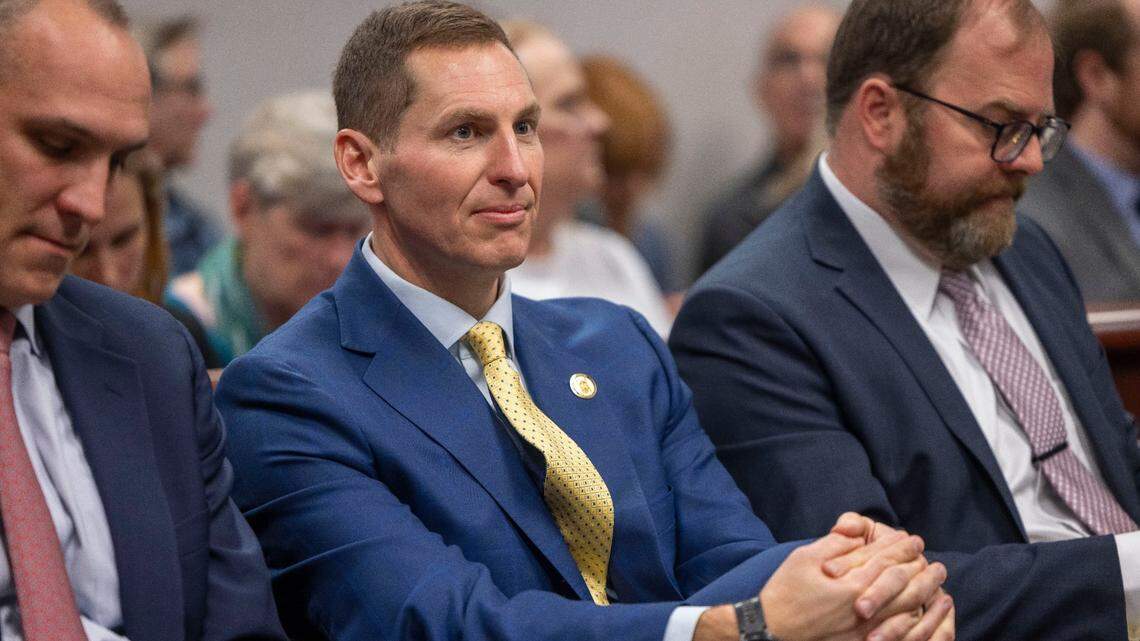
Jefferson Griffin’s legal effort to overturn his defeat in November’s state Supreme Court race must be getting expensive.
In the four months since he lost by 734 votes out of more than 5 million cast, his lawyers have made filings with and appearances before the State Board of Elections, federal court, Wake County Superior Court, the state Supreme Court and the state Court of Appeals.
Griffin, an ambitious 44-year-old Court of Appeals judge, is running up a big legal bill as a plaintiff. That raises the question of who is paying for his attempt to have more than 65,000 votes disqualified for what he alleges is lack of proper registration and other issues.
For now, it’s not clear who is paying the big bills. But it is clear that the need to raise legal funds in this dispute invites potential conflicts of interest for Griffin and the apparent winner in the race, state Supreme Court Justice Allison Riggs.
Griffin, a Republican, has a legal expense fund on file with the State Board of Elections, but the filings are quarterly and won’t be updated until mid-April. As of the end of last year, the fund shows $17,200 raised and $14,000 in legal expenditures.
Griffin, his lawyers and the state Republican Party did not respond to requests for comment.
Riggs, a Democrat, also faces mounting legal expenses as she fends off Griffin’s challenge. She regularly sends out emails seeking contributions. In a recent email she wrote: “I’m committed to upholding the rule of law and the rights of voters. But I need your help to do it – and we need every resource to keep pushing forward. Will you chip in $25 today to help us fight back?”
Riggs’ legal expense fund shows $22,550 raised and no legal expenses at the end of 2024. An update will not be available until mid-April, but a representative of her campaign said, “Significant legal bills have been incurred in our fight to protect voters and the rule of law, already totaling more than 1 million dollars.” The representative did not say who is paying those bills.
These legal costs come at a time when contributions to state Supreme Court races are growing rapidly. A report from the Brennan Center for Justice on the 2021-22 election cycle found that “interest groups and political parties spent $100.8 million on state supreme court elections. This was nearly twice the spending in any prior midterm cycle, after adjusting for inflation.” In North Carolina, state Supreme Court candidates raised $7.3 million while outside groups spent $10.3 million, the report said.
In this environment, a judge in need of legal funds opens a second and personal path for contributors to seek influence over court decisions. And legal expense funds, unlike campaign funds, can accept unlimited amounts from individuals. Meanwhile, a change in state law tucked into last year’s Hurricane Helene relief bill permits a political party to donate to a legal expenses fund out of the party’s building fund. That change could make it harder to track individuals behind a donation.
Douglas Keith, a Brennan Center senior counsel who studies state court races, said all contributions to judicial candidates are problematic. “There are ethics rules in many states — not in North Carolina — that prohibit judges from soliciting contributions from lawyers or others who might appear before them because it raises such a specter of conflict of interest,” he said.
Meanwhile, judges employing lawyers raise new potential conflicts.
For instance, Keith asked, “If a lawyer is working on behalf of the judge for a long period of time, is that lawyer then going to be able to appear in front of the same judge? Is the law firm charging low rates to the candidate that they are representing?”
Anne Tindall, an attorney with the advocacy group Project Democracy who has represented individual voters whose vote Griffin has challenged, said, “There is real risk to the administration of justice when judges rely on outside parties to fund not just their campaigns, but litigation in support of their personal political ambitions.”
Griffin’s legal challenge may fail, but it has already made a compelling case for stronger restrictions on contributions to judges and judicial candidates, or even better, replacing judicial elections with the appointment of judges.
This story was originally published March 9, 2025 at 1:00 AM with the headline "Who’s paying for legal wrangling over NC’s contested Supreme Court seat? | Opinion."