
Seen this red-dotted bird around NC? First on the endangered list, it’s come back | Opinion
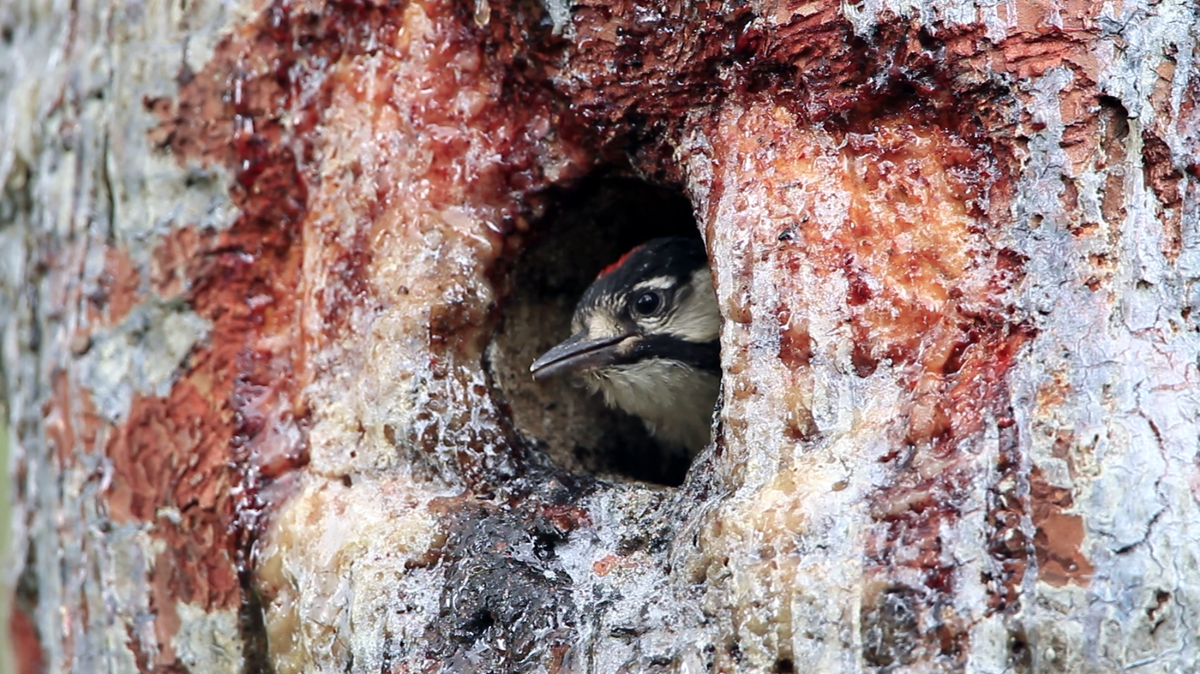
No species exists in a vacuum. It is part of a community, dependent on its neighbors for survival. That’s why recent news that the red-cockaded woodpecker has been moved from endangered to threatened is a reason to celebrate. It also comes with a note of caution and concern for its future.
The little bird, whose red is confined to a mere dot on the male’s head, was the first bird placed on the Endangered Species List. More than 50 years later, its numbers have swelled from just 1,470 breeding groups to 7,800 breeding groups. One of the healthiest populations is in the North Carolina Sandhills.
Although these numbers do not fully meet the milestones set forth decades ago, the population is most certainly on its way to recovery — as long as we remain committed to managing its home.
This current success has been the result of a effort between many partners, both public and private, and aided significantly by the resources and protections afforded by the Endangered Species Act. This is a great example of the positive impact of the act, providing an emergency room to heal the wounds to our natural world.
The red-cockaded woodpecker’s existence is closely tied to longleaf pine and controlled burning because the birds make their homes almost exclusively in mature longleaf pine trees that are kept open by regular fire. Restoring longleaf forests, which once covered 90 million acres across the Southeast but shrunk to a low of 3.2 million acres, was key to bringing back the red-cockaded woodpecker. The Nature Conservancy (TNC) is one of a host of organizations working to restore longleaf pine. We have added 2 million acres of longleaf forest since that low point. As longleaf came back, so did the red-cockaded woodpecker.
Most of that longleaf recovery has been driven by funding aimed at red-cockaded woodpeckers, and that funding has largely been a result of the Endangered Species Act. Here in North Carolina, those dollars came from the Department of Defense (DOD), which was ordered to restore the population of red-cockaded woodpeckers at Fort Liberty. TNC, DOD, and other conservation partners took an innovative approach to restoration with the DOD paying for conservation on adjoining land for woodpeckers.
It worked. These fascinating birds, with their intriguing family structure where offspring help raise future generations, are thriving today. This DOD model was replicated at other military bases, including Camp LeJeune, Fort Moore in Georgia, and Eglin Air Force Base in Florida. Without the order to restore a federally endangered species, it is doubtful the military would have been motivated to fund this conservation.
It isn’t just red-cockaded woodpeckers and longleaf pine trees that have benefited from this conservation. A host of other species, including the iconic Venus flytrap, have seen their numbers soar in these restored longleaf forests. That’s because longleaf forests are some of the most biodiverse in the world.
Longleaf forests need management to thrive, which involves controlled burning every two-to-three years. That is costly. The military has also paid for stewardship, and groups like TNC raise money to cover the cost of burning.
I am thrilled to see red-cockaded woodpeckers back from the brink, but I know that the downgrading isn’t all good if it shifts focus, resources, and commitment away from longleaf habitats.
We can celebrate in the moment. This month it was announced that a red-cockaded woodpecker was building a nest at South Carolina’s Peach Tree Rock Preserve — the first time one has been seen there since the early 1970s.
But, these woodpeckers are still on a precipice. Earlier this fall, Hurricane Helene wiped out many old longleaf pine trees with nests in Georgia’s Moody Forest.
If we are to keep the comeback celebration going, then we must continue to protect, restore and manage longleaf pine. If we shift too heavily away from investments in longleaf restoration, the red-cockaded woodpeckers may well be back in peril, along with many other species that depend on healthy longleaf forests.
This story was originally published December 11, 2024 at 8:00 AM with the headline "Seen this red-dotted bird around NC? First on the endangered list, it’s come back | Opinion."