
Those who condemn students for peaceful campus protests are sending the wrong message | Opinion
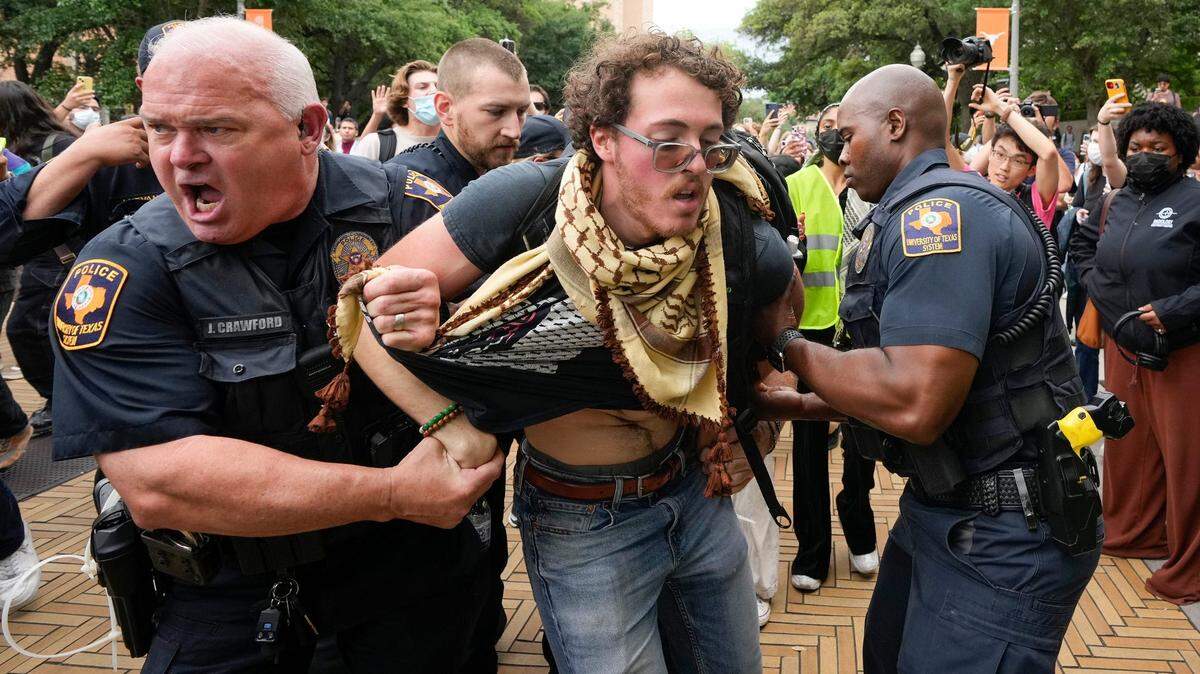
My oldest child graduates high school soon and heads off to university next fall, so I’ve been watching the protests on college campuses with a very full heart.
So many powerful voices are declaring their disgust in these young people. They are accused by politicians and even their own professors of antisemitism and hate crimes. Their voices are dismissed as ignorant, naive and hysterical. Authorities falsely claim their protests are in support of Hamas and in celebration of the Oct. 7 terrorist attacks.

All this backlash arises from a vile false binary. A person can protest against the genocide of one ethnic group without supporting the genocide of another ethnic group. It is possible to categorically reject the horrific violence of the Oct. 7 attack on Jewish civilians and also denounce and protest the indiscriminate bombing of Palestinian civilians as they desperately seek shelter in refugee camps, queue for bread to feed their starving children and seek medical care in the bombed-out remnants of their hospitals. It is possible to call for the immediate release of all Israeli hostages and also cry out for an immediate cease-fire for the people of Gaza. It is possible to be on the side of both peoples.
We send our children to college to learn to be critical thinkers. We hope their degrees will prepare them not to simply preserve the society we’ve created, but to reshape it into a more just, free, compassionate one. We expect them not just to learn history, but to learn from history. I want my daughters to study and live with the horrors of the Holocaust and to swear in the name of those who were murdered, “never again.” Not simply, “never again” will we stand by and watch the slaughter of Jewish civilians, but also “never again” will we stand by passively when any vilified ethnic group is subjected to brutal collective punishment.
It is not antisemitic to call for the protection of Palestinian lives, because the Palestinian people are a Semitic people too.
I worry these young people on our campuses are learning that being good citizens requires uncritically accepting the narratives of authorities, swallowing their questions and seeking permission before speaking out. I worry they are learning that trying to make peace is irresponsible and dangerous and foreign policy must be left to the sole discretion of military experts and those invested in the status quo.
I worry they are learning not to trust the evidence of their own eyes and witness of their own hearts. After listening to accusations hurled at protesters, my soon-to-be college student approached me in confusion and horror: “I thought these were peace protests, I didn’t know it was antisemitic to oppose the war.” She didn’t understand how there could be opposition to peacemaking.
I reminded her of the strange series of blessings we call the beatitudes found at the beginning of Jesus’ public ministry. The penultimate one is “blessed are the peacemakers, for they shall be called the children of God.” It’s followed by the deeply ambiguous cumulative blessing. “Blessed are those who are persecuted in the pursuit of righteousness,” Jesus announces, “and blessed are you when people persecute you falsely and say all kinds of evil against you.’”
Jesus warned us that the price of pursuing righteousness and making peace is persecution. We still live in a world with a toxic understanding of peace as domination. We are taught that solidarity with your friends requires turning a blind eye to the destruction of their enemies. We are told that waging and winning wars is the only way to make peace. Now we are being told that only by starving Palestinian children can we protect Jewish children. If you dare to question war, you will be accused of condoning evil and threatened with arrest and imprisonment. Before peacemakers are celebrated, they are vilified by those who profit from war.
But we are called to peacemaking nonetheless. I pray we will join the voices of the peaceful protesters calling out for cease-fire in Gaza, release of Israeli hostages and denouncing both antisemitism and Islamophobia. If my daughter were already on a campus, I hope she would join the peaceful protests. And if there wasn’t such a peaceful protest on her campus, I hope she would start it.
This story was originally published April 29, 2024 at 1:26 PM with the headline "Those who condemn students for peaceful campus protests are sending the wrong message | Opinion."