
Mick Mulvaney: It’s time to talk about abortion and other issues in a civil way
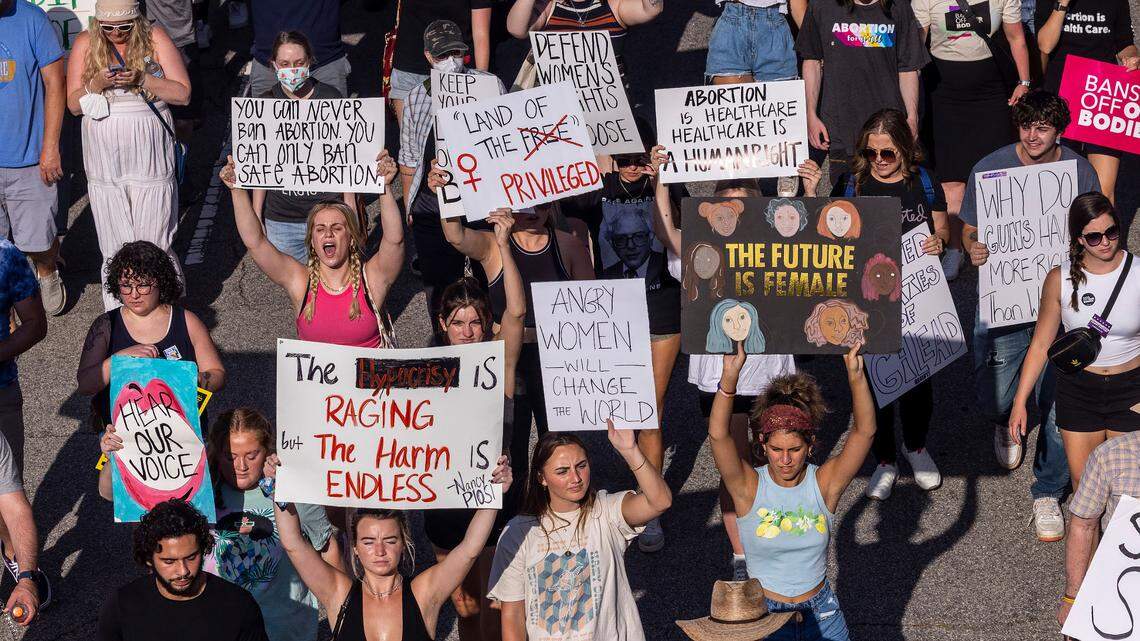
It has been two months since Dobbs v. Jackson Women’s Health, the U.S. Supreme Court decision that overturned Roe v. Wade and ended the federal right to an abortion.
Since then, Kansas voters affirmed abortion protections in their state constitution, the Indiana legislature passed sweeping restrictions on the practice, and lawmakers in dozens of other states began debating the topic.
Some look at this as tumult, reaping the whirlwind of legal precedent come undone. They see a dramatic rollback of women’s rights to privacy, overreach by pro-life advocates, and chaos across society.
I see it differently: Dobbs is doing exactly what it intended when it comes to abortion. But in doing so, it may do even more.
We have debated abortion for more than 50 years. But the debate was always confined. Everyone, on both sides, knew that at the end of the day there was still Roe. People could argue for everything from complete bans to post-birth abortions, secure in the knowledge that Roe likely stood in the way.
Dobbs changed that. The debate is now very real.
The issues are challenging. They may take decades to resolve. It is much more than whether abortion will be legal. Where will each state fall on the spectrum between unlimited abortion on demand and an absolute ban? Who will be held responsible for illegal abortions? How do we propose to handle states that criminalize travel for purposes of having an abortion? What of corporations offering to pay for (and deduct the costs of) employees’ abortions?
Those are really hard discussions. But being compelled to face phenomenally complex and uncomfortable issues may be exactly what the country needs right now.
It is quickly getting to the point where Americans have forgotten how to discuss difficult issues. Indeed, many of us actively, and aggressively, do not want to talk about some things. And we want to attack those who do.
Instead of having reasonable conversations about climate change, for example, scientists who suggest it isn’t caused by human activity are dismissed as kooks and charlatans.
Instead of talking about the merits of traditional marriage, devout Christians who suggest the institution should be between one man and one woman are accused of bigotry.
Instead of discussing biology and identity issues, anyone who contends that men cannot bear children are condemned as fomenting violence.
And good luck to any of those folks getting (or keeping) a job at a major university, or being promoted into upper management at a publicly traded company. Indeed, they should consider themselves fortunate if they are able to continue to use their Twitter, Google, and Facebook accounts.
Cancel culture — the refusal to engage in reasonable debate and the brutal, institutional silencing of one’s critics — is ascendant. That is in part because elements of the progressive left would prefer not to engage in a competition of ideas. But one of the reasons cancel culture can thrive is because we have — all of us — forgotten how to discuss difficult issues.
And while it is the progressive movement driving the breakdown in civil discourse now, let’s not kid ourselves: the MAGA crowd would welcome the chance to cancel the left. That’s because, right now, it’s easier to not debate uncomfortable topics. It is easier to simply retreat to our own camps, surround ourselves with people who agree with us, believe we are right and the other side is wrong — and that they are evil because of it.
We were able to deal with abortion that way for five decades. But with Dobbs, we will be forced to start a national discussion that Roe silenced. If we handle that discussion properly, we might also remember how to discuss other important — and uncomfortable — topics as well.
Will that happen? I’m not so naïve as to think it likely. But it could. And at least now, because of Dobbs, we have an excuse to try.
This story was originally published August 23, 2022 at 12:27 PM with the headline "Mick Mulvaney: It’s time to talk about abortion and other issues in a civil way."