
NC superintendent says trans athletes in girls’ sports ‘isn’t right.’ That’s dangerous.
Should transgender women be able to compete in women’s sports?
Unfortunately, many Republican officials, including some in North Carolina, don’t think so.
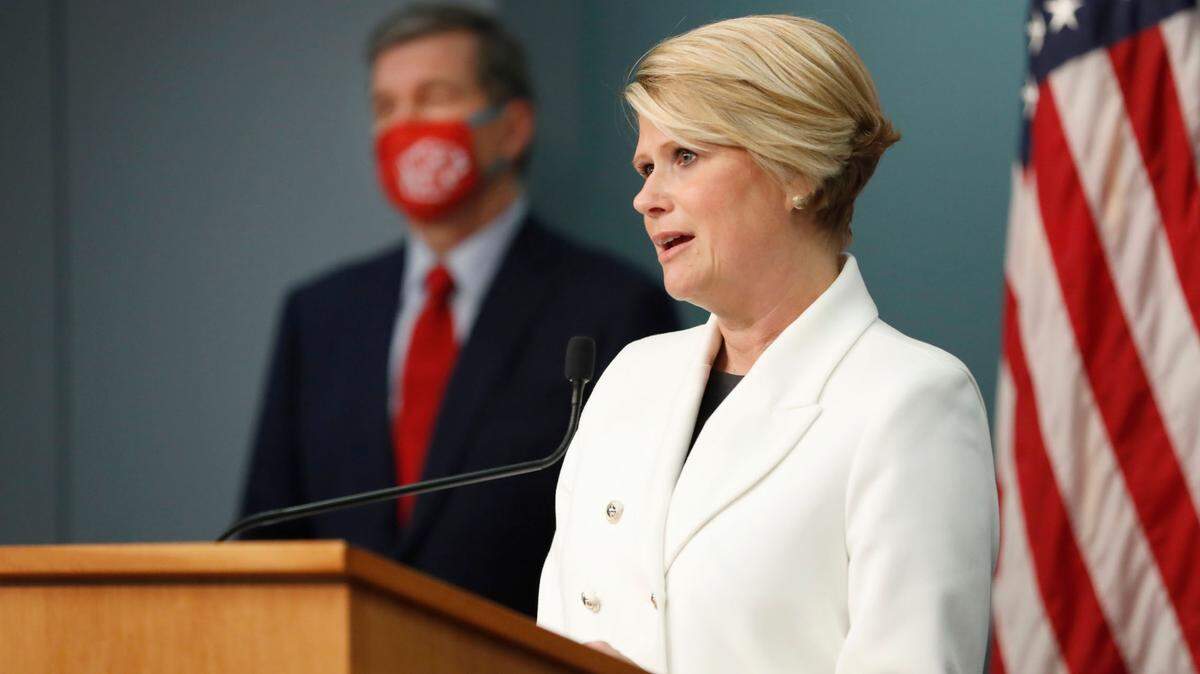
North Carolina Department of Public Instruction Superintendent Catherine Truitt took to Facebook last week to express her thoughts on a recent debate over a transgender student at the University of Pennsylvania who competed in the NCAA women’s swimming championships.
The student, Lia Thomas, came in first place in the 500-yard freestyle, making her the first known transgender athlete to win a Division I national championship in any sport. But some of Thomas’s fellow swimmers, as well as angry parents, have complained that letting Thomas swim in women’s events isn’t fair.
In her Facebook post, Truitt said that the achievements of Thomas’s competitors have been “unfairly overshadowed.”
“The rules intended to protect women’s sports are failing to do so and our daughters are the ones who are unfairly impacted. This isn’t right,” Truitt wrote, adding the hashtag #SaveWomensSports.
In the past year, a wave of states have introduced harmful legislation to ban or limit transgender youth in K-12 schools from participating in sports consistent with their gender identity.
South Carolina, for example, has been inching forward with a trans athlete ban of its own, even as the state’s Republican education superintendent has said she does not support it. (We asked if Truitt would support a policy to prevent transgender students in North Carolina from playing on girls’ sports teams. Truitt’s office did not respond to a request for comment.)
And last week in Utah, after the state legislature passed a similar ban, Republican Gov. Spencer Cox announced he would veto the bill, citing high rates of suicide among trans youth as a reason for his decision. Cox pointed out that just four transgender students in Utah participate in school sports, and only one of them plays girls’ sports.
“Rarely has so much fear and anger been directed at so few,” Cox wrote in a letter explaining the veto. “I don’t understand what they are going through or why they feel the way they do. But I want them to live.”
The North Carolina High School Athletic Association’s current policy allows students to compete on sports teams consistent with their gender identity. Republican lawmakers proposed a bill last year to prevent transgender girls from playing on female sports teams, but it was ultimately thrown out because there were no examples of it actually being a problem.
The justification for these bans revolves around the idea that transgender women have a “biological advantage” over cisgender women, largely due to muscle mass and the amount of testosterone in their bodies. Science doesn’t necessarily agree that testosterone inherently confers such an advantage, but that doesn’t seem to matter.
It’s also worth noting that the proposed bans wouldn’t affect professional or even college athletics. Instead, they target young people who participate in middle or high school sports.
But sports, especially at the middle and high school levels, are about more than just collecting trophies or winning championships. They’re a way for kids to connect with peers who share their interests and feel like they belong. For trans youth especially, that feeling can be hard to come by. Gender-affirming, inclusive participation in sports is linked to positive outcomes among trans youth, who are already at increased risk for depression, anxiety and suicide.
But, of course, the objections surrounding sports are — for some — not really about sports. They’re part of a larger attack on trans people across the country. Republican politicians have pushed an onslaught of draconian anti-trans measures, such as an Idaho bill that would make providing medical care to trans youth a felony or a Texas directive that classifies gender-affirming care as “child abuse” under state law.
To be clear, Truitt hasn’t voiced support for such policies, but signaling a need to “protect women’s sports” is still dangerous in its own way. Truitt’s failure to recognize the harm such a call can cause raises doubts about whether she has the capacity necessary to serve all students and the diversity of needs they have.
BEHIND THE STORY
MOREWhat is the Editorial Board?
The Charlotte Observer and Raleigh News & Observer editorial boards combined in 2019 to provide fuller and more diverse North Carolina opinion content to our readers. The editorial board operates independently from the newsrooms in Charlotte and Raleigh and does not influence the work of the reporting and editing staffs. The combined board is led by N.C. Opinion Editor Peter St. Onge, who is joined in Raleigh by deputy Opinion editor Ned Barnett and in Charlotte by deputy Opinion editor Paige Masten. Board members also include Observer editor Rana Cash and News & Observer editor Nicole Stockdale. For questions about the board or our editorials, email pstonge@charlotteobserver.com.
This story was originally published March 28, 2022 at 12:59 PM with the headline "NC superintendent says trans athletes in girls’ sports ‘isn’t right.’ That’s dangerous.."