Wake County Library ban of LGBTQ+ book may be unconstitutional
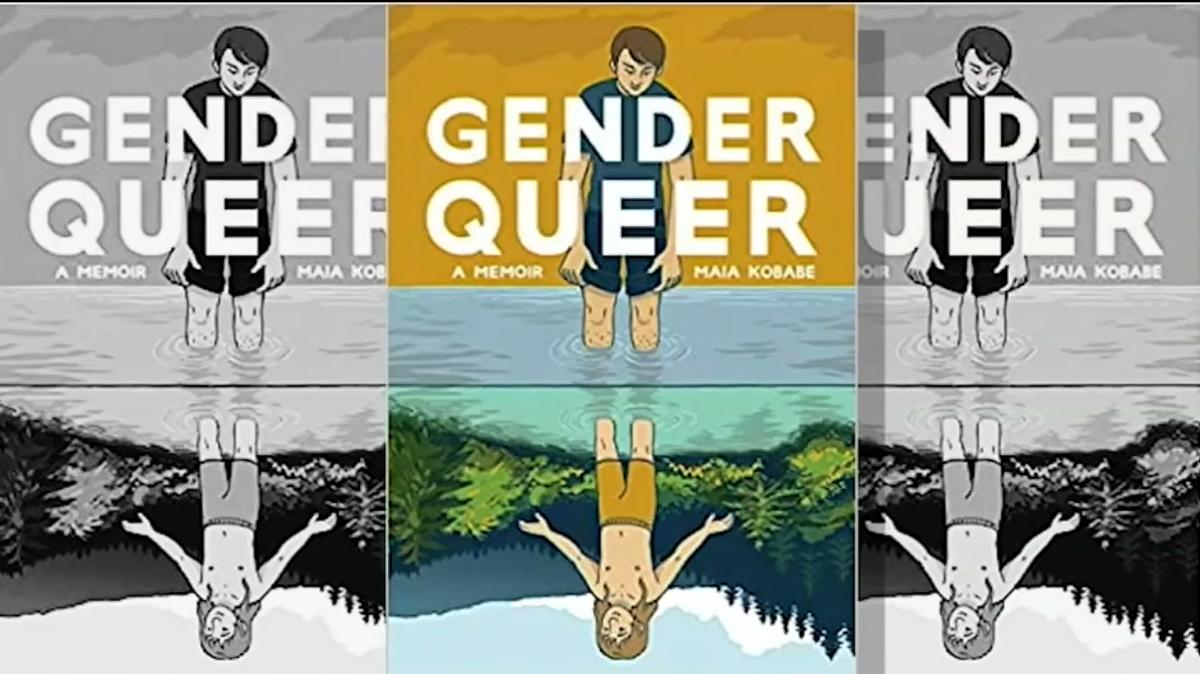
On Wednesday, the Wake County Public Library announced it was pulling its copies of the graphic novel memoir Gender Queer out of circulation. In a statement to The News & Observer, a spokesperson said it was due to “explicit illustrations that do not align with WCPL’s selection policy.”
The decision has been met with outcry from LGBTQ+ groups and activists, but it’s possible that the action could have legal consequences for the county government.
The genre of the book, if it is for adults, could mean the removal of it is unconstitutional, based on First Amendment law and precedent. Julia Hersberger, professor emerita in UNC-Greensboro’s Department of Library and Information Studies, covers the ethics of restricting access to information in one of her classes. She says that in order to restrict a book like this, the library would have to justify the reason beyond “explicit illustrations.”
“What is exactly the fear?” she says. “I’m guessing that it’s an assumption that somebody reading it might go ‘Oh, I’m gay! I didn’t know it before,’ or that someone reads it and becomes violent, or that somebody reads it and wants to have sex. There is no right to not be offended. There’s no right on the planet, because that is such a subjective benchmark.”
There are still sexually explicit books available in Wake County libraries. All three books from the Fifty Shades of Grey trilogy can be checked out. Same with Lolita. More than 3,000 adult romance fiction novels are on file; most of those probably depict sex acts, too. There are also graphic novels displaying nudity still available to be checked out.
Hersberger’s class spends time going over a case study where a mother filed a complaint with the Greenville, SC library after her fourteen-year-old daughter checked out Neonomicon, an award-winning graphic novel by Alan Moore with explicit images.
In the case, the teenager was allowed to check it out because her mother gave her written permission to take home books from the adult section. The library removed the book altogether, an act Hersberger considers “state-sponsored censorship.”
Gender Queer tells the story of a person’s grappling with gender and sexuality from childhood to adolescence and beyond. Its author, Maia Kobabe (who uses e/em/eir pronouns), uses illustrations to show how e came to understand emselves as asexual, or not sexually attracted to anyone.
To understand this, Kobabe has to talk about eir sexual experiences.
The News & Observer read through the novel and found nine pages of sexual scenarios in the 239-page book. They include sex toys, illustrations of men with erections, and one oral sex scene involving a dildo that ends with the author questioning why e didn’t necessarily enjoy it.
There’s no record of the age makeup of the people who have or want to check it out, whether they’re high schoolers or older. Kobabe admitted in an op-ed for The Washington Post that e wrote the book with a specific audience in mind.
“The truth is, the readers I primarily wrote it for were my own parents and extended family,” e wrote. “When I was first coming out as nonbinary, I kept getting responses along the lines of, ‘We love you, we support you, but we have no idea what you are talking about.’”
The Wake County Public Library says it has seven copies of Gender Queer. The book has been checked out 61 times in 2021, and there were more than 30 people waiting to check it out when the library manager and other top staff members made this decision.
It’s understandable that there’s some discomfort with sexually explicit imagery. It can be hard to talk about in any context, especially for those who have never experienced sex outside of a straight relationship. But the book is about exactly that: Kobabe’s aversion to sex, and eir journey to accepting that and eir gender.
When the book was banned in Virginia earlier this year, Kobabe received a message from a queer student in the school system who read the book with their mother, as to better understand the confusion that comes along with figuring out your gender.
“I loved it!” the teen wrote to Kobabe. “I related to almost everything you said. I felt so understood and not alone. I think my mom understands me better and I’m more confident in confiding in her since she read your book.”
That is value. Wake County can’t stifle that.
This story was originally published December 16, 2021 at 1:04 PM with the headline "Wake County Library ban of LGBTQ+ book may be unconstitutional."