
What you should know about NC’s in-person school bill - with an Editorial Board recommendation
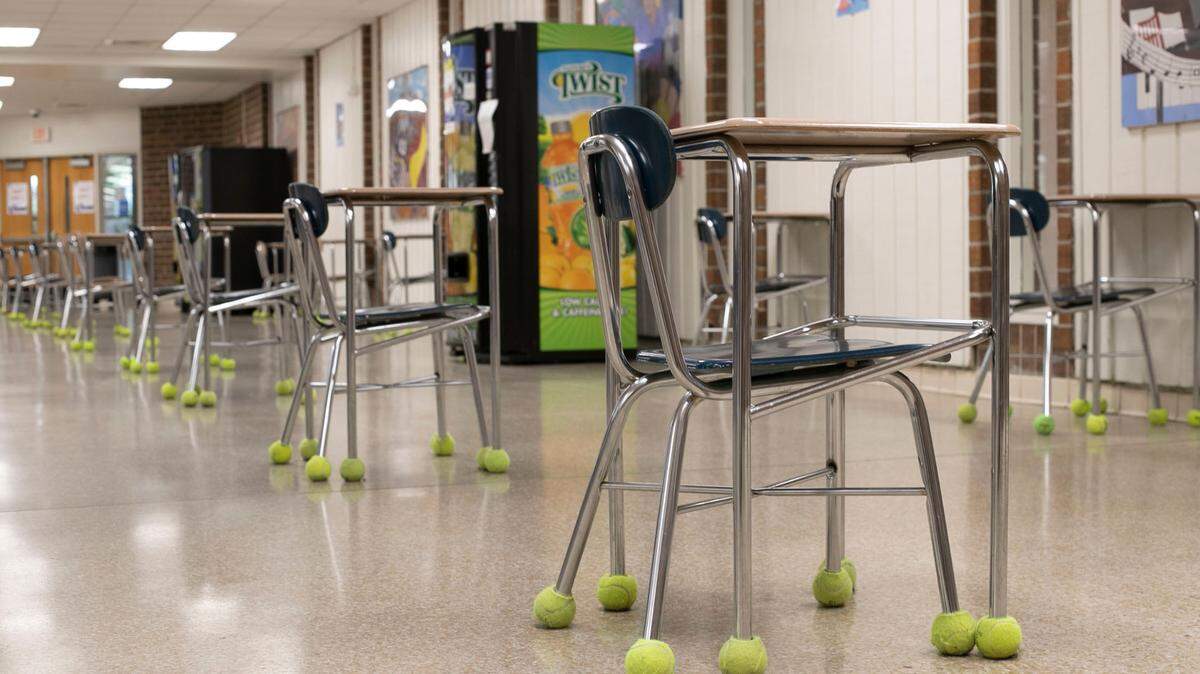
North Carolina’s public school students are headed back to in-person classes across the state this month, and N.C. lawmakers want to keep it that way. The N.C. House and Senate have passed a bill requiring the state’s K-12 public school districts to offer in-person learning again. The bill is now before N.C. Gov. Roy Cooper, who expressed hesitation Wednesday about signing it.
Here’s what you need to know about SB 37, along with the Editorial Board’s recommendation for the governor and lawmakers.
What the bill does
As the News & Observer’s Dawn Baumgartner Vaughan reports, SB 37 requires school districts to offer a full-time, in-person instruction option — Plan A — to special needs students. It would also require schools to offer either Plan A or Plan B (a hybrid of remote and in-person instruction) to all students. The latest state guidance calls for Plan A only for K-5 students, and Plan B for 6-12.
The bill would continue to allow online-only instruction to families who choose it. Charter schools are not included in the legislation.
Practically speaking, that’s not much different than where most N.C. public schools are this month. In Mecklenburg and Wake counties, students have returned or are headed back to in-person classes, some for the first time since last March. In Durham, where the school board voted to keep students in remote learning through the spring, the bill would bring a significant change in plans.
What the bill changes
The bill’s biggest impact, however, isn’t to change what’s happening now. It’s to take the decision about in-person learning out of the hands of the governor and local school districts.
While the bill allows districts to close individual schools “due to COVID-19 exposures that result in insufficient school personnel or required student quarantines,” local school boards can’t decide to proactively require remote learning because of community or school outbreaks. The governor, who previously could close schools with executive orders, would be bound by N.C. law to keep schools open.
What are the governor’s options?
Cooper, in a statement Wednesday, said he isn’t satisfied with SB 37. Among his issues: The legislation allows middle and high schools to open without following current DHHS guidance requiring 6 feet of social distance.
“Children should be back in the classroom safely and I can sign this legislation if it adheres to DHHS health safety guidance for schools and protects the ability of state and local leaders to respond to emergencies,” Cooper said. “This bill currently falls short on both of these fronts.”
Cooper doesn’t have much leverage, however. Each bill passed with enough Democrats voting in favor to override a veto if Gov. Roy Cooper issues a veto. Governors generally don’t like the politics of having vetoes overridden, so Cooper could merely refuse to sign it and let it become law after 10 days.
What the Editorial Board recommends
Most public school students are headed back to school, if they’re not already there. Science largely supports that, with studies showing that COVID-19 transmission can be avoided when the proper measures are taken. We encourage schools and districts to make the safety of their teachers and students a priority.
North Carolina’s COVID numbers also are moving in the right direction. Hospitalizations are down, as is the percentage of positive infections. We still have higher numbers than summer 2020, but with warmer weather ahead and more North Carolinians getting COVID-19 vaccines, we’re at least on an encouraging path.
But what if that changes? Health officials have expressed concern about three new COVID variants that could cause new outbreaks if vaccinations aren’t distributed quickly enough. The University of Washington’s Institute for Health Metrics and Evaluation predicted last week that the variants could cause COVID-19 infections to increase after mid-March and for 4-6 weeks.
SB 37 would leave N.C. schools vulnerable in such an outbreak. While the law would allow districts to respond to individual outbreaks in schools, school boards and the governor wouldn’t be able to proactively close schools if infections in the community reach dangerous levels. That’s intentional on the part of lawmakers, who believe school districts bowed to teachers’ COVID concerns and kept students at home longer than necessary.
A compromise is available. N.C. school districts should be given the capacity to respond to new outbreaks, but that response should be triggered by measurable factors such as percentage of positive tests in the community or number of outbreaks in a school district. Such a compromise would balance the benefits of students learning in-person with flexibility for districts to respond to new, unsafe COVID-19 circumstances. It would protect both health and educational outcomes. Cooper should veto SB 37, and he and lawmakers should work to make it better.
BEHIND THE STORY
MOREWhat is the Editorial Board?
The Charlotte Observer and Raleigh News & Observer editorial boards combined in 2019 to provide fuller and more diverse North Carolina opinion content to our readers. The editorial board operates independently from the newsrooms in Charlotte and Raleigh and does not influence the work of the reporting and editing staffs. The combined board is led by N.C. Opinion Editor Peter St. Onge, who is joined in Raleigh by deputy Opinion editor Ned Barnett and in Charlotte by deputy Opinion editor Paige Masten. Board members also include Observer editor Rana Cash and News & Observer editor Nicole Stockdale. For questions about the board or our editorials, email pstonge@charlotteobserver.com.
This story was originally published February 18, 2021 at 12:00 PM with the headline "What you should know about NC’s in-person school bill - with an Editorial Board recommendation."