Why Raleigh may stop residents from watering their lawns completely
AI-generated summary reviewed by our newsroom.
- Level one restrictions allow lawn watering Tuesdays (odd) and Wednesdays (even).
- More than 300 water use violations were recorded since April.
- Further restrictions could bar all lawn watering unless water-efficient methods are used.
Raleigh water customers could see more limits on their use as North Carolina’s drought continues and demands on the city’s water infrastructure grow.
In April, the city enacted level 1 restrictions that included limiting people with odd-numbered addresses to watering their lawns on Tuesdays and people with even-numbered addresses to Wednesdays.
Since then, the city has recorded more than 300 violations of water use rules.
Assistant Director of Raleigh Water Ed Buchan said the city’s hand might be forced into further restrictions that, among other things, could prohibit watering lawns any day of the week, unless people use more water-efficient methods.
Could restrictions become stricter?
Typically, the city’s water restrictions are tied to the water levels at Falls Lake, the city’s main water reservoir. Depending on the month and how low water levels are at the lake, the city will issue either level 1, 2 or 3 water restrictions.
Currently, water levels are at 67%, Buchan said. For the city to implement level 2 restrictions in June, the lake would typically need to go down to 45%.
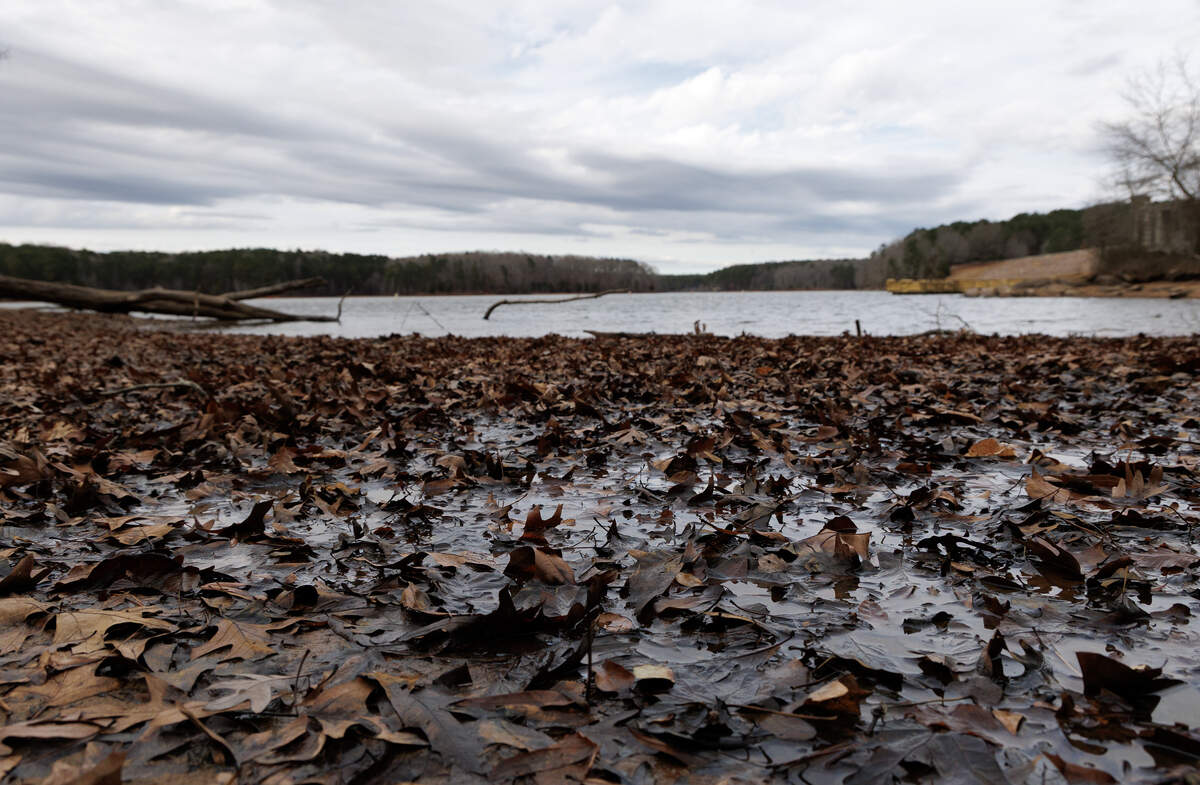
For reference, Buchan said in April that the lake is usually full at that time of year. Less than two months later, water levels have dropped 33%. And summer has not even officially begun yet.
Parts of the state benefitted from rain in late May, which broke an eight-month streak of drier-than-normal months, according to the North Carolina State Climate Office’s website.
Raleigh only got 1.54 inches of rain in May, with seven out of the last nine months in the city seeing less than 2 inches of precipitation, according to the Climate Office.
The National Weather Service’s Climate Prediction Center forecasts the drought to persist throughout North Carolina in its seasonal drought outlook released May 31.
It usually takes a couple of inches of rain to change an area’s drought status, said Andrew Kren, meteorologist with the National Weather Service, in a previous interview.
Raleigh is 19.8 inches below its average rainfall totals from August 2025 to Thursday.
But Buchan said there’s another reason the city could consider further restrictions, even if water levels don’t drop too much more.
He said current restrictions, combined with the heat and lack of rainfall, cause water demand to spike on Tuesdays and Wednesdays.
“We’re seeing irrigation demand we’ve never seen before,” Buchan said. “It’s a huge demand spike in a very limited amount of time in the morning.”
Irrigation is by far the biggest driver of water demand, he said. Combined with morning showers, sink usage and other water uses, the Tuesday and Wednesday lawn-watering tests the city’s capacity to pump water.
“It’s like a race,” he said.
Though there’s still enough water in Falls Lake to meet demand, the city has to race to pump enough water to households across the city all at once, which is a challenge.
“That might force our hand to go into the next stage before water levels fall,” he said.
Stage 2 restrictions prevent people from watering their lawns unless they’re doing it with a handheld hose or with water-efficient drip irrigation.
Water restriction violations
Restrictions were put in place April 20, and since then the city has recorded 355 violations, according to ABC 11, The News & Observer’s newsgathering partner.
Most of those are from people watering on days other than Tuesday or Wednesday, Buchan said.
The city also has sent 244 education letters and issued 10 official warnings.
Buchan said the city can’t release information about specific water users’ violations or water usage.
Filling up pools, irrigating athletic fields, pressure washing and car washing are all allowed under stage 1 and 2 restrictions, The N&O previously reported.
To report a violation, call Raleigh Water at 919-996-3245 or email customercare@raleighnc.gov.
The first violation results in a letter, the second in a $100 fine and the third in a $500 fine.
If the violations are not resolved, the city may stop water service. You can find more details in the city’s Water Shortage Response Plan on the city’s website, raleighnc.gov.
Are golf courses, pools or car washes using too much water?
Buchan said that most other water uses aren’t really a problem for the city.
Golf courses often have their own irrigation reservoirs or use reclaimed water from the city, which isn’t drinkable. It’s too expensive for them to use the city’s drinking water to water their grass anyway, Buchan said.
Most pools don’t hold enough water to make a significant effect on the overall water supply, and most of the time people are just topping off the evaporated water in their mostly full pools anyway, he said.
Car washes and power washers both use relatively small amounts of water, Buchan said.
While the city does sell some water to other counties and municipalities, it requires those places to implement their own water restrictions when necessary.
Durham is implementing its own water restrictions starting Monday, and its water reservoirs feed into Raleigh’s. But Buchan said that won’t help Raleigh much unless Durham’s reservoirs fill up, which would require a very large amount of rainfall.
This story was originally published June 12, 2026 at 5:30 AM with the headline "Why Raleigh may stop residents from watering their lawns completely."