Hurricane Gabrielle’s swells affecting NC coast. Where the storm is headed
AI-generated summary reviewed by our newsroom.
- Hurricane Gabrielle's swells pose ongoing rip current risks along NC coast.
- Gabrielle, now a Category 4 storm, continues northeastward into open Atlantic.
- Two Atlantic tropical waves show strong development potential this week.
Update: Find our latest story on Hurricane Gabrielle here.
Gabrielle’s swells will continue to affect the North Carolina coast, as the storm moves out into the open Atlantic.
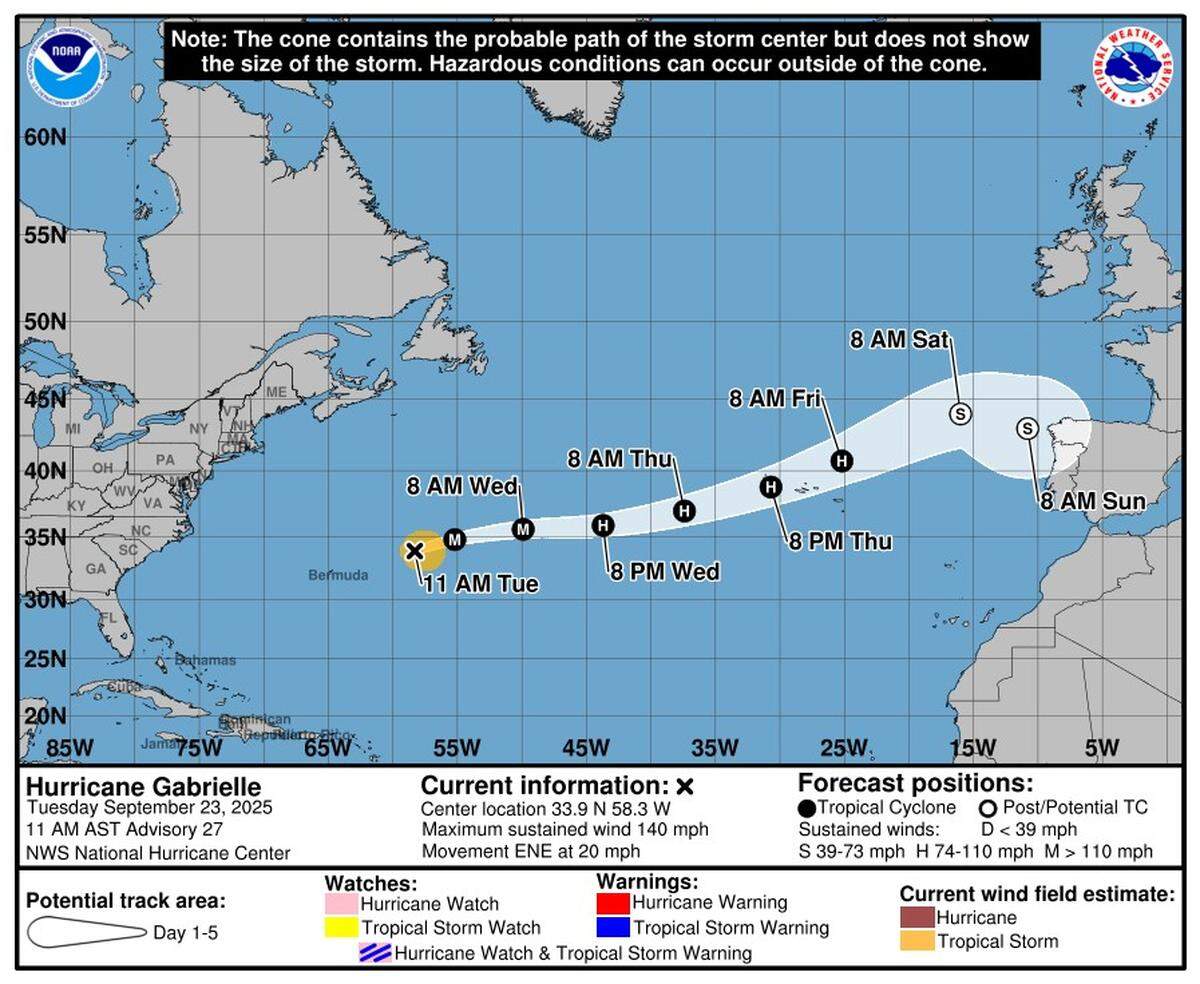
As of 5 p.m. Tuesday, Sept. 23, the hurricane was about 520 miles east-northeast of Bermuda, moving east-northeast at 21 mph, according to the National Hurricane Center. Its maximum sustained winds reached 130 mph. It’s still a category 4 storm, but has weakened slightly from earlier in the day.
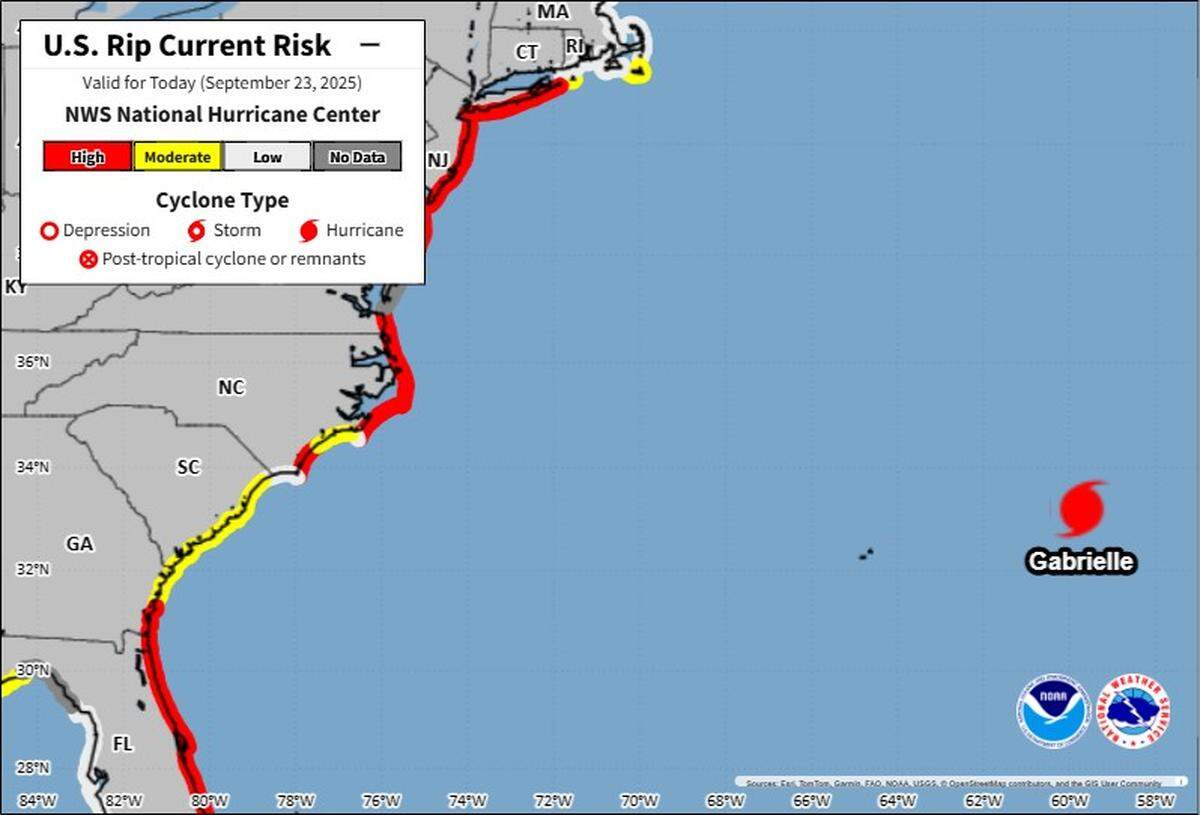
The swells could produce life-threatening rip currents, and there is a high or moderate risk of rip currents along the Outer Banks and North Carolina coastline, according to the National Hurricane Center.
The center of Gabrielle will continue to move away from Bermuda on Tuesday. Its east-northeastward motion is expected to continue for the next several days.
The Azores Meteorological Service issued a hurricane watch for all of the Azores islands. Gabrielle is expected to weaken during the next couple of days but should still be a hurricane when it passes the Azores, likely Thursday, Sept. 25 into Friday, Sept. 26.
Two more Atlantic disturbances
The National Hurricane Center continues to track two tropical waves in the Atlantic.
- A tropical wave east of the Leeward Islands has a 20% chance of forming through 48 hours and a 60% or medium chance of forming through seven days, as of 8 a.m. Tuesday. It is expected to move west-northwestward, spreading heavy rainfall and gusty winds into Puerto Rico and the Virgin Islands on Tuesday night and Wednesday. The wave is expected to slow down and turn northwestward near the Bahamas late this week, and a tropical depression could form when the disturbance is in that region.
- A tropical wave around 1,000 miles east of the Lesser Antilles has a 90% chance of forming through seven days and a 60% chance of forming through 48 hours, as of 2 p.m. Tuesday. It is likely to develop into a tropical depression by the latter half of this week, as the system moves west-northwestward to northwestward.
When is hurricane season?
More than two months are left in the 2025 hurricane season, which runs through Nov. 30.
So far, there have been seven named storms this year. Of those, two — Erin and Gabrielle — have been major hurricanes.
Meteorologists at the National Oceanic and Atmospheric Administration predicted that there will be at least 13 named storms this season, including between five and nine hurricanes and between two and five major hurricanes.
Colorado State University’s seasonal forecast, which was last updated Wednesday, Aug. 6, includes 16 named storms, eight total hurricanes and three major hurricanes.
Both the NOAA and Colorado State forecasts predict above-normal Atlantic storm activity.
This story was originally published September 23, 2025 at 9:42 AM with the headline "Hurricane Gabrielle’s swells affecting NC coast. Where the storm is headed."