What is shrimp trawling? NC commercial fisherman explains the harvesting method
AI-generated summary reviewed by our newsroom.
- Shrimp is one of the most popular types of seafood consumed in the United States.
- Shrimp trawling uses nets towed slowly near the bottom of the water.
- Turtle excluder and bycatch reduction devices help marine animals escape nets.
A controversial bill that has been making its way through the North Carolina legislature would ban shrimp trawling in sounds, rivers and within a half mile of the coast.
While that bill won’t be taken up by the House, the proposed legislation has shone a light on one of North Carolina’s most historic industries.
Shrimp is one of the most popular kinds of seafood consumed in the United States. Americans ate 5 1/2 pounds of shrimp per capita in 2022, according to data from the National Oceanic and Atmospheric Administration.
Despite the popularity of this seafood, people may not know how wild-caught shrimp gets from coastal waters to their grocery store, market or favorite seafood restaurant.
Glenn Skinner, a commercial fisherman and the executive director of the North Carolina Fisheries Association, explained shrimp trawling, a method of harvesting shrimp.
What is shrimp trawling?
Some shrimp boats are fitted with outriggers, poles that can be extended outward from the port and starboard sides to keep boats stable and nets separated. Other boats have one net pulled behind the boat, while others have one trawl net or two trawl nets on each side, Skinner said.
Rectangular wooden objects called doors are attached to nets with cables, so the doors can be let out or drawn in, depending on water depth, Skinner said.
Doors are pulled behind the boat, separating and sinking to the bottom of the water as the boat moves. The doors have sleds that help doors glide along the floor without getting stuck.
As the boat moves, water pressure helps keep the doors open, which opens the trawl net.
“We don’t pull a plow, we pull a sled,” Skinner said.
Typically, boats pull the trawl at a speed of 2 1/2 to 3 knots, Skinner said, which is around 3 mph.
The trawl forms a flattened cone shape, where the bottom line, also called the foot rope, is weighed down, skimming the surface of the floor. And the top line — or head rope — floats, keeping the front of the net open. A tickler chain at the front, open part of the net causes shrimp to jump as the nets move.
The chain and the sleds on the doors touch the floor, but the nets float inches above it.
How turtles and marine animals are kept out of the trawl
The nets contain turtle excluder devices, which prevent turtles and larger marine animals such as sharks from getting caught. Another bycatch reduction device behind the turtle excluder allows smaller fish to escape.
Nets do not span the entire water column, but may vary in depth depending on the type of shrimp being caught.
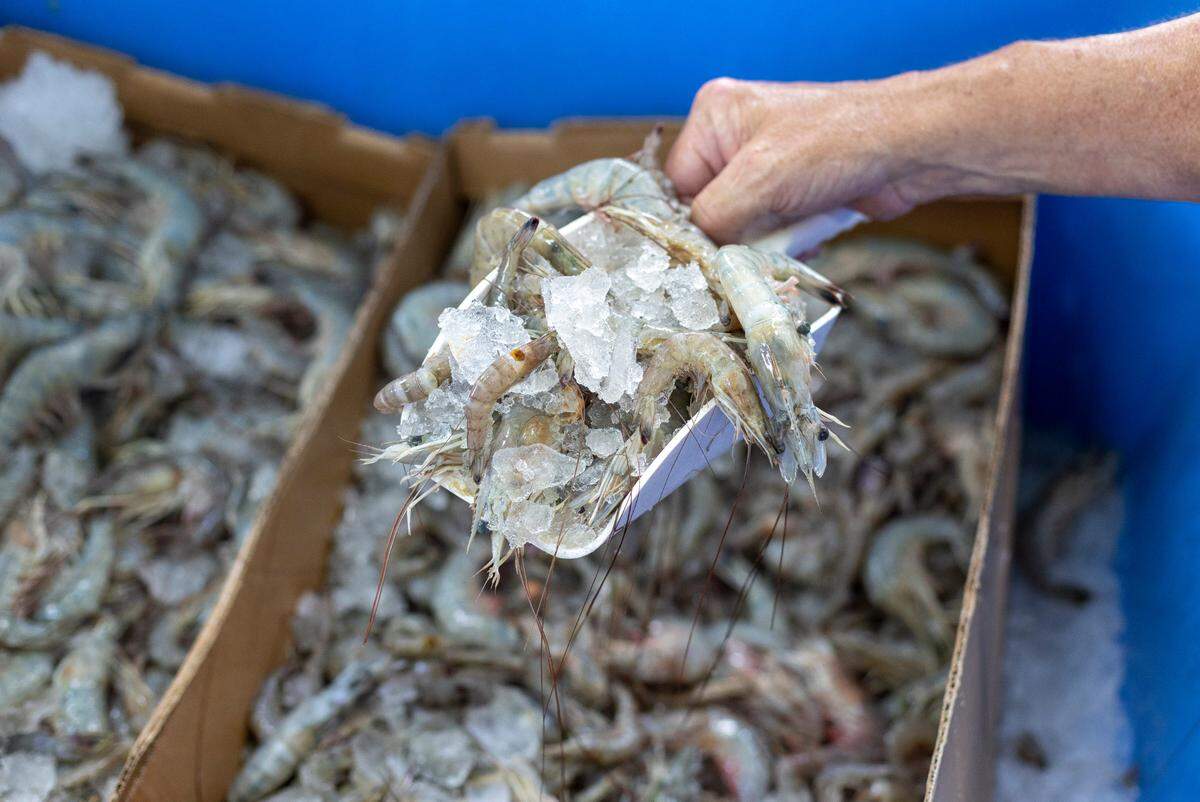
The catch is funneled into what’s known as the tail bag. After an hour or so of towing, shrimpers haul in the nets and dump the tail bag to release the catch.
See what shrimp trawling looks like
The Southern Shrimp Alliance, a group that advocates for commercial shrimpers and shrimp processors across eight states including North Carolina, produced an informative video that details shrimp trawling.
This story was originally published June 25, 2025 at 4:38 PM with the headline "What is shrimp trawling? NC commercial fisherman explains the harvesting method."