
12-foot ‘prehistoric’ canoe found floating in NC river by sportsman, state says
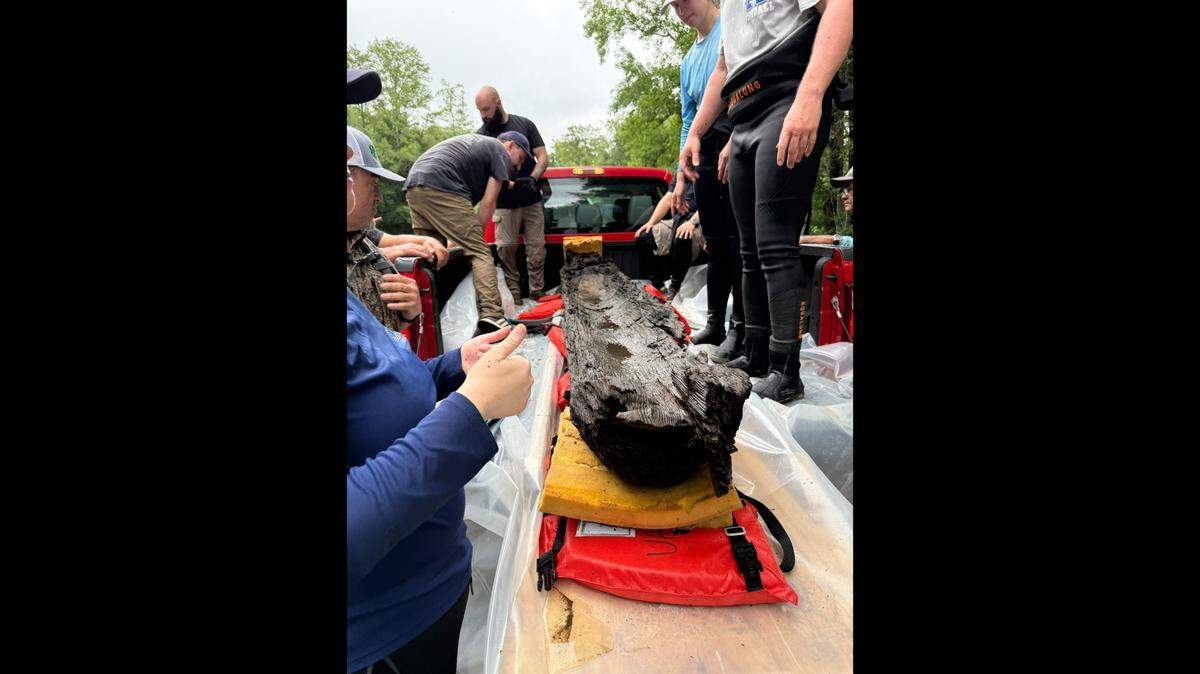
A dugout canoe found bobbing in one of eastern North Carolina’s blackwater rivers could prove to be centuries old, state archaeologists say.
Made from a single log, the 12-foot, 4-inch “prehistoric” canoe was “quite sound and in very good condition,” officials with the N.C. Department of Natural and Cultural Resources told McClatchy News.
The canoe was discovered in the South River near Autryville and it’s likely the canoe was sitting at the spot where it was abandoned by the original owner, according to deputy state underwater archaeologist Stephen Atkinson.
Autryville is about a 70-mile drive south from Raleigh.
Carbon dating has not been done, so archaeologists haven’t settled on an age for the canoe.
“In most circumstances, these canoes predate modern memory and current indigenous holdings by hundreds if not thousands of years,” Atkinson told McClatchy News in an email.
“As a state agency we do not presume judgment over what tribes determine to be a part of or representative of their cultural heritage, but rather work to support their goals and do right by all involved to make sure our state’s archaeological resources are preserved. In that regard, the tribe we have worked with most closely on this recovery has been the Coharie.”
The discovery was made by “an avid sportsman” who notified the Coharie Tribe, officials said. Tribal representatives visited the site and reported their findings to the N.C. Office of State Archaeology’s Underwater Archaeology Branch in June 2024, officials said.
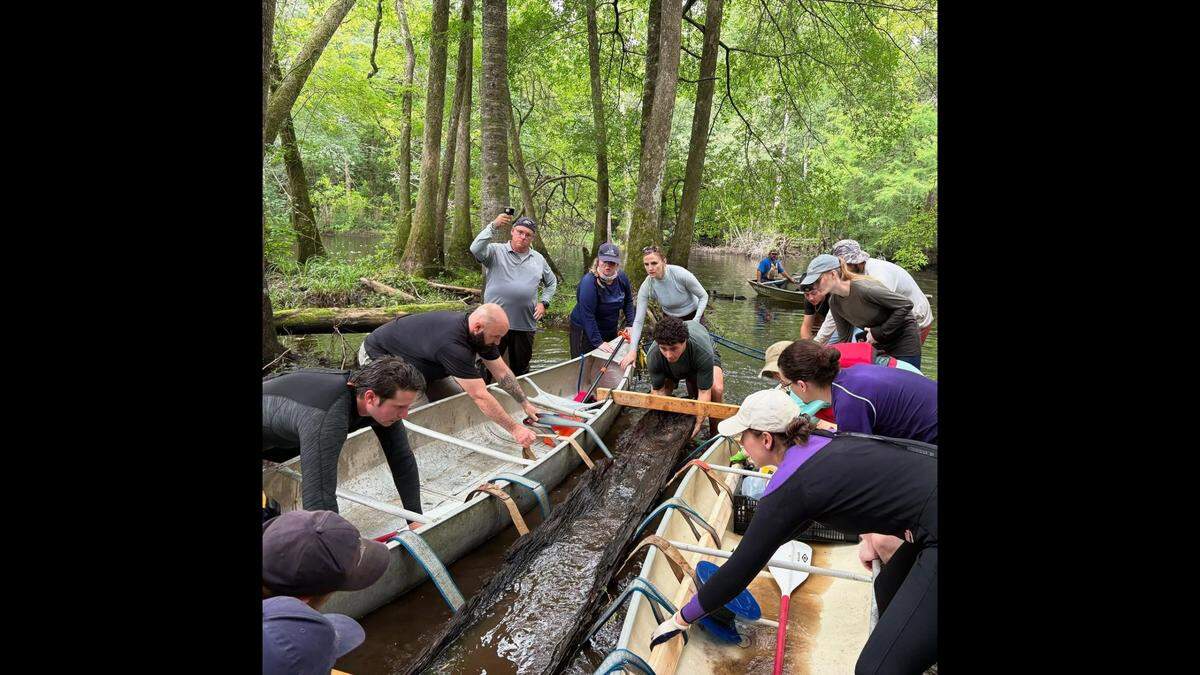
State archaeologists say the canoe “had become dislodged from the bank and was neutrally buoyant.”
It was recovered June 10, with experts working together to lift the canoe out of the river with straps to tow it up river to a waiting truck, state officials said. It is currently being kept wet in “a secure pond for safe keeping.”
The canoe will next be taken to the Queen Anne’s Revenge Conservation Lab in Greenville for stabilization, a process that could take five to 10 years, according to Kim Kenyon, head conservator and assistant state archaeologist with the Underwater Archaeology Branch.
Careful preservation is needed, because “waterlogged wood of this age will twist, crack, and crumble away” if allowed to dry in an uncontrolled environment, she said.
“Preservation is very dependent on the environmental conditions of the body of water where an object was deposited. Waterlogged wood submerged in silty, less oxygenated, fresh water, that is tannin-rich thanks to the trees surrounding the body of water (like many of the rivers and lakes in N.C.), has a better chance of remaining in good condition for very long periods of time,” Kenyon said.
“Fresh bodies of water in N.C. seem to be ideal for the preservation of dugout canoes, since 79 have now been found and recorded.”
Archaeologists suspect “there is potential for these canoes to exist in all bodies of water in North Carolina,” she said.
.jpeg "Photo Jun 10 2025, 11 14 14 AM (1_fitted (1).jpeg")
Among the 79 canoes was another found in the South River near Autryville, state officials said.
It was made of pine, 12 feet, 9 inches long and dated to the period between 1340-1396, Atkinson said.
Twenty-three of the canoes were found in Lake Phelps in eastern North Carolina, with the oldest being “carbon dated to 2430 BC,” officials said. The lake is about a 75-mile drive northeast from Greenville, in Washington and Tyrrell counties.
“The canoes from the South River seem to be unique in that they are quite short compared to the canoes found in lake environments, which can reach up to 27 feet in length or more,” Atkinson said.
Details of how the sportsman spotted the canoe were not released, but state archaeologists say it “was ‘in situ,’ or deposited exactly where it was last used.”
Once preserved and stabilized, the canoe will go on display “where it can help to tell the story of North Carolina’s rich cultural heritage,” Atkinson said. That display site has yet to be determined.
The canoe previously found in the South River is on loan at the Coharie Tribal Center in Clinton.
This story was originally published June 23, 2025 at 7:30 AM with the headline "12-foot ‘prehistoric’ canoe found floating in NC river by sportsman, state says."