
A washed-out road in Western NC was rebuilt after Helene. Should everyone use it?
AI-generated summary reviewed by our newsroom.
- Hurricane Helene destroyed U.S. 64/74A; a temporary road links Bat Cave and Chimney Rock.
- NCDOT begins $300M rebuild project; permanent highway may be done by late 2027.
- Residents urge tourists to avoid the area; 'local traffic only' remains unenforced.
Of the hundreds of North Carolina roads damaged by the remnants of Hurricane Helene, few were as devastated and will cost as much to rebuild as the 2 1/2-miles of highway in Hickory Nut Gorge between Bat Cave and Chimney Rock.
The raging Rocky Broad River carried away trees, homes and businesses along its banks, as well as the earth on which they stood. Also gone was much of U.S. 64/74A, the once tree-shaded two-lane highway that connected the two communities.
“Full stretches completely destroyed,” says Nathan Moneyham, an engineer for the N.C. Department of Transportation. “No real sign that a road had even been there.”
Eight months after the storm, NCDOT and its contractors have reconnected Bat Cave and Chimney Rock with a ribbon of dark pavement atop a new bed of rock alongside the river.
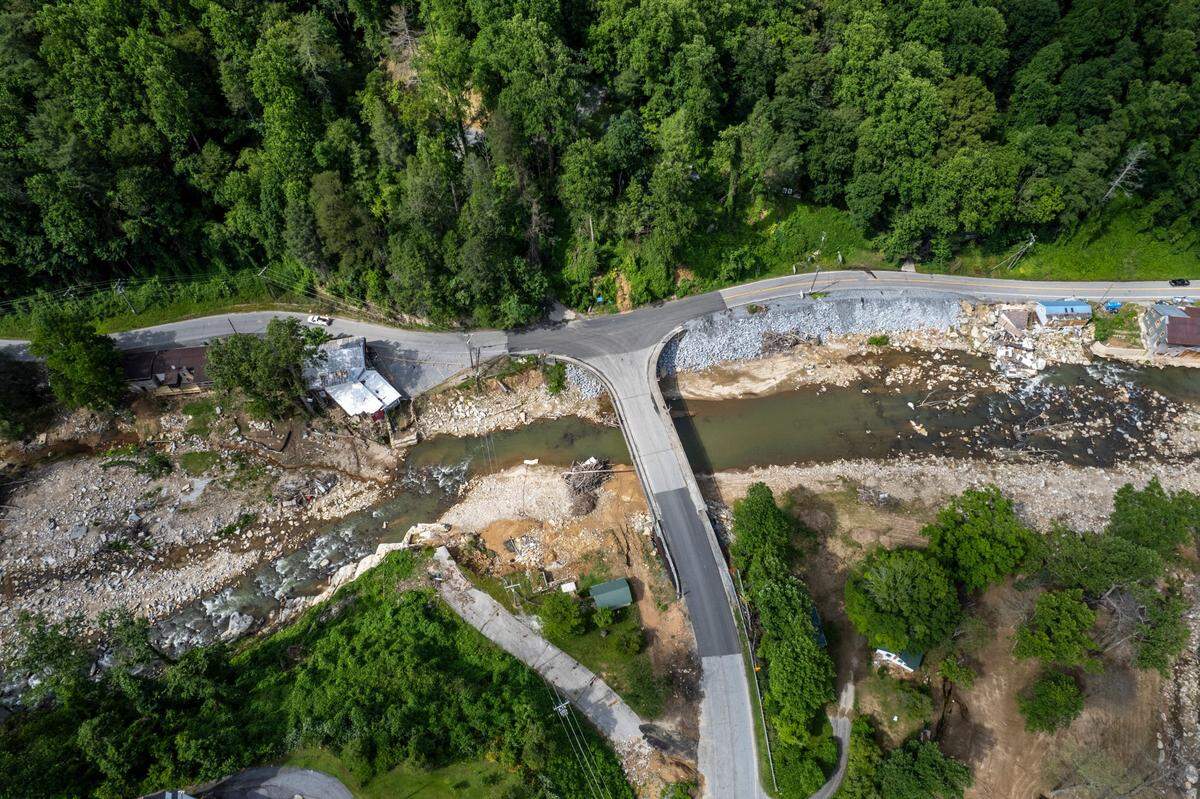
But as pretty and smooth as that road is, it’s only temporary. It’s not ready for significant amounts of traffic, nor are many residents of the area who are still recovering from the storm. Roads leading into Hickory Nut Gorge and Bat Cave were also badly damaged and are still officially closed to all but local traffic.
But outsiders drive around the road closed signs, some because their GPS systems direct them that way or they’ve heard Chimney Rock is open. Chimney Rock State Park is scheduled to reopen June 27, but all of the businesses in the village left standing after the storm are still shuttered.
Visitors who aren’t coming to help with clean-up bother residents like Lynette Staton. She and her husband Mark own the building that houses the Bat Cave post office and her vintage store HipHen Uniques, which was destroyed by water and mud pouring down the hill behind it. People who come simply to gawk and take pictures of shattered houses get on her nerves.
“When you come down here and you see a black Porsche, shiny and new. Bright yellow Corvette, no dirt on it. It’s like, ‘You’re not local,’” said Staton, standing beside a table of food and relief supplies outside her store. “We got so tired of telling people the road was closed.”
The road may officially remain closed for years. NCDOT has awarded contracts to build a permanent highway, but the most optimistic completion date is late 2027.
Billy Clarke, who represents the region on the state Board of Transportation, was born in Bat Cave and lives just over the mountain in Fairview. Clarke says the winding roads that converge in the gorge were heavily used by residents as well as tourists and visitors to Chimney Rock and Lake Lure.
“It’s one of those places that’s a little difficult to get to on a good day,” Clarke said. “So repairing the roads is a monumental task.”
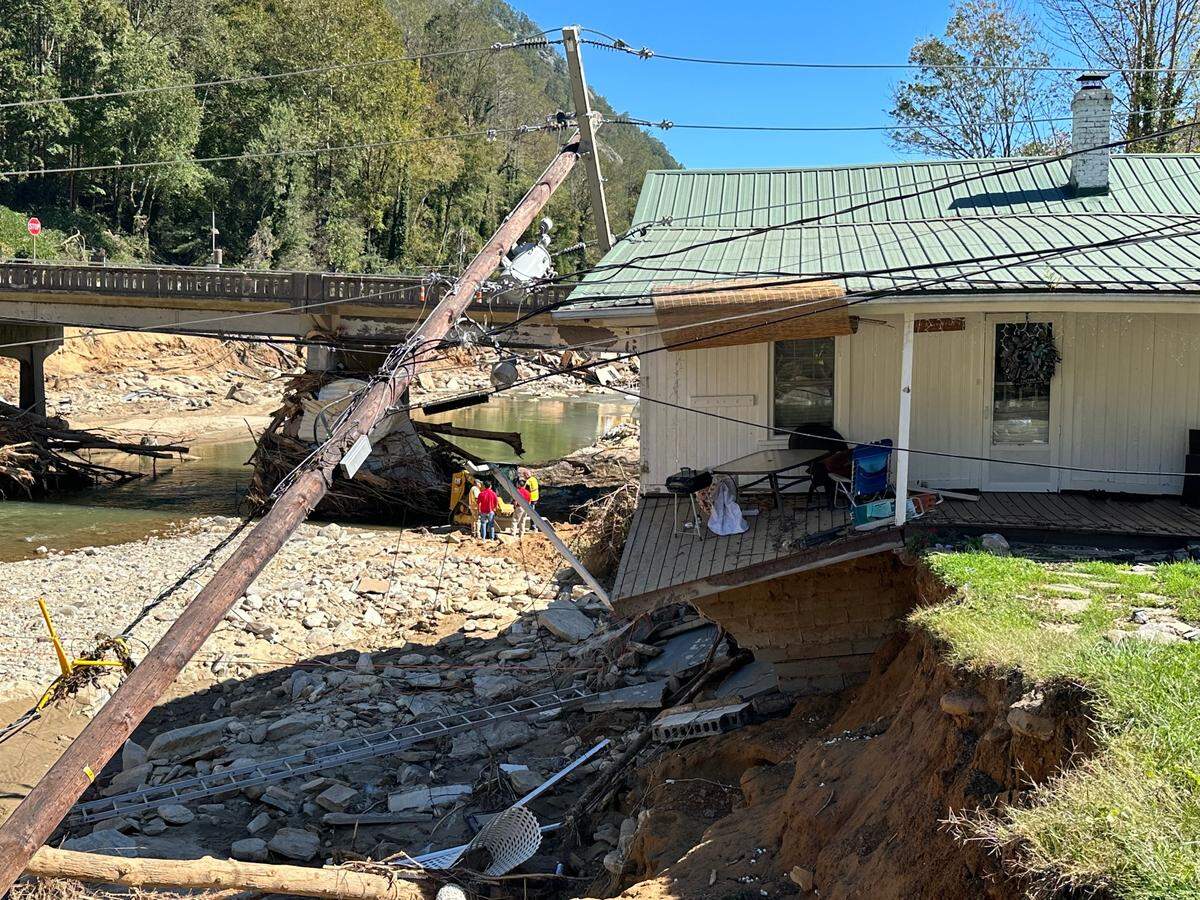
Flood sweeps everything in its path
The remnants of Hurricane Helene dumped more than 20 inches of rain on the mountains above Bat Cave, turning Hickory and Reedy Patch creeks and the Rocky Broad River into torrents of muddy water. Several sections of N.C. 9, U.S. 74A and U.S. 64 were covered in landslides and fallen trees or undermined by the rushing water.
From Chimney Rock, where the river carried away a row of buildings and left Main Street covered in mud, NCDOT engineers looked up the gorge toward where U.S. 64/74A used to be and saw just a wide, rocky river bed.
“That first week or so, you just had to hike through there, and climb boulders, up around the remnants of properties and houses,” said Moneyham, NCDOT’s construction engineer for the region.
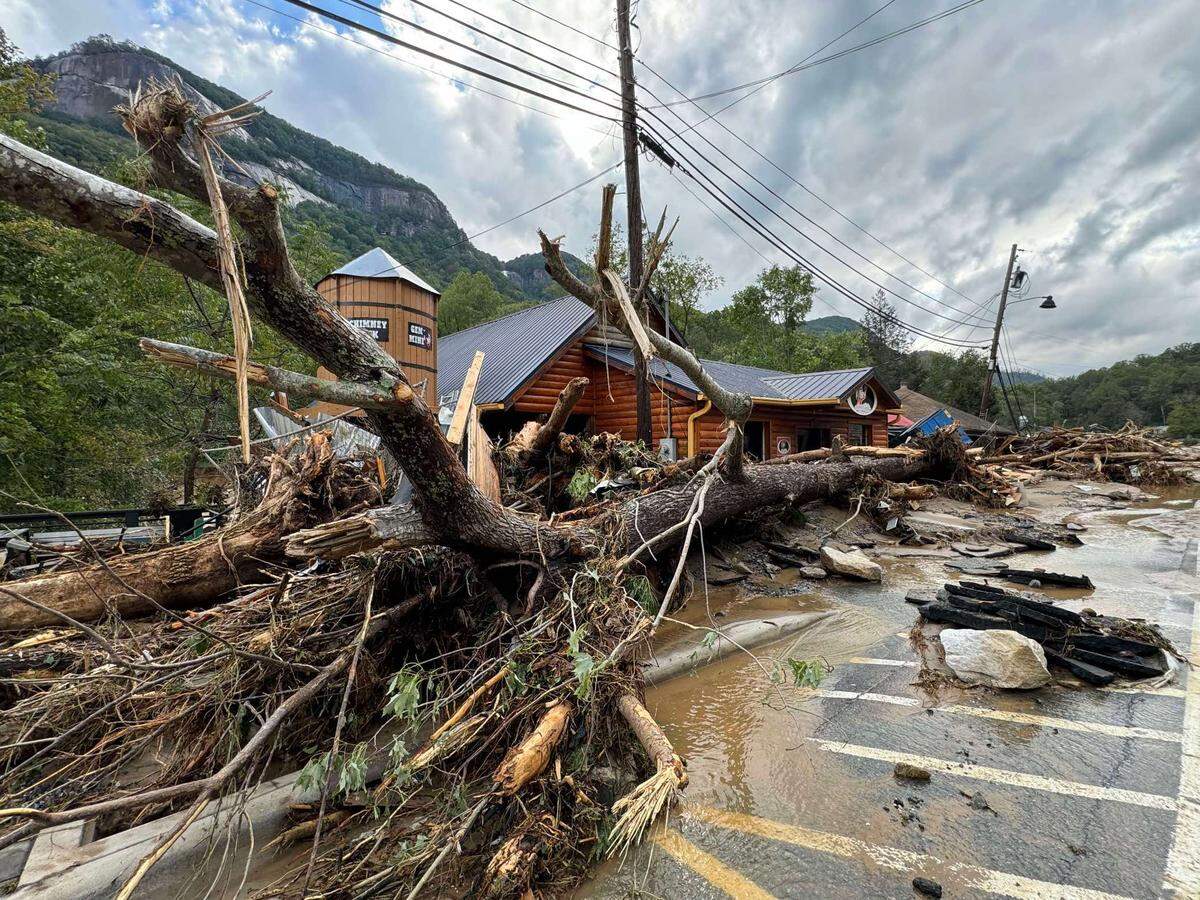
NCDOT immediately began building a single-lane gravel road from Chimney Rock up the valley toward Bat Cave, to provide access to residents, utility crews and its own contractors. Progress was steady but slow, but NCDOT’s gravel road was open by Thanksgiving, two months after the storm.
But travel was still rough. Law enforcement agencies set up checkpoints to ensure only residents and people involved in recovery got through.
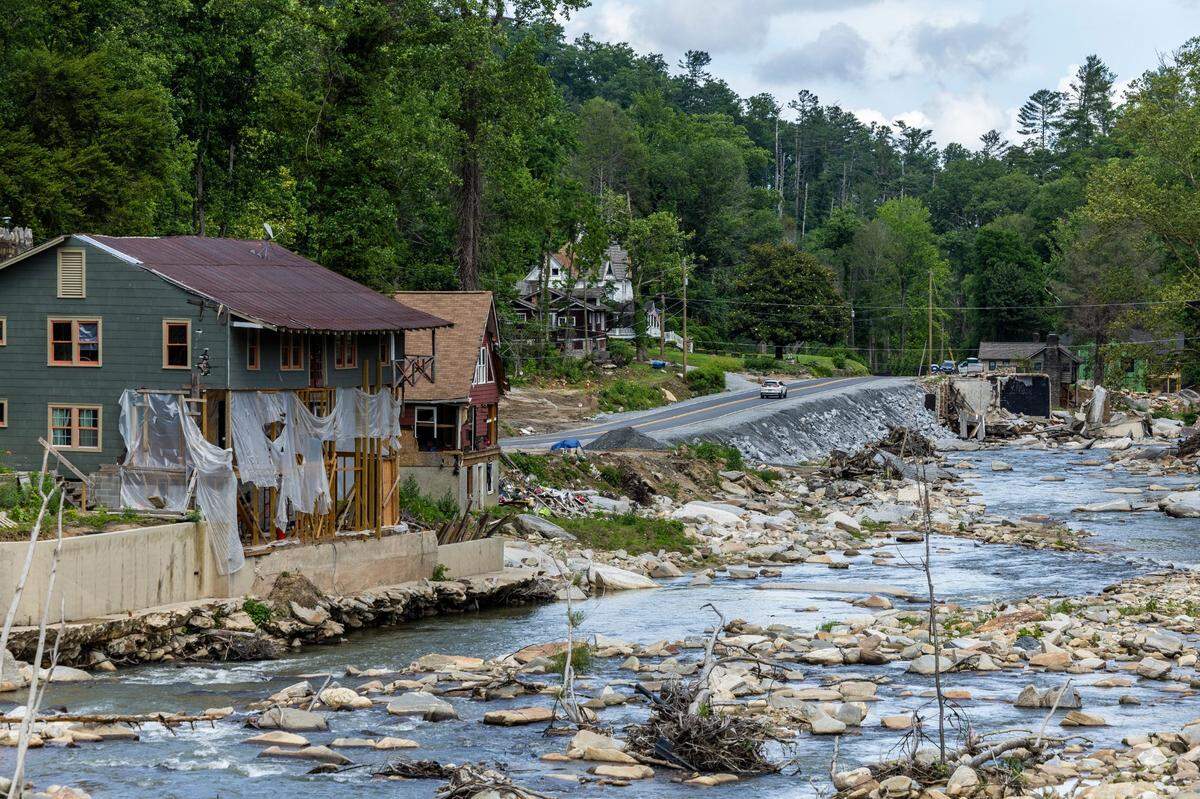
The Episcopal Church of the Transfiguration in Bat Cave survived the storm intact, as did a small section of U.S. 64/74A in front of it. But parishioners couldn’t get there, said pastor John Roberts, and the church didn’t hold its first Sunday service until late February. In the meantime, Roberts said, that surviving pavement became a staging area for trucks bringing in stone to rebuild the roadbed.
“There was like 40 to 50 dump trucks lined up every single morning, with a foreman going back and forth,” he said, likening the scene to a parade of elephants. “And it was slow and dusty and dirty and gritty, but that little stretch in front of the church was the only one that had the original yellow lines.”
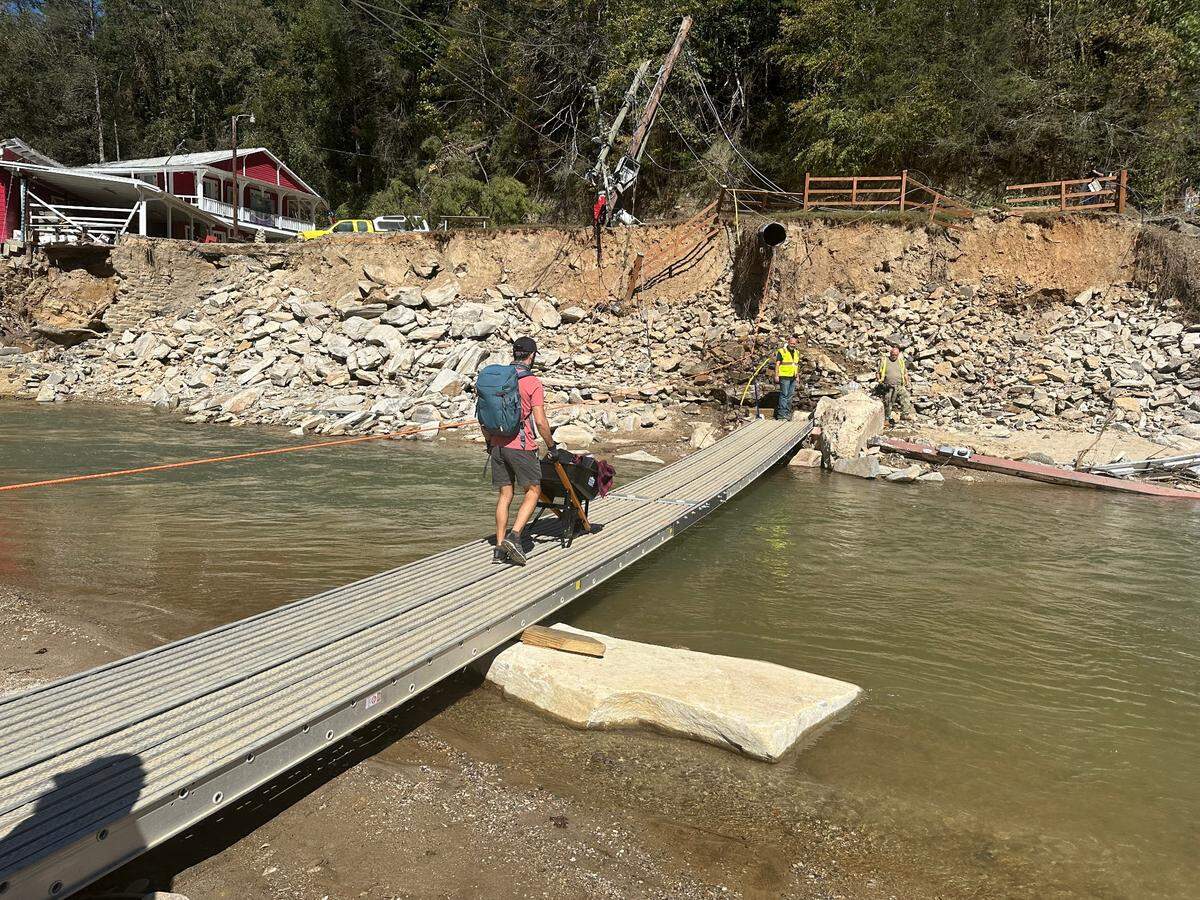
NCDOT gradually widened the single-lane gravel road to two lanes, except for two places where engineers were forced to re-route it across the river. There, contractors built single-lane bridges using railroad flatcars before paving the road this spring.
What does ‘local traffic only’ really mean?
In the days after the storm, residents speculated that it would be years before the road between Bat Cave and Chimney Rock would be rebuilt. That you could drive it by Thanksgiving and that it’s now paved is impressive, said Stephen Duncan, the village administrator for Chimney Rock.
“We are absolutely amazed — in some cases it’s been miraculous — at the work that’s been done to create a temporary road system for local traffic,” Duncan said. “We could not be happier about that.”
Duncan called the road a lifeline, not only for residents but for the area’s tourism-dependent economy. He said businesses along Main Street in the village will begin to reopen this summer, after water and sewer service is restored next month.
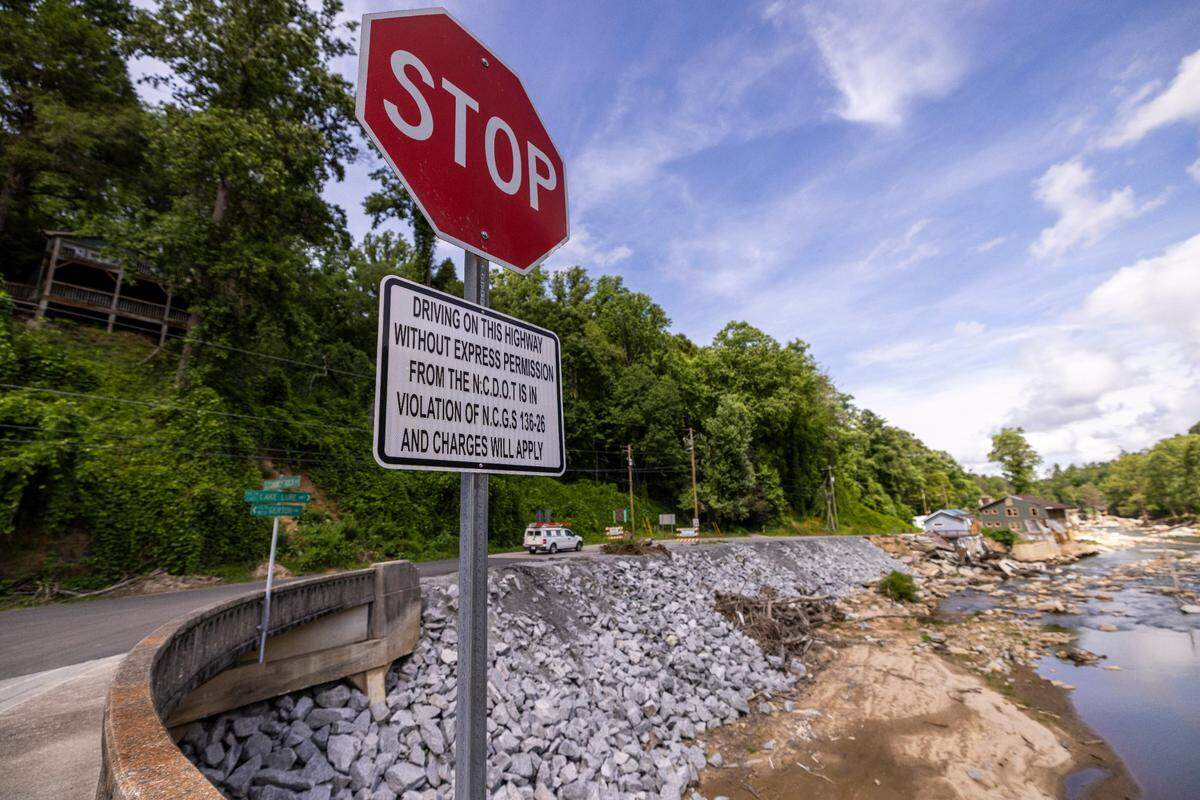
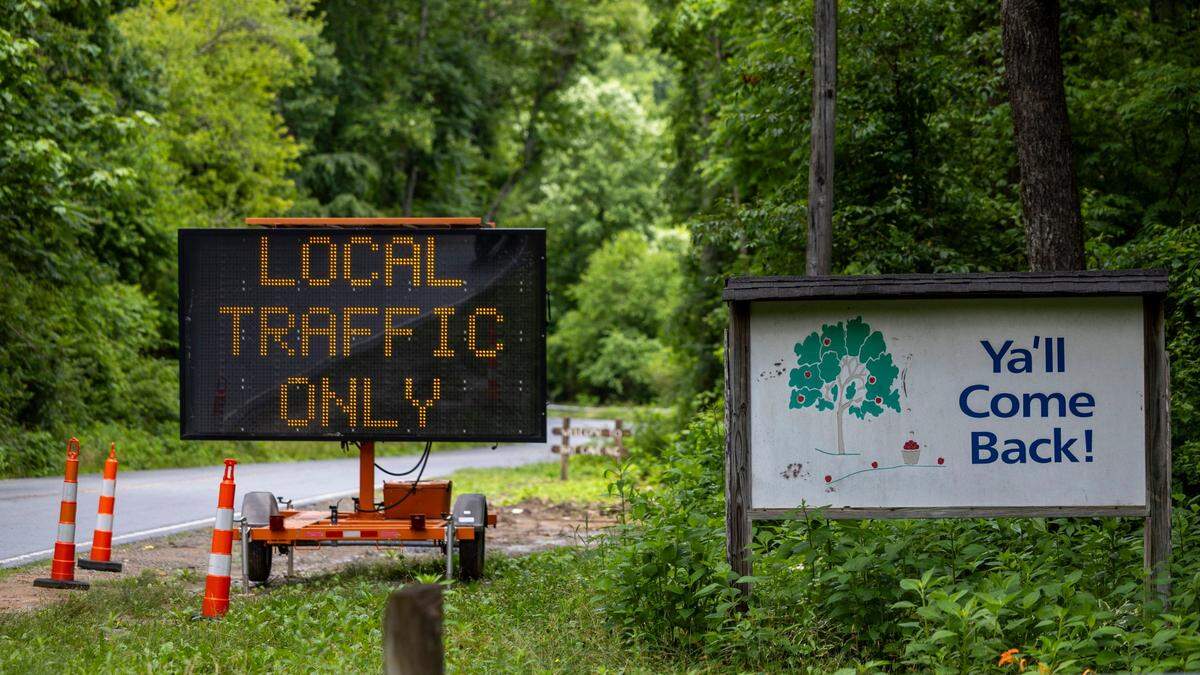
It’s not clear how the road’s status of being closed to all but local traffic will play out. Though the “road closed” signs remain, the roadblocks have come down. And as the park and businesses reopen, more people will find their way into Hickory Nut Gorge, putting more traffic on a road not designed for it.
“We know people are driving on it who may or may not be local,” Duncan said of the temporary road. “Just as long as they’re reasonable and don’t do anything dangerous or ridiculous, nobody’s going to say too much to them.”
Aside from attracting the ire of residents, tourists who choose to drive in or out of Chimney Rock and Lake Lure through Bat Cave will find the going slow. Traffic on N.C. 9, U.S 64 and U.S. 74A is limited to one lane in several places, with long waits for oncoming cars.
Before the storm, area businesses benefited from pass-through traffic, as people stopped on their way between South Carolina and Asheville, said Carol Pritchett, mayor of Lake Lure. Pritchett says the completion of the temporary road helps by providing an option for people willing to endure the construction delays.
“Just the status of there being a road to get out that way is helping things now,” she said, adding that she expects visitors will use that route to get in and out.
“If there’s no one managing that or enforcing that, how would you possibly confine it to just locals?” she asked.
.jpg "462546381_1521506825158297_2382655864344580683_n (1).jpg")
Permanent road construction begins this fall
NCDOT will likely keep the “local traffic only” signs up as long as it takes to rebuild the road between Bat Cave and Chimney Rock, said Moneyham, the engineer. Contractors are still doing design work and hope to begin construction this fall, he said.
The department is using a new approach on this and other projects in the mountains, where a team designs and begins building individual sections instead of waiting for the entire project to be designed. That means construction can begin earlier, but it also means NCDOT isn’t sure yet how much everything will cost.
NCDOT’s wild guess in the weeks after the storm was $600 million. Now it estimates something near $300 million, but that could change as the design work proceeds.
But at $300 million, these 2 1/2 miles of road will cost more than a handful of road rebuilding projects following Helene. Altogether, NCDOT estimates it will spend $5 billion on Helene repairs. That compares to $700 million the department spent rebuilding after all previous storms combined since 2016, which includes two hurricanes, Matthew and Florence, that devastated the eastern part of the state.
As much as possible, NCDOT aims to build the permanent highway between Bat Cave and Chimney Rock on the path of the old one.
That’s welcome news to Staton, the Bat Cave resident. As much as possible, she’d like the highway and her community restored to the way they were, including the trees that filled the spaces between the road and the river.
“I want it to look somewhat back to normal,” she said.
It’s not clear how much tree planting NCDOT and its contractors will or can do along the highway. Where there were earthen berms or slopes in the past, NCDOT will likely put in concrete walls, riprap or other stone to help the road withstand future floods, Moneyham said.
“I don’t know that it will ever go back exactly to the way it was,” he said.
This story was originally published June 18, 2025 at 5:00 AM with the headline "A washed-out road in Western NC was rebuilt after Helene. Should everyone use it?."
