A giant cloud of smoke and dust could impact NC air quality this week. Here’s why
AI-generated summary reviewed by our newsroom.
- Wildfire smoke from Canada and Saharan dust from Africa may intersect over NC.
- Air quality risks remain for sensitive groups, despite high-altitude dust levels.
- Residents should limit outdoor activity and use air filters during peak exposure.
Massive clouds of pollutants could collide in North Carolina this week and result in poor air quality conditions for millions.
Smoke from more than 100 wildfires burning in Canada has drifted into the United States, according to AccuWeather. The smoke reached the U.S. on Tuesday and is expected to linger at least through the end of the week.
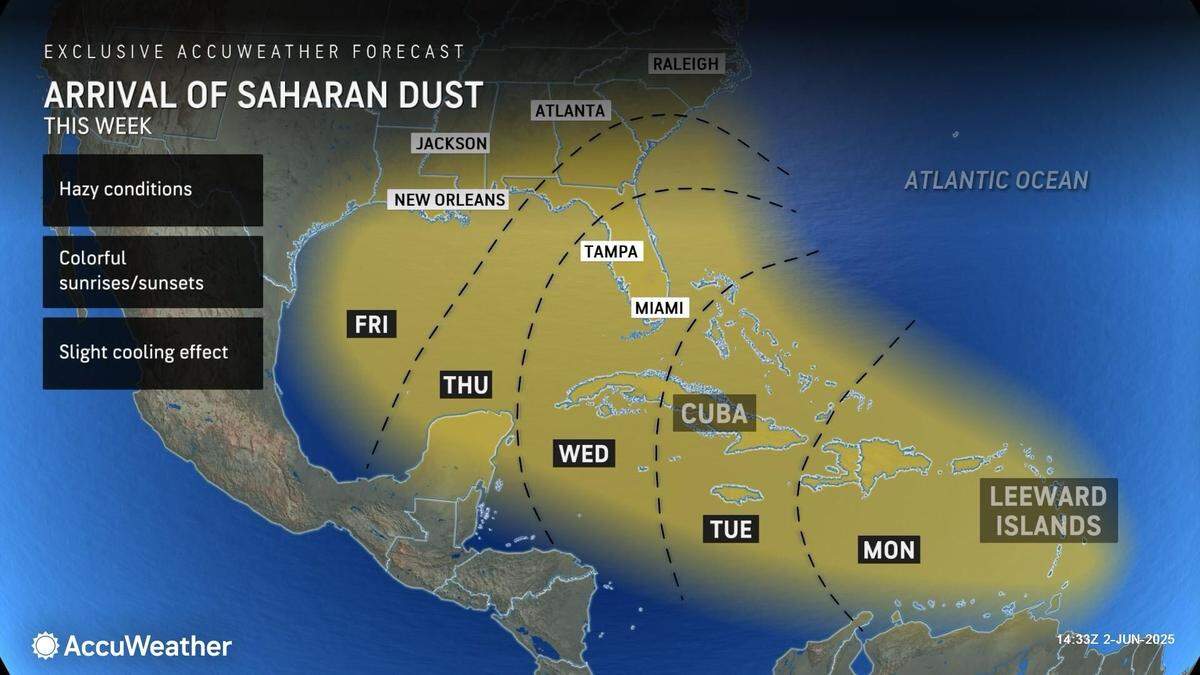
A giant Saharan dust plume moving across the Atlantic Ocean is making its way toward Florida and is expected to hit North Carolina on Friday.
“As its name suggests, Saharan dust originates in the Sahara Desert, where strong winds blow dust and dry air west out of the region frequently from late spring to early fall,” AccuWeather says.
Wildfire smoke and dust plumes are composed of small particulate matter that can be harmful if inhaled, especially in those with underlying conditions, according to AccuWeather.
Here’s what you need to know.
How will the smoke and dust impact air quality in NC?
Smoke from the wildfires is having a minimal impact on air quality in most of the U.S. outside of the Midwest, according to AccuWeather.
However, AccuWeather notes that “there’s still some risk to vulnerable populations, like children, as its impact to air quality, while lessened, isn’t zero.”
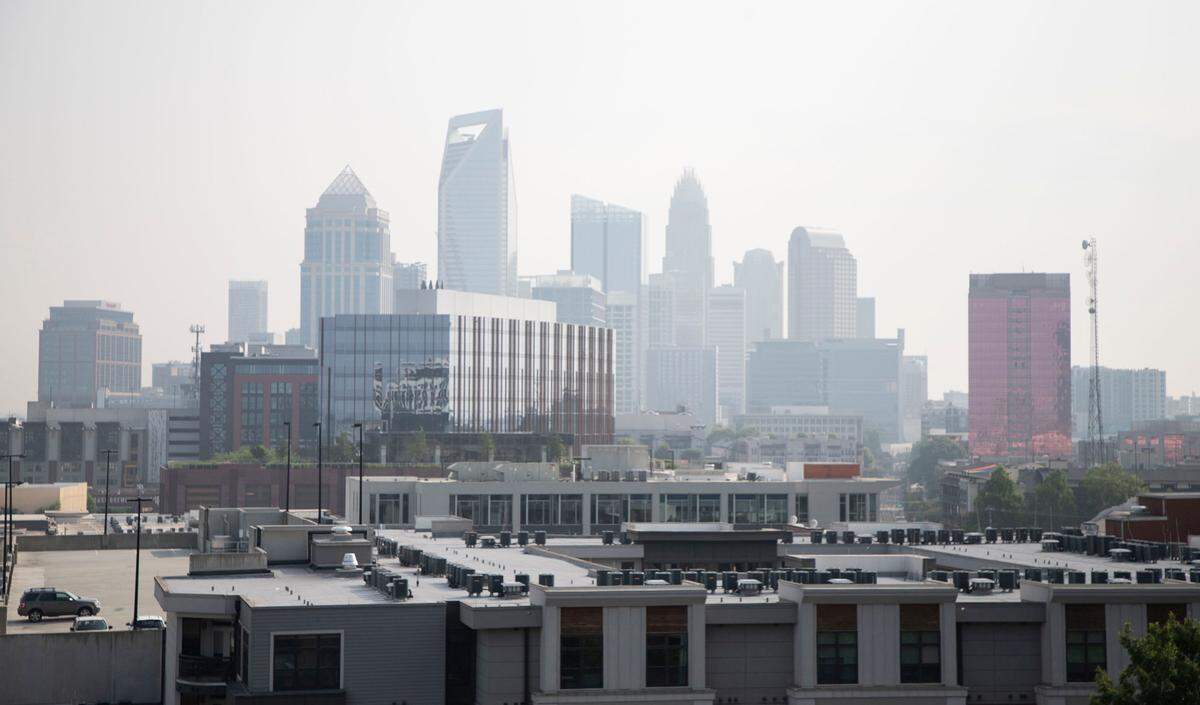
The site also pointed out that the Saharan dust will have little impact on air quality since it will remain thousands of feet high in the atmosphere, but warned that dust and smoke could overlap in some areas, creating “hazy or dim” skies and resulting in poorer air quality.
But the collision of dust and smoke in the Carolinas won’t be all bad, according to AccuWeather.
“Dust plumes also create colorful sunrises and sunsets with deeper oranges and reds when the conditions are right,” the site says.
How is air quality measured?
The Environmental Protection Agency’s Air Quality Index (AQI) measures how clean or polluted the air is, with values ranging from 0 to 500. Higher AQI values mean greater levels of pollution in the air.
AQI values ranging from 0-50 are considered “good,” and air pollution poses little or no risk to the general public.
According to the EPA, as AQI values rise, some people may start to experience symptoms from exposure to ozone.
“Sensitive populations include children and older adults and anyone with cardiovascular or respiratory illnesses,” Mecklenburg County Air Quality Director Leslie Rhodes previously told The Charlotte Observer.
According to the EPA, AQI values of 200 or more mean the general public is at risk for serious health effects due to ozone exposure and would trigger health alerts.
How to protect yourself from poor air quality
Here are some ways you can protect yourself during periods of poor air quality, according to the American Lung Association:
Limit time outdoors when the Air Quality Index (AQI) is high.
Avoid intense outdoor activities to reduce exposure.The longer and harder you exercise outdoors, the higher your risk from air pollution.
If you must go outside, wear a well-fitted N95 or KN95 mask. Cloth or dust masks offer little protection.
Keep indoor air clean by closing windows and doors.
Use A/C on recirculate, run a HEPA air purifier or set up a clean room if needed.
This story was originally published June 5, 2025 at 12:01 PM with the headline "A giant cloud of smoke and dust could impact NC air quality this week. Here’s why."