How do you treat a copperhead snake bite? UNC & Duke doctors explain what to do
AI-generated summary reviewed by our newsroom.
- Copperhead bites are rarely fatal to humans but may require medical evaluation.
- Antivenom is effective for treating bites and is administered at hospitals.
- Symptoms including swelling help determine whether antivenom is needed.
Copperhead snake bites are rarely fatal to humans, but that doesn’t mean people who have experienced an encounter with the venomous reptile should skip medical attention.
This time of year is when people are more likely to see copperheads, the most common venomous snakes in the Triangle and central North Carolina.
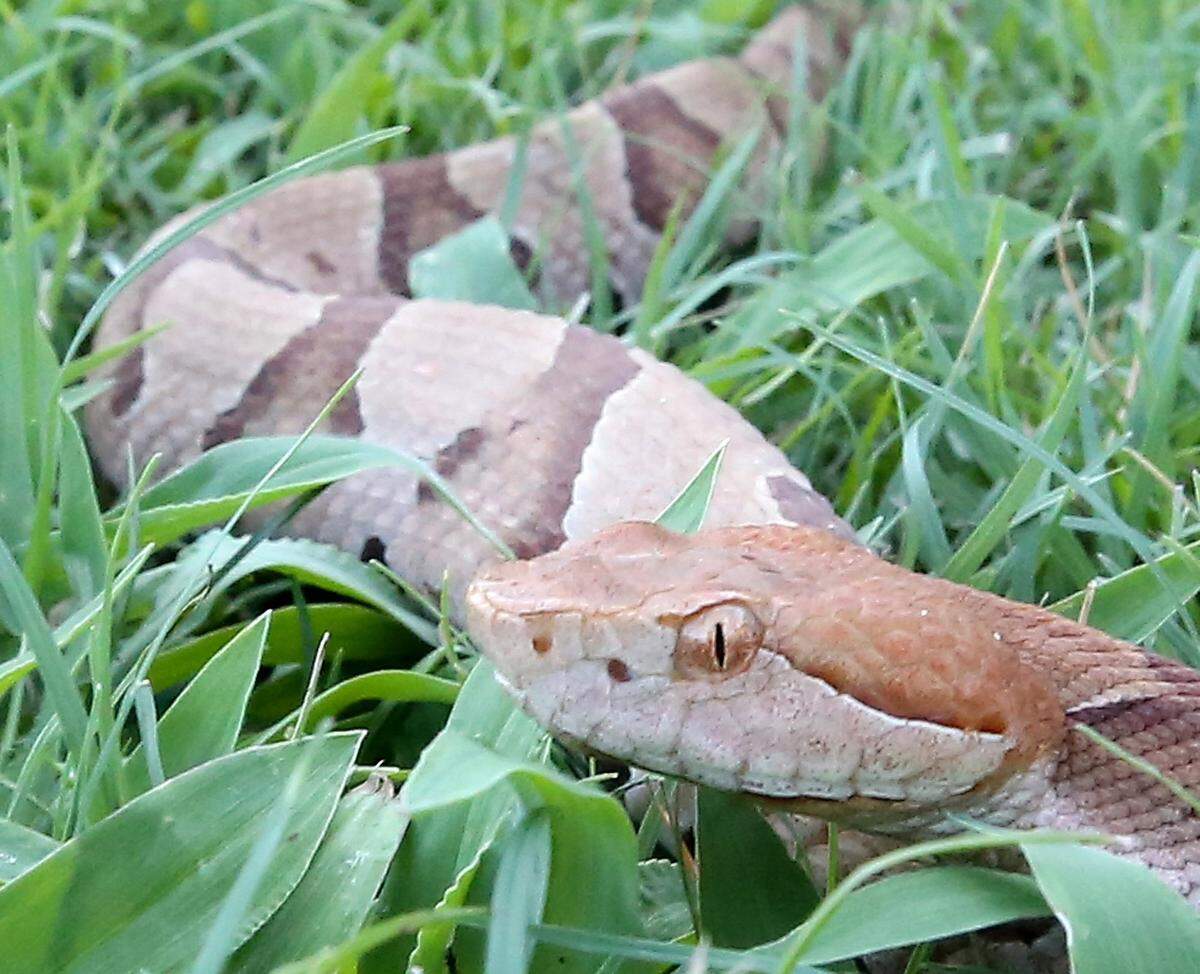
Identifiable by their Hershey’s Kiss-shaped pattern and brownish, grayish coloring, the snakes are not typically aggressive but may be territorial and have been known to bite if they feel threatened.
There are steps to take to decrease the chance of being bitten, such as being careful and alert while walking and wearing gloves if reaching into bushes or weeds.
Still, bites occur. Triangle medical professionals from UNC Rex and Duke Health told The News & Observer what to know about treating copperhead bites.
What does treatment for a copperhead bite include?
The first thing medical professionals at Duke Health do when a patient arrives with a copperhead bite is ensure they’re stable — breathing properly and not in shock — and reassure them that copperhead bites are rarely fatal, said Dr. Charles Gerardo, the chair of the department of emergency medicine at Duke University School of Medicine.
Then, patients are asked when and where the bite occurred, what they were doing when they were bitten and how long after they started to show symptoms.
Medical staff then ensure patients are up-to-date on their tetanus shot before beginning evaluation and treatment.
The bite area is elevated, and patients receive pain medication. If they have symptoms, they are treated with antivenom, Gerardo said.
Dr. Ryan Lamb, the medical director and chair of emergency medicine at UNC Rex Hospital and Rex Holly Springs Hospital, said hospitals perform lab work. However, swelling is the main indicator of whether a person needs antivenom.
“If that is expanding, that swelling is increasing over time, that is usually the No. 1 indicator,” Lamb said.
Is antivenom required to treat a snake bite?
If a person has symptoms, then antivenom is administered, Gerardo said.
“The currently available U.S antivenom — there’s two of them — have been pretty well-studied, and they have been shown to benefit people in mild bites, moderate bites and severe bites,” Gerardo said.
Some people who receive antivenom may have allergic reactions to the treatment, but Gerardo said they “tend to be not of much consequence for the vast majority of people.”
At UNC Rex, Lamb said, patients are only given antivenom if they need it because it can lead to side effects including nausea, rashes, itchiness and a delayed allergic reaction called serum sickness.
Antivenom would not be used to treat dry bites or bites from a nonvenomous snake, Gerardo said.
If a person bitten by a copperhead does not receive antivenom, the worst-case scenario is “permanent dysfunction,” Gerardo said. He’s seen some people who never fully recover. But most people will eventually recover without antivenom.
“Even though copperhead bites typically don’t kill you, so we don’t worry about mortality, we do worry about morbidity, and that’s what we’re trying to prevent,” Gerardo said.
How much does antivenom cost?
Antivenom has a high sticker price, but most patients do not end up paying the full amount, local medical centers previously told The N&O.
Here’s how much antivenom costs in 2025:
Duke Health: Around $9,700 per vial. A person’s out-of-pocket cost for antivenom would be well below the market price because “factors like insurance, ability to pay and charity care are all considered before a patient is billed,” Duke Health officials said in an emailed statement.
UNC Health: $47,000-$77,000 for an initial dose of four to six vials. Most insurance plans cover antivenom, though, and people who are uninsured can “work with our financial navigators for assistance with payment programs that result in a significantly discounted cost,” Alan Wolf, UNC Health’s director of media relations, said in an email.
WakeMed: $11,000-$14,000 per vial of CroFab antivenom, with a typical initial dose of between four and six vials. Out-of-pocket costs vary based on, for example, how much CroFab is needed, a patient’s copayment, coinsurance and deductible, and maximum out-of-pocket responsibility, WakeMed marketing and communications senior specialist Kristin Kelly wrote in an email.
Do you need to go to the hospital if you are bitten by a copperhead?
Yes, doctors said.
“You’re much better off checking in, letting us monitor you over four to six hours to see, do you need something or you don’t,” Lamb said.
Can you use home remedies to treat a copperhead bite?
People may have heard that copperhead bites may be treated by applying ice, or cutting the bite area and trying to suck out the venom.
“Many of these home remedies have been studied, and they’re ineffective,” Gerardo said. “Some even cause harm.”
Should you always go to the emergency room for a snake bite?
It depends.
If you are bitten by a nonvenomous snake, the symptoms won’t be the same. There may be marks from the fangs and a little bit of pain, Gerardo said.
“They should not cause swelling. They should not cause bruising. They should not cause redness,” Gerardo said.
Venom, on the other hand, does cause those symptoms. So if you are bitten by a snake and have swelling, bruising or redness, you should seek medical attention.
If you’re bitten by a venomous snake, but you don’t yet have symptoms, you should seek medical care. Symptoms may not present immediately.
This story was originally published June 4, 2025 at 12:44 PM with the headline "How do you treat a copperhead snake bite? UNC & Duke doctors explain what to do."