
Painful no-see-ums are back in NC. What to know about the tiny biting insect
Spring means increased activity for biting insects, including one with a funny name that you may not notice at first.
Commonly referred to as “no-see-ums” in North America, these tiny pests are known as “punkies” in the Northeast, “five-O’s” in Florida and Alabama (due to their penchant for biting people around 5 p.m.), “pinyon gnats” in the Southwest and “moose flies” in Canada, according to the Purdue University Extension.
No-see-ums usually come out in spring when the weather warms up, but in North Carolina’s coastal areas, where the weather remains relatively mild, they can be spotted year-round, Chris Hayes, an extension associate of structural pest management at NC State University who specializes educating the pest management industry on critter habits, told The Charlotte Observer.
Here’s what to know about them.
Are no-see-ums in NC?
No-see-ums prefer swampy areas along the coast, Hayes said, adding that “you can absolutely see them outside of those areas.”
“When readers around the Charlotte area are seeing them and experiencing them, they’re really going to be focused in mud,” Hayes said.

What do no-see-ums look like?
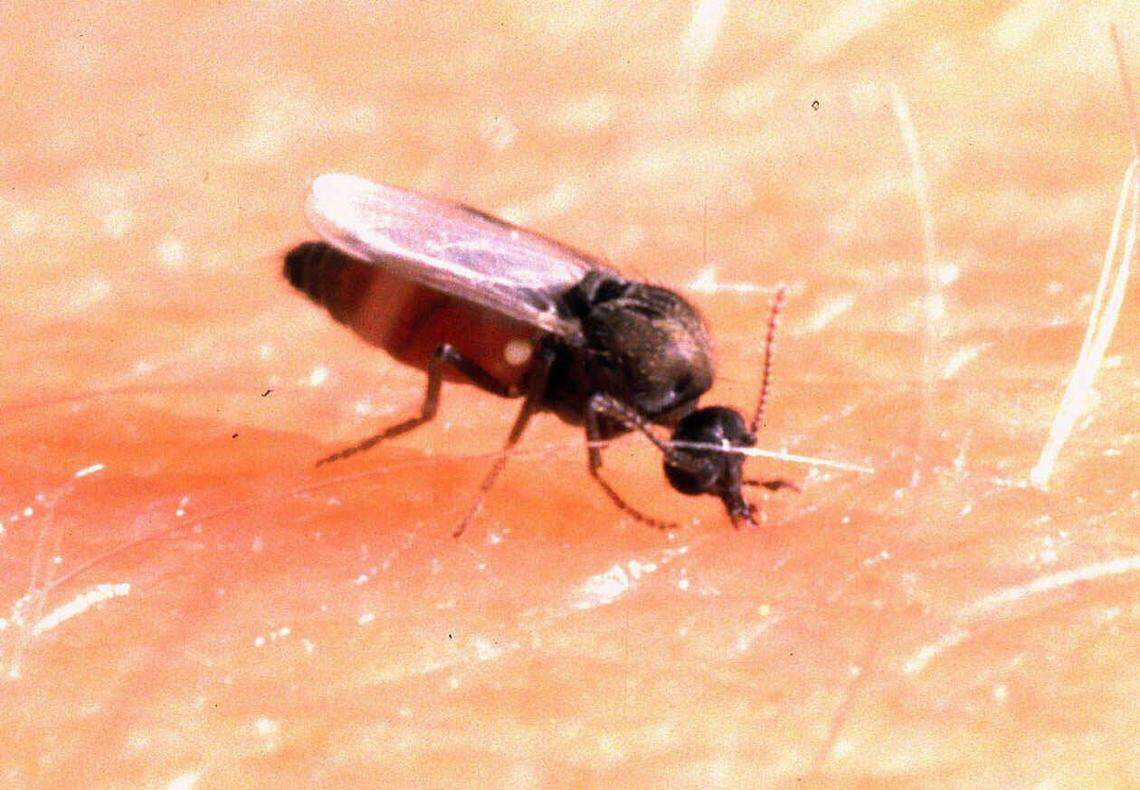
Hayes said no-see-ums are essentially “really small flies.”
“Basically, they’re akin to a mosquito, like a tiny mosquito, but their mouth looks a little different,” Hayes said.
“And in fact, you may not even notice them at all. You may not even see them, hence the name ‘no-see-ums,’” Hayes said. “Because you happen to notice them when an adult is typically biting you.”
How likely are they to bite?
Very, Hayes said.
“Adults will feed on plant nectar, and then the ones that bother humans also feed on blood,” he explained. “And it’s just the female that bites.”
No-see-um bite symptoms
Bites from no-see-ums can lead to a burning sensation, and they cause different reactions in humans, such as small, red welts at the bite site to allergic reactions that can lead to significant itching, according to the Purdue University Extension.
While bites can be annoying, there’s no cause for alarm when they happen.
“To my knowledge, there’s not any disease that we need to necessarily be concerned about in North Carolina, but certainly these small types of biting midges can carry diseases. So it’s good to always keep that in mind when you’re considering prevention and control of them,” Hayes said.
No-see-ums can infect animals with Blue Tongue virus, an illness that is a major cause of disease in livestock in the western U.S., the extension says.
What should you do if you’re bitten by a no-see-um?
No-see-um bites can be uncomfortable, but you can use these tips from Insect Shield, a company that makes insect repellent clothing, to relieve the pain:
Gently wash the affected area with mild soap and water, then pat it dry using a clean towel.
To relieve itching, apply a clean washcloth soaked in cold water to the area for 5-10 minutes. Repeat as needed.
To help reduce swelling and itching, use a cold pack or wrap ice cubes in a clean cloth and apply to the area.
Consider taking an over-the-counter antihistamine to ease itching and inflammation.
If scratching has caused bleeding, apply an antiseptic cream to help prevent infection.
Seek medical attention if you experience an allergic reaction or if the pain and swelling persist for more than a few days.
How to keep no-see-ums away
To get rid of no-see-ums and keep them from your home, Hayes recommended checking any planters you may have had for an extended period of time.
“When people have had plants for a long time, they kind of over water them,” Hayes said. “Some of those soils can be muddy and great breeding places for these no-see-ums, or you could also see them breeding in the mud or mildew of the water trap underneath planters.” (This is also the top advice for getting rid of mosquitoes.)
Hayes suggested moving those planters outside or using a treatment on the soil to get rid of the pests.
He also recommended trying to drain or dry up any muddy areas around your home, and clearing away any dead or decaying plants from your yard, such as old leaf piles.
“Keep in mind that if you’re in a swampy area, there’s really not a whole lot you can do, because there are swamps and they’re going to breed in those swamps,” he added.
How to avid no-see-um bites
To prevent bites, the most effective line of defense is insect repellent, Hayes said.
“Just remember to apply them regularly, because they do wear off, and not to over apply them, because if you over apply them, that can also have harmful effects,” said Hayes.
The insect control company Mosquito Magnet says “the best advice is to buy DEET labeled for use against No-See-Ums (or any of their other common names, including sand flies, biting midges, gnats and so on) and use the repellent exactly as directed on the label.”
This story was originally published May 14, 2025 at 10:50 AM with the headline "Painful no-see-ums are back in NC. What to know about the tiny biting insect."
