A copperhead bit your dog? What NC veterinarians say you should do
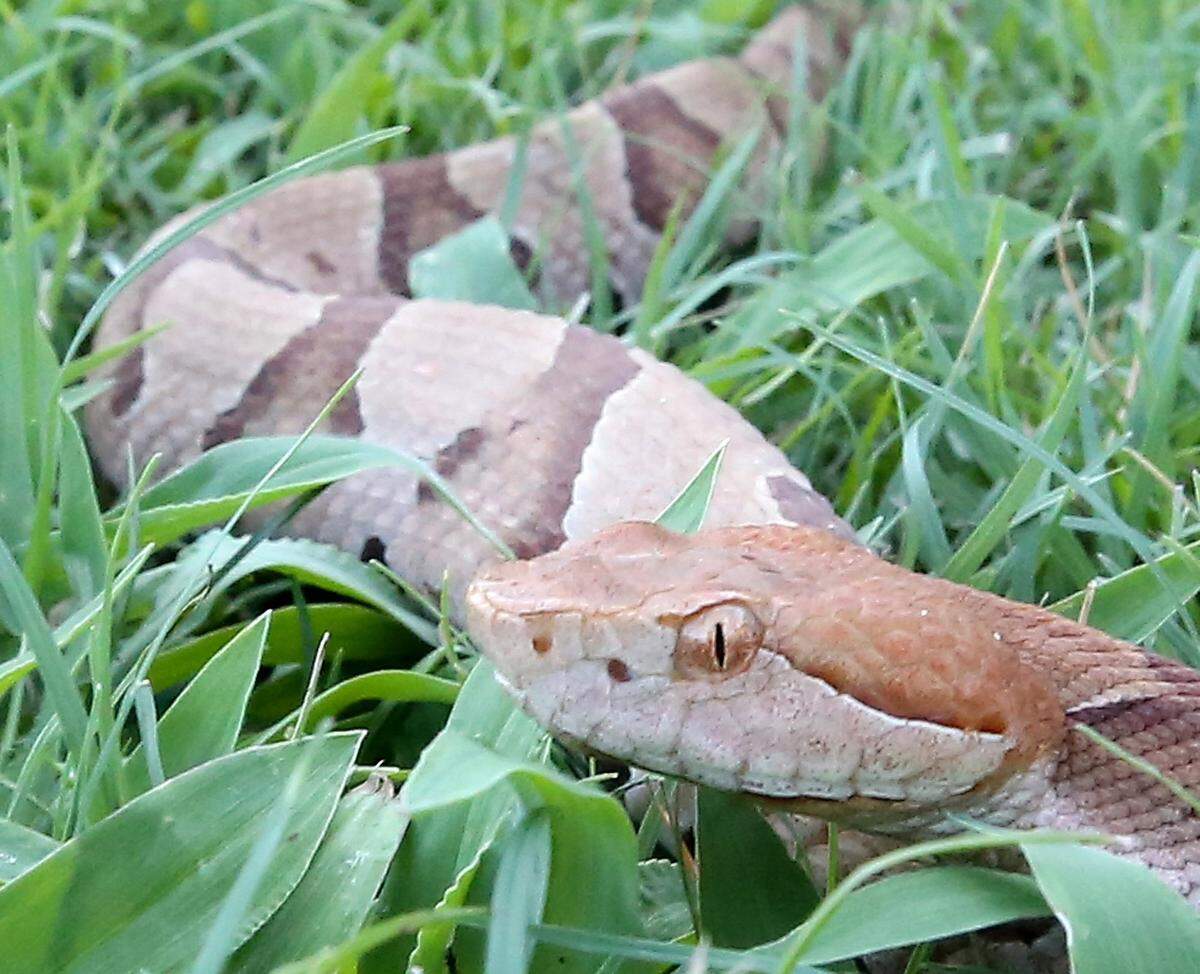
With weather warming, copperheads — the only venomous snakes we’re likely to see in the Triangle and central North Carolina — are out, and another potential threat to our furry friends has returned.
Copperheads like to hide in piles of leaves and sticks, which are also areas where some dogs like to explore. And while those of us on two legs know to leave snakes alone, dogs may not know that.
“The most common places we see dogs with snake bites is on their muzzle, just because they’re sniffing around in the leaves, or on their legs, because they happen to walk by where a snake is sitting, and they reach out and bite them,” Makenna Cash, a veterinarian at Bahama Road Veterinary Hospital in Durham County, told The News & Observer in a phone interview.
The ASPCA provides several tips for avoiding snake bites:
- Keep your dog on a leash.
- Don’t let your dog put its nose where it doesn’t belong — places like bushes, thick ground cover and piles of dried leaves.
- Stay on paths where you can see what’s in front of you.
- Keep cats indoors. (However, Cash said she does not often see cats bitten by copperheads.)
Cleaning up areas around bird feeders is a good idea, too, Cash said. If there is too much feed on the ground, it could attract mice, which are copperheads’ prey.
Symptoms of a snakebite on a dog
If your dog is bitten by a snake, you’ll probably hear them cry out, Cash said, and run away.
Around the bite site, where there may be strike marks from the snake, there will be pain and swelling, and swelling could be apparent in as little as half an hour.
Dr. Steven Marks, a former associate dean and director at NC State Veterinary Medical Services, previously told The N&O that dogs may become nauseated or will salivate because of pain, especially if the bite is in or near the mouth.
Bites on the limbs, face, nose and tongue are common, Marks said.
What to do if your dog is bitten by a snake
.jpg "Newborn Copperhead_Falyn Owens_8-18-2024 (1).jpg")
Remain calm, but get your dog away from the area where the snake was.
“Stay calm and keep the pet calm,” Marks said. “If you’re out in the woods and you run to the car, that’s the worst thing you could do. Anything you do that excites the patient allows the venom to circulate more extensively.”
Don’t attempt first aid. Instead, call your veterinarian.
“I wouldn’t recommend giving any medications at home, because some of the pain meds that we have for people could be more harmful than helpful in a case like that,” Cash said.
Should your dog see a veterinarian after a snake bite?
Copperhead bites are rarely fatal, but they may be, so it’s a good idea to have your pets evaluated, Cash said. A veterinarian will check your pet’s vitals, including heart rate, and make sure they’re not getting a fever.
The veterinarian will also make sure there aren’t any systemic issues, which are less common, but could include problems with clotting or anemia.
“The tricky thing with copperheads is there’s no way to know really how much venom was injected,” Cash said.
What treatment to expect for snake bites
- An exam: Marks previously told The News & Observer that at N.C. State’s Veterinary Hospital, which operates a 24/7 emergency clinic for small animals, the dog — or cat — would get a full physical examination to determine the extent of injury. That might include shaving the fur to get a good look at the wound site; you can estimate the size of the snake based on how far apart the fang marks are.
- Pain management: Cash said she recommends pain medication to make the pet more comfortable.
- Lab work: The veterinarian may also check lab work to make sure there are no “systemic signs of effect.”
- IV fluids
- Avoid infection: Besides the systemic effects of venom, the pet will also need wound care. The wound site could become infected, and venom can destroy the local tissue, Marks said. The wound will need to drain, so allow it to heal as an open wound and do not bandage it.
If there are systemic effects, such as an issue with clotting, the veterinarian may treat the pet with antivenom. Antivenom may also be used to reduce pain or swelling.
“It really is just kind of a case by case basis,” Cash said. “I’ve treated many just with pain medications and sent them home. And I’ve also treated many with hospitalization, fluids, antivenom.”
Pet snakebite treatments
- Should you give your dog Benadryl? It’s not likely to help or hurt, Cash said, so “it’s not something I usually reach for.”
- Do you treat your dog with steroids? Steroids may cause harm, Cash said.
- What if your dog is bitten more than once? The number of times a dog is bitten by a snake wouldn’t really affect the pet’s overall health, Cash said.
This story was originally published April 11, 2025 at 12:52 PM with the headline "A copperhead bit your dog? What NC veterinarians say you should do."