How could NC schools be impacted by a shutdown of the US Dept. of Education? What we know
President Donald Trump signed an executive order to dismantle the U.S. Department of Education on Thursday, March 20.
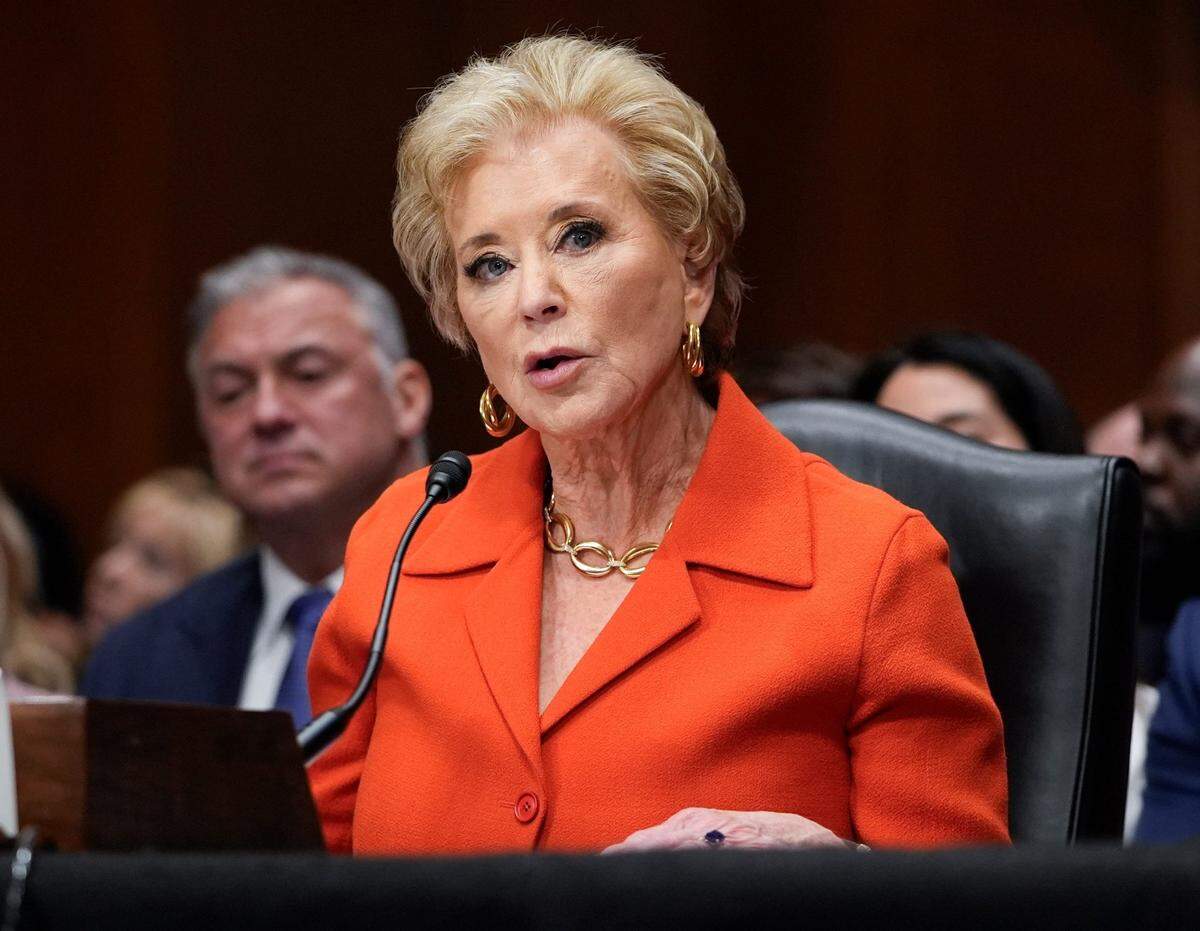
The order directs Education Secretary Linda McMahon to take “all necessary steps to facilitate the closure of the Department of Education and return education authority to the states,” reported CNN.
Previously, on March 11, the department announced its first step in dismantling the department: the immediate terminations of about half of its staff — more than 2,000 career employees, NBC News reported.
There are few details available regarding what will happen to the department’s budget — nearly $242 billion in 2024, according to USAspending.gov — and it’s difficult to say what effect the closing will have in North Carolina.
But here is what we know about how federal education dollars are spent in North Carolina and why some critics want the department dismantled.
What does the U.S. Department of Education do?
Congress created the cabinet-level agency in 1980 during the administration of President Jimmy Carter to “Strengthen the Federal commitment to assuring access to equal educational opportunity for every individual,” according to its mission statement.
The federal agency was intended to supplement and complement state and local efforts to improve the quality and usefulness of education, as well as work with the private sector, nonprofit research institutions and others.
It serves students from kindergarten through grad school.
How does the U.S. Department of Education work?
The department distributes funds to each state through dozens of types of grants, some of them entitlements and others awarded through a competitive application process.
The grants are aimed at improving education for specific populations, such as students with disabilities, homeless students or migrants, and at programs, such as:
- teacher training
- literacy training or
- vocational rehabilitation
It also manages the federal Direct Student Loan Program and Pell Grants, both for higher education.
How much U.S. Department of Education money comes to North Carolina?
According to department documents, In 2023, North Carolina received about $4.4 billion in federal non-competitive grants. In 2024, the state received more than $4.6 billion. In 2025, the state is on track to receive more than $4.8 billion.
Newsweek.com said in a story published Feb. 5, 2025, that North Carolina would receive $2,470 per K-12 student this year.
Why does Trump want to abolish the Department of Education?
The Trump administration has taken actions recommended in Project 2025, the Heritage Foundation’s 900-page conservative playbook for overhauling the federal government.
In the chapter on the Department of Education, author Lindsey M. Burke, director of the Center for Education Policy at the Heritage Foundation, opens with the statement, “Federal education policy should be limited and, ultimately, the federal Department of Education should be eliminated.”
Burke lays out a number of criticisms of the department, including that:
▪ Nationwide, student proficiency in reading has remained stagnant since the 1970s and proficiency in math has declined, meaning the agency has not accomplished the goal of improving education;
▪ The “labyrinthian nature of federal education programs—convoluted funding formulas, competitive grant applications, reporting requirements, etc.,” has forced state and local schools districts across the country to hire non-teaching staff just to handle federally required paperwork, diverting money that could be used for improving student outcomes.
Burke writes in Project 2025 that, “The federal government should confine its involvement in education policy to that of a statistics-gathering agency that disseminates information to the states.”
After her swearing-in as secretary of the department, McMahon issued a statement on March 3 saying she was taking the lead on its “final mission,” which would be “to send education back to the states and empower all parents to choose an excellent education for their children.”
What would happen to the Department of Education’s programs?
Burke recommends the programs be reformed, eliminated or moved to other agencies. For instance, federal programs designed to help Native American students could be transferred to existing entities that work with tribal issues.
What would happen to the Dept. of Education’s funding?
Some funds would be saved by the elimination of jobs at the agency, which has more than 4,400 employees.
Burke does not say that federal education funding should be eliminated. Rather, she says, existing funding could be:
▪ Sent directly to families on a per-pupil basis, or Congress could approve federal tax credits to encourage families to voluntarily contribute to K-12 education spending accounts managed by charitable non-profits;
▪ Sent to the states as grants over which they would have complete control, as long as they follow the law.
Can President Trump abolish the Department of Education with an executive order?
While Trump has said he would do so, legal scholars have said the cabinet-level agency created by Congress can only be eliminated by Congress.
Project 2025 calls for the president to work with Congress on education policy and to decide what to do with the department and its funding.
However, the Dept. of Education already has stopped funding more than $600 million in federal grants it said were being used to train teachers in “divisive ideologies,” which it identified as diversity, equity or inclusion initiatives.
The move has affected more than $90 million worth of grants in schools across North Carolina, The News & Observer has reported. Among other things, the money was used to address critical teacher shortages through performance and retention bonuses.
Grant recipients were given 30 days to appeal.
This story was originally published March 11, 2025 at 7:33 PM with the headline "How could NC schools be impacted by a shutdown of the US Dept. of Education? What we know."