Do I need a tuberculosis vaccine in NC? What to know as cases spike in the Charlotte area
Tuberculosis cases are on the rise in Mecklenburg County, public health officials said.
There were 31 active cases of TB in Mecklenburg County as of Friday, Feb. 7, WSOC reported. (For comparison, there were 37 cases of TB in the county in all of 2023.)
Mecklenburg County Public Health told WSOC that some cases have been linked, but they’re not responding to any official outbreaks or “large-scale contact investigations.”
The news comes as Kansas City combats one of the largest TB outbreaks in recent history, The Charlotte Observer reported. As of Friday, Jan. 31, there were 67 cases of TB in the Kansas City area, according to the Kansas Department of Health and Environment.
Here’s what you need to know about TB.
How does TB spread?
TB is a contagious illness that spreads from person to person through the air, according to the N.C. Department of Health and Human Services.
When a person with TB coughs, speaks or sings, people nearby can breathe in the bacteria and become infected, NCDHHS says.
“Family members, roommates and close friends of the sick person are more likely to become infected than the general public,” NCDHHS says. “This is because they spend long periods of time together in enclosed spaces like a home or car.”
However, most people get infected with TB don’t get sick, according to NCDHSS. That’s because their bodies can fight the germs, a condition known as latent TB infection (LTBI).
People with LTBI cannot infect other people, but without proper treatment, the infection can turn into active TB.
Who is most at risk of contracting TB?
Roughly three quarters of TB cases reported in North Carolina were in people born outside of the U.S., Dr. Nicholas Turner, an infectious disease specialist at Duke Health, previously told the Charlotte Observer, noting that those individuals likely had a past TB exposure.
Other factors can increase your risk of developing active TB, according to Healthline, such as:
having a weakened immune system due to cancer, HIV or other conditions
living in overcrowded conditions
traveling to countries with high rates of TB
frequent close contact with someone that has active TB disease
working in healthcare settings that service high risk populations
What are the symptoms of TB?
One of the most common symptoms of TB is consumption, or “wasting away and losing weight,” Dr. David Weber, an infectious disease specialist at the UNC School of Medicine, previously told the Observer.
The Centers for Disease Control and Prevention says TB disease in the lungs symptoms can also include:
A bad cough that lasts 3 weeks or longer
Pain in the chest
Coughing up blood or sputum (phlegm) from deep inside the lungs
Weakness or fatigue
No appetite
Chills
Fever
Sweating
Additionally, symptoms of TB in other parts of the body depend on the area affected. For example, TB disease of the lymph nodes may cause a firm red or purple swelling under the skin, and TB disease of the kidney can cause blood in the urine.
Should you get the TB vaccine?
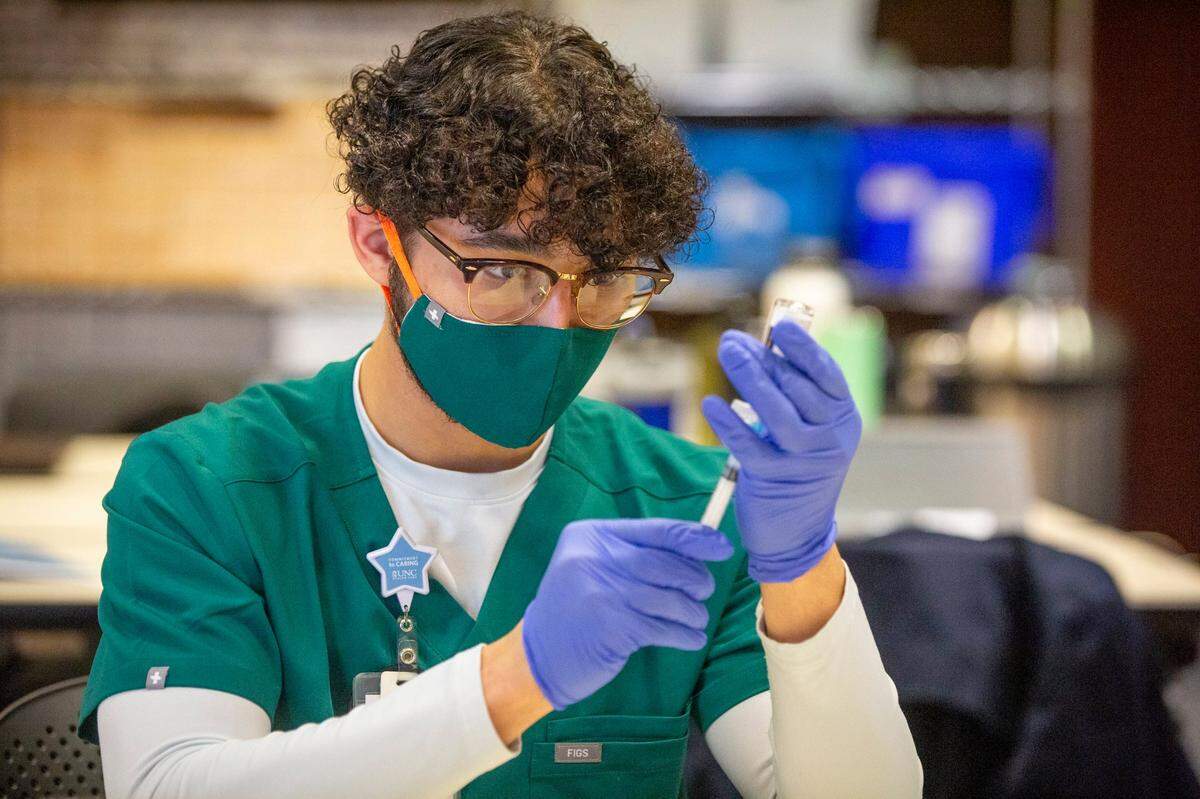
The TB vaccine is not widely recommended.
This is because the TB vaccine, isn’t effective in most people, Weber said, adding that he’s only administered the vaccine only a couple of times during his career.
But another vaccine — the BCG vaccine, formally called the Bacillus Calmette-Guérin vaccine which was developed more than a century ago — is somewhat effective in infants, Turner said.
“It’s by no means a perfect vaccine,” said Turner. “Its benefits wear off pretty quickly, and so the protection against TB in adults or TB at any point later in life is actually, unfortunately, not very good.”
Since the vaccine is rarely recommended, Turner said it’s not readily available in the U.S.
“It tends to be given to infants in countries with high incidence rates,” Turner said. “I’m not personally aware of any pharmacies that keep it in stock.”
How to prevent TB infections
Masking is one of the most effective ways to prevent TB infections, Weber and Turner said.
“[N-95 masks] work against flu and RSV, and we have a lot of flu right now,” Weber said. “They work against COVID, they work against TB, they work against mumps, measles, rubella and pertussis. So anything that goes through the air, a mask will work.”
Turner also pointed out that the state has a system that notifies people of potential TB exposures.
Health care providers in the state must notify their local health departments if they suspect or diagnose TB. The health department will then investigate and contact people who may have been exposed to TB.
“Just being responsive if you get a call from a local public health department that notified you of a potential exposure” can help prevent severe TB infections, Turner said. “They will typically give some instructions on the next steps for getting screened and, if necessary, getting the preventative treatments for it.”
Healthline also offers the following tips for preventing TB infections:
Avoid close contact with people who have active TB disease.
Wash your hands often and cover your mouth when coughing or sneezing.
Eat a nutritious diet and exercise regularly to keep your immune system strong.
If you’re traveling to a high-risk area and you have a compromised immune system, talk with a doctor about preventive treatments.
This story was originally published February 10, 2025 at 3:44 PM with the headline "Do I need a tuberculosis vaccine in NC? What to know as cases spike in the Charlotte area."