NCDOT: Helene repairs will cost $5 billion. This road will account for a fifth of that
The destruction of U.S. 19W by the remnants of Hurricane Helene is extraordinary but also typical of what the storm did to many roads in Western North Carolina.
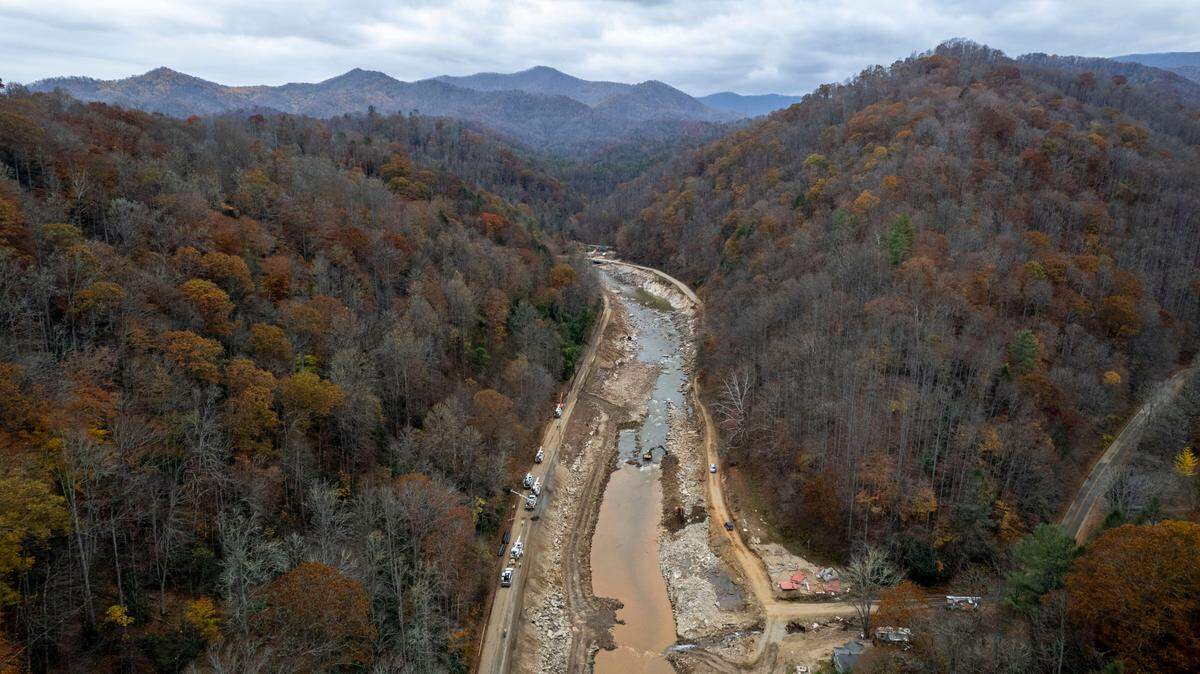
U.S. 19W snakes about 22 miles from near Burnsville through the isolated northwest corner of Yancey County up to the Tennessee state line. For most of its route, it follows the Cane River, which was turned into an unrecognizable torrent on Sept. 27 after Helene dumped two feet of rain in the mountains.
The river and the debris it carried destroyed bridges and washed away miles of pavement and the earth underneath it. In that respect, the damage was similar to what happened to hundreds of roads along mountain streams and rivers after the storm.
But among the long list of roads that need fixing, U.S. 19W stands out, both because of the extent of the damage and the estimated cost to rebuild it. Along a 14-mile stretch beside the river, the highway simply disappeared in several places, replaced by piles of rocks and sand or gleaming, newly exposed bedrock.
“Right now, we have crews just building the road back from nothing,” said Chris Deyton, the deputy engineer for N.C. Department of Transportation’s Division 13, which includes Yancey and six other counties.
NCDOT expects to spend $1 billion to rebuild the two-lane highway. That’s nearly the same as the most expensive post-Helene road repair, the reconstruction of the eastbound lanes of Interstate 40 through the Pigeon River Gorge.
Overall, NCDOT estimates it will cost roughly $5 billion to restore state roads, bridges and other transportation infrastructure damaged by Helene, according to Emily McGraw, the director of Highway Operations. In contrast, McGraw said, NCDOT spent about $700 million on repairs from all previous storms combined since 2016, which includes two hurricanes, Matthew and Florence, that devastated the eastern part of the state.
Where the money will come from is not yet clear. The department has enough on hand to help cover initial costs, while the Federal Highway Administration sent $100 million as a down payment on federal help to follow. NCDOT will ask the General Assembly for more money as well, said Secretary of Transportation Joey Hopkins.
It will be a long recovery, Hopkins told members of the Board of Transportation this month.
“We can’t afford to spend $5 billion in 18 months, so it will have to be spread out,” he said. “It’s probably not unrealistic that we’re wrapping this up six to eight to 10 years from now.”
NCDOT says it has been able to reopen more than 1,000 roads that were closed by fallen trees, landslides and flooding from Helene. About 100 more have partial access.
But nearly 300 remain closed, many of them like U.S. 19W with sections that must be rebuilt from scratch.
The goal in most cases is to build temporary roads to serve the often isolated residents and communities that depend on them. Deyton hopes NCDOT and its contractors can have at least a basic gravel road in place along the Cane River by Christmas if the weather holds.
“But I know any day the weather’s going to change on us,” he said. “We’ve been very blessed to have good weather after the storm, because that’s been a big difference.”
‘Just imagine that there was nothing there’
Deyton took reporters up U.S. 19W on Nov. 1 to show what had been accomplished so far and the challenges that lie ahead. Before everyone piled into an NCDOT van, he said they would drive over several sections of gravel road.
“That was all just sheer drop-offs before,” he said. “So everywhere you see gravel up there, just imagine that there was nothing there.”
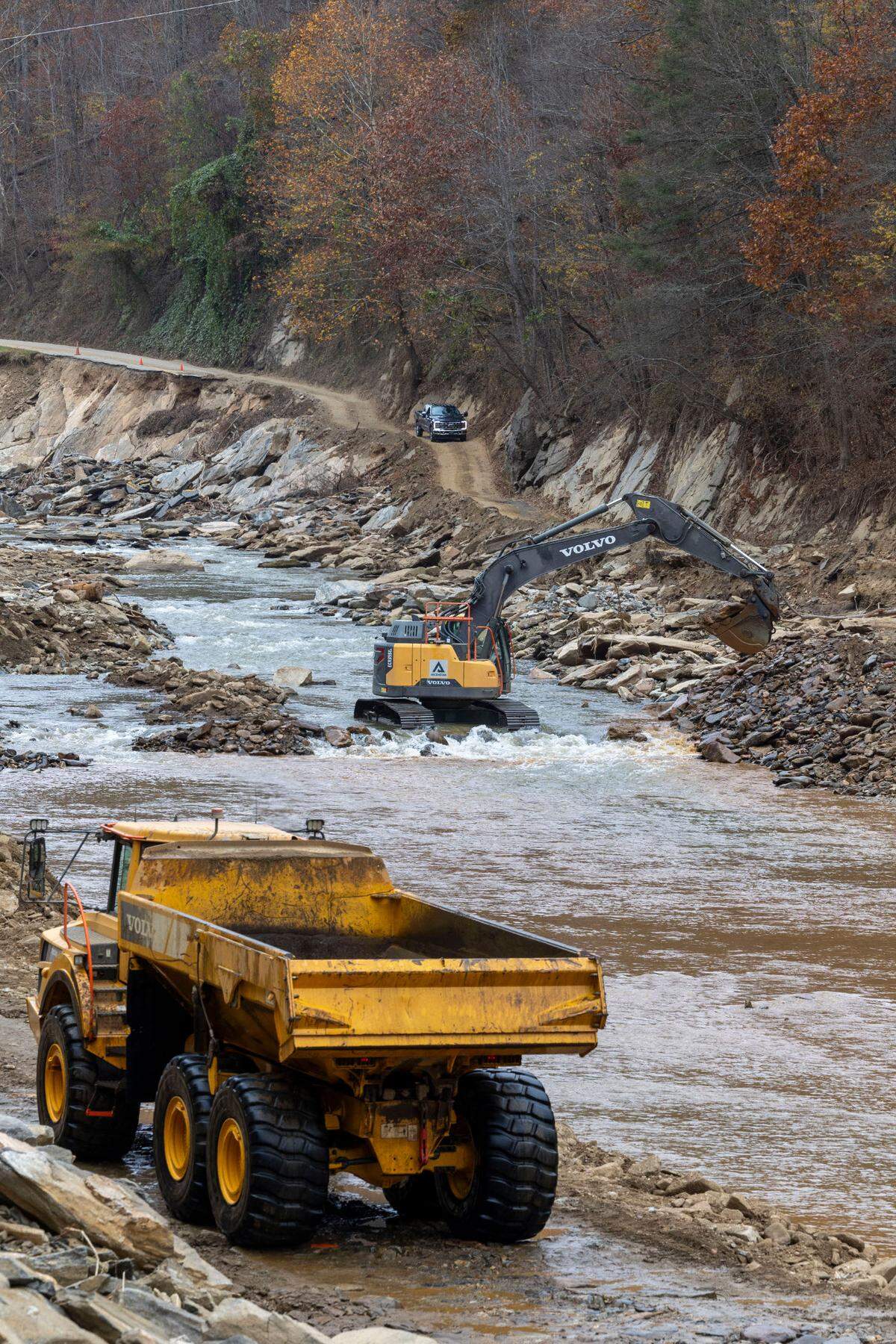
Travel on the open section of 19W can be slow going. There are several places where the road narrows to one lane because of washouts and missing pavement, bringing utility, construction and dump trucks to a stop.
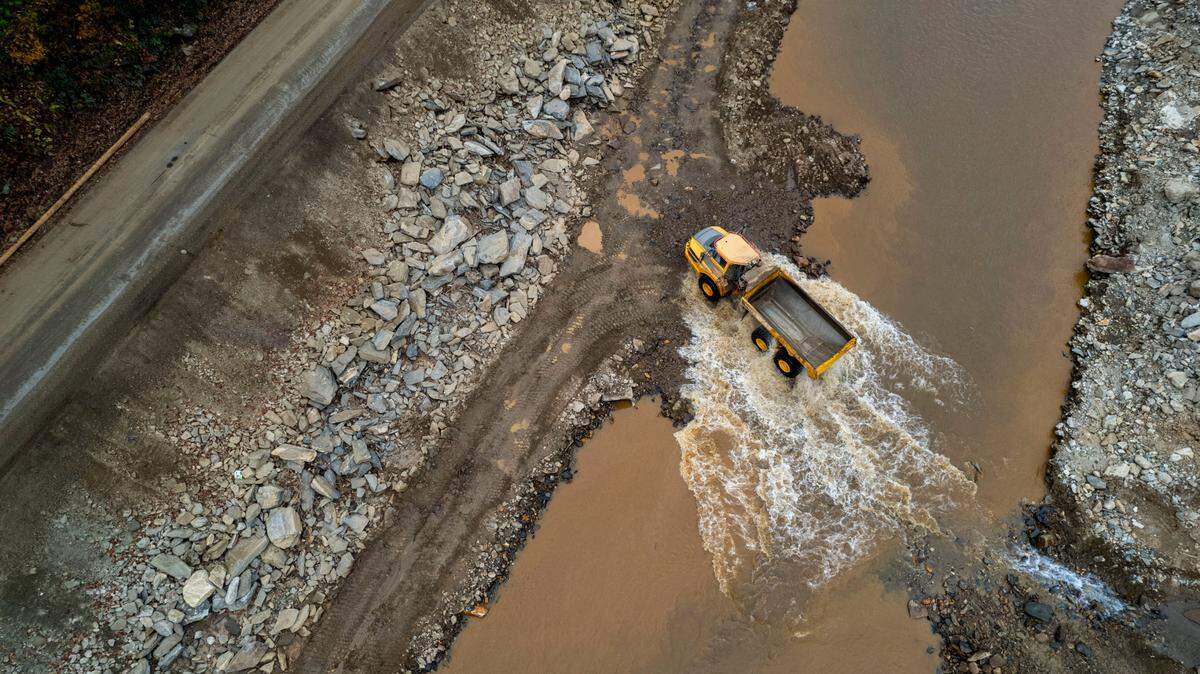
Dump trucks are everywhere in the mountains these days, hauling stone to damaged roads or going to quarries to get more. The only quarry in Yancey County was flooded, so the trucks coming to 19W are traveling long distances, Deyton said.
NCDOT is also using rock from the river to recreate the roadbed.
“The river washed places out, but it also made deposits,” Deyton said. “So you have areas where the roadway and the rock is gone, but then you have mountains of rock piled up where the water slowed down. So basically we’re utilizing where it dropped rock and trying to put it back and build the road back.”
The washed-out road isn’t the only sign of flooding along 19W. Houses and barns lie in rubble or are simply gone. The second floor of a small motel teeters over the washed-out river bank. Bus-size RVs lie on their sides, and steel beams are scattered downstream of the concrete piers of now-gone private bridges, leaving homes stranded on the other side.
U.S. 19W crosses the Cane River four times, and Helene left three of those bridges impassable. The first bridge is open, and the second is now usable again, too, after crews filled in the gap where the river washed away the bank. Much of the concrete railing, held in with rebar as big around as nickels, was ripped away, but the 53-year-old bridge appears sound, Deyton said.
For now, though, it leads nowhere. The road beyond was washed away, and men in earth-moving equipment are gradually rebuilding the roadbed.
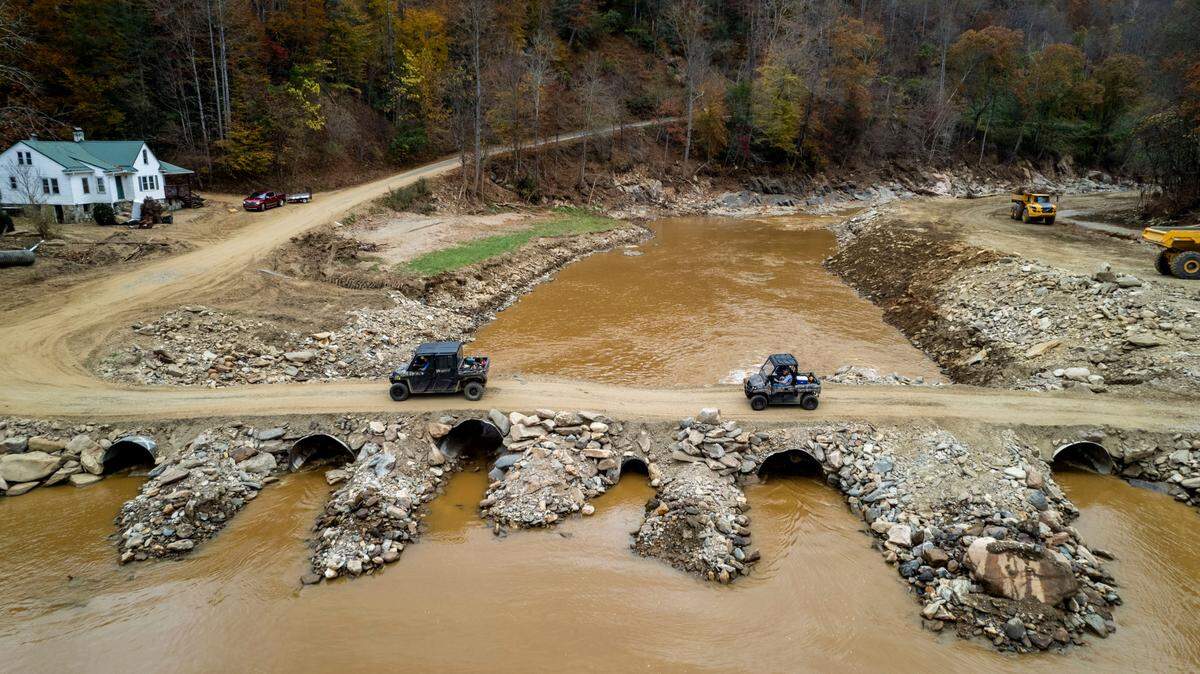
To get to the next section of 19W, Deyton heads up Piney Hill Road, which winds 3.5 miles over the mountain before coming back down to the river. There it connects with a ford made of stone and steel pipes that NCDOT built across the river to provide temporary access to a network of dead-end roads on the other side.
The people who live on those roads would normally have used a bridge upriver that was washed away.
The permanent road will take years to build
NCDOT has the blessing of state and federal environmental agencies to do what’s necessary to build the temporary roads. That includes the ford and the earth-moving and mining-size dump trucks removing rock from the river.
But building a new, permanent 19W will be much more involved, requiring environmental permits, surveys to demarcate the road from private property and coordination with utility companies that will have to move the temporary poles they’re installing now.
NCDOT hopes to award contracts by the end of the year to design and build the permanent road and the secondary roads that tie into it.
The new 19W will be built to current standards, which will likely mean wider shoulders and perhaps wider travel lanes. And there will be new features to protect the road from the river, such as concrete walls instead of earthen embankments in some places.
It’s not possible to design a road in this narrow valley that could withstand another flood like Helene, Deyton said. But when it’s done in a few years, the new 19W will be more resilient.
“It’s not going to look exactly like it did before the storm,” he said. “It’s going to basically be like designing a whole new roadway.”
This story was originally published November 14, 2024 at 5:00 AM with the headline "NCDOT: Helene repairs will cost $5 billion. This road will account for a fifth of that."