Don’t kill this nonvenomous snake. It eats copperheads and its population is in decline
Please don’t kill the Eastern kingsnake.
Unlike other snakes, such as the copperhead, and like the majority of snakes found in North Carolina, the Eastern kingsnake is not venomous. And its population is declining.
“With kingsnakes, because they’re really, really cool snakes, I always say, admire them from a distance. Just enjoy the experience, because they’re just neat snakes to have around,” said Falyn Owens, an extension biologist at the North Carolina Wildlife Resources Commission.
The News & Observer spoke with Owens and Jeff Beane — the collections manager for herpetology at the North Carolina Museum of Natural Sciences in Raleigh — to learn about Eastern kingsnakes, including how to spot and interact with them.
What is the Eastern kingsnake?
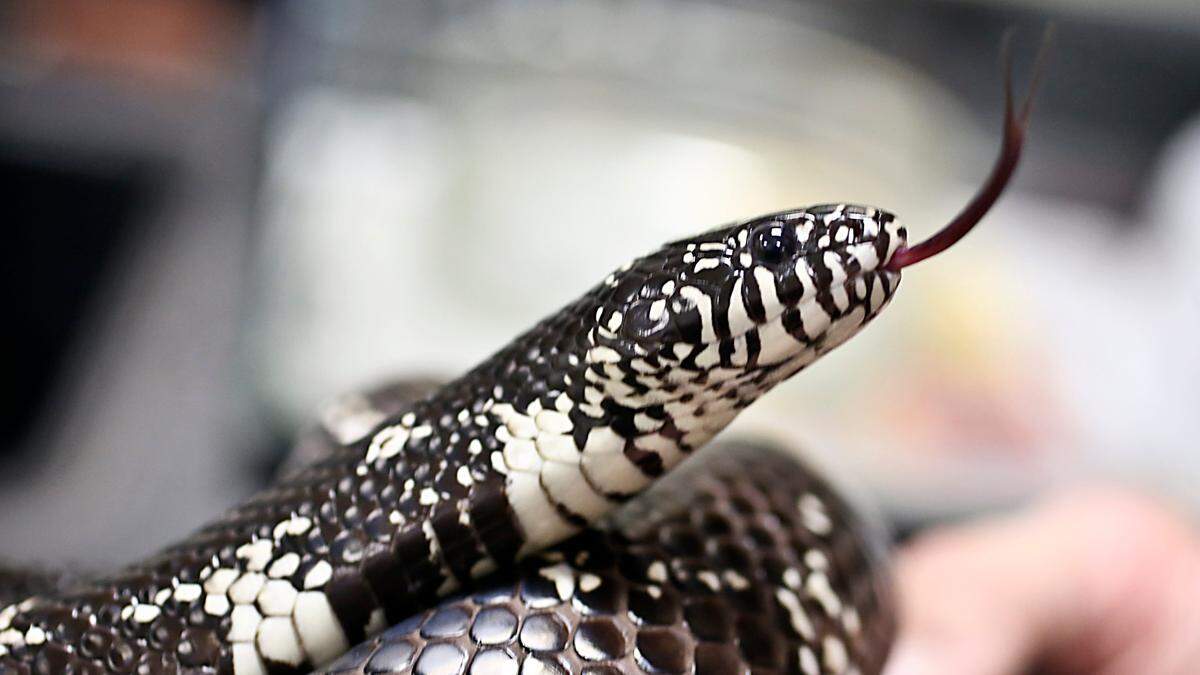
The Eastern kingsnake is a constrictor. It is typically black with a white or yellow chain-like pattern, though sometimes the snake is more brown.
They may be found across the eastern United States, including throughout North Carolina, though they’re rare in areas with higher elevation and urban areas. Eastern kingsnakes are more likely to be found in wetter environments, near bodies of water, where there’s more food.
“They’re not the most common snake, even though they’re found across the state,” Owens said.
What do they eat?
The diet of Eastern kingsnakes includes frogs, birds, turtle eggs, lizards, other snakes and mammals such as rodents. What a snake eats depends on where it lives, Beane said.
Eastern kingsnakes are immune to pit viper venom, Owens said. That means they can eat venomous snakes including copperheads, rattlesnakes and cottonmouths.
A video shared by the Georgia Department of Natural Resources in 2021 shows an Eastern kingsnake killing and devouring a venomous timber rattlesnake. The timber rattlesnake, by the way, is the most common of the three rattlesnake species in North Carolina. Though it’s unlikely that any rattlesnake will be found in the Triangle, The News & Observer previously reported, the timber rattler can be found in Charlotte.
Why is the population in decline?
Habitat loss caused by humans — including the construction of roads and buildings — is one reason why Eastern kingsnakes are struggling.
“Most animals just don’t do well when their habitat is covered with pavement and vehicles are driving through it,” Beane said.
But human activity is not the only factor. If the population of Eastern kingsnakes’ prey is in decline, that could cause the Eastern kingsnakes’ numbers to drop, too, Beane said. Disease may also be a factor for the snakes in some areas, including parts of Florida.
Measures to protect Eastern kingsnakes
Beane said land protection is the main initiative being undertaken to help preserve the Eastern kingsnake population.
What to do if you see one of the snakes
Just leave it alone. It’s not dangerous to humans or pets, Beane said — unless your pet is a mouse or a small snake.
“With any snake, my advice is always to give it space, so that it feels comfortable, so that you’re not putting yourself at risk of making it feel like it has to defend itself,” Owens said.
This story was originally published May 28, 2024 at 12:44 PM with the headline "Don’t kill this nonvenomous snake. It eats copperheads and its population is in decline."