
North Carolina

Why are flocks of black birds in my yard this winter? Here’s what the experts say
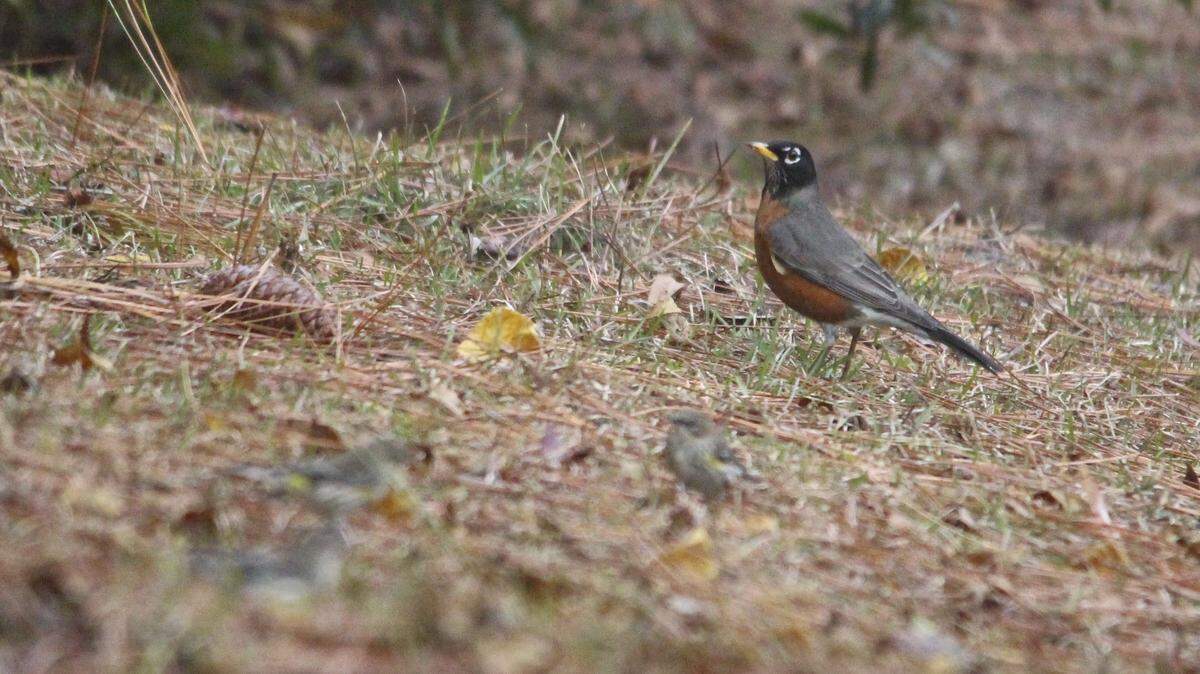
American robins are thought of as abundant, almost ubiquitous birds in some areas of the Lowcountry, but that typically holds true only during spring and summer. According to Fripp Audubon Club member Charlie Holbrook, who led the Dataw Island Christmas Bird County on Saturday, there have been years in which not a single robin was sighted this time of year. But this year, at least a dozen or so were spotted near a pond bank, and the group surmised that fresh water had attracted a small flock in mid-migration. In the foreground, out of focus, you might make out the outline of several yellow-rumped warblers that hopped along the ground nearby.
American robins are thought of as abundant, almost ubiquitous birds in some areas of the Lowcountry, but that typically holds true only during spring and summer. According to Fripp Audubon Club member Charlie Holbrook, who led the Dataw Island Christmas Bird County on Saturday, there have been years in which not a single robin was sighted this time of year. But this year, at least a dozen or so were spotted near a pond bank, and the group surmised that fresh water had attracted a small flock in mid-migration. In the foreground, out of focus, you might make out the outline of several yellow-rumped warblers that hopped along the ground nearby. Staff photo

Flocks of black birds have been spotted in backyards and parks over the past few weeks in the Triangle, causing many of us to do a double take when we leave our homes or pass a large, grassy field.

Some believe these flocks signal changes in certain weather. But our expert at the Cornell Lab of Ornithology says that’s not true, as birds don’t predict the weather.

“These species form large groups on the wintering grounds and during migration, and they roam widely when foraging for food or when roosting together,” Pat Leonard, media relations manager for the Cornell Lab of Ornithology, previously told The News & Observer.

Which black birds are in my backyard?

If you’re seeing flocks of black birds in the Triangle, Leonard thinks they are likely European Starlings, Common Grackles or Brown-headed Cowbirds.

All of these birds forage on the ground, Leonard said, which can contribute to seeing large numbers of them in grassy spaces.

To see photos of each bird, visit eBird.org/explore and search the species name.

Many North Carolinians will also spot flocks of American Robins, the most abundant bird in North America (and a permanent resident of our state).

In fall and winter, local birds will flock together, while many in the north will move down south to spend the cold months, according to the Carolina Bird Club. When spring comes, adult American Robins will be found feeding worms to their spotted young on lawns.

Flocks numbering in the thousands are usually found in February and March.

Triangle Asked & Answered: What do you want to know?

Have a question about something in our community? The News & Observer’s Service Journalism team wants your questions for our Triangle Asked & Answered series. Reach out to us by filling out this form or by sending an email to ask@newsobserver.com.

Read Next
Read Next

This story was originally published December 6, 2023 at 11:38 AM with the headline "Why are flocks of black birds in my yard this winter? Here’s what the experts say."

Kimberly Cataudella Tutuska
The News & Observer
Kimberly Tutuska (she/her) is the editor of North Carolina’s service journalism team. 
Get unlimited digital access
#ReadLocal

Try 1 month for $1

CLAIM OFFER