How are Canada wildfires affecting air quality in Charlotte? Here’s what to know
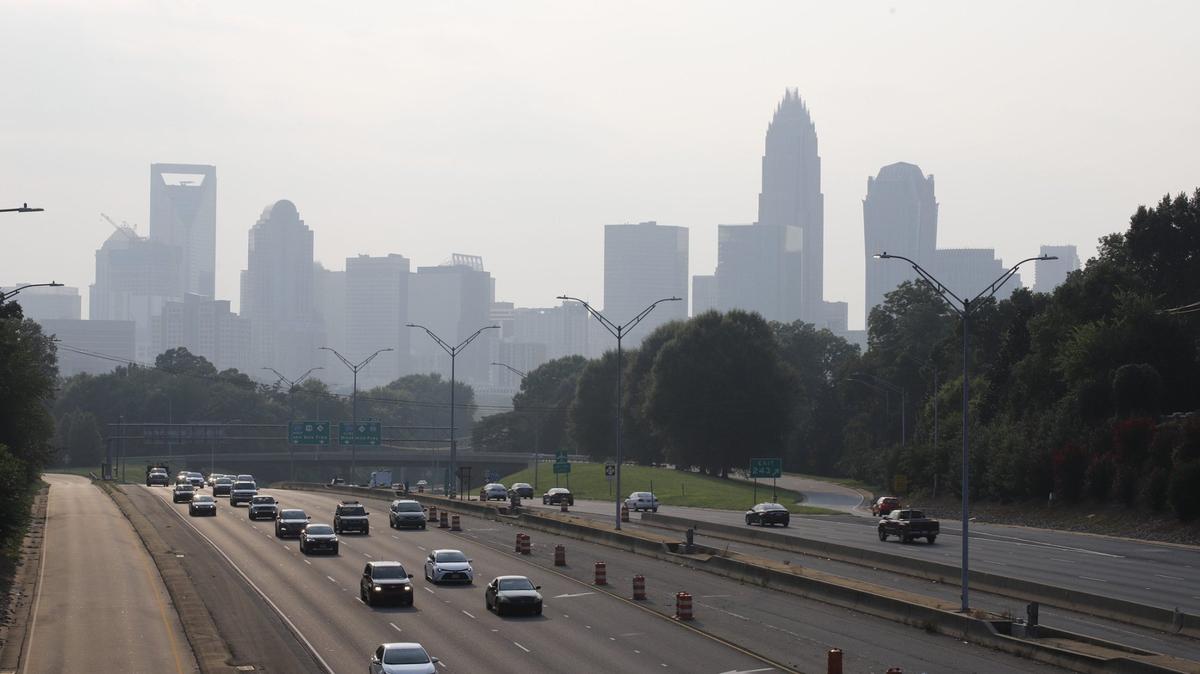
Smoke and harmful particles from wildfires in Canada are negatively affecting air quality in Charlotte and will create unhealthy conditions for people outside for the rest of the week.
More than 400 Canadian wildfires continue to scorch land near Quebec, sending clouds of smoke downwind to the United States, including the Carolinas.
The N.C. Department of Environmental Quality upgraded air quality alerts for Wednesday to Code Red for more than 35 counties in Piedmont and central North Carolina, including Mecklenburg, and issued Code Orange alerts for the westernmost and eastern part of the state.
Air quality in Charlotte currently sits at 110, which is considered “unhealthy for sensitive groups,” according to Air Quality Index metrics on the air quality measuring website AirNow.
At that level, it is recommended that people with lung disease or heart disease, older adults, children, and teens choose less strenuous activities, like walking instead of running and reduce the amount of time they spend outside.
Air quality is expected to reach “unhealthy” levels later today, according to AirNow. When air quality is in this range, anyone who is active outside can experience respiratory symptoms.
During a news conference on Wednesday, Dr. Aaron Levy, a pediatrician at Atrium Health Levine Children’s Hospital, recommended people limit time outside and take frequent breaks while exercising outdoors.
“If we get into the code red area, any healthy person would be vulnerable to health impacts,” Levy said. “Even short-term exposure, we know, can make people feel irritated with their itchy eyes, nose, throat.”
The Air Quality Index measures how clean or polluted the air is, with values ranging from 0-500. Higher AQI values mean there are greater levels of pollution in the air.
Levy said N95 masks can help reduce exposure to smoke, but regular face coverings or surgical masks won’t provide much benefit.
“It’s not necessary to say everybody needs to wear an N95,” said Levy. “It’s going to be really person-specific and personal choice based on symptoms they’d be having or underlying conditions that they may have.”
Smoke from fires can make outdoor air unhealthy to breathe, according to the Environmental Protection Agency. Symptoms of smoke inhalation include coughing, shortness of breath, hoarseness, irritated eyes and headache, according to WebMD.
Anyone who experiences a hoarse voice, difficulty breathing, drawn-out coughing spells and mental confusion from smoke inhalation should seek emergency medical care.
This story was originally published June 7, 2023 at 10:20 AM with the headline "How are Canada wildfires affecting air quality in Charlotte? Here’s what to know."