Career-minded women in Triangle made housewives by H-1B visa system
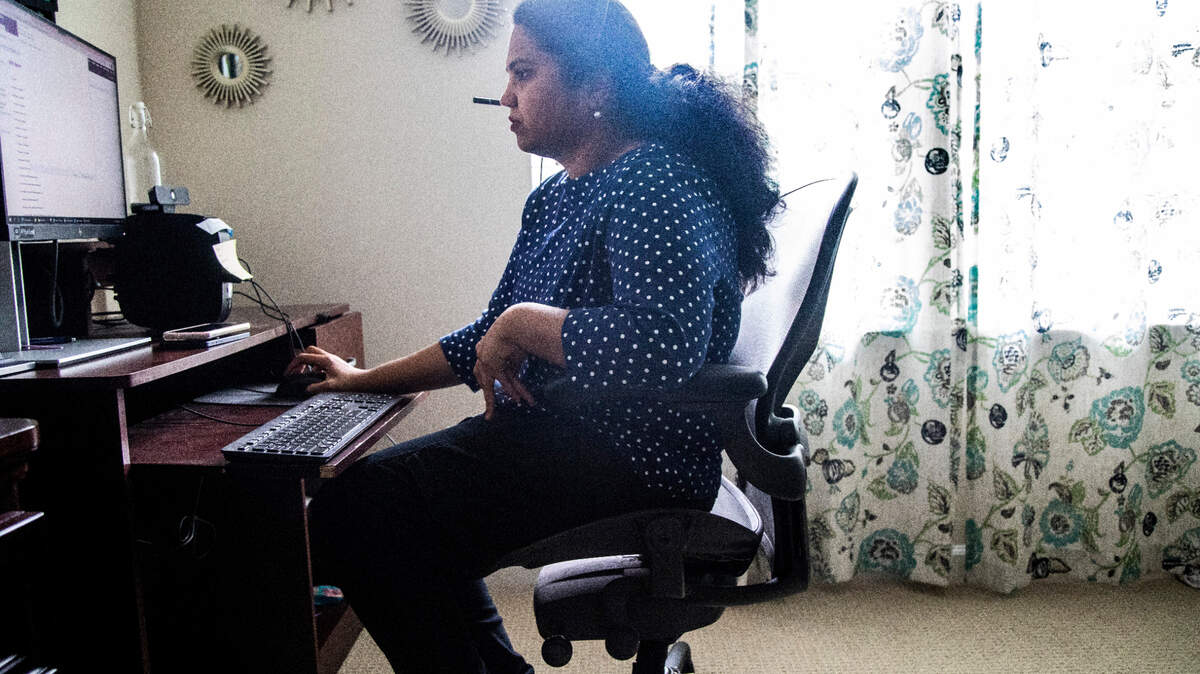
Days feel similar to Pooja Parikh.
She organizes her house, cooks a meal, often goes to the grocery store. At some point, she’ll take a walk with her husband Arpit around their neighborhood in Morrisville, a town of 31,000 between Durham and Raleigh.
Pooja, 27, has ample time to watch television; the Netflix show “Manifest” is her current favorite, and she’s taking an online course on data analytics to break the monotony. But without much structure, time blends.
“Like you know, if you go somewhere on a vacation, you’re good for seven days, 10 days, maximum,” she said. “Then you have nothing else to do.”
Pooja’s veritable vacation has stretched on for five months, and there’s no clear end in sight.
This time last year, she was a dentist living in the western Indian city of Ahmedabad. She was early in a career she loved.
“After we treat the patient, and they’re happy with the treatment, that gives a lot of satisfaction,” she said. “So, satisfaction is the main point. It feels like you did something in your life.”
Then in June, a few months after Arpit moved to the North Carolina Triangle to begin work as a software engineer, she followed. Arpit, 30, is on a popular high-skilled work visa known as an H-1B. But as his spouse — or, in the technical language of the U.S. immigration system, his H-4 dependent — Pooja is unable to work.
“It’s boring, it’s frustrating, and it’s very depressing at some point,” she said. “I used to work back in India, and I was independent there. Here, I have to depend on my husband for the finance and all other things.”
Pooja is one of several unintended housewives in the Triangle, professionals in their countries of birth who can’t legally take a salary-paying job in the United States. And as an Indian woman in Morrisville, her experience is representative.
During the most recent fiscal year, which ended in September, the United States approved roughly 330,000 H-1B visas. Around three-fourths went to Indian nationals and a comparable percentage went to men. In North Carolina, approximately 7,700 new and continuing H-1B visas were approved.
Most H-1B holders work in the tech sector, making the Research Triangle a popular destination. And within the Triangle, many settle in Morrisville, which has around 30% of its residents being of Indian descent, according to the latest census.
It’s a community that’s missing out on talent because of a flawed immigration system, said Rishi Oza, an attorney at the Brown Immigration Law office in Durham.
“Most of the H-1B workers are typically very well educated, and they’re also married to other really well-educated people,” Oza said. “And so, the longer we have H-4 spouses that are just sitting at home, the longer we have this huge lost opportunity of employing really talented people.”
The United States offers multiple paths for H-4 spouses to enter the workforce, but each requires patience or good fortune — or both. And so, Pooja waits.
‘You have an MBA — you’re not working’
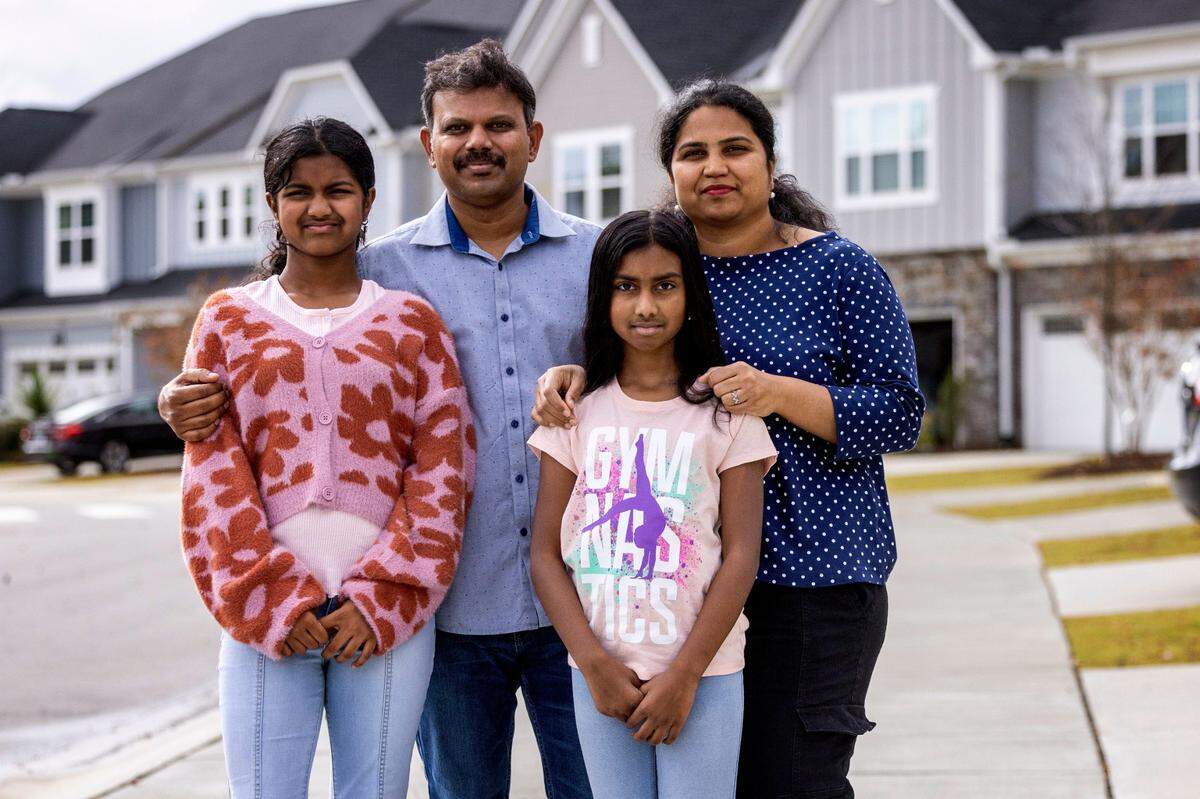
Having a degree and work experience without the ability to use it is something Archana Gopal lived every day during her first six years in the United States. She arrived in 2013 with her two young daughters and husband, Maharajan Shunmugam, who works on a H-1B visa as a software engineer in Morrisville.
Gopal had come to idealize the United States at a young age. When she was 2, her family doctor gave her a Mickey Mouse doll. “To be frank, I really pray in the next life I take that I’m born here,” she said. “I don’t know why I love this country that much, but I love it.”
When she was living in the southern Indian state of Tamil Nadu, Gopal worked as a banker and business analyst, including with the Royal Bank of Scotland.
Filling her days in North Carolina wasn’t easy, she said. Raising the kids took up her time, and she would teach music to them and other neighborhood children. But Gopal wasn’t the role model she desired to be.
“When I was asking my daughter to learn, she told me, ‘You have an MBA. You’re not working. Why should I study?’” she said. “That triggered me a lot.
”
Fortunately for Gopal, a new avenue into the workforce was opening up for H-4 spouses.
The H-1B visa program has been around since 1990, and for most of its history, H-4 spouses could only work once their green cards were approved. This wasn’t as much of a hindrance as the green card approval process used to be relatively quick. Until the mid-2000s, applicants rarely had to wait more than a year — if any time at all — to get approved.
But then wait times for green cards crept higher, vacillating between four years and a decade as system delays and country-of-origin quotas contributed to severe backlogs, especially for Indian nationals.
Recognizing such delays were excluding skilled workers from the labor market, then-President Barack Obama issued an executive order in May 2015 to allow H-4 spouses to work while awaiting their green cards. They could now apply for employment authorization documents, or EADs, once their H-1B husbands or wives reached an initial step in the green card process called an I-140 petition.
By no means has this policy brought spouses into the workforce seamlessly.
Out of their control
First, it can take several years for H-1B workers to obtain their I-140 petitions. And it’s not up to the workers when this process begins.
“The H-4 spouse, in a strange way, is really beholden to the H-1B visa holder’s employer initiating the process,” Oza said. “We have some employers who say, ‘We don’t initiate the green card process until you’re a year into your employment.’ Others say they won’t start the process until you’re three years into employment.”
Arpit says his employer — the nonprofit U.S. Green Building Council — has promised to sponsor his green card in around six to eight months. After that, United States Citizenship and Immigration Services (USCIS) must approve his I-140 petition before Pooja can apply for her EAD.
Even getting to the approval stage involves multiple steps overseen by the U.S. Department of Labor. First, employers must obtain a labor certification to prove they aren’t underpaying their H-1B workers, then they must advertise the job in local newspapers to ensure U.S. citizens have the opportunity to fill the position. Lastly, the I-140 petition must be processed. Combined, these steps take his clients around 18 months, Oza estimates.
Only then can spouses apply for their work authorization.
This is how Gopal reentered the workforce. She obtained work authorization in 2019 and started as a bank teller at an area Wells Fargo, committed to working up the business ladder. In less than a year, she had been promoted to the loan servicing department.
But then in 2021, USCIS informed her that her work authorization renewal would be delayed.
Some politicians and immigration experts have blamed this on the Trump administration.
A program in peril
Under the former president, the Department of Homeland Security had considered ending EADs for H-4 spouses, and in 2019, the Trump administration implemented a biometric screening requirement — a health screening that critics say increased wait times for receiving and renewing EADs, especially during the pandemic.
“They just generally slowed down the EAD processing times,” said Patrick Hatch, an immigration lawyer with Hatch Rockers Immigration in Raleigh.
Like H-1B visas, EADs must be renewed. And if the renewal process hits delays, recipients may have to stop working. In 2021, the Biden administration eliminated the biometric testing requirement, but renewal concerns lingered.
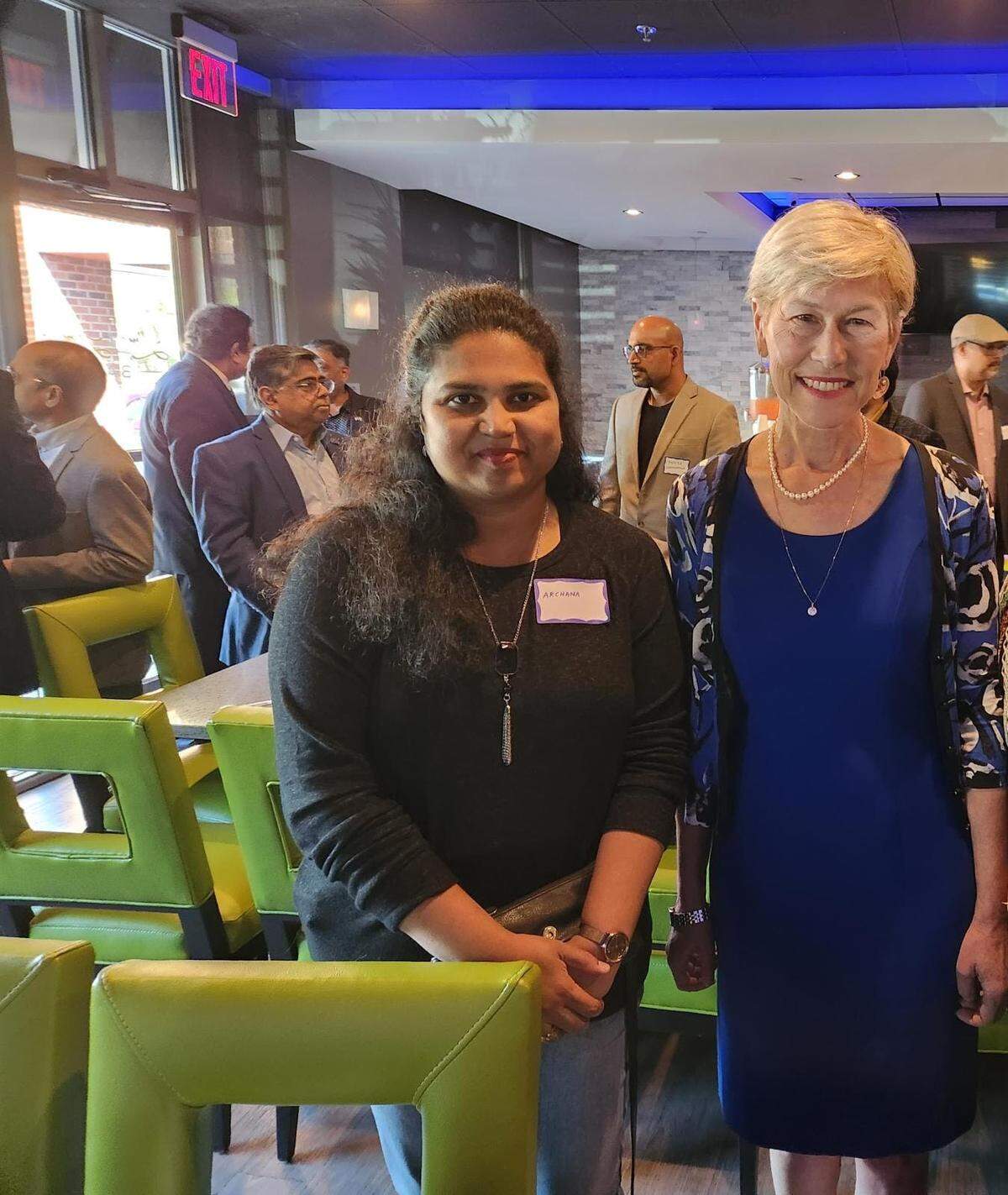
That December, Rep. Deborah Ross (D-Wake) sent a letter to Homeland Security Secretary Alejandro Mayorkas in which she wrote, “processing delays have left their families without a second income, forcing them to dip into their savings, sell their homes, and take other drastic measures to stay on their feet.”
Gopal never feared having to sell her house, but her delayed work authorization did send her spiraling.
“I went to a psychiatrist, I was that much affected,” she said. “I didn’t eat for 32 hours at a stretch. I had this feeling that I didn’t need food.”
Considering Canada
In her letter to the secretary of Homeland Security, which was signed by 22 other congressional representatives, Ross recommended federal actions that would speed up EAD processing, including adjudicating a couple’s H-1B visa and H-4 EAD renewals together.
In May, USCIS also implemented a temporary rule that says H-4 dependents who file their work authorization on time will automatically get their status extended for 540 days if they encounter delays. Last year, Gopal got her authorization renewed but said fears over delays left some employers wary of hiring H-4s.
Ross told The News & Observer she was “glad USCIS took action to address the growing backlog of immigration applications,” yet added that she still hears from constituents about “our broken immigration system that leaves many of their lives in limbo.”
Arpit believes more Indian nationals will begin looking to move to other countries rather than deal with the American immigration system. “Like in five years, I think everyone will move to Canada,” he said.
Arpit first came to the United States in the mid-2010s as a graduate student at George Washington University in Washington, D.C. He was impressed with the job opportunities here, and the size of the homes. He went back to India after his visa expired, married Pooja, and has looked to build a life back in America.
Now that he’s spent time as an H-1B worker, Arpit wonders if returning to the United States was a mistake. He’s aware his green card likely won’t come anytime soon, leaving his and Pooja’s immigration statuses tenuous as they consider starting a family. And he sees his wife struggling at home.
Pooja said she’s gotten to know a few other women in her situation, including one who has been in the United States for more than two years and still cannot work. She also has applied to volunteer in the community doing social work.
But her daily schedule remains dispiriting, she says.
“I don’t have any aim currently in my life, like that routine,” she said. “Usually, you wake up and go to work and come back and all that stuff. I used to do that a lot in India, but I don’t do that here.”
Besides securing a green card or EAD, there are a few other ways H-4 spouses can begin working. They may seek H-1B visas themselves, though the lottery odds aren’t too favorable. Each year, the federal government allocates up to 85,000 H-1B visas. Last year, USCIS received more than 308,000 registrations.
And while Arpit earned a graduate degree in the United States, Pooja’s dentistry degree from India is not valid here, meaning she is less marketable for a high-skilled visa.
Pooja said she is weighing enrolling in an American college, and if she graduates and enters a STEM field, she would be granted three years of work authorization during which time could enter the H-1B lottery.
It’s exhausting to navigate all this, the young couple says. But at least for now, they believe America is worth this headache.
This story was produced with financial support from a coalition of partners led by Innovate Raleigh as part of an independent journalism fellowship program. The N&O maintains full editorial control of the work.
This story was originally published November 16, 2022 at 6:00 AM with the headline "Career-minded women in Triangle made housewives by H-1B visa system."