
50 years after Stonewall, NC town declares first LGBTQ Pride Day. Not everyone’s happy.
Ashleigh Jackson was scared to come out.
At her high school here, she said, her friends had been bullied, spat at and pelted with food for kissing same-sex partners in the hallway or experimenting with their clothing choices. One friend, who was bisexual, killed herself.
But on Saturday, Jackson, 22 and now openly a lesbian, sat in a crowd of rainbow flags, her arms wrapped around another woman. Around her, thirty-something drag queens danced with sixty-something pastors to songs by Madonna and Lady Gaga.
It was the first time this small mountain town had seen anything like it.
“It’s just been life-changing,” Jackson said. “Hendersonville was very hush-hush and traditional in terms of how you could express yourself... but now there are people here who are speaking up and fighting for equal rights.”
The story of how Pride came here — a retirement community of 13,000 in the heart of apple-picking country — is, by most measures, a sign of the dramatic shift in public opinion on LGBTQ rights.
About two decades ago, a support group for parents of gays and lesbians met secretly in a church basement accessible only through a back door, fearing for their safety.
In 2012, a majority of Henderson County — where Republicans outnumber Democrats 2 to 1 — voted to ban same-sex marriage in the state constitution. And just three years ago, the North Carolina state legislature barred cities from passing ordinances to protect gay and trans people, drawing plenty of support from locals here.
“But things are changing now,” Jackson said, and “even small conservative communities are going to start speaking up and fighting for their equal rights.”
In the span of her lifetime, LGBTQ Pride events have spread from just one statewide parade to events in 20 counties across North Carolina, including celebrations in Salisbury and Burke County. This year, half a century after the New York City riot known as the “first pride,” Hendersonville joined the list.
But this celebration has yielded just as much backlash from the city’s residents as it has enthusiasm.
After the mayor issued a proclamation designating June 15 as LGBTQ Pride Day, the rest of city council came out vehemently against it. Two days before the drag queens and pastors danced in the park, hundreds descended on the same site to pray for their neighbors’ salvation.
That backlash, organizers say, underscores the opposition that remains on LGBTQ rights — especially in more rural pockets of the South like this one.
A long time coming
Many residents think of Hendersonville, in the mountains of Western North Carolina, as everything their hippie neighbor up the road is not: rural, old, conservative.
“We have some people who pride themselves in that we’re not Asheville,” Mayor Barbara Volk said.
For a while, the handful of gay and lesbian families quietly living in Hendersonville would make the half-hour drive up for resources and community.
But in 1994, they decided to go local. A few of them formed a chapter of what was then called Parents and Friends of Lesbians and Gays, putting out only a phone number in order to hide from the possible backlash. For years, barely half a dozen people showed up to monthly meetings.
“We were in the closet, as far as the church was concerned,“ said Jerry Miller, an early PFLAG member whose son Keith came out as gay while in college. “But we were determined to keep it going, and we did.”
This weekend, Miller wore a T-shirt with a rainbow-striped apple — a play on a symbol for Hendersonville — that said: “We’re all the same on the inside.”
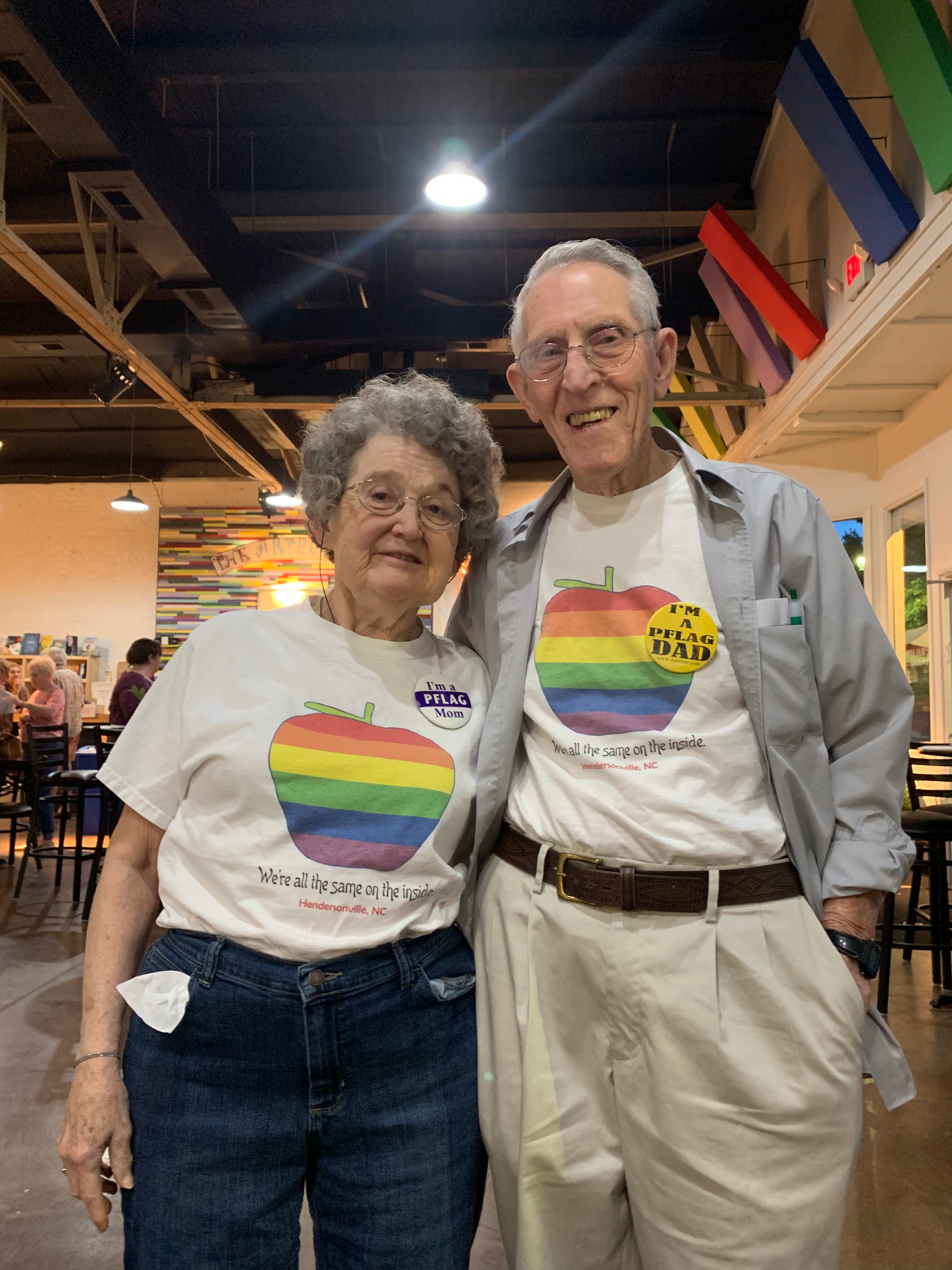
That message slowly started to spread beyond their secret meetings in a church basement. There was one high school gay-straight alliance, and then three, and then a coalition of gay-friendly churches, Miller recalled. The local Democrats birthed a chapter of their party’s LGBTQ caucus. That evolved into a group of organizers who decided that they wanted more.
It was the 50th anniversary of the Stonewall riots in New York City, the birth of the modern gay rights movement, they said, and their town should have a Pride celebration too.
“We knew it would not go over so well with this community,” said Laura Bannister, president of the LGBTQ Democrats of Henderson County, “but we thought we would try.”
Over lunch earlier this year, Bannister pitched the idea of a proclamation to Volk. The mayor didn’t hesitate.
“We have LGBT people who are our coworkers, who are our neighbors, who are our family, and I don’t think they should feel that they are second-class, or that they are threatened,” Volk said.
Hendersonville police told Bannister that the Ku Klux Klan would likely show up if they organized a parade, she said, so they planned a movie night on Friday and a picnic in the park on Friday instead. (Hendersonville police chief Herbert Blake denied those comments were ever made, instead citing concerns about parking and business at local stores.)
Pastors at some of the more LGBTQ-friendly churches in town preached those plans from the pulpit. Bannister went door to door on Hendersonville’s Main Street, the site of an annual apple festival, asking businesses to put up posters advertising the picnic. Most of them agreed.
And on June 6, hundreds of people descended on a monthly city hall meeting to cheer — or protest — as the mayor issued a proclamation on Hendersonville’s first Pride Day.
Opposition, both political and religious
Travis Parker, the pastor at Zirconia Missionary Baptist Church, said he attended the meeting because he was offended that the proclamation had effectively put the entire city’s support behind homosexuality — a sin according to the Bible, he said.
“Nobody said they couldn’t have a picnic,” Parker said, but “for the mayor to speak on behalf of all of Hendersonville was offensive to many people.”
The council itself was no less divided. The pride proclamation, said Mayor Pro Tem Ron Stephens, has stirred up more uproar than any other issue in the 12 years he’s been in office.
Like Stephens, the rest of city council — which is officially nonpartisan, but dominated by registered Republicans — said they felt Volk had gone over their heads to put the local government behind a cause that should not get that kind of support.
“I don’t know that it’s the government’s job to endorse certain lifestyles and ideologies,” Stephens said. “When you know it’s a hot-button issue, common sense says you just generally stay away from it.”
All four of them expressed their opposition to Volk on the proclamation, which only needed the mayor’s backing to become official. And now, they say, they’re working to amend city law so future proclamations must be voted on by the whole council.
“It just doesn’t need to be publicized and supported by the city,” Stephens said. “What people do in private needs to stay in private.”
Parker said he led a prayer meeting of several hundred people at the site of the picnic on Thursday evening. They asked that picnic attendees would “see the goodness of God” and that local government would revert from what the crowd saw as a sign of the end of times.
“It’s a great demonstration of love,” Parker said. “Hate would not be doing or saying anything.”
One speaker at that meeting, according to video posted on social media, called for death to any religious leaders who support gays.
Changing public opinion
Those threats didn’t stop the weekend’s Pride celebrations.
On Friday, an older crowd watched the documentary “Stonewall Uprising” inside Hendersonville’s Center for Art and Inspiration, with pride flags and police posted outside. A much bigger group was line-dancing at the town’s monthly classic car show a block away.
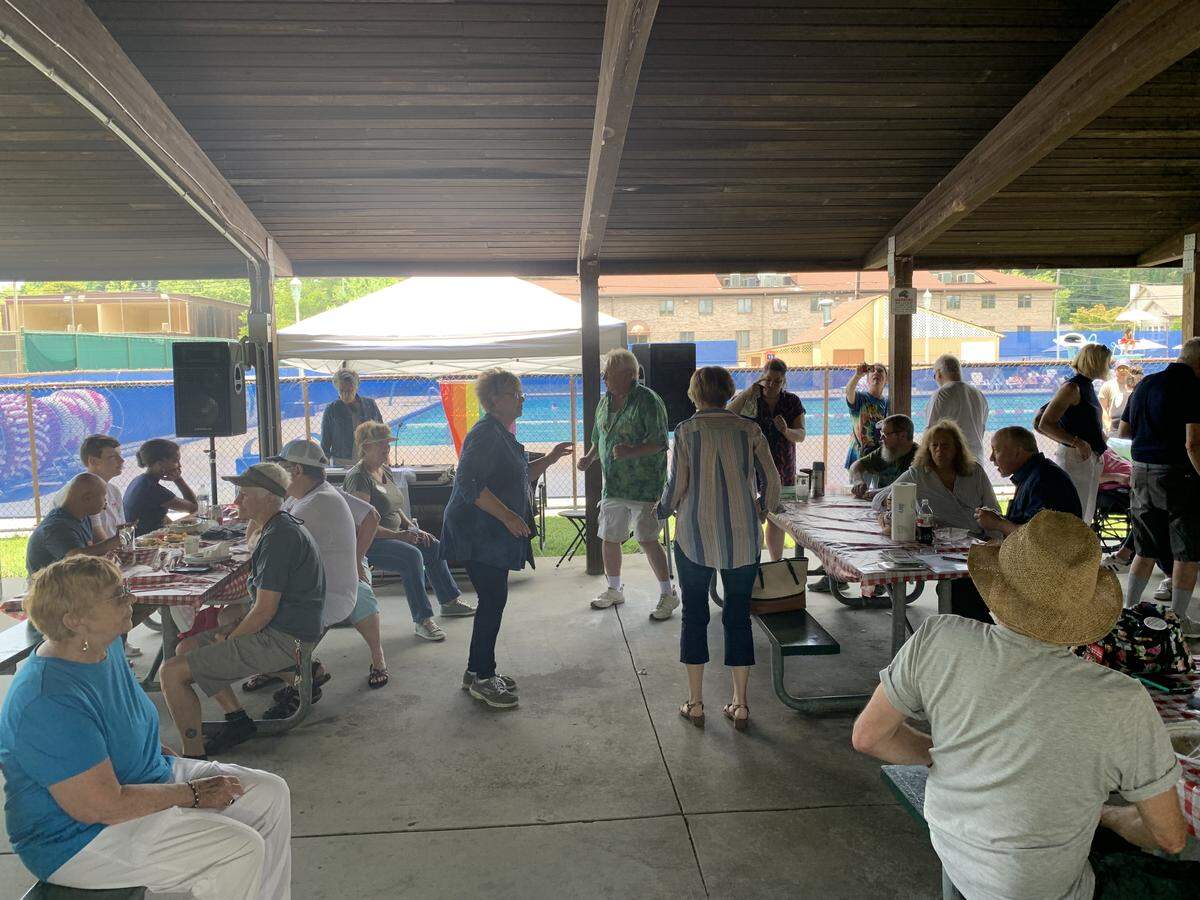
The following day, several hundred people shared sandwiches and pasta salad, as little kids had their faces painted with rainbows and glitter. Under a pavilion in Pioneer Park, organizers and local faith leaders addressed the crowd.
Jason Husser, a political science professor at Elon University, said that North Carolina has consistently trailed the U.S. by about 5 or 10 percentage points on public support for same-sex marriage. But as the country has shifted to grow more accepting, the state has too.
In 2001, about 35% of North Carolinians said they thought it should be legal for someone to marry someone of the same gender. In 2009, that figure had barely jumped to 37%.
But between 2012 and 2017 — just as North Carolina voted in a ban on the issue, and the Supreme Court made marriage equality the law of the land — that support nearly doubled, to 62%.
“A lot of this has to do with LGBT activists being willing to organize, and local authorities increasingly being fearful and hesitant of violating those folks’ ability to organize,” Husser said.
Bannister said she approached Volk, the mayor of Hendersonville, to make the pride event more official. Volk said that she treated the request for a pride proclamation the same way that she would have approached any similar request.
Husser said North Carolina’s shift in public opinion can be traced to three factors: Some individuals have changed their personal beliefs, often after a friend or family member comes out. Younger people, who lean to the left, have grown up and started voting. And the demographics of the state have changed too, with people like Bannister moving in.
Bannister spent much of her life in Washington, D.C., where she enjoyed a long career as a landscaper working for the likes of Supreme Court Chief Justice William Rehnquist and Bill and Hillary Clinton. She and her partner moved to be closer to family in nearby Macon County.
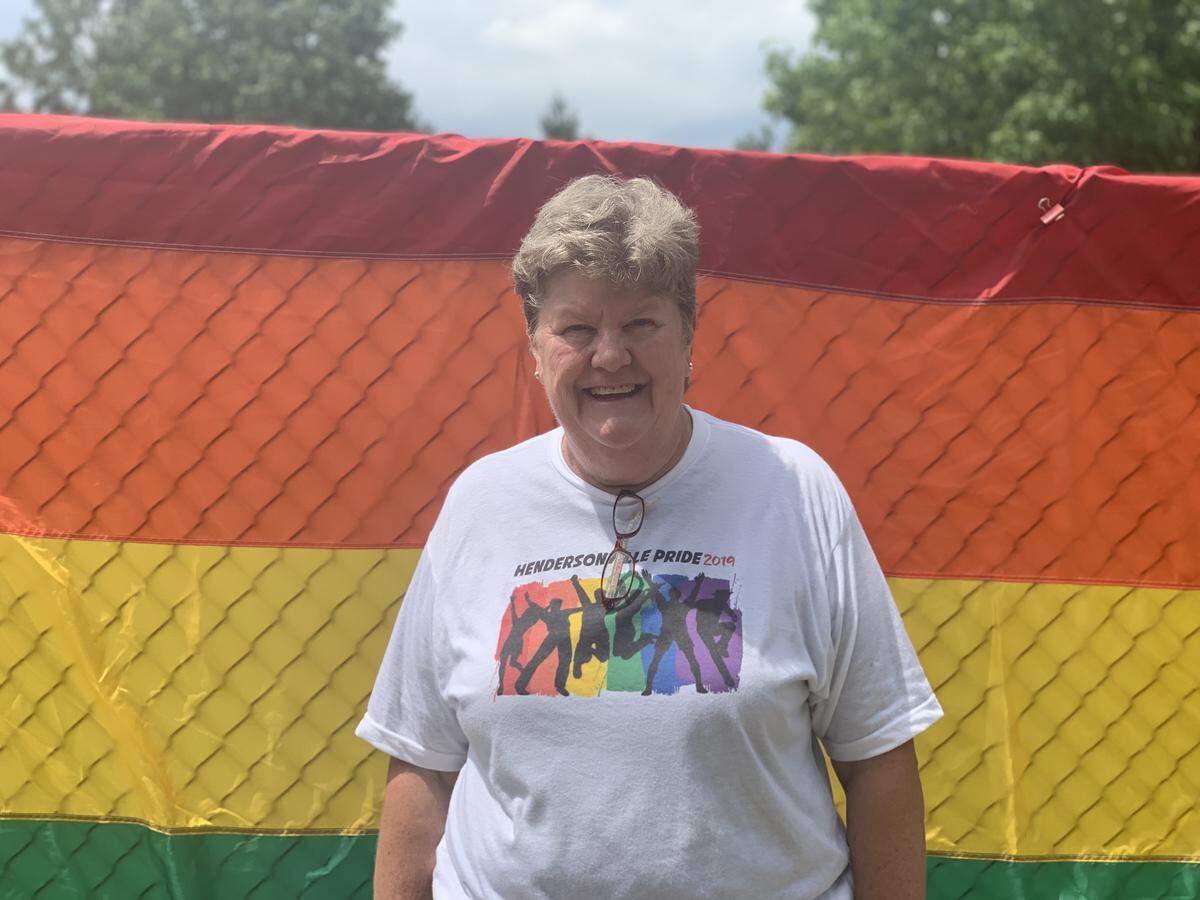
“I never dreamed in a thousand years that I would end up being the face of gay pride in Hendersonville,” she said, “but here I am.”
More work left to be done
While social scientists have often used same-sex marriage as a proxy for support of the LGBTQ community, other issues — such as gay adoption — have drawn less support, according to studies from both Elon and Public Policy Polling, a left-leaning firm in Raleigh.
At the state level, meanwhile, advocacy organizations like Equality NC point out that North Carolina lacks protections on gender identity and sexual orientation in housing and employment.
LGBTQ people, they say, are also subject to a greater risk of suicide and violence: This month, a black trans woman, Chanel Scurlock, was murdered in Lumberton — one of several high-profile killings like it across the country.
Matt Comer, the communications director of Charlotte Pride, said that smaller towns like Hendersonville may lack the kinds of resources afforded to larger cities like Charlotte: gay-friendly businesses, social spaces, and neighborhoods, medical support, or nonprofit groups to assist with needs like housing for youth.
“There are loving, affirming, welcoming people in all areas across the state, but there are also real discrepancies,” he said. The pride proclamation “is going to create ripples and waves of change that no one is even aware of yet.”
While Hendersonville’s city councilmen said debates tied to sexual orientation and gender identity should stay out of local politics, Comer said that additional progress can and must come from government itself.
“Nothing is going to change until the state legislature decides that it’s time to change,” he said.
For her part, Bannister simply hopes that a picnic next year won’t be so painful to organize.
Over the mic at the picnic, she thanked her partner and the “500 new friends” who had attended the celebrations. She said hopes the events will provide some hope to kids in Henderson County who may be struggling with their own identities.
“Who knows the positive impact that we’ve had,” she said, “getting them to see there are other people like them here.”
This story was originally published June 15, 2019 at 6:06 PM with the headline "50 years after Stonewall, NC town declares first LGBTQ Pride Day. Not everyone’s happy.."