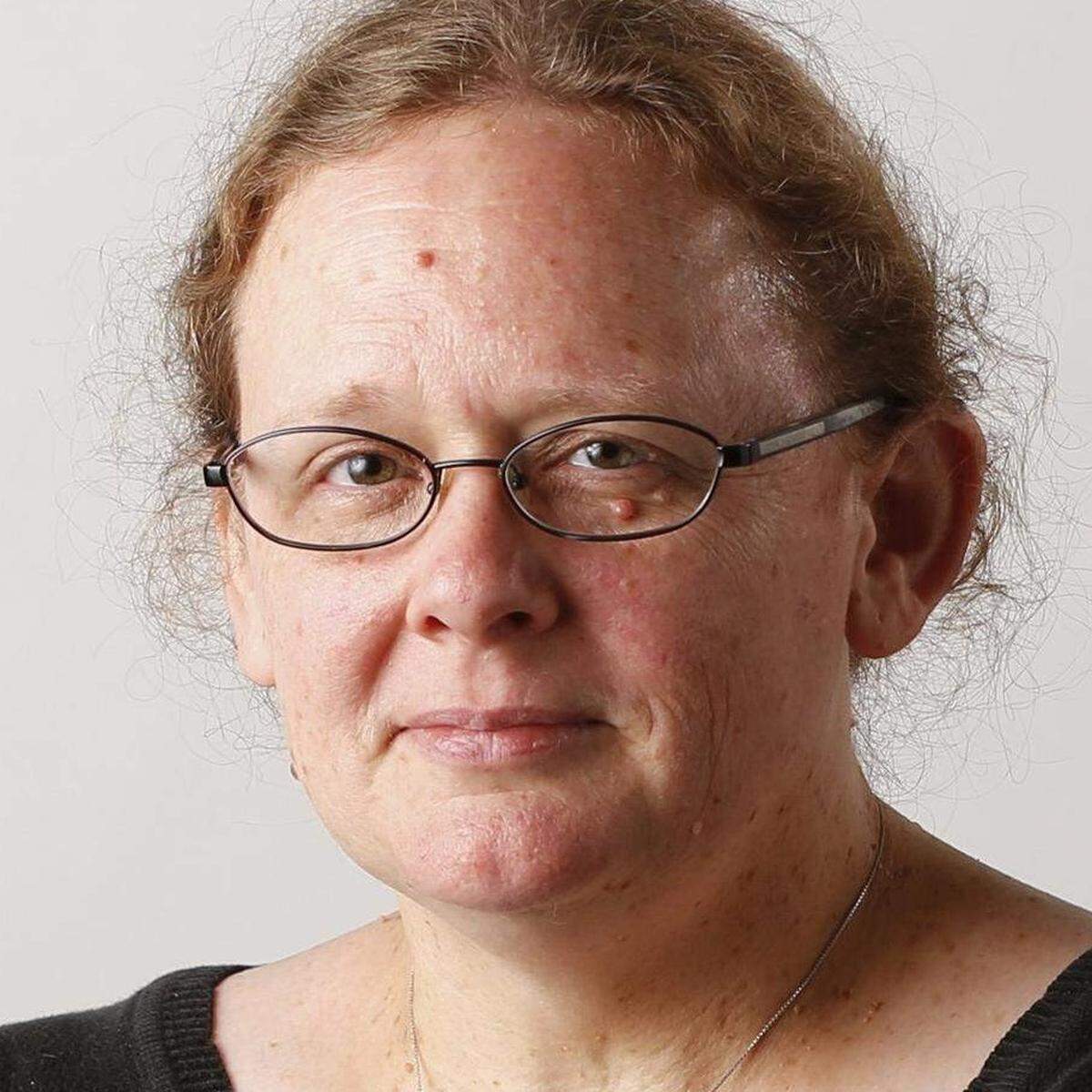
5 questions: A conversation with Chapel Hill mayoral candidate Jessica Anderson

Jess Anderson rode a wave of frustration and anger over tall buildings, “luxury” apartments and other development decisions to win a seat on the Chapel Hill Town Council in 2015.
The nascent citizens group, Chapel Hill Alliance for a Livable Town, played a key role in that election, which also helped Pam Hemminger defeat incumbent Mark Kleinschmidt in the race for mayor. Anderson enjoyed CHALT’s support again in 2019.
This year, Hemminger is stepping down, and CHALT is supporting Anderson’s rival, council member Adam Searing.
Many Chapel Hill residents share the group’s concerns about affordable housing, the potential loss of local businesses, rising taxes and town budget shortfalls, and whether the town can grow in a way that eases traffic congestion and provides more parks, trees and stormwater protections.
Anderson wants to see the town’s Complete Community policy to fruition, adding diverse, affordable and middle-income housing, linked by a comprehensive greenway network, and more jobs and housing downtown. The mother of two young children and a public policy analyst who teaches at UNC has the support of five former Chapel Hill mayors and a slew of other current and former officials.
Anderson faces fellow Town Council member Adam Searing in the Nov. 7 election for mayor. Early voting begins Thursday, Oct. 19, and runs through Saturday, Nov. 4.
Here are excerpts from our conversation with Anderson.
Why hasn’t more been done to revise form-based code in the Blue Hill District surrounding Eastgate Crossing, where only the town manager and Community Design Commission have to approve projects that meet town guidelines?
There are legal and practical reasons that we didn’t change it more than we did. One being there were legal concerns about just rolling it back or putting in a moratorium. We were told that’s just not legal in North Carolina.
There were also concerns that if we changed it too much, developers would throw in applications to hold a spot under the more preferable regulations. And then, the council at that time was not really supportive of making changes.
The fact that we got any changes through, including more commercial space, more green space, more parks and rec requirements, and we dealt with block lengths — all those things were really hard to do given what we came into. (Anderson and Council member Amy Ryan weren’t on the board when it created the district.) We tried to make it better and hopefully in the future, people will see some of those changes.
Greenfield Commons and Greenfield Place is the affordable housing ... that I think the council planned (to offset the loss of the already affordable Park Apartments). We have to rely on our staff to guide developers through the process, and when it comes to us, we can also ask (for affordable housing).
CHALT backed you in 2015 and again in 2019, but the group is now backing your opponent for mayor. What changed?
I hope that I’ve learned and changed some of my opinions over time. If I haven’t changed at all in the past eight years or gotten better at anything or learned anything, I think that should be a concern.
I also think that because I’m a policy analyst, I really needed a framework to work in to make decisions, and that’s what I brought ... (and) the way that I’ve been able to really feel confident about moving forward in ways that I wasn’t confident about at the beginning. That’s why it was so important to bring Complete Community together, so it wasn’t just our opinions or our levels of understanding.
Now we can look at things that people bring to us and say that meets the standard or it doesn’t, or it partially does. That is something that has changed ... so I can be as effective as possible, and I think my colleagues, most of them, have also really appreciated that.
I guess as it relates to CHALT supporting me before and not now, that’s a question for them. I came in saying some (things) need to change, so that may be where we overlapped, that we agreed on some things that we didn’t like. I think I’ve now moved forward, actually in consultation with a lot of CHALT leadership (on the Complete Community policy).
I hope maybe as (people) understand it better, that maybe they’ll come around, but I think we can’t make our decisions solely around one perspective. Given that we now have this capacity analysis and needs analysis and an entire framework of how we make decisions, if people meet those standards, we are going to move forward.
How will you, as mayor, work with your opponent and with members of his slate if there’s a split council?
It’s who I’ve been and who I will continue to be, so that’s not a deviation for me. When I first came in in 2015 people were very distressed about the form-based code and Blue Hill. We were already working with others on how can we improve this.
Similarly, I championed Complete Community, and we actually got unanimous approval for that with people who often don’t agree with me. That’s what I expect of myself and that’s what I think I will optimistically expect of others, that they can come in ready to set aside whatever allegiances they ran on and work for the best interests of the town.
We have the most diverse council I think we’ve ever had in this town, in terms of age, gender, race, socioeconomic status, and so for there to be so many 8-1 votes, I think eight people are saying there’s enough in here that I’ve been able to work with others, I’ve been able to strongly express my own opinion, and we’ve come to some sort of agreement that whatever the final product is that we’re voting on is good enough that it meets the best interests of the town, and I think that’s pretty powerful.
What more do you think the town can do to make sure people are informed?
Council member (Amy) Ryan and I actually launched a “Know Before You Vote,” because we noticed there was more confusion about town issues in this cycle than normal. We wanted to make sure that voters are equipped with factual nonpartisan information, so we always linked back to the original source. We put links with town data and other trusted sources of information.
We now have a community engagement staff person (and) the town manager I think is pretty close to hiring a new communications manager. I think that’s something that the entire council, or the vast majority of the council, has been very clear needs to ramp up, that we need to think of different vehicles to get information out, different places to meet people where they are when we know most folks are just not going to come to council chambers.
I think really rooting ourselves in some basic facts is going to be critically important to having hard conversations. That should be an easy barometer of qualified people to elect into office: Do they know basic factual information, and if they make a mistake, which we all do, and they’ve been corrected, do they then change what they’re saying or do they keep repeating the same thing over and over again? I think this community is going to have to decide.
What has the town done to help downtown business, and what more would you do as mayor?
We approved middle (income) housing downtown, and part of a bringing the innovation space and capturing the spinoffs from UNC is also about supporting downtown businesses.
I think Amy Ryan says it well that the projection is every (downtown) worker or resident, spends $3,000 a year on our downtown businesses, so as you’re bringing new things in, the emphasis is on bringing the right mix and bringing things that are 12 months a year vs. nine months.
(The concern about vacant wet lab space) is not what our financial consultants and our economic/real estate consultants have said. That’s why it’s recommended, not only because of the synergy with the university but also because nobody can do (wet lab work) at home.
We (also) value all our small businesses, so that’s why we have our relocation grant program, that’s why the town has really been providing a lot of assistance, looking at other spaces right on Franklin Street to move to. We have to look at our big-picture strategy and then also take care of the details or take care of folks who may be impacted by that big-picture vision.
This story was originally published October 18, 2023 at 5:35 AM with the headline "5 questions: A conversation with Chapel Hill mayoral candidate Jessica Anderson."