Clarence Birkhead, candidate for Durham County sheriff
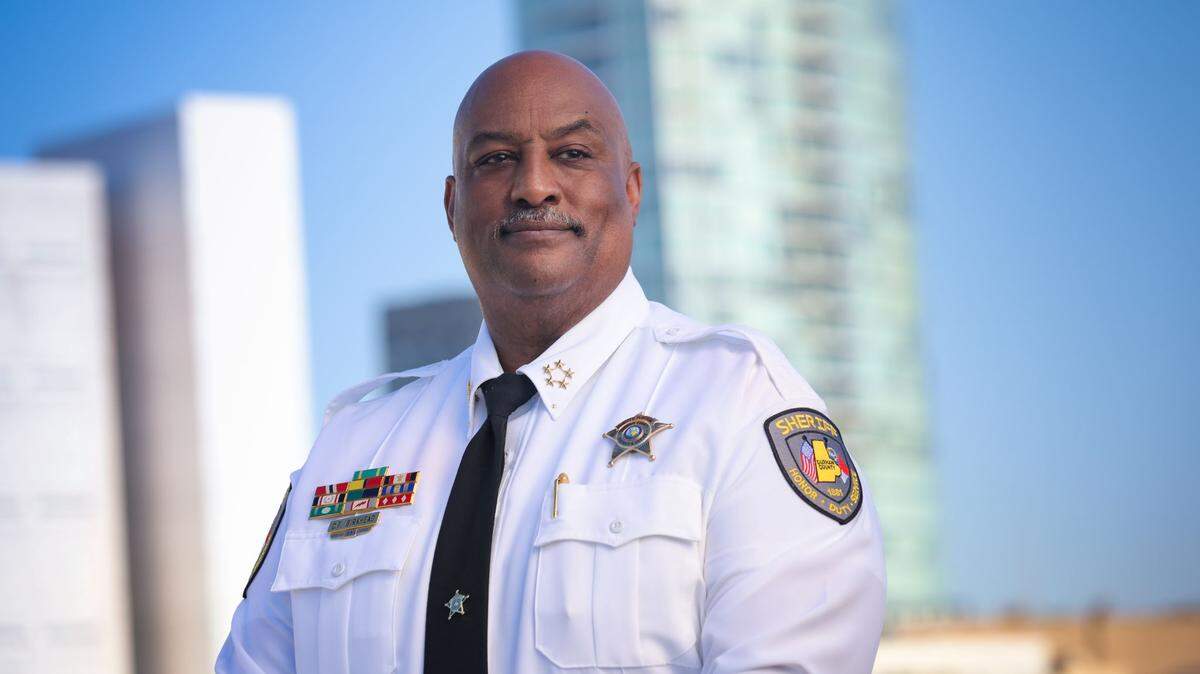
Name: Clarence Birkhead
Age: 61
Political party: Democrat
Campaign website: www.birkheadfordurham.com
Occupation and employer: Durham County sheriff
Education: Master of Science Organizational Management, Pfeiffer University, 2001; Bachelor of Arts Criminal Justice, Shaw University, 1995.
Have you run for elected office before? Yes. Durham County sheriff 2014, 2018. Orange County sheriff 2005.
Please list highlights of your civic involvement: Governor’s Task Force on Racial Equity in Criminal Justice, Citizens’ Advisory Committee, City of Durham/County, Durham city/county Criminal Justice Advisory Committee, Durham Public Schools’ Superintendent’s Closing the Achievement Gap Task Force (CTAG), Former Campaign Leader of the Year for Triangle United Way and Town of Hillsborough, Former assessor on N.C. Governor’s Institute on Alcohol and Substance Abuse Inc.
Who are your top three campaign contributors? Frances Langstaff contributed $4,600, Anthony Broadway contributed $4,000, and Derrick Harrington contributed $2,500.
What are 3 things you want to accomplish in the next year, and how do you plan to accomplish them?
▪ Addressing violent crime. I employ a targeted enforcement approach with law enforcement partners to identify and apprehend the most violent offenders in Durham who must be held accountable. I have created teams to identify offenders who commit crimes across county boundaries and to better respond to complaints, concerns of Durham residents together with the Durham Police Department.
▪ Creating opportunity for equitable access to good-paying jobs. I encourage business owners to hire people who were formerly incarcerated. A second chance can provide residents with life-changing opportunities to earn a living. A job is the quickest way to exit a life of crime and reduce recidivism.
▪ Reducing the mass exodus of qualified Durham County Sheriff’s Office employees. DCSO has fallen behind on competitive salary. As the sixth largest county in North Carolina, salary is among the lowest for deputies and detention officers. On average, one Sheriff’s Office employee is lost per month to nearby law enforcement agencies paying up to 20% more in salary.
What about your experience makes you the best person to be sheriff?
My first term as Durham County sheriff has given me firsthand perspective on the ongoing challenges facing Durham and how to address them. With nearly four decades of diverse law enforcement experience, I have a vast knowledge and understanding of how local government works, how the Office of the Sheriff operates as a constitutional office, and what it means to be a servant leader. Coupled with my formal education and life experiences, I am the best suited to continue in my role serving as Durham’s sheriff.
What does the current administration do well? In what areas does the Sheriff’s Office need to improve?
My administration has excelled at building community relationships and consensus across socioeconomic boundaries. DCSO lacks tools, mainly competitive salaries, to recruit and retain employees. With those tools in place, DCSO will improve recruitment of women and people of color.
How will you attract and retain deputies?
Higher salaries must be negotiated with the Durham County Board of Commissioners to be competitive in the Triangle region recruiting and retaining deputy sheriffs and detention officers. DCSO offers outstanding opportunities to grow as a professional law enforcement practitioner while being exposed to the various functions of the DCSO.
What role does the Sheriff’s Office play in stemming violent crime, and how do you plan to approach that role?
DCSO plays a vital role in addressing violent crime. A targeted enforcement approach and partnership model are effective to identify and apprehend the most violent offenders in Durham. I have created a Strike Team (similar to a tactical team) that works with our regional partners, identifying offenders who commit crimes across county boundaries, and a Sheriff’s Targeted Enforcement Program (STEP) that focuses on being responsive to complaints and concerns presented by Durham residents and developed from local intelligence-sharing with Durham Police. DCSO is among the many law enforcement agencies working to ensure violent offenders are held accountable for their actions — actions that continue to destroy the quality of life in our most marginalized neighborhoods.
Do you support the use of no-knock raids? Why or why not?
No, I do not support the use of no-knock warrants. An unannounced entry into someone’s home creates a chaotic and, potentially, dangerous situation as the occupants may be inclined to protect themselves, which could lead to use of force by police. For this reason, North Carolina law requires the following of law enforcement: “before entering the premises, give appropriate notice of his identity and purpose to the person to be searched” unless “the officer has probable cause to believe that the giving of notice would endanger the life or safety of any person.” N.C. Gen. Stat. 15A-249, 251, 401. DCSO policies and procedures prohibit no-knock warrants. And, in the interest of safety, the majority of our search and/or arrest warrants are done during the day.
Do you support the use of body-worn cameras for deputies?
Yes, during my tenure as sheriff, DCSO improved technology, including body-worn cameras (BWCs). The cameras are being issued to all deputies, school resource officers (SROs), and eventually to detention officers.
As part of this project, the DCSO vehicle dash cameras were upgraded and installed in more vehicles. More than 100 vehicles now have dash cameras. The upgraded dash cameras are programmed to work in conjunction with BWCs, which are activated when the vehicles reach a certain speed allowing more video footage of incidents to be captured by the combined use of BWCs and dash cameras. Among many benefits, transparency and accountability are increased.
Under what circumstances and timelines do you support the release of body-camera footage? For example, do you support video release when requested? Only for serious or fatal incidents? Within 48 hours of the incident or only after the investigation is complete?
We must strike the balance between using body-worn camera footage to hold our law enforcement accountable while also honoring the privacy of those residents who appear in the footage and alleviate concerns of residents about police surveillance or use of force.
The decision to release a body-worn video should be made after careful consultation with the district attorney and family, or their representatives. North Carolina allows video viewing by people depicted in the video or their representatives without a court order. Judicial release sets the conditions to maintain the integrity of criminal investigations and prosecution, the defendants’ right to a fair trial, the family’s privacy concerns, and the public’s right to be informed.
Proposed changes in Senate Bill 300 shift the responsibility of requesting video release to law enforcement, which may lead to faster release. Another proposal permits and requires immediate disclosure of video depicting death or serious bodily injury. I support these changes.
What is your definition of transparency, and how do you plan to apply that to your office?
I ran for office with a platform of transparency, engagement and accountability. During my first term as sheriff, I have regularly provided updates to the community, with emphasis on information to victims’ families. Updates include information about DCSO efforts without compromising the integrity of criminal investigations.
As sheriff, I created the Community Advisory Board, the first of its kind in North Carolina, to hear input directly from community members in a safe space. Through transparency, engagement, accountability, accessibility, trust and confidence in the sheriff and Sheriff’s Office is developed and strengthened.
How will you ensure that people of color and people who are poor are treated fairly?
From my vantage point as a Black man serving as sheriff, my life experiences have influenced my management philosophies. It is important to me that my office treats POC and those less fortunate with fairness, dignity and respect. Under my watch, DSCO has instituted “fair and impartial policing” and racial equity training.
An immediate goal was to evaluate the current culture and begin to transform the office to better reflect the citizens of Durham. Positive changes have taken place, yet there’s more to do. Through community engagement, I am aware of residents’ concerns and complaints. These interactions are used to develop, strengthen and foster relationships with Black, brown and marginalized groups. I am part of the rich fabric of the Durham community of POC, religious organizations, community leaders and community activists taking an active role to improve the quality of life for all in Durham.
How do you plan to prevent deputies from using excessive force? How will your office handle cases involving excessive use of force?
DCSO properly trains deputies and detention officers as law enforcement professionals in service to the people of Durham County. Tools include: a model policy on use-of-force, a policy on an officer’s duty to intervene, de-escalation training, body-worn cameras, in-car dash cams, crisis intervention training, and ongoing training as best practices evolve.
In the event of an excessive use-of-force incident, it is investigated by the Internal Affairs division. Findings are reviewed for appropriate action by senior leadership, including the sheriff.
If elected, will you honor Immigration and Customs Enforcement detainers? Participate in the 287 (g) program?
No, I have not and will not cooperate with ICE regarding detainers when they are not accompanied by a judicial warrant. I acted upon this issue immediately after taking office in 2018, and I will not waver from that decision. No to participating in 287 (g) — never have, never will.
Do you support an independent review board? Under your administration, what would that board look like?
No, I do not support the creation of an independent review board. The Office of the Sheriff is bound by the Constitution, which prohibits the sheriff from delegating any constitutional and statutory duties and authorities. However, I have created a Citizens Advisory Board (CAB) to solicit input from the community, a first in North Carolina. In CAB meetings, I am able to share limited information as prescribed by law. If North Carolina laws protecting employee privacy were decreased, greater latitude would be offered to the sheriff to discuss personnel matters related to alleged wrongdoing.
This story was originally published April 24, 2022 at 9:24 PM with the headline "Clarence Birkhead, candidate for Durham County sheriff."