
Nearly 800,000 early voters in NC — mainly Democrats — already had their Election Day
The countdown is on for Super Tuesday, with just two days left before voters in 14 states cast their ballots for the presidential primary. But nearly 800,000 voters in North Carolina have already made their way to the polls.
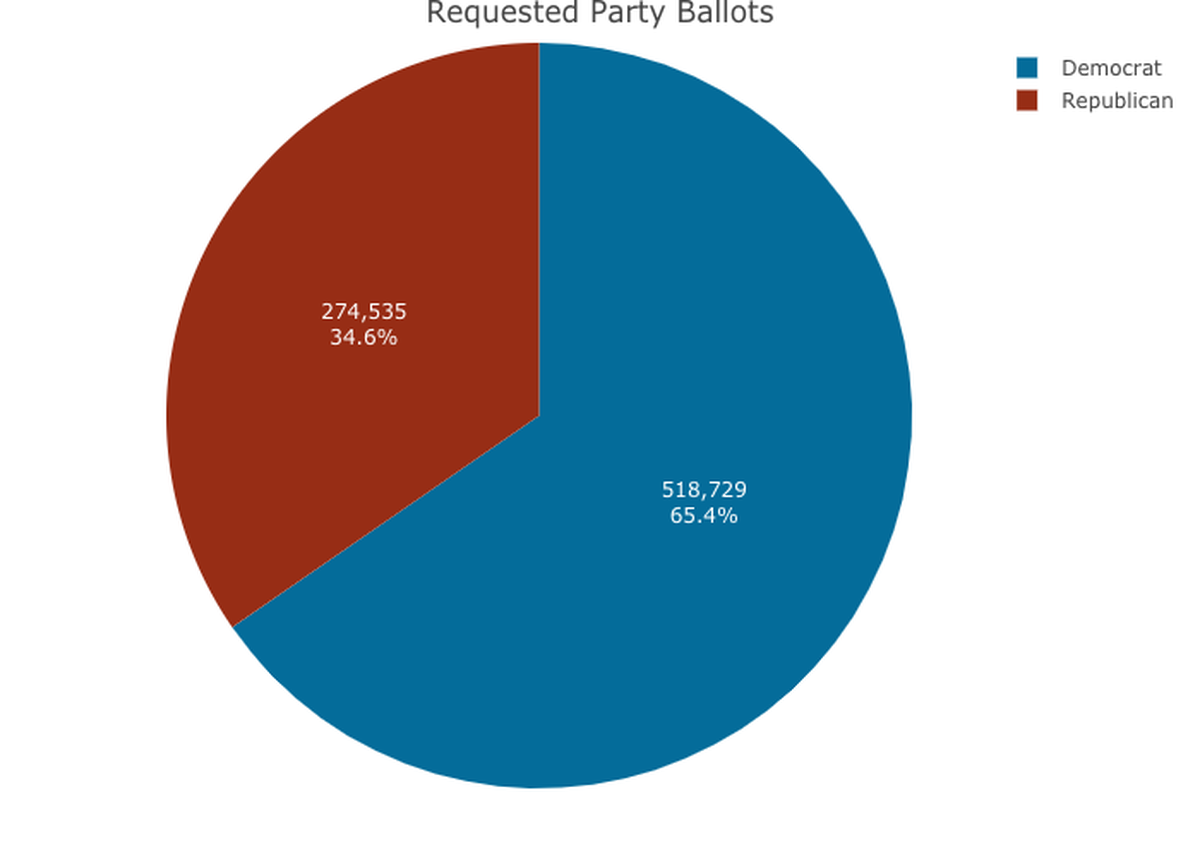
More than half a million people voted in the Democratic primary, while some 274,000 cast a Republican ballot, according to the latest numbers.
Compared to the last presidential primary in 2016, early voters this year saw everything from more voting days, longer polling hours, inclement weather, an all-but uncontested Republican presidential primary and a larger pool of candidates on the Democratic side. All of these factors may have had some effect on when, where and how North Carolina residents voted. And these factors make it difficult to compare voter turnout to previous years.
“In 2016, there were contested primaries for Republicans and Democrats,” said state Board of Elections spokesperson Patrick Gannon. “Every year is going to be different.”
This year, early voters — in-person and by mail — surpassed those in the 2016 presidential primary by more than 68,000 voters, according to the most recent numbers released by the board. An increase of nearly 100,000 more in-person early voters drove that growth.
Early voters made up more than 11% of all registered voters in both 2016 and 2020.
The biggest surge of 2020 primary voters came in the final days of early voting, with more than 250,000 casting ballots on Friday and Saturday, according to preliminary numbers.
Late surge
Voters didn’t show up in droves when the polls opened Feb. 13. In 2016, early voting lasted just 10 days, compared to this year’s 17. Early reports indicated that voter turnout was much lower compared to previous years.
Michael Bitzer, politics professor and department chair at Catawba College, said that could have been due to voter indecision.
“I think that the average Democratic voter was looking at the field and was thinking, I still don’t know who to vote for,” Bitzer said.
In the last few days, that changed.
“Things have kind of really picked up the last couple of days,” Bitzer said. “The deadline is getting closer and people have to make up their minds.”
Comparing to 2016
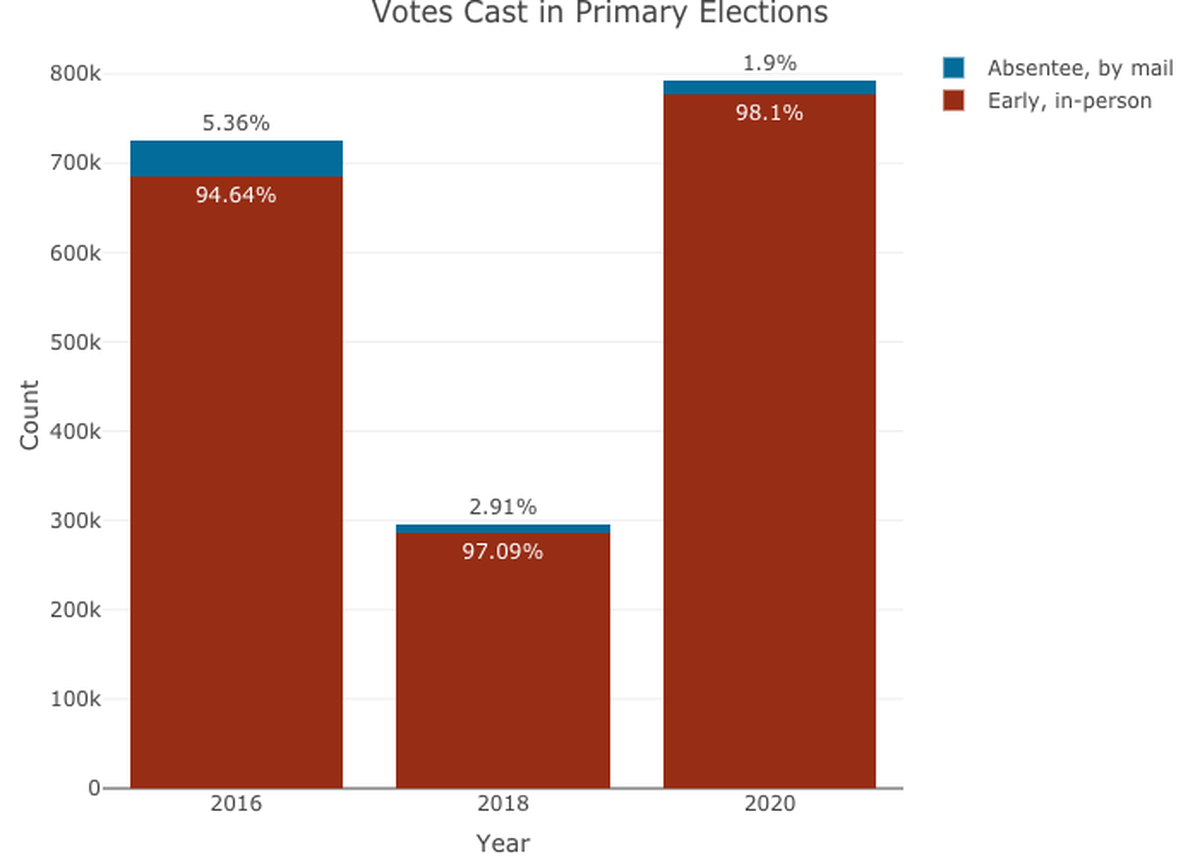
In 2016, just over 724,000 people voted early. Ninety-four percent of those were early, in-person voters. That means around 6% percent of ballots — some 38,000 — were mail-in.
This year, 98% of the nearly 800,000 early voters cast in-person, also called one-stop, ballots during the early voting period which opened Feb. 13 and closed Saturday afternoon. Mail-in ballots made up the remaining 2%.
But absentee ballots are still coming in. Mail-in ballots must be postmarked by the day of the primary election, and must be received by Friday, March 6, though that deadline is extended for overseas voters. And votes from same-day registration voters — those who register and vote during the early voting period — are often not shown online until the following day. That means turnout numbers are bound to evolve over the upcoming days and weeks.
“There are so many nuances,” said Wake County Board of Elections member Gerry Cohen. “If the race was really close, then it could make a difference.”
Race and gender
More than 47% of early voters this year were registered Democrats, according to state Board of Elections data. Nearly 27% were unaffiliated, and 25.6% were registered Republicans.
Those splits were slightly different in 2016, where nearly 45% of early voters were registered Democrats, nearly 32% Republican and 23% unaffiliated.
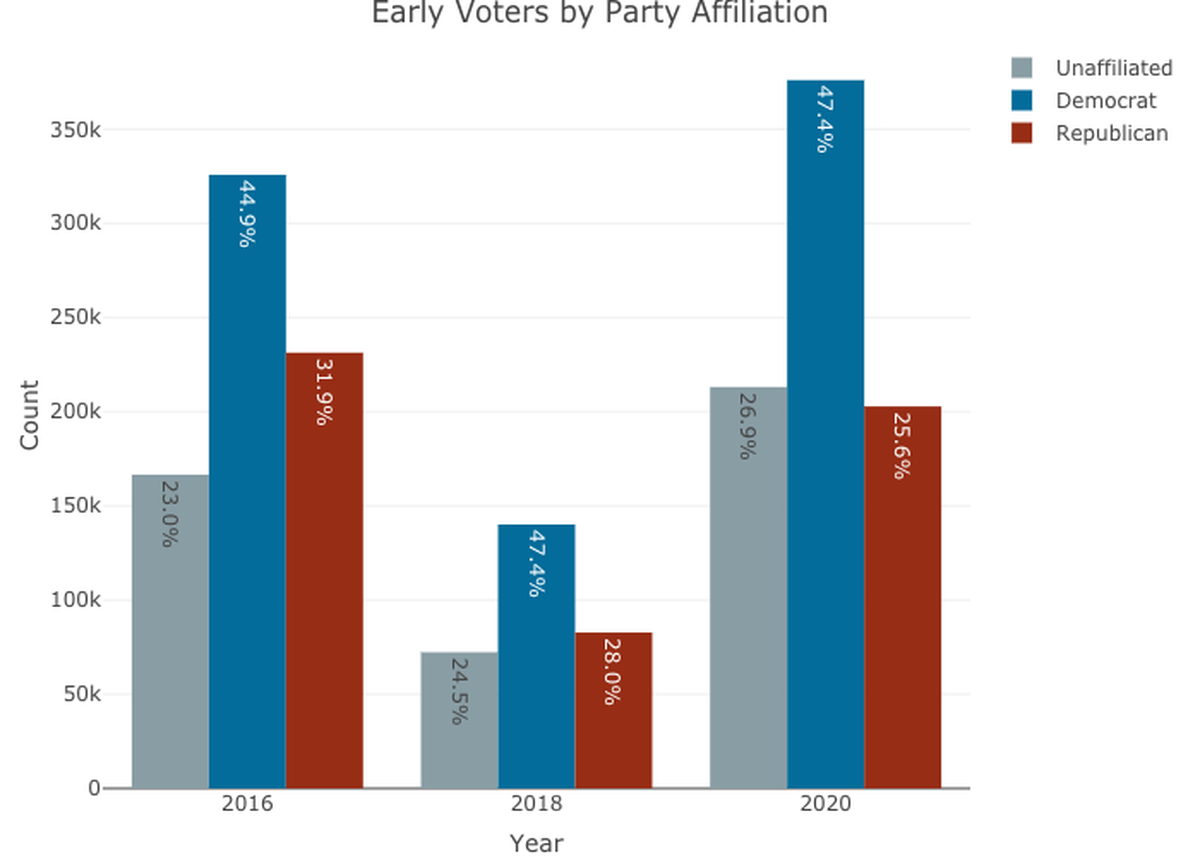
Experts say there seems to be more enthusiasm among Democrats. This year, 15% more Democrats voted early than in 2016.
“There’s a lot of get-out-the-vote and campaigning with a lot of active presidential candidates on the Democratic side,” Cohen said. “That really drives turnout somewhat.”
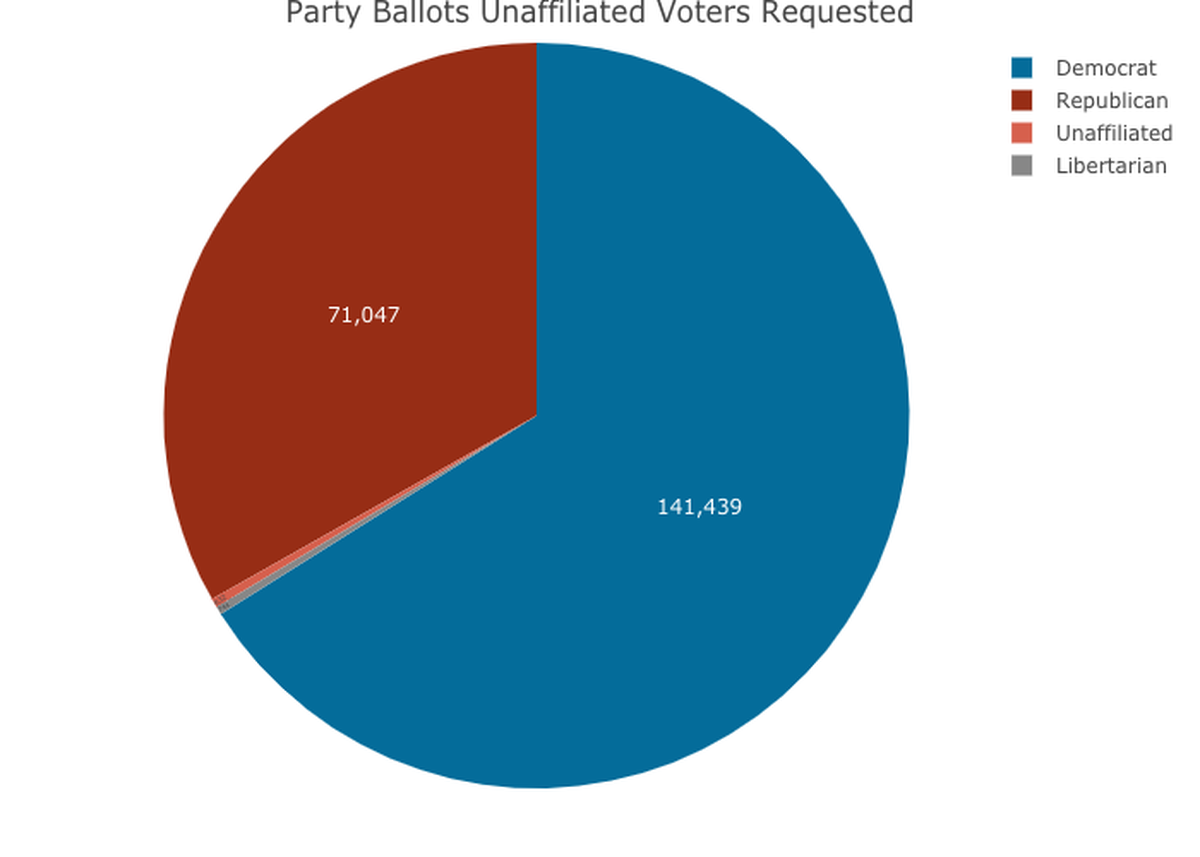
And while the number of unaffiliated voters has risen since 2016, most unaffiliated voters cast ballots in the Democratic primary.
Women cast more early ballots than men in both of the last presidential primaries, and black voters made up nearly 22% of voters both this year and in 2016.
On Saturday, a last-minute surge of non-white voters made it to the polls before early voting closed, Cohen said. That day, 47% of Democratic voters were non-white, Cohen said. Across the previous 16 days of voting, however, non-white turnout was about 33%.
The last-minute surge could have been due to snow in some parts of the state, or because they were waiting to see what would happen in other states. But whatever the reason, more people have voted in this year’s primary than in recent years. That could mean election officials will have a busy Super Tuesday, Cohen said, but it’s impossible to say for sure.
“A lot of (voters) made their decisions much later than they normally do,” Cohen said. “Given that it is a sort of sudden rush, I would think there’s going to be a higher turnout on Tuesday.”
For more North Carolina government and politics news, listen to the Domecast politics podcast from The News & Observer and the NC Insider. You can find it on Megaphone, Apple Podcasts, iHeartRadio, Stitcher or wherever you get your podcasts.
This story was originally published March 1, 2020 at 2:45 PM with the headline "Nearly 800,000 early voters in NC — mainly Democrats — already had their Election Day."