Been putting off election research? Here’s our guide for procrastinators like you.
People in North Carolina and 13 other states are casting their votes in the presidential primaries, helping Democrats decide who will take on Republican President Donald Trump this November.
In North Carolina, though, it’s not just about the presidential race. Voters of all political persuasions have the chance to weigh in on races ranging from governor to Congress and the state legislature — as well as in local government, with races like county commissioner also on the ballot for some.
That means potential voters — whether they’re Republicans, Democrats or unaffiliated — have plenty of races to research and candidates to learn about. In primary elections like this, people who are registered with a political party have to vote in that party’s primary, but people who are registered as unaffiliated can choose which party’s primary to participate in.
There are hundreds of candidates running for office all around North Carolina this year. The News & Observer, the Herald-Sun and the Charlotte Observer asked many of them to fill out questionnaires, to help voters go to know them better. You can find answers from:
▪ Legislative candidates in the Triangle
▪ Legislative candidates in the Charlotte area
▪ U.S. House candidates in the Triangle: the 2nd and 4th districts.
And for people who haven’t voted in a while — or possibly ever — here are some things that might be useful.
How to vote
It can sometimes feel overwhelming finding all the information about voting, particularly where your precinct is or what you need to bring.
For the primary, you won’t need to bring a photo ID this year, due to a court ruling that blocked the state’s voter ID law from going into place for now.
But where to vote? Counties post that information on their own elections board websites, and it can also be found on the N.C. State Board of Elections website. Go to vt.ncsbe.gov and click on “Voter Search.” Then enter your name, and click on your voter profile to find your polling place.
And for people who already know where to vote, that site is still helpful because it has a sample ballot showing you exactly what races you’ll be voting on when you go to the polls.
If you see offices or candidates you’re not familiar with, our online voter guide may be of assistance.
Also, what happens if for some reason you can’t get to the correct precinct? You should still be able to vote, using what’s called a provisional ballot. There will be some extra paperwork, but anyone who shows up to the polls should be allowed to vote. In the case of people who vote by provisional ballot, election officials will check those later and make sure that the person who cast the ballot was allowed to do so, before deciding whether the votes should count or not.
Finally, for people who haven’t already registered to vote, or who are registered to vote at an old address that’s no longer accurate, it’s too late to sign up for this election. However, there is still plenty of time to get properly registered by the general election in November.
To update your registration, or register to vote for the first time, go to www.ncsbe.gov/Voters to find the forms.
Polls are open from 6:30 a.m. to 7:30 p.m.
Who’s on the ballot
Statewide, both Republicans and Democrats have primaries for president, U.S. Senate, governor, lieutenant governor, auditor and superintendent of public instruction.
The Democratic presidential primary is at the top of voters’ minds in that party, and the field has now narrowed to just a few candidates remaining — although voters will still see 15 candidates’ names on the ballot here in North Carolina, since they were printed months ago.
And what about people who still haven’t decided who they prefer for the Democratic nomination?
Here are some primers that might be useful: Where the Democratic candidates stand on health care, economic issues like minimum wage and affordable housing, and HBCU issues. North Carolina has many historically black colleges and universities, including the country’s largest: N.C. A&T University in Greensboro.
In North Carolina’s U.S. Senate race, incumbent Republican Sen. Thom Tillis is the favorite to win the GOP primary, while in the Democratic primary several candidates are competing for the chance to take on Tillis in November.
In addition to those races with primaries on both sides, the Democrats also have statewide primaries for treasurer and agriculture commissioner. And the Republicans also have statewide primaries for attorney general, labor commissioner, secretary of state and insurance commissioner.
All 13 of North Carolina’s U.S. House seats are up for grabs this year, too, although not all of them have primaries.
But in three of the 13 seats, a Republican incumbent decided not to run for re-election, opening up interesting primaries to watch.
In two of those seats, the incumbents stepped down after a court ruling in a gerrymandering lawsuit forced the state legislature to redraw those districts’ lines to favor Democrats instead of Republicans. That means whoever wins the Democratic primary is likely going to win the general election in November.
Those two newly Democratic-leaning seats are based around Raleigh (NC02) and Greensboro (NC06). The third seat with a hotly contested primary is the 11th district in western North Carolina, currently Republican Rep. Mark Meadows’ seat. There are crowded Democratic and Republican primaries in that race, as both parties seek to replace Meadows.
For more North Carolina government and politics news, listen to the Domecast politics podcast from The News & Observer and the NC Insider. You can find it on Megaphone, Apple Podcasts, iHeartRadio, Stitcher or wherever you get your podcasts.
Senate
Click a candidate's name to read an explanation to his or her answer.
Would you vote to keep, expand or end the Affordable Care Act?
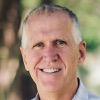 Thom Tillis (R): End
Explain your response. What is your plan for expanding affordable health care to more Americans?
I’ve heard from many North Carolinians who are struggling because of Obamacare, forced to either pay skyrocketing premiums or forgoing health insurance altogether and paying the individual mandate penalty. More than 70% of North Carolinians who have been forced to pay the penalty make less than $50,000, which is why I successfully worked to repeal the individual mandate. I’ll continue to fight for affordable health care that gives North Carolinians the choices they want and the protections they need, which is why I introduced the Protect Act, which would guarantee that you can’t be denied coverage or charged more for a pre-existing condition.
 Sharon Yeager Hudson (R): End
Explain your response. What is your plan for expanding affordable health care to more Americans?
The Affordable Care Act works for some people. We need a system that works for everyone. Free market private health insurance would help the most people have the best coverage at the lowest cost. But we must also address the problem of pre-existing conditions. According to health care expert Christopher Jacobs - “Obamacare uprooted the entire market to address a comparatively small universe of truly uninsurable patients. A better reform would use a more specialized approach.” One possible solution is to set up a network of state high-risk pools. Jacob’s research shows that would cost significantly less than Obamacare.
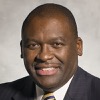 Trevor M. Fuller (D): Keep, Expand
Keep, Expand
Explain your response. What is your plan for expanding affordable health care to more Americans?
Health care is one of the biggest and most consequential expenses families incur. But our health care system has put quality, comprehensive healthcare out of reach for millions of Americans. Rather, we have a system in which health care is made available only to some and primarily through private insurance companies. In other words, we have a system in which, metaphorically, the fox is guarding the hen house. Insurance companies are deciding the amount, cost and quality of care for individuals -- life and death decisions in the hands of entities for which their primary motive is making a profit. This is not sustainable. Meanwhile, nearly 30 million Americans have no health insurance at all. I believe health care is a right for all Americans. The passage of the Affordable Care Act was an important first step. Now is the time for bold action to finish the job with universal health care available for everyone. Medicare for All makes that possible, and that is why I support it.
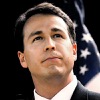 Cal Cunningham (D): Expand
Explain your response. What is your plan for expanding affordable health care to more Americans?
I will work to strengthen and extend coverage under the Affordable Care Act, and will stand up against all attempts to roll back protections for people with pre-existing conditions and other benefits of this law. I will also build on the ACA by creating a public health insurance option, and do more to support rural hospitals and address doctor shortages. Moreover, it is long past time that North Carolina expand Medicaid, which would cover more than 600,000 North Carolinians.
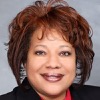 Erica D. Smith (D): Keep
Explain your response. What is your plan for expanding affordable health care to more Americans?
I absolutely support the ACA which, while still imperfect, has brought peace of mind to over half a million North Carolinians this year alone, confident that they cannot be denied coverage of pre-existing conditions and that they can find affordable insurance. A recent reduction in premiums and continuous enrollment has promoted efficacy of the ACA. I support transitioning from the ACA to Medicare for All, a single payer system that extends health care for all Americans that includes prescription drug price controls, no limitations on pre-existing conditions, and reinvestment of profits to consumers through tax deductibles.
Our health-care system, and its inequities and inadequacies, is a complex of interconnected problems. As an engineer, I know that we cannot take a simple-minded approach to repairing a complex system, just as I know that few if any members of Congress have the skill and insight to solve the problem without the deep contributions of public health experts, health-care economists, medical thought-leaders, educators, and NGOs focused on health-care equity. I believe that Congress must convene a body of such experts to study the problem systematically and to craft non-partisan recommendations for a systematic legislative solution, following which we must launch a ‘Manhattan Project’ to achieve the goal. “Further study of the problem” is too often used as a dodge and excuse for doing nothing, but study designed to lead to action is truly needed here. I don’t believe that any of us – least of all politicians - yet has a complete solution to our nation’s health-care crisis.
Health care should be approached as population health with coordinated strategies that would improve health ratings, access to health care and comprehensive population wellness. This health task force should have the responsibility of addressing the health-care crisis by stabilizing access to universal health care and improving population health through multidisciplinary and multi-department strategies that include the USDA, Department of Education, Health and Human Services and all other necessary agencies to increase access to preventative health, increase recreation access and fitness awareness and promote access to healthy food options.
• Congressional appropriations of resources through Community Development Block Grants (CDBG) for funding programs to address health disparities through community health partnerships.
• Providing more access to preventative care by closing the health-care coverage gap through expansion would make a tremendous impact with reducing high costs of patient emergency care and provide early diagnosis and prevention of serious illness.
• Addressing food deserts and consequent lack of healthy options through farm-to-table initiatives, community gardens. USDA grants, and healthy eating public service programs.
• Promoting ecotourism and recreation through expanding development of walking, biking and scooter trails, of which Durham is leading the push for biking lanes and community health initiatives. Revise our elementary and secondary education standards of learning to include an increase in P.E. requirements for students K-12.
 Paul M Wright: End
Explain your response. What is your plan for expanding affordable health care to more Americans?
Get liberal politicians and government out of health care. Provide services to the poor.
Do you support Medicare for All?
Thom Tillis (R): No
Explain your response.
It has been disappointing to see the Democratic Party embrace “Medicare for All” because it’s a radical proposal that represents the total government takeover of our health care system, forcing every North Carolinian off their employer-sponsored health insurance that they earned. I believe in patient-centered health care reform that protects pre-existing conditions and will provide all North Carolinians with the affordable and quality choices that work best for their needs and their budget, and I will oppose all efforts to move America towards a system that eliminates your choices and gives control of your health care to government bureaucrats.
Sharon Yeager Hudson (R): No
Explain your response.
I am for limited government. A free-market approach that uses deregulation to enable companies to offer affordable insurance plans is preferable to growing a big government program. I have seen families with sick children. I have had sick children. I know we need health care that meets everyone's needs. I think we can get there without growing our government even more.
Trevor M. Fuller (D): Yes
Explain your response.
I support Medicare for All because it is consistent with American values, it will improve the health of all Americans at a lower cost, it will reduce health disparities, people will no longer go bankrupt because of a medical condition, and because the rapacious profiteering in our current healthcare system simply cannot be sustained.
Cal Cunningham (D): No
Explain your response.
I share the goal of making sure everyone has access to health care and I think we can achieve that by adding a public option to the Affordable Care Act, while ensuring no one loses their employer-sponsored coverage who wants to keep it.
Erica D. Smith (D): Yes
Explain your response.
I further support transitioning from the ACA to Improved Medicare for All, single payer system that guarantees coverage of medically necessary health care for all Americans, including prescription drug price controls, no limitations on pre-existing conditions, vision, dental, mental and behavioral health, long-term and home health care with reinvestment of profits to consumers through tax deductibles. There are several proposals for Medicare for All; I find Rep. Jayapal’s HR1384, the Medicare for All Act of 2019, as a progressive and pragmatic approach to this transition. The Act includes retraining and/or severance for any health-care workers, including insurance professionals displaced by the Improved Medicare for All program, for a period of five years.
Our health-care system, and its inequities and inadequacies, is a complex of interconnected problems. As an engineer, I know that we cannot take a simple-minded approach to repairing a complex system, just as I know that few if any members of Congress have the skill and insight to solve the problem without the deep contributions of public health experts, health-care economists, medical thought-leaders, educators, and NGOs focused on health-care equity. I believe that Congress must convene a body of such experts to study the problem systematically and to craft non-partisan recommendations for a systematic legislative solution, following which we must launch a ‘Manhattan Project’ to achieve the goal. “Further study of the problem” is too often used as a dodge and excuse for doing nothing, but study designed to lead to action is truly needed here. I don’t believe that any of us – least of all politicians – yet has a complete solution to our nation’s health-care crisis.
I broadly support the goal of providing every American with equitable and affordable health-care coverage. After intensive research and funding analysis, I have concluded that IMFA is the strongest proposal to get us there. For a better understanding of funding, plan overview, cost comparisons and information, I recommend www.healthcareforallyall.org. This will be one of my first and foremost goals when I am seated in the U.S. Senate.
Paul M Wright: No
Explain your response.
"Single payer" is a confusing term that few understand, China is a single-payer country. I am against single-payer socialized government health care.
Do you support a wall on the Southern border?
Thom Tillis (R): Yes
Explain your response and how you would work to stop or limit illegal immigration.
We must fix America’s broken immigration system and secure our borders. That’s why I support an all-the-above strategy to invest in personnel, technology, and infrastructure, including walls where they make sense.
We need to move to a merit-based immigration system built on the needs of our economy. I support reforms that stop illegal immigration, which is a matter of fairness to both American workers and to legal immigrants who follow our laws and patiently wait for their chance at the American Dream. Unlike my opponents, who support sanctuary policies, I've led efforts to crack down on sanctuary jurisdictions that shield violent criminals.
Sharon Yeager Hudson (R): Yes
Explain your response and how you would work to stop or limit illegal immigration.
An immigration policy based on merit would be ideal. Those seeking political asylum should be considered on a case-by-case basis. Refugees should be housed as close to their home country as possible until it is safe for them to return. Our borders must be secured. Build the wall where it is needed.
I support a robust guest worker program that is unrelated to immigration. They must be sponsored by companies, and there are strict guidelines as to who can participate. They are not in line to become citizens. They cannot vote.
Trevor M. Fuller (D): No
Explain your response and how you would work to stop or limit illegal immigration.
Immigration has been deplorably politicized by this Republican president and his Republican allies in Congress. Yet, they acknowledge that we cannot deport the 11-12 million undocumented immigrants who already are in our country, they tacitly acknowledge the importance that immigrant labor has played in the economy, and they know that we cannot continue to cage children at our southern border. From these basic truths, I believe there is room for comprehensive immigration reform. So I support the following approach:
1. Increase foreign aid to the nations of Central America from which many of the undocumented immigrants are coming, for the purpose of improving the conditions that are causing them to flee their homes;
2. Pass DACA legislation that cannot be taken away summarily by an executive order;
3. Pass legislation to end family separation at the border (in fact, making it illegal to separate children from their families), allow asylum seekers to remain the U.S. while going through the application process, and provide better funding to speed the asylum and naturalization processes; and
4. Create a pathway to citizenship for undocumented people already in the country, so as to bring people out of the shadows and improve public safety in our communities.
State and local governments should not be responsible for the enforcement of federal immigration law.
Cal Cunningham (D): Maybe
Explain your response and how you would work to stop or limit illegal immigration.
As an Army veteran, I take the safety and security of North Carolinians seriously, including border security. While I don’t support President Trump’s efforts to divert money from our military bases to build a wall along the entirety of the southern border, I do believe that the smartest and most cost effective way to secure our border is through a strategic mixture of physical barriers, technology, and manpower. I also support comprehensive immigration reform that fixes our broken system and modernizes it for the economy of today, grows North Carolina’s economy, protects DREAMers, and provides a fair pathway to citizenship.
Erica D. Smith (D): No
Explain your response and how you would work to stop or limit illegal immigration.
I do not support an ornamental Southern border as it is simply a distraction and lacks any real and serious conversation about immigration or immigration reform. The border walI currently being constructed with illegally diverted funds from other congressionally approved projects is already being rendered useless with sawed through portions revealing the fallacy of depending upon a simple structure as a comprehensive immigration plan. I am not in favor of open borders, but there are so many other methods and techniques to defend our border with technology, drones, etc. There are so many other ways to defend our borders with a comprehensive approach to immigration.
I will support and defend DACA, as well as comprehensive immigration reform providing a pathway to citizenship. And because we have always been a nation of immigrants, always will be, and are enriched by the energy that immigrants bring with them to our country, I will fight to reverse the current administration’s hostile immigration policies, while recognizing that secure borders and orderly immigration procedures are necessary for any country.
Needed reforms of U.S. immigration policy include:
-Defense of DACA. In my service as a state senator I have already demonstrated my support for DACA recipients through my sponsorship of 2019 Senate Bill 615 (“DACA Recipients In-State Tuition”). But so much more remains to be done for these innocent and eager would-be citizens that can only be accomplished at the federal level.
-A clear and equitable pathway to citizenship for current undocumented immigrants who have proven themselves to be responsible and contributing members of our society.
-Border security (not Trump’s ornamental wall!) implemented hand-in-hand with humane immigration and refugee policies and quotas that incentivize legal entry to our country by those who seek a better life and offer their boundless energy to this nation – a nation built (and still being built) by immigrants, refugees, and their offspring – that is to say, nearly all of us.
As we work toward these admittedly challenging goals, near-term measures needed to better humanize our treatment of current undocumented immigrants consist, first, of systematically reversing each and every one of the president’s heartless and destructive new DHS policies and procedures. Comprehensive congressional investigation is called for to thoroughly document the disaster of our government’s recent and current family separation activities, with the goal of guiding legislation and appropriations to reverse as much of the damage as possible, and to ensure our nation can never take this same inhuman course again. Additionally, on both moral and public health grounds, we must extend Obamacare (and universal health insurance when it becomes available) to include immigrants both documented and undocumented.
The Department of Homeland Security has, over the past three years, proven itself to be vulnerable to being hijacked by despots and xenophobes. New legislation is required to ensure that can never happen again.
Paul M Wright: Yes
Explain your response and how you would work to stop or limit illegal immigration.
A wall is just one of many tools we should use. Liberal politicans and media are trying to bring about a cultural political revolution of traditional America through no borders.
Do you believe humans are contributing to global climate change?
Thom Tillis (R): Yes
What should the government do (or not do) to combat the effects of climate change?
We need to address the long-term effects of climate change with free-market innovation and not a heavy-handed, big-government approach that would tank our economy and cause our tax and utility bills to skyrocket. I firmly oppose the Green New Deal, which dictates where Americans can live, what types of cars they can drive, and what kinds of foods they can eat. Instead, I support commonsense steps to enhance our clean energy infrastructure. That’s exactly what I did as speaker when I negotiated a renewable portfolio standard for the state, and what I’ve done in the Senate by promoting renewable energy like solar.
Sharon Yeager Hudson (R): Don't know
What should the government do (or not do) to combat the effects of climate change?
While we have many serious challenges in North Carolina, including coal ash leaks and cancer clusters, I do not believe draconian laws that will ultimately destroy our economy will benefit us. The Green New Deal promises a massive economic transformation that would touch every corner of society. It is as much about solving "inequality" as it is about the environment.
I am very concerned about the environment. I love being outdoors. I want clean air and clean water. But to me the Green New Deal looks like just another plan to redistribute wealth, take my liberty and bankrupt the country.
Trevor M. Fuller (D): Yes
What should the government do (or not do) to combat the effects of climate change?
Climate change is real. I believe the science. To witness supposedly educated people deny the science is perplexing. I support the Green New Deal. It is a bold road map for addressing the impact of climate change on our lives. In particular, I favor its focus on building resiliency against climate change-related disasters, providing Americans with improving access to clean water and air, repairing and upgrading our national infrastructure, including building energy-efficient and smart power grids, spurring growth in clean energy jobs, supporting family farming, high-speed rail, and many other initiatives to improve the quality of our life on this planet.
Cal Cunningham (D): Yes
What should the government do (or not do) to combat the effects of climate change?
Climate change is one of the most urgent issues we face. We need to invest in a clean energy economy that will create good-paying jobs, reduce carbon pollution, and make North Carolina a leader. I support efforts to move to 100% renewable energy by 2050, rejoin the Paris Climate Agreement, and retrain workers for green energy jobs. North Carolina can be a leader. Solar energy is spreading, providing good-paying jobs and economic investment in rural areas. We also need green and sustainable investments in infrastructure in North Carolina to help drive the economic growth of the future.
Erica D. Smith (D): Yes
What should the government do (or not do) to combat the effects of climate change?
My expertise and experience in equitable, sustainable economic development informs my position that growing a green economy is good business and good for the Earth. The switch to sustainable, carbon-free energy, climate remediation, and 21st century transportation systems can both supercharge our economy and save our planet. I will support and sponsor legislation in each of these areas.
First and foremost, the dangers of the impacts of climate change are real. I am an engineer and I believe in facts; science facts over science fiction. Currently, I represent several counties in northeastern NC that experienced major impacts from Hurricanes Matthew and Florence. I learned, first-hand, the importance of providing responses to natural disasters with an organized, comprehensive and structured response that addresses immediate emergency needs and sets resiliency planning. The types of 100-year and 500-year floods that we have experienced in two years across this nation is a warning to America that we must have a more proactive plan to deal with global warming, climate control and disaster responsiveness. Communication is a key component in responding to disasters. In this vein, we must continue to invest in satellite and communications technology that provide early prediction and monitoring of storm patterns in order to evacuate as many people as possible out of the eye of the storm. We must further perform analysis of climate change and implement policy and target goals for reducing emissions and carbon-power generation. Other necessary steps would be to relocate threatening industries outside of the flood plains so that we can limit pollution to our clean water supplies that result from spillage, pond overflow, and flooding. Our local, state and federal planners must optimize engineering designs for emergency structures that withstand category 2, 3 and 4 winds and stop relying on schools – many of which are in no condition to safely house residents in a storm. There must be federal, state and local efforts to audit regulations, policies and statutes with various EPA, Emergency Management and FEMA related to crisis response and modify any current practices for more optimized results.
Our state and nation are rich with agriculture, eco-tourism and natural resources, including mountains, beautiful lakes, rivers, streams and coastal beaches. I support environmentally responsible growth that harnesses these resources toward promoting clean energy initiatives, fishing and wildlife protections as well as our state’s No. 1 industry, “farming." I support solar and wind energy installations, broadband expansion and environmental justice for land owners.
Paul M Wright: Don't know
What should the government do (or not do) to combat the effects of climate change?
Continue progress to control polution of the air but also the water and ground, such as ending GMO crops and chemical farming.
Do you support the USMCA trade agreement? And what would you do to improve wages and job opportunities for Americans?
Thom Tillis (R):
I’m proud to have voted for the bipartisan USMCA, which is going to be a great opportunity for workers in N.C., especially our farmers and small businesses. We need to continue the pro-growth tax and regulatory policies that we have enacted during the last three years in order to further stimulate our economy. The 2017 tax cuts have given us record-low unemployment, unprecedented opportunities for women and minorities, and wages for rank-and-file workers that are rising even faster than those of their bosses. While my Democratic opponents want to repeal these tax cuts, I want to build on them.
Sharon Yeager Hudson (R):
I have not researched the USMCA, but any trade agreement can be improved upon. The important thing is not to enter into an agreement that is difficult to cancel or change. Obamacare, for example, was designed to be almost impossible to dismantle. In any plan or agreement it is essential that there be a way to exit. Just ask the British about their difficulties with Brexit. In North Mecklenburg we have a $665 million toll lane project that no one wants, but that no one can get rid of. Why? Because that's what Thom Tillis ordered.
Trevor M. Fuller (D):
Reluctantly, yes. Too many Americans are living paycheck to paycheck, working two and three jobs, struggling to make ends meet. The American Promise has been that if you work hard and play by the rules, you can succeed, no matter where you’re born. But that has not been the case for a large proportion of families. It is high time for a change. We need to raise the federal minimum wage to $15 per hour, phased in over a few years. I also believe we should phase-out the sub-minimum wage for tipped workers. These measures will help us get more money into people’s pockets so that they, in turn, can purchase goods and services in our economy, which benefits everybody. In addition, since education is the key to prosperity, early childhood education is essential.
Every child, from birth to age 5, should have access to a quality early childhood education, no matter their financial circumstances. The evidence is clear that every dollar of investment in early childhood education reaps multiple returns. I led the effort to implement universal pre-K in Mecklenburg County. Nearly 2,000 children now are receiving a quality early childhood education who did not previously have access to it. That is why I support national universal early childhood education and care from birth for all children, particularly when only about 39% of third-graders read on grade-level.
Cal Cunningham (D):
Yes. I’ve long been in favor of renegotiating NAFTA because North Carolinians, like the furniture manufacturers in my hometown of Lexington, saw the impact it had on our manufacturing workforce. USMCA represents a step forward for communities who’ve been left behind by unfair trade, and has better environmental and worker protections. I support raising the minimum wage, promoting full-time jobs with benefits, and adjusting our tax system to benefit low and middle income families, not the wealthy few as the GOP tax law did. I support expanding the Earned Income Tax Credit and Child Tax Credit to help more families.
Erica D. Smith (D):
The USMCA represents only slight differences between it and the former NAFTA. Those slight differences offer both net gains and net losses for the U.S. consumer and business environments to include:
*Importantly, the USMCA is largely silent on climate change and the environment. There is a small concession that all three countries will “adopt, implement and maintain” seven different multilateral environmental agreements, covering issues such as endangered species. But there is nothing in the agreement to require countries to take steps on climate change.
*Farmers will see little difference and only small gains from the provisions of NAFTA to include small additional access to the Canadian markets for limited producers. Many of the agricultural provisions are the same as in NAFTA, which has already canceled most duties on food products moving across the United States, Canada and Mexico.
*Auto makers will have more rigorous tests of North American production (75%) to comply with the USMCA versus the 62.5% requirement under NAFTA. While it could add jobs in the U.S., it could also result in higher prices for automobiles in the U.S. amid cries of protectionism.
*Pharmaceutical companies were rebuffed when attempting to include patent protections that could have made it harder for cheaper, generic versions of drugs to reach consumers faster.
*Labor unions benefit by being able to root out labor violations and take away trade benefits if goods and services are found to have been produced by workers toiling under poor labor conditions.
*Regarding digital rights of corporations, the USMCA includes provisions prohibiting duties on digital music and eBooks which benefits conglomerates such as Amazon and Netflix.
In summary I would have supported the USMCA as an initial step. The obvious improvements to the USMCA are to add provisions and teeth on environmental/climate change and to add greater trade opportunities for the farmers to sell their products and help improve their local economies to reduce the rural/urban divide.
Paul M Wright:
Continue to bring jobs lost overseas back to America as Trump has been doing.
Candidate Info
Thom Tillis
Email Addressinfo@thomtillis.com
EducationUniversity of Maryland University College - graduated in 1997
Professional experiencePricewaterhouseCoopers, 1990-2002 (Admitted to partnership in 1996); partner, IBM Global Business Services, 2002-2009.
FamilyWife, Susan Tillis; two children and one grandchild.
Websitewww.thomtillis.com
Sharon Yeager Hudson
Email AddressElectSharonHudson@gmail.com
Education B.A. English, University of N.C. at Charlotte, Secondary Teaching Certification
Professional experienceA small business owner, I have experience in property management, transportation, chemicals, construction, retail, banking, financial services, education and public relations. I home-schooled two of my children, and I have written opinion pieces and covered political events.
FamilyMarried, we have three adult children
Websitehttps://electsharonhudson.com/
Trevor M. Fuller
Email Addresstrevor@fullerfornorthcarolina.com
EducationA.B., Hamilton College; J.D., Georgetown University Law Center
Professional experienceAttorney, president of The Fuller Law Firm, P.C., since 1998; partner, Fuller & Barnes, LLP (Charlotte, North Carolina); associate attorney, Bayh, Connaughton & Stewart, P.C. (Washington, D.C.); associate attorney, Phillips Lytle LLP (Buffalo, New York)
FamilyWife, Camille Davidson; two children
Websitewww.fullerfornorthcarolina.com
Cal Cunningham
Email Addressinfo@calfornc.com
EducationUNC Chapel Hill, B.A. (1996); London School of Economics. M.S. Public Policy and Public Administration, (1997); UNC School of Law, J.D. (1999); Command and General Staff Officer’s Course-Common Core (2015)
Professional experienceU.S. Army Reserve (2002-present); Law Offices of J. Calvin Cunningham (2010-present); WasteZero (2013-present)
FamilyMy wife Elizabeth and I have two kids, Caroline and Will.
WebsiteCalforNC.com
Erica D. Smith
Email Addressinfo@ericaforus.com
EducationNC School of Science and Mathematics: 1988, HS DiplomaNorth Carolina Agricultural & Technical State University: 1994, BS, Mechanical EngineeringHoward University: 2000, MA, Religious Studies (Highest Honors)Eastern NC Christian College & Seminary: 2007 Doctorate of Ministry (Honoris Causa)Virginia State University: 2010, Teacher Certification
Professional experienceNewport News Shipbuilding and Dry Dock Company, Summer Intern 1989The Boeing Company, 1993-1998, Senior Specialist EngineerThe United States Patent and Trademark Office, 1998-2003, Patent Examiner- Chemical EngineeringNorthampton County Public Schools, 2003-2004, Math, Chemistry, Physics TeacherGreensville County Public Schools, 2005 - present, Secondary Math Instructional Specialist
FamilyDivorced. Four children (three living)
Websitehttps://www.ericaforus.com
Paul M Wright
Email Addresscarolina.attorney@gmail.com
EducationDuke Law School
Professional experienceSuperior Court Judge
FamilyWife Pat; between us, eight children
Websitewrightforussenate.com
Governor
Click a candidate's name to read an explanation to his or her answer.
What do you think is or is not working well under the current office-holder? If not, how would you change it if elected?
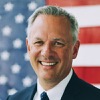 Dan Forest (R):
Leadership is hard work. We must make timely decisions on critical issues to move our state forward. There has not been an effective effort by the governor to work closely with the General Assembly for the good of our people, nor has there been any effort to cast a long-term vision for our state.
Governor Cooper has failed to deal effectively with the hurricane disasters of the past several years, and families are still suffering due to the lack of help from the executive branch.
The governor and I also have very different views on education and how to move things forward. There has been no education plan from the governor other than teacher pay and eliminating school choice. I believe it’s critical to provide students with options for a sound education - especially Opportunity Scholarships for families with no other options.
I am a strong supporter of the tax policies that have jump-started our economy and put North Carolinians back to work. The governor does not agree that these policies are good for NC.
I strongly disagree with the governor’s stance on the following:
-Born Alive bill veto
-ICE bill veto
-Budget veto
-Handling of the Atlantic Coast Pipeline
-Handling of lawsuits against our farmers
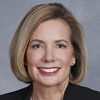 Holly Grange (R):
I don't think much is working well at all. Governor Cooper's administration has been a failure in leadership. I will bring a mission focused style of leadership to Raleigh. Leaders bring people together to get things done and that's exactly what I will do as Governor. My administration will work with the legislature, not pick fights. My administration will balance budgets, not bloat them. My administration will give teachers raises, not veto them. My administration will stand up for our veterans and their families, not hold their scholarships hostage. My administration will be transparent and serve with honor, not hide millions of dollars in a pipeline slush fund. As Governor, I will lead. Roy Cooper has not.
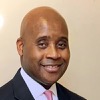 Ernest T. Reeves (D):
Candidate did not respond to the question.
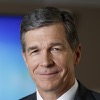 Roy Cooper (D):
I have a mission statement for our state. I want a North Carolina where people are better educated, healthier, and have more money in their pockets so that there will be more opportunities for people to have lives of purpose and abundance. As governor of North Carolina, I’ve fought for good-paying jobs, strong public schools, access to quality, affordable health care, and a more prosperous North Carolina. It has been the honor of a lifetime to lead this state and strive toward those goals. We have made progress for our state, but there’s still more work to do.
Do you support any expansion of Medicaid? Explain why or why not.
Dan Forest (R):
I am for high-quality, affordable health care for all North Carolinians. Medicaid expansion does not fit the bill.
The Affordable Care Act promised hardworking families more access, better care, and no tax increases to pay for it. These were broken promises. Now these same promises are being made by Governor Cooper regarding Medicaid expansion. Our people are smarter than this political rhetoric.
When I'm Governor, I'll focus on providing better access for patients by encouraging doctors to practice in our rural communities. I'll work with the General Assembly and the State Treasurer to ensure more price transparency so citizens know how much prescription drugs and vital health services cost. I'll fight to get those left in the coverage gap created by the ACA on private insurance. And lastly, I'll sign a budget that funds bipartisan reforms to Medicaid that have been blocked by Governor Cooper.
Holly Grange (R):
I am against Roy Cooper's plan to expand Medicaid to all. I believe there are conservative solutions to the coverage gap including work requirements and having recipients pay a premium.
Ernest T. Reeves (D):
Yes. I fully support expansion of Medicaid throughout North Carolina. In my opinion no citizen should be without access to healthcare. The state has an obligation to help those in need. More importantly, the federal government will currently fund 90% Medicaid expansion through 2020 with no current federal end date.
Roy Cooper (D):
Right now, thousands of working North Carolinians fall into a health care coverage gap, which means they are working full-time, but still can’t afford health care. When they seek care in the emergency room, it’s expensive and the cost is increasing insurance premiums for everyone else. I’m fighting to expand Medicaid to close that coverage gap and extend coverage to half a million people, including families and veterans, without additional state tax dollars. No person in this state should have to choose between basic necessities and access to quality health care that saves lives. A large majority of states, red and blue, have expanded Medicaid with great success, including Vice President Mike Pence when he was Governor of Indiana. Expanding Medicaid would cover an estimated 500,000 or more North Carolinians, boost the economy by $4 billion and create an estimated 40,000 jobs.
What percent annual raises should teachers receive from the General Assembly? Do you think that should be the same raise as other state employees? If no, explain why higher or lower.
Dan Forest (R):
For far too long, our state has pointed fingers and bickered over fractions of percentage points rather than discuss a fundamental mindset shift to put students first in education.
We have schools throughout our state that have seen multi-generational failure, and no amount of increased funding has or will break that cycle. I’m done fighting and re-fighting the same tired battles rather than discussing whether we’re preparing our students for the modern world.
When I am Governor, we will offer parents choices in education and the ability to find the setting that works best for their child. We will also move toward a competency-based system that makes sure our children are learning rather than being shuttled through an outdated and ineffective system.
The Republican General Assembly has done a great job providing raises over the past six years and will continue to do so. No other state in the country has addressed teacher pay six years in a row. Another pay raise is in the budget that the governor won’t sign.
Additionally, there’s no reason to put a cap on the amount our state’s best teachers should earn. We will empower principals to determine how much we pay teachers based on performance and demand, not requiring state legislators to propose one-size-fits-all solutions. And I have always believed that teachers who are using their subject-area master’s degree inside the classroom should be compensated for that expertise.
Holly Grange (R):
I want North Carolina to be the top state in the region when it comes to teacher pay. I believe we need to recruit and retain the best teachers in the country. We have given teachers pay raises every year that I've been in the legislature and I believe the 3.9% raise we gave this year is fair. It's certainly bigger than 0% which Governor Cooper has given them by vetoing those raises.
Ernest T. Reeves (D):
I am OK with the current proposed pay raises for teachers and other state employees as outlined by the unsigned (vetoed) state budget. As a general rule, I personally believe that our nation’s (annual) military pay raise should be among the highest as a group. It is 3.1% for 2020.
Roy Cooper (D):
Education is the key to our future success, and students deserve a good teacher in every classroom. If we don’t keep our teacher salaries competitive we will lose good teachers to other states and the private sector. From my first day in office, I’ve fought for better teacher pay and funding for our classrooms and North Carolina has raised teacher pay, expanded pre-kindergarten programs and re-established the Teaching Fellows Program to recruit highly qualified teachers. General Assembly leaders have prioritized corporate tax cuts over teacher pay raises. We don’t have to pit teachers against other state employees. Instead of giving teachers significant raises comparable to those given to other state employees or passing a bond to build new schools and get students out of trailers, legislative leaders have focused on passing sweeping tax cuts for corporations which has shortchanged the people of North Carolina. My 2019-20 budget proposed a 9.1% increase for teachers, and my compromise offer included an increase of 8.5% over two years with no plateaus and a pay raise for every teacher. Legislative Republicans, on the other hand, want just a 3.9% increase over 2 years with some teachers left out.
What do you think is the biggest issue in North Carolina that you would be able to shape if elected (or re-elected)?
Dan Forest (R):
1. Jobs. It is time for North Carolina to cast a vision for the future and determine what markets and industries we need to attract to provide well paying jobs for our citizens. As the world economy transitions, we must make sure that our education system is prepared, but also that our state is prepared and that we are willing to do the hard work to attract the right types of companies.
2. Education. It is time to get serious about bridging the education divide in North Carolina. There is no excuse for a failing school. A couple years ago I led the charge to make North Carolina the first state in the nation to have every classroom connected to high speed broadband. That was a start and a good foundation, now we need to make the necessary investments to be the first state in the nation to fully implement competency based education so that we know our students are prepared for their futures. Competency education moves away from seat time and age based progression and ensures that students are competent in subject areas before they advance. Gifted students in certain subjects can move more quickly, and those that need more study can take more time before they move to the next subject.
3. Law and Order. The government’s first priority should be the safety and security of the people. We must restore law and order if we are to protect our civilized society. When a handful of sheriffs allow violent criminals to roam free in our state, purely for political reasons, the entire state suffers.
Holly Grange (R):
I will be a jobs champion for North Carolina. We will work to recruit rock solid American companies to our state and ensure we're bringing good, high paying jobs. We will work to train a workforce that is ready for the 21st Century economy. Investing in the development of strategic partnerships to boost our skilled trades programs is so important in that mission. The best way to lift someone out of poverty is with a great job. My mission will be to give families that financial security. I want families to not just have a job that allows them to survive, but to save and go on vacation. I believe we can accomplish that mission.
Ernest T. Reeves (D):
Minimum wage. I will fight to increase the minimum wage in North Carolina. The minimum wage must be increased to help out citizens to live a better quality of life. In fact, outside of the defense of our great nation (safe environment), Social Security, and Medicare — I believe that minimum wage increase and education are the two most important factors in terms of economic mobility.
Roy Cooper (D):
My team and I have fought for better pay for teachers and other educators instead of sweeping corporate tax cuts. We’ve engineered success in recruiting jobs and growing businesses. I’ve vetoed bad budgets that valued corporate tax cuts over classrooms, clean water and better health care, and I’ve vetoed extreme right-wing social legislation that’s wrong for our people and our economy. We’ve worked hard and gotten results, but there’s more to do. I’m asking the people for a second term to complete our mission of a better educated, healthier and more prosperous North Carolina.
What’s a policy issue that you and the other party agree on?
Dan Forest (R):
I have always made it my policy to lead through influence, and influence only comes through building trust. I have spent the last seven years building trust with members of the General Assembly. I count them as friends - Republicans and Democrats. That’s why I have a strong track record of championing bills with significant bipartisan support such as protecting free speech on college campuses, providing stiffer penalties for human trafficking, supporting the Small Business Healthcare Act, and Burt’s Law to help protect those taken advantage of in group homes.
Moving forward we need to seek bipartisan solutions for issues such as restoring law and order, reforming education policy, encouraging affordable housing and increasing government transparency.
Holly Grange (R):
I've worked across the aisle with my colleagues on many bills. I think we've found common ground in taking care of our veterans and as a veteran myself, that is something I take very seriously. I have also worked across the aisle on many bills concerning our first responders, the National Guard, Active Duty military and their families. These are definitely issues that cross party lines.
Ernest T. Reeves (D):
Not a policy -- but North Carolina is a great place to live and a great place for businesses!
Roy Cooper (D):
In addition to being appointed by the President to serve on his Commission on Combating Drug Addiction and the Opioid Crisis, I’ve worked with the legislature across party lines to combat the opioid crisis in North Carolina. We launched the state’s first Opioid Action Plan in 2017 and, as a result, opioid prescriptions have dropped by 24%, emergency room visits for opioid misuse have declined by 10% and opioid related deaths have decreased by 5%. We have only begun to turn the tide on this epidemic, though, and we have more work ahead to keep helping people and saving lives.
What should the government do (or not do) to combat the effects of climate change?
Dan Forest (R):
I strongly believe in good stewardship of the environment - protecting clean air, clean water and conserving land for future generations. The problem is that the term “climate change” has become a catch-all for both environmental stewardship and apocalyptic alarmism. If we want to address these issues, then we must stop tossing everything into one basket and begin tackling one solvable problem at a time. I believe there is a place for good regulatory policy related to the environment, but I also believe in innovation over regulation. It’s time to stop using the environment as a political football and start solving problems.
Holly Grange (R):
We have a God given responsibility to protect our coasts, our forests, our waterways, our mountains and other natural resources in North Carolina. I believe we can work together to continue making strides in renewable energy and being good stewards of our beautiful state.
Ernest T. Reeves (D):
The government should brief all citizens on what climate change is and is not. Moreover, they should continue promoting the efficient uses of energy throughout the state and especially in our government buildings, investing in clean energy and technologies, the planting of trees, and maintaining environmental policies (i.e. cap and trade) that are current (measurable) and enforceable.
Roy Cooper (D):
Fighting to make sure North Carolinians have access to clean air and clean water and doing our part to reduce dangerous emissions is how we build a true line of defense against climate change. To date, my administration has secured historic environmental wins. We’ve ordered Duke Energy to dig up remaining coal ash ponds in North Carolina and worked to establish permanent water supplies for residents who have spent years drinking bottled water because of coal ash. We launched a Clean Energy Plan and established a goal to cut North Carolina’s greenhouse gas emissions by 40% by 2025 and 70% by 2030, and renewed our state’s commitment to reducing pollution. We’ve fought offshore drilling and have stood against those who would threaten our coastal economy and our beaches. We need to continue to invest in renewables and make sure we achieve a carbon neutral North Carolina.
Should North Carolina continue giving out corporate incentives?
Dan Forest (R):
Yes
Holly Grange (R):
Yes
Ernest T. Reeves (D):
Yes
Roy Cooper (D):
Candidate did not respond to the question.
Would you change the state's incentives programs, and how?
Dan Forest (R):
I believe incentives can be valuable when trying to attract a game changing industry to our state in the right locations. Much like BMW transformed South Carolina, there are many areas of our state that need that type of catalyst to jump-start their economy. These transformative projects result in a net positive to the taxpayer, not only through jobs, but through the increased tax base that more than pays for the incentives. In these special instances, state and local governments have a role to play.
It is important to remember that while the big corporate wins get most of the attention, most jobs are created by small businesses. All too often the government finds itself in the position of picking winners at the expense of existing companies (some that may have been loyal taxpayers for many years) that may find themselves with new competition with an unfair market advantage.
Since most businesses are small businesses that never get to see a government incentive, the best incentive is tax relief for all companies that pay taxes, small and large. Tax relief allows them to make decisions that can lead to growth in the economy in a fair and equitable way and helps all communities, not just the big cities where most corporate incentive money lands.
Holly Grange (R):
Absolutely. I believe in attracting companies that do business the right way and bring with them good paying jobs. I believe any incentives should ensure that the jobs promised are delivered. We need guarantees from companies that new jobs are North Carolina hires and that infrastructure investments benefit our communities. We need to be competitive with neighboring states in attracting these businesses.
Ernest T. Reeves (D):
North Carolina should always have robust corporate incentive programs to attract and maintain businesses. But, it is critically important that taxpayers' money (incentives) given to corporations (businesses) include mandatory provisions that allow for a certain number of local hires (North Carolina residents) in the community where the businesses are located as well as a guaranteed increased minimum wage. The minimum wage in North Carolina is too low and needs to be raised to at least $10 an hour by 2022.
Roy Cooper (D):
You can’t compete for new jobs and major companies with one arm tied behind your back, and we need every tool at our disposal to compete. My administration together with the legislature has demonstrated a commitment to job creation and wage growth by both supporting small business and attracting out of state talent to North Carolina to create jobs and contribute to a robust economy. We have recruited and announced tens of thousands of new jobs across the state. A large number of these projects are located in rural and economically distressed counties. Our exceptional workforce has drawn global companies to our state and more are coming. In attracting and retaining these companies, our workforce has been steadily growing the state into a worldwide leader in several key industries, including technology, manufacturing, pharmaceutical companies, and others.
Candidate Info
Dan Forest
RaceGovernor
PartyRepublican
EducationDegrees in architecture, UNC Charlotte
Professional ExperienceFormer Office President and Partner at Diversified Architectural Consulting, the state’s largest architectural firm.
Public offices heldLt. Governor
FamilyWife, Alice; children, Jake, Haley, Max, Olivia
Campaign websitehttps://www.danforest.com/
Holly Grange
RaceGovernor
PartyRepublican
EducationUnited States Military Academy at West Point, West Point, B.S., 1982 University of Southern California, Los Angeles, M.S. Systems Management, 1988Northern Illinois University College of Law, Chicago, J.D. Cum Laude, 2006
Professional ExperienceArmy/U.S. Army Reserve, Corps of Engineers Officer/Major, Attorney, State Representative
Public offices heldState Representative 2016-Present
FamilyDavid Grange, husband; Matt and David Grange, sons
Campaign websitehollygrangenc.com
Ernest T. Reeves
RaceGovernor
PartyDemocrat
EducationA.A. Liberal Arts, Highline Community College, Des Moines, Washington; B.A. Communications (2 Year Green to Gold Active Duty Scholarship Winner); graduated Magna Cum Laude, Saint Augustine’s University, Raleigh, North Carolina; Graduated Top 10% of U.S. Army Signal Officers’ Basic Course (SOBC), Fort Gordon, Georgia; Graduate, Headquarters, United Airlines Talent Management Program (TMP), Chicago, Illinois.
Professional ExperienceFormer candidate, City Council, Greenville, North Carolina (D-NC, 2019); former special election candidate, U.S. Congress, 3rd Congressional District (D-NC, 2019); former general election candidate, U.S. Congress, 3rd Congressional District (D-NC, 2016); former candidate, U.S. Senate (D-NC, 2016); former candidate, mayor of Greenville, NC (2015); former candidate, U.S. Senate (D-NC, 2016); former Escort Officer for U.S. Ambassador Paul Bremer, Administrator of the Coalition Provisional Authority of Iraq (Special White House Duty) 2003; military officer assigned to the staff of U.S. Ambassador Darrell Trent, 2003; Junior Executive Officer for Executive Services Organizational Management Office for the Office of the Administrative Assistant to the Secretary of the Army; Escort Officer for the 2003 Dwight D. Eisenhower National Security Conference; Master of Ceremony for the Administrative Assistant to the Secretary of the Army, The Pentagon (Headquarters, Department of the Army) 2003 Organizational Day; 2003 HQDA Birthday Ball Committee Member; Secretary of the Armed Forces Communications and Electronics Association, Tokyo; served two years as Commander of the Pontiac Recruiting Company which covered three counties and an area of 2,230 square miles with command responsibility of 77 high schools, 15 colleges, and six recruiting stations for recruitment of U.S. Army Active Duty and U.S. Army Reserve goals over six cities. Served nearly four years on a nominative assignment to Seattle-Tacoma International Airport on behalf of Headquarters, U.S. Army Personnel Command (Mobilization), Washington, D.C. Coordinated with some of the nation’s largest airlines and organizations in the movement of Army, DOD personnel and others throughout the nation and world as directed. Participated in movement of nearly 10,000 DOD personnel and family members from the Philippines during the eruption of Mount Pinatubo through Seattle-Tacoma International Airport and McChord Air Force Base, Tacoma, Washington, in 1991. Served as a lawn care assistant to my late father, Mr. Alfred Reeves Sr., who worked directly for U.S. Senator John P. East (R-NC) as his personal longtime lawn care professional.
Public offices heldNone
FamilySingle, no kids
Campaign websiteernestreeves.com
Roy Cooper
RaceGovernor
PartyDemocrat
EducationBorn and raised in Nash County, Cooper attended public schools and worked summers on the farm. His mother worked as a school teacher and his father practiced law and farmed in Nashville, the county seat. He went on to the University of North Carolina at Chapel Hill where he was a Morehead Scholar, and then earned his law degree from the University of North Carolina School of Law.
Professional ExperiencePlease see below for a brief bio.
Public offices heldRoy Cooper was elected to the North Carolina House of Representatives in 1986 representing his home community. He was appointed to the North Carolina Senate in 1991 to fill a remaining term of a vacant seat and then was elected to serve the district through 1999. He chaired the Judiciary Committee among other committees. As a legislator, he fought to increase pay for teachers and reduce class sizes. He wrote North Carolina’s first children’s health insurance initiative, passed laws that set a national standard against predatory lenders, pushed for tougher safety standards and higher quality for child care centers, gave victims new rights through the Crime Victims Bill of Rights, banned guns from schools, and helped create a graduated license program to give young drivers more training. He continued to practice law as the managing partner of the law firm Fields & Cooper in Rocky Mount and Nashville, North Carolina. In 2000, Cooper was elected Attorney General. As North Carolina’s top law enforcement official, he worked to protect families across the state. He cracked down on child predators, worked to increase penalties for drug dealers, and oversaw a sharp decrease in crime. He prioritized consumer protection by fighting utility rate increases and by putting payday lenders out of business and cracking down on telemarketers.
FamilyRoy and his wife, Kristin, have three grown children -- Hilary, Natalie, and Claire.
Campaign websitewww.roycooper.com
2nd Congressional District
Click a candidate's name to read an explanation to his or her answer.
Would you vote to keep, expand or end the Affordable Care Act?
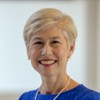 Deborah K. Ross (D): Keep; Expand
Keep; Expand
Explain your response. What is your plan for expanding affordable health care to more Americans?
The Affordable Care Act isn’t perfect and improvements need to be made, but we cannot go back to the days where insurance companies ran the show. We need to create a comprehensive public option for health insurance, ensuring that all people have affordable and equitable access to care. I have worked successfully to require health care companies to cover basic services like contraception, mental health, and autism treatment. I helped expand coverage for children’s health care, and I fought to expand Medicaid coverage for over 500,000 uninsured North Carolinians and provide relief for our rural hospitals facing closures. In Congress, I will continue to prioritize health care by protecting coverage for people with pre-existing conditions, expand access to care, and I will work to lower the cost of prescription drugs.
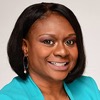 Monika Johnson-Hostler (D): Expand
Explain your response. What is your plan for expanding affordable health care to more Americans?
Working towards a Medicare for All healthcare system
Do you support Medicare for All?
Deborah K. Ross (D): No
Explain your response.
People should be able to keep their insurance if they are satisfied with their coverage, but we need to create a robust public option to compete with private coverage, expanding care and bringing costs down. I have always fought to protect and expand health care, and in Congress, I will work to ensure that all people have affordable and accessible health care from the day they are born until the day they die.
Monika Johnson-Hostler (D): Yes
Explain your response.
I am supporting it because Americans deserve to live their lives, without the fear of a sickness or surgery that will bankrupt them. Medicare for All would reduce costs across the board for everyone that isn’t a multi millionaire. If it is implemented in a year, or if we phase into this solution. I will support it because American lives are at risk and now is the time to act.
Do you support a wall on the Southern border?
Deborah K. Ross (D): No
Explain your response and how you would work to stop or limit illegal immigration.
Nothing is more important to me than keeping all families safe and secure. I am willing to consider any common sense proposal on how to make our country safer, but border enforcement does not require a physical wall. Demonizing immigrants and turning to the politics of fear-mongering does nothing to keep us safe and only serves to divide us. Those who cross our border must be treated with humanity. In Congress, we must put aside partisan differences to reform our immigration system in a way that respects our border and meets our country’s economic needs, while providing a fair pathway to citizenship and keeping families together.
Monika Johnson-Hostler (D): No
Explain your response and how you would work to stop or limit illegal immigration.
We need to create a pathway to citizenship for those who have built their lives and live in the United States. In order to address immigration, we must reform the process to provide asylum and sanctuary for refugees of violence and instability. To curb illegal immigration we should invest in smart technologies to monitor our southern border to know who is coming in our country, and create a humane environment for immigrants. But under no circumstances should we build a wall on the southern border.
Do you believe humans are contributing to global climate change?
Deborah K. Ross (D): Yes
What should the government do (or not do) to combat the effects of climate change?
Climate change is one of the most imminent threats facing our country, and we must take immediate action to address it. I have been a champion on environmental and climate issues, voting repeatedly to support clean energy, oppose fracking, and address climate change in North Carolina. We must modernize our electric grid to increase the distribution of renewable energy and we need to create incentives to expedite battery storage for intermittent renewable resources. These measures will reduce our need to use fossil fuels for energy. I helped grow the state’s clean energy sector, creating tens of thousands of jobs in our state, and in Congress, I will continue to combat what has become an international crisis and move us forward.
Monika Johnson-Hostler (D): Yes
What should the government do (or not do) to combat the effects of climate change?
Time is running out to address this climate crisis and we need to act now to create a path to a 100% renewable energy system and work to eliminate all carbon emissions.
Do you support the USMCA trade agreement? And what would you do to improve wages and job opportunities for Americans?
Deborah K. Ross (D):
Yes, I support the USMCA trade agreement. We know prioritizing corporations over people weakens labor, environmental, and public health protections, and trade policy is no different. Putting partisan politics aside and seeking input from working people, this Congress was able to pass the USMCA trade agreement. While not perfect, the USMCA trade agreement eliminates special carve outs for corporations and provides enforceable standards for workers. To compete globally and create more jobs here at home, we must increase the minimum wage, pass true equal pay laws, invest in education and infrastructure, and expand Medicaid.
Monika Johnson-Hostler (D):
The USMCA that has passed the Democratic controlled House has better provisions to help our domestic labor force and improve wages. But, I do not think it goes as far as it should go to give American workers the edge that they need in the years to come. Our domestic product output could have been higher in the agreement, our wage protections should have been higher in the agreement, and worker safety provisions can always be improved. But, I do believe that it is an improvement over NAFTA and I would have voted for it because it does provide improvement.
Candidate Info
Deborah K. Ross
RaceNC2
PartyD
EducationBrown University, BA (International Relations)University of North Carolina at Chapel Hill, JD
Professional experienceLawyer in North Carolina since 1990.
Previous public offices held (if any)NC House 38 (2003-2012)NC House 34 (2012-2013)
FamilyHusband, Steve Wrinn and dog, Wylie
Websitewww.deborahross.com
Monika Johnson-Hostler
RaceNC2
PartyD
EducationB.S. in Psychology, Fayetteville State UniversityMasters in Public Administration, North Carolina Central University
Professional experienceExecutive Director of the North Carolina Coalition Against Sexual Assault, 20 yearsPresident, National Alliance to End Sexual Violence Wake County School Board Member District 2 (2015-Present), former chair of the board (2017-2018)
Previous public offices held (if any)Wake County School Board, district 2 (present)
FamilyBobby, husbandGabby, daughter
Websitewww.monikaforcongress.com
4th Congressional District
Click a candidate's name to read an explanation to his or her answer.
Would you vote to keep, expand or end the Affordable Care Act?
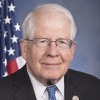 David Price: Keep
Explain your response. What is your plan for expanding affordable health care to more Americans?
Health care should be a basic human right, yet millions of Americans continue to lack access to quality, affordable care. I have cosponsored several pieces of health care reform legislation which offer a range of paths to universal coverage, including Medicare for All (H.R. 1384), Medicare for America (H.R. 2452), Medicare Buy-In and Health Care Stabilization Act (H.R. 1346), and the Protecting Pre-Existing Conditions and Making Health Care More Affordable Act (H.R. 1884).
 Daniel Ulysses Lockwood: End
Explain your response. What is your plan for expanding affordable health care to more Americans?
Would only vote to end in order to replace it with a better system, which is Medicare for All.
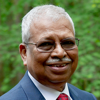 Debesh Sarkar: End
Explain your response. What is your plan for expanding affordable health care to more Americans?
We must let the market assist - this is how we can rein in heath care costs. Choice and competition are the answer. More big government programs and socialism are not what we need.
 Nasir Shaikh: End
Explain your response. What is your plan for expanding affordable health care to more Americans?
The health-care system does need changes. Medicare for All is not the prescription. Our health-care system is very highly regulated, with very few checks and balances. There is no competition in many markets. There is no transparency in costs. Why can't a patient call a hospital or doctor's office and get a price on an X-ray, blood test or any procedure and shop for the best price? If you could it would force competition and prices would come down. An example of this is what has happened in LASIK surgery. It is not regulated, insurance does not cover. Prices have come down nearly 90% and providers have increased.
Why can't individuals pool together and form medical groups or pharmacy clubs to better negotiate medical pricing and bulk purchasing to lower drug costs? Why can't we purchase drugs from Canada which have been researched and produced for Canadian citizens? Why can't we purchase insurance across state lines? Why are doctors being harassed by local and state medical boards and insurance companies for non-compliance issues when their practices begin to to be a patients-with-cash only system and they refuse to take patients with insurance or Medicare?
Do you support Medicare for All?
David Price: Yes
Explain your response.
I want to see the proposal considered as a path to universal coverage. No American should have to choose between putting food on the table and affording basic medical coverage. The Affordable Care Act was a major step forward in providing coverage to more people, but millions of Americans remain without health insurance. Without further delay, North Carolina must expand Medicaid to provide health care to thousands of families stuck in the middle of a bitter Republican effort to block this coverage. Once a Democratic president and Senate join the House majority in 2021, we must work together to end the sabotage of the Affordable Care Act and enact policies that put us firmly on the path to universal coverage.
Daniel Ulysses Lockwood: Yes
Explain your response.
Medicare for All is the only bill that covers all residents and includes comprehensive coverage for all health-care needs (physical, mental, dental, vision, reproductive, gender affirmative treatments). Because health care would be free at point of service and place a cap on the cost of prescription drugs, many Americans will be able to stop picking between food and meds they desperately need. Moreover, M4A includes a jobs re-training and placement program for those displaced by the dismantling of the health-insurance industry. One million North Carolinians are currently under or uninsured. This issue is incredibly urgent. We must radically change our health-care system so that no one goes without the care or meds they need.
Debesh Sarkar: No
Explain your response.
The left's "Medicare for All" fantasy would explode spending, severely increase taxes, and end private insurance. That is bad on every level. We need more competition, not less.
Nasir Shaikh: No
Explain your response.
Medicare for All is a pipe dream, rather it would be an absolute nightmare for America. The government can't even adequately handle and run the VA. How do we expect it to handle another 300+ million people added to the system? What do you do with the people who have great insurance from their employers? Do you really want to destroy the private health insurance industry?
This is part of an article from The Atlantic which I often quote. "The Urban Institute, a center left think tank highly respected among Democrats is projecting that a plan similar to what Warren and Sanders are pushing would require $34 trillion in additional federal spending over its first decade in operation. That's more than the federal government's total cost over the coming decade for Social Security, Medicare and Medicaid combined, according to the most recent CBO projections."
All we are told is cost will go up for wealthy Americans and evil corporations while costs will decrease for hard working middle class families. These are political lies. Every Democratic candidate with a complicit MSM knows this to be a lie.
There will need to be a safety net for those who are truly in need of insurance and cannot afford it. That's where redesigning and streamlining Medicare needs to begin.
Do you support a wall on the Southern border?
David Price: No
Explain your response and how you would work to stop or limit illegal immigration.
I support fact-based proposals to secure the border, including increased screening technology and well-staffed ports of entry, but I do not support dumping federal funds into an ineffective border wall. President Trump’s wall has become a symbol of a broader set of Trump immigration policies that are unconscionable, and making it nearly impossible to reach consensus on meaningful reforms.
For decades now, Congress has promised, yet failed, to reform our broken immigration laws to meet the needs of our economy and allow millions of otherwise law-abiding undocumented residents to come out of the shadows and become full members of society. During each of these attempts, there was an understanding from presidents of both parties that as a nation of immigrants, our enforcement priorities should be geared toward those who pose a threat to our communities.
I believe that an enforcement-only approach to immigration is simply untenable. I support comprehensive immigration reform that would put an end to the exploitation of undocumented workers, provide children a chance at the American dream, and give us a practical way to match the economy’s labor needs with our visa allowances and the supply of legitimate immigrant workers. Despite continued Republican opposition, I will keep working with like-minded colleagues to ensure that we take a practical, comprehensive, and humane approach to addressing this issue.
Daniel Ulysses Lockwood: No
Explain your response and how you would work to stop or limit illegal immigration.
The richest country in the world should be doing more to ensure the safety of those displaced by economic hardship and the global climate catastrophe. Curbing illegal immigration is as easy as making immigration easier. We have both the resources and the moral duty to make it as easy as possible to come into the United States. Moreover, we should be shuttering corrupt and unneeded agencies like ICE (created in 2003) and prosecuting the leadership of these agencies for the crimes being committed against innocent people at the border and in the concentration camps. We have a moral imperative to be kind and welcoming to immigrants and we must condemn the racism and xenophobia directed at them.
Debesh Sarkar: Yes
Explain your response and how you would work to stop or limit illegal immigration.
We must stop the flow of illegal immigration at our border, and we must implement policies like E-Verify to cut off the hiring of illegals. Further, we must force our law enforcement officials to work with ICE and make sure criminal illegals are deported and not let back out into our neighborhoods. This is a public safety issue first and foremost.
Nasir Shaikh: Yes
Explain your response and how you would work to stop or limit illegal immigration.
1. Secure our border. Build the Wall. Pay for the wall by charging a fee on all remittances sent overseas. Start with 15% fee.
2. Charge a border wall fee on all items coming into America via Mexico.
3. All drug monies captured by federal, state and local authorities to be allocated towards building, maintaining and supporting border wall.
4. Federalize National Guard as needed to help with CBP.
5. Commit US Army personnel to assist with satellite and drone technology across entire mileage of border wall.
6. Eliminate chain migration visa program. Limit to only spouses, children and parents of US citizens.
7. Eliminate visa lottery program.
8. Eliminate any visa program that is not merit based.
9. Re-examine asylum and refugee visa programs .
10. Once border wall complete, border is secure, then begin guest worker program for employment.
11. Merit based immigration based on America's need in the STEM fields as well as others. This to be done only after making sure Americans in those fields have filled those positions.
12. We need to stop the practice of allowing foreigners to come to America for the sole purpose of giving birth. The 14th [Amendment] needs to be challenged in this regard. this was not the intent of the framers of our Constitution.
Do you believe humans are contributing to global climate change?
David Price: Yes
What should the government do (or not do) to combat the effects of climate change?
When we generations [from now] look back at this time, I’m certain climate will be the one issue where our ancestors say, “what were they thinking, and why didn’t they act?" The disastrous impacts of climate change influence my policy decisions, from my Transportation and Housing (THUD) Appropriations Subcommittee Chairmanship to how we should rebuild in the face of storms. By now, we know all too well the threats of climate change right here in North Carolina. It’s meant harsher weather, shrinking coastlines, and more powerful storms.
Throughout my career, I have championed clean air and water protections, conservation of natural habitat, investments in clean energy, and U.S. leadership in combating climate change. I was a strong supporter of President Obama’s landmark Clean Power Plan, his raising of automobile fuel efficiency standards, and his leadership in negotiating the Paris Climate Accords, and I have been an outspoken critic of President Trump’s decision to withdraw from the Accords.
A major focus of mine as THUD Chair is incorporating principles of resiliency into existing federal programs. For example, I’ve secured HUD recovery funding that allows states -- including North Carolina -- to invest in a broad range of recovery projects that mitigate threats from future storms so we can rebuild smarter. I’ve also included provisions in annual funding bills to require localities that receive certain HUD block grants to incorporate resiliency in their planning process, and prioritized robust funding for transit, rail, and other transportation alternatives that reduce emissions and give Americans more choices when they need to commute or travel.
In the current Congress, I am a co-sponsor of both the Green New Deal and legislation that would require federal agencies to develop realistic plans to ensure our nation moves to 100% renewable energy over the next three decades. I’m also leading the fight against President Trump’s efforts to allow drilling and seismic testing off the North Carolina coast and have sponsored legislation to reinstate the Obama Administration’s drilling safety regulations. I am proud to have received a 100% rating from the League of Conservation Voters.
As we look to the future, we need big, bold solutions to tackle climate, and I’m working in the House to make that happen.
Daniel Ulysses Lockwood: Yes
What should the government do (or not do) to combat the effects of climate change?
We are in the middle of a climate catastrophe. Our planet is warming at alarming rates resulting in crop failure, increased natural disasters, massive displacement of peoples from hotter regions, and the loss of entire species due to things like fires and ocean acidification. The time has long since passed for drastic change. We must act immediately and radically to overhaul our infrastructure, transform our energy grid, and change the way we develop sustainably. The only approach that even begins to meet the scale and urgency of the problem is the Green New Deal. This massive jobs program, combined with a much needed investment in clean energy, is the only way we can even hope to combat climate change. The Green New Deal will also replace our aging and dangerous pipes, address environmental justice for marginalized communities and environmental refugees, and save Americans money by investing in weatherizing homes and electric public transportation. We should nationalize industries like water, energy, and internet service. We need to hold corporations like Duke Energy accountable when they poison our planet with coal ash spills all across the state.
Debesh Sarkar: Yes
What should the government do (or not do) to combat the effects of climate change?
I think the climate is changing and changes all the time. I think humans are one of many factors contributing to that, but the data is mixed and we cannot give in to the left's "Chicken Little, sky is falling" theatrics. We should all be good stewards of the earth, but every step we take should be measured and always consider the impacts on our economy and be based on fact, not the zealotry of left wing extremists.
Nasir Shaikh: No
What should the government do (or not do) to combat the effects of climate change?
Let me preface my answer by saying maybe. The climate is always in a state of flux, always changing. The real question is how much is due to nature and how much is due to humans? Conservatives like myself acknowledge needing to protect the environment. The EPA should not be weaponized as a social or political tool to stifle economic and energy development. We need to incorporate all kinds of energy production to include oil, gas, coal, nuclear, wind, solar and fracking. President Trump's energy policy has allowed the United States to become the world's #1 exporter of energy. In regards to climate policy I am 1000% behind President Trump's decision to rescind the Paris Climate Accord. That would be have been disastrous for America. With the left trying to convince Americans that the Green New Deal is just what the doctor ordered, we need to ask which doctor? Dr. Strange-Glove! The Left's new entry into identity politics is the religious marriage of climate change with politics. The Left has a new religion to promote and it is the Church of Climatology. This is why the extremists from the Church of Climatology have constantly changed their climatology descriptors just as much as the climate changes. From global cooling to global warming and now to climate change. What will they call it next? Getting rid of carbon based energy which has brought billions out of poverty is not the solution. Destroying the American energy sectors are not the answers. The government should allow for the full potential of the American private sector to develop new streams of energy and let them compete in the marketplace without playing favorites. We need to look at all forms of energy to include oil, gas, wind, solar, clean coal and nuclear.
Do you support the USMCA trade agreement? And what would you do to improve wages and job opportunities for Americans?
David Price:
I have always evaluated trade agreements that come before the House on a case-by-case basis, based on how it will affect the district I represent, the state of North Carolina, and the country as a whole. After successful negotiations led by Speaker Pelosi and Congressional Democrats to strengthen several provisions within USMCA, I voted to support this important update to NAFTA. I’m working to ensure American workers and American jobs are protected, which is why I was pleased to see that the final USMCA included provisions to enhance the enforcement of labor protections, the monitoring of Mexico’s labor reform implementation process, and the mechanisms for rapid responses to any labor violations. I have consistently fought to ensure a level playing field for American workers and supported “Buy America” provisions to ensure that domestic suppliers are given full consideration in federal procurement decisions, and will continue to do so going forward.
The economy has grown as our nation recovered from one of the most devastating recessions in our history, but not everyone has felt this growth. Too many Americans are left behind by a regressive tax system that gives away huge tax breaks to corporations and the wealthy while burdening those in the lower and middle class. I’ll fight to undo the 2017 tax cuts on the wealthy, and reinvest those savings into education, health care, and a better life for everyday Americans. An economy that works for everyone means a livable minimum wage, universal health care, paid family leave, a progressive tax system, reduced tuition for college and training programs, clean energy jobs and research, as well as incentivizing corporations to spend earnings on workers, not stock buybacks. These policies will help improve job opportunities and growth, while strengthening our safety net and ensuring that every American is given a fair shot.
Daniel Ulysses Lockwood:
No. The USMCA, effectively NAFTA 2.0, does little to address the shortcomings of the original agreement. Opposed by large labor unions like the United Food and Commercial Workers, this trade agreement does very little to create or protect good-paying American jobs. USMCA does nothing to put a stop to corporations closing American factories and outsourcing labor, and environmental groups (i.e. Sunrise Movement, Sierra Club) have clearly stated that this will do little to combat climate change. Any trade agreement worth considering would include regulations about where companies can dump their waste, and would work to make it harder for energy corporations to pump dangerous crude oil through fragile pipe systems. This agreement fails to even mention the concept of climate change. All things considered, this trade agreement does little to protect American workers and little to protect the environment.
We can immediately start to improve wages by raising the federal minimum wage to at least $15 an hour with yearly raises tied to inflation. The GND will have to include a massive jobs mobilization effort. Saving our planet will require rapid and radical changes to our infrastructure; we will create a huge number of skilled jobs with this program. Strengthening workplace democracy by making unions stronger and killing right to work laws will give workers more power over their lives and bosses, providing them with better jobs and higher wages.
Debesh Sarkar:
Yes. NAFTA was a disaster and USMCA substantially improves the agreement. To improve wages and job opportunities for Americans we need to stay the course -- under President Trump our economy is exploding and all Americans are seeing the benefit. We need to further unleash our economy by continuing to decrease regulation and help job creators, just as our president has done the past three years.
Nasir Shaikh:
I absolutely support President Trump and his USMCA trade agreement. Elites on both sides, Republicans and Democrats, especially the Clinton administration, sold out the middle class of America and not only gutted but destroyed the manufacturing base of this country.
We need to continue the policies of President Trump by exerting pressure on those countries who are not fair traders by employing tariffs on their goods. I am for free trade but with the caveat being it needs to be fair trade first, then trade freely. Make deals equitable for both sides. ... [Leaders] put corporate and foreign interests ahead of America and American workers. By introducing merit-based immigration policies we can increase the pay of unskilled labor because we will not be diluting the workers pool by allowing unskilled labor to enter the market. All companies in the U.S. must abide by E-verify. If companies do not comply, they should be fined $100,000 for every illegal alien they were illegally employing. Fines should go to continued funding for the border wall.
Candidate Info
David Price
RaceNC4
PartyD
EducationRep. Price received his undergraduate degree at UNC-Chapel Hill and went on to Yale University to earn a Bachelor of Divinity and Ph.D. in Political Science.
Professional experienceBefore he began serving in Congress in 1987, Price was a professor of Political Science and Public Policy at Duke University. He is the author of four books on Congress and the American political system.
Previous public offices held (if any)
FamilyRep. Price and his wife Lisa live in Chapel Hill and are parents of two children and two grandchildren.
Websitehttps://priceforcongress.com/
Daniel Ulysses Lockwood
RaceNC4
PartyD
EducationB.A. Journalism and Mass Communication - UNC Chapel Hill 2015
Professional experience- Client Website Coordinator - Etix - July 2017 to present- Freelance Brand Strategist - April 2016 to present- Advertisement Design Independent Contractor - Charlotte Observer - Oct. 2016-17- Temp Video Editor - The Friday Institute - Aug to Oct 2016- Volunteer Designer - Bernie for President - Feb to May 2016
Previous public offices held (if any)
Family
Websitehttps://www.lockwood4nc.com
Debesh Sarkar
RaceNC4
PartyR
EducationCalcutta University (Engineering Degree), Columbia University (Masters, Architectural Technology)
Professional experienceSenior Structural Engineer at NC Department of Transportation since 2001
Previous public offices held (if any)None - first time running for office
FamilyWife, Rajyashree; daughters, Deboshree and Deboleena
Websitehttps://www.debeshsarkar2020.com/
Nasir Shaikh
RaceNC4
PartyR
EducationMD from Ross University School of Medicine
Professional experienceJoined Mannatech Inc. after graduation from medical school in 1994. Mannatech is an R&D company and pioneer in the field of Glycobiology. I was a part of its new product development committee, member of the training and development division, and compensation plan committee, as well as part of its doctors speaking bureau. I was also elected to be on Mannatech's Directors Associate Council Board from 1998-2006. I was the first MD to become a Presidential Director in the company. I was also a part of Mannatech's international team when we opened up an office in Australia.Currently i have my very own radio and TV conservative talk show, "The Dr. Nasir Shaikh Show" which is produced by the Conservative Commandos Radio Network and is also a part of the AUN-TV Broadcasting Network in California. We are in 14 radio markets and 12 cities in northern California.
Previous public offices held (if any)
FamilyI am married to my wife, Samina. We have three children: two boys, Hasan and Sultan, and our daughter named Kirren.
Websitewww.DrNasirShaikh.com
Council of State
Click a candidate's name to read an explanation to his or her answer.
Lieutenant Governor
What do you think is or is not working well under the current office-holder? If not, how would you change it if elected?
 Deborah Cochran (R):
Lt. Gov. Forest has focused on financial literacy and trades education. I have been a long-standing advocate because I teach personal finance. I will continue apprenticeships, internships, trades and support funding for community colleges that teach skills to fill the skills gap. Since I work at a magnet Title 1 school, I have seen students go directly to the workplace with skills or to a community college or to a university.
 Greg Gebhardt (R):
The current lieutenant governor has done an exceptional job at bringing relevance and awareness to the office. I will build upon that by focusing on veterans, vocational trades and voter ID. As an Iraq War veteran and current member of the North Carolina National Guard, I understand the unique challenges faced by our military families. Also, as the brother of someone who does not have a four-year degree yet has a good-paying job, I know the benefits of obtaining a certification from a community or technical college. Finally, as a policy adviser in the North Carolina General Assembly who helped craft the original Voter ID bill back in 2013, I know that an overwhelming majority of North Carolinians support voter ID. We must allow the will of the people to be heard on the issue and an un-elected, federal judge.
 Ronald L. Newton (D):
Elected officials do not represent the people who elected them. Too much log rolling and support for bad legislation. Every elected official is charged with the responsibility and duty to represent their constituency. Tailor divisiveness by relying on facts. Ask yourself what and how will this legislation affect the people I represent. Frequently seek public support.
 Andy Wells (R):
Dan Forest, the current lieutenant governor, is not seeking re-election. He's running for governor. Dan has spoken out on many issues I agree with. For example, both of us believe the ruling by the Obama federal judge that struck down North Carolina's voter ID law is wrong.
 Allen Thomas (D):
Our current lieutenant governor, Dan Forest, started his campaign to run against the current governor almost four years ago. He also frequently sent out press releases attacking the governor on various issues. Dan Forest benefited from millions of dollars donated by Greg Lindberg who is currently awaiting trial for attempting to buy influence in state government. The then-N.C. GOP Chairman was also caught up in the scandal. He pleaded guilty late last year for lying to the FBI regarding his role in this bribery scandal.
As lieutenant governor, I would work to regain the public trust and integrity of the office. I would work hard with Gov. Cooper to turn the N.C. House and Senate blue in 2020, and I will be a reliable and passionate advocate for the North Carolina values that we all hold dear.
 Yvonne Lewis Holley (D):
The current lieutenant governor has gutted our public education system. He has promoted charter schools and vouchers, using public money for private institutions. Many private schools that are receiving public money have no accountability and can pick and choose which students to serve. All schools that receive public funding should be held to the same academic standards. I want to bring credibility and fair accountability back.
Teaching is an honored profession. Our students deserve to have qualified teachers in every classroom, teachers paid their value and given professional development opportunities for growth.
The taking over of struggling schools should be the responsibility of the State DPI, not sent out to private companies for profit. We need to provide resources, financial and professional, to help up the standards of teaching in our schools.
 Mark Johnson (R):
The political system is broken. For years, the political system has only looked out for itself. I've fought for the working families of North Carolina. As N.C. Superintendent, I fought against confusing Common Core standards and over-testing and fought for more accountability, transparency, and efficiency for our education bureaucracy. I am running for lieutenant governor to take this fight to the next level. If you want more of the same, vote for someone else. If you want to continue the fight for change, vote Mark Johnson for Lieutenant Governor.
 Terry Van Duyn (D):
I believe in a North Carolina that treats its educators like the professionals they are, that believes that health care should be accessible and affordable for everyone and where good-paying jobs are available for all of our people.
Our current lieutenant governor has championed legislation that seeks to divide us. He has sided with Sen. Berger and Speaker Moore to deny the expansion of Medicaid and thus health-care coverage to over 500,000 of our brothers, sisters, and siblings. He has sided with Sen. Berger and Speaker Moore to under-fund our public schools. And, he has sided with Sen. Berger and Speaker Moore to allow corporate polluters and bad actors to run unaccountable.
As the only state senator in the Democratic primary, I want to use my experience to bridge the gaps that we face. I will work with Gov. Cooper to make education North Carolina’s top priority. As the president of the Senate, I will use my tie-breaking vote to expand Medicaid, and I will use my office as lieutenant governor to connect our business with our community colleges and trade schools to make sure we are ready for 21st century jobs.
 Bill Toole (D):
The current lieutenant governor has used his position to promote divisive issues like HB2 that have harmed North Carolina businesses. The current officeholder's attention to distracting issues means he has not devoted attention to important North Carolina issues like public education, health care, or the environment.
a) As lieutenant governor sitting on the State Board of Education, Council of State, and presiding over the Senate, I will advocate for (1) teachers' assistants in every classroom between pre-K and third grade; (2) full-time nurses, psychologists and social workers in every school to help students succeed despite coming to school hungry, homeless or with trauma in the home, and to address North Carolina's high teen suicide rate; (3) establishing modern vocational training in our high schools and community colleges; and (4) recognizing our teachers as professionals through meaningful teacher pay.
b) I would also advocate for health care that helps families care for loved ones. Assuring quality, affordable health care must a top priority in North Carolina. Because access to health care is a pressing issue in our rural communities and for working families, I will work with Gov. Cooper to expand Medicaid, strengthen rural health care, battle teen depression, and fight the opioid crisis. We must recognize and begin to address the needs of many families struggling to provide long-term care for aging loved ones suffering from illness such as dementia or Alzheimer's.
c) I will push for the controlled access to cannabis. This will permit the automatic expungement of arrest records for non-violent possession of 1.5 ounces or less, the collection of $450 million annually, and assuring broader access to treatment for drug and alcohol use disorders. By insisting that 90% of all product sold in North Carolina is grown in North Carolina, our farmers will once again have a meaningful cash crop that replaces tobacco. Veterans suffering from PTSD, cancer patients, grandmothers with arthritis, and children suffering from rare forms of epilepsy are among those who have been asking for this and would directly benefit. Among the 34 states that have legalized access have found that opioid abuse rates have fallen, some by as much as 43%; none have seen cannabis usage increase significantly. I will ensure that all communities have the chance to participate in the economic opportunities offered by cannabis normalization.
d) Recognizing and preparing for climate change must be a priority which, if ignored, will lead to disastrous consequences directly affecting our agricultural economy and vulnerable populations as well as our urban areas. Severe weather changes will affect all aspects of North Carolina life. We must create policies that help residents make their homes
 John L. Ritter (R):
Lt. Gov. Dan Forest has done a great job. I believe he has worked hard across the board, and particularly for our community college system.
 Mark Robinson (R):
The current office-holder has done a great job standing up for conservative values. I will look to further improve on Dan's hard work by continuing to push conservative causes by addressing various issues facing North Carolina.
 Buddy Bengel (R):
Our current Lt. Gov. Dan Forest has been a great advocate for school choice and a voice for the pro-life movement. I would like to add a more pro-business approach to the office. I would utilize my background in creating companies and creating jobs to work with business executives to bring companies to North Carolina or expand in North Carolina.
 Chaz Beasley (D):
The role of lieutenant governor is one of the most underutilized positions in our state government. For years, popular belief has been that the office lacks any real power. Our current lieutenant governor has focused on the ceremonial duties of the job. I will take a different approach.
Who becomes our next lieutenant governor matters more now than it has in decades. The chances of a closely-divided (or tied) Senate are high. In this case, the lieutenant governor, as the tie-breaking vote, could be the last stop for each bill. As lieutenant governor, I will use my experience as an effective legislator, lawyer, and professional in the financial industry to give every bill the attention it deserves.
Additionally, the state budget will begin in the Senate next year. This session’s budget has been stuck in limbo for months. As presiding officer of the Senate, the lieutenant governor must play a role in preventing this from happening again next year. Our state cannot afford another year of legislative leaders refusing to negotiate.
 Scott Stone (R):
Lt. Gov. Dan Forest has done a great job over the past eight years. I would continue to be a strong conservative statewide leader.
As lieutenant governor, I would lead the effort to tell the Republican story and improve our message. Republicans have successfully turned around North Carolina's economy by lowering taxes and at the same time making North Carolina very competitive, even leading to major corporate relocations. We've reduced taxes while increasing teacher pay (from 47th in US to 29th today), investing in infrastructure, creating surpluses, and building a $2B Rainy Day Fund. Too few people know of this tremendous success, and as lieutenant governor I would create a platform to tell this message for our Party.
 Renee Ellmers (R):
I think Dan Forest has done a great job as lieutenant governor, but I want to do more with the office. If elected, I will immediately ask the legislature to head a Special Healthcare Task Force charged with creating a truly affordable, patient-center health care system that serves North Carolina communities.
What do you think is the biggest issue in North Carolina that you would be able to shape if elected (or re-elected)?
Deborah Cochran (R):
Economic growth and development is as core as it gets. I am pro-business. That was my focus as mayor, and I flew to West Memphis to successfully recruit a California based industry to Mount Airy. In a recent Harper poll, economics and jobs are still the top priority in N.C. People need a paycheck which translates into dollars for the economy.
Greg Gebhardt (R):
Vocational trades. As lieutenant governor, I will ensure that any student who does not desire to attend a four year institution is able to earn a certification in the trades, through our world class community college system, before leaving high school.
Ronald L. Newton (D):
There are four issues of equal importance: expanding Medicaid, criminal justice reform, support for public education funding, and reduction of poverty.
Andy Wells (R):
Right now, when Democratic sanctuary sheriffs arrest illegal immigrants for crimes, they refuse to work with ICE to deport those illegals. Instead, they release them, putting them back on our streets. An illegal, who a sanctuary sheriff released, later murdered a 19-year-old girl. Another illegal, who was released, kidnapped and attempted to murder a woman. The Republicans in the legislature passed a law to stop sanctuary sheriffs but Governor Cooper vetoed it. As lieutenant governor, I’ll fight to stop sanctuary sheriffs.
Allen Thomas (D):
Ending poverty is the cornerstone issue of our campaign. We believe that government has the ability to address the many social and racial inequities that oppress economic mobility. In my role as lieutenant governor my plan to end poverty includes the following:
• As a member of the State Board of Education, I will focus on equitable funding and resources as we seek to close the racial and socioeconomic achievement gap in our schools. The disparities between schools in low-income communities and high-income communities are unacceptable. A child does not choose where they live or the economic status of their parents. We have an obligation to ensure that all children receive a good, sound education.
• Working closely with the governor, I will champion raising the minimum wage. Income inequality is also an issue in our state. I believe every worker should receive a living wage. We must raise the minimum wage to a living wage. Black and brown people are disproportionately harmed by our lack of a living wage statute in this state. As we focus on affordable housing, we must also realize that the reason that the homes are unaffordable is partly the absence of a living wage in that specific community. I support both raising the minimum wage and increasing the government investments in affordable housing to meet the needs of low-income residents.
• Criminal justice reform is also a very import piece to promoting social and racial equity. I support legislation that eliminates racial bias in sentencing, decriminalizes marijuana for personal use, and that creates a prison system that focuses on rehabilitation and not punishment. We must ensure that individuals re-enter society better people. We must also work to get them work and housing so that they do not re-offend.
Yvonne Lewis Holley (D):
As your candidate for lieutenant governor, I am running to make living affordable for all North Carolinians. My priority issue is a program I will champion and lead - I’m calling it The Affordable Living Initiative (ALI). My ALI platform encompasses establishing a state-wide initiative that brings together public/private partnerships, non-profits, urban and rural governments, legislators, environmentalists, homebuilders, and everyday citizens to help solve some of the problems that have become critical needs in communities across N.C. ALI will be a statewide initiative to bring organizations across the state together to form private-public partnerships to tackle these issues:
Attainable housing: At least 310,000 people in North Carolina are spending more than half of their income on housing. This means families across the state are having trouble putting food on the table due to skyrocketing rent prices. This isn’t the quality of life our North Carolina families deserve. Housing is an essential component to everyday North Carolinians and frankly, human life. As your next lieutenant governor, I will work with residents, developers and local governments to find solutions to build fair cities and expand affordable housing. ALI is dedicated to having diverse voices at the table - we’ll come up with practical, applicable solutions:
-Comprehensive legislative study to review laws/policies that hamper affordable housing
-Eviction expungement program
-Increase financial resources for the NC Housing Finance Agency
-Implement energy efficiency conversion programs for existing stick built/mobile/modular homes
-Study ways to upgrade inaccessible homes or repair “sick homes”
-Study tax structures in areas of rapid gentrification which may push people out of their homes
Access to affordable and healthy food: 1.5 million people in North Carolina live in food deserts that lack access to healthy food. I am taking on this crisis in the lieutenant governor’s office with my Affordable Living Initiative to fight food insecurity affecting our citizens. Since my start in the General Assembly, I have pushed the issue of food insecurity, and will keep pushing it until every North Carolinian has access to healthy and affordable food. I introduced a bill which would create the Healthy Food Small Retailer Fund in the Deptartment of Agriculture and Consumer Services. This bill addresses food desert relief in small neighborhood stores. This program will continue to need funding, and the battle will continue as budget wars persist in the General Assembly. Your support for my candidacy as lieutenant governor would push this issue to the forefront, and I will work to expand this program.
Jobs: (entrepreneurial, small business, and workforce development): I have sponsored bills to raise the minimum wage and worked with Commerce and the Community College System to prepare our already existing labor force through education and training. By working with ALI, workforce development should include entrepreneurial and small business training to provide a ready workforce and new business/small business opportunities. When small businesses and entrepreneurs thrive in NC, there are more jobs created in our local economy. For all jobs, raising the minimum wage to a living wage is a priority. By providing a ready, able, and skilled workforce, we can create an economy that works for North Carolinians.
Transportation: People need access to reliable public transportation to get to their jobs, medical appointments and live their day-to-day life. I recommend expanding transportation options, like bus rapid transit, micro transportation systems, and light rail systems wherever possible.
Mark Johnson (R):
Government is broken. The people of North Carolina need and deserve leaders who work for the people, not the political system. I will continue to fight the Establishment to bring the changes our working families need and deserve.
Terry Van Duyn (D):
In order to have a North Carolina where everyone can participate, I believe we need to make education our top priority.
I want to work with Gov. Cooper to ensure that we increase teacher pay to at least the national average, bring textbook funding back up from pre-recession levels and pass a bond referendum to rebuild our state’s classrooms. We need to take further steps to make education beyond high school more affordable; one step in that direction would be fully funding Gov. Cooper’s proposal of NC GROW, which would make community college affordable for every North Carolina high school graduate. We need to ensure we are appropriately funding our community colleges and trade schools and ensure that those attending our four-year institutions are not graduating with crippling debt.
Bill Toole (D):
North Carolina's political polarization is the biggest issue we face because it has distracted us from addressing North Carolina's very real problems with public education, health care and the environment. North Carolina citizens are frustrated by this dysfunction. I have a long professional and political history of working with members of all parties and constituencies to find common solutions to common issues wherever possible, while recognizing there are some issues where compromise is not possible.
John L. Ritter (R):
There are many important issues. In terms of those I could shape, I plan to focus a great deal of effort on promoting the trades. These jobs will be crucial to our economy and if we do not share with young people the value and opportunity the trades offer, we will not have enough skilled people to meet future demands. For example, the average age of an electrician is 55. This issue touches on education and economics. The lieutenant governor sits on the state school board and state community college board. This issue is at the crossroads of what I could successfully help shape as North Carolina's next lieutenant governor.
Mark Robinson (R):
Changing the culture in public education.
Buddy Bengel (R):
Making our state the most military friendly state for active-duty service members and veterans. We would do this by advocating to remove the tax on military pensions for veterans. In addition, I would help lead the efforts to reduce veteran suicides and keep our service members in North Carolina through workforce development programs. To make N.C. more military friendly we must ensure we thank these heroes and their families for making the ultimate sacrifice for our state and nation.
Chaz Beasley (D):
As the son of a single mother growing up in rural North Carolina, I could have become a statistic. Many families – particularly families of color still living the way I lived – struggle to overcome their circumstances. Still, I was able to beat the odds – in large part because of the public education I received.
Education transformed my life. I owe it to the next generation of North Carolinians to fight for our kids, our teachers, and our schools.
Our lieutenant governor serves on both the State Board of Education and the Board of Community Colleges. These two boards play a central role in our state’s education policy. As lieutenant governor, I will fight to ensure our schools are the best they can be. This includes paying our teachers what they deserve and giving our kids the resources they need.
Scott Stone (R):
One of the greatest threats to the safety and security of our communities today is our sheriffs who refuse to cooperate with federal law enforcement. I will continue to work to hold our elected officials accountable to uphold their sworn oaths of office, including honoring ICE detainers for illegal immigants - many of whom were arrested for violent crimes.
I would also utilize my business background having created jobs, along with my experience in the legislature, to bring increased efficiency to state government. This is something I do each day running my company; and we should expect the same level of accountability within our state government. We must do this by increasing transparency in government operations, creating metrics to drive accountability, and modernizing our technology.
Renee Ellmers (R):
Health care was a top issue in the 2018 elections, and it will be at the forefront of this year’s election. It’s a vital issue President Trump is committed to and something I worked on diligently in his administration under Secretary Azar. As Lieutenant Governor, I will force the issue with my Healthcare Task Force, which will produce legislation for the General Assembly to consider.
What’s a policy issue that you and the other party agree on?
Deborah Cochran (R):
Trades education is essential for N.C. to compete in global economy.
Greg Gebhardt (R):
While some may say that the two major political parties do not agree on much these days, I believe that both Republicans and Democrats agree on providing our children with a sound education. As a former substitute teacher and PTA president, I know the amazing work being done in our schools on a daily basis. However, I also know that we must continue to do more for the least of these. As a kid who grew up in a single parent household and received free and reduced lunches, I know that many time the issues we see in our schools are less a function of the system and more a function of what is going on in that child's home life; we must address the problem and not simply treat the symptom. I know Republicans and Democrats agree on doing what is best for our children when it comes to education.
Ronald L. Newton (D):
Rebuilding N.C.'s infrastructure. Connecting road ways, and putting fiberoptic wiring in the roads to ensure residents can have access to the super highway. I also believe that ground can be gained in the area of tax reform. Reducing the tax burden on average residents and working class North Carolinians. This would help to reduce the income inequality gap that now exists.
Andy Wells (R):
I think both Republicans and Democrats can agree we need to support our veterans and the soldiers who serve at our military bases like Fort Bragg, Camp Lejeune and Seymour Johnson – though, sometimes, we may differ on the best ways to do that.
Allen Thomas (D):
I agree with the bipartisan "Raise the Age" legislation where 16- and 17-year-old children are no longer automatically charged as adults. I also believe we should go back and seal the records for most crimes committed before individuals turned 18.
Yvonne Lewis Holley (D):
Criminal justice reform. In order for people who have served in the criminal justice system to become viable citizens, there must be some criminal justice reform.
Mark Johnson (R):
Government is broken, and the political system has only looked out for itself.
Terry Van Duyn (D):
We place too much emphasis on high-stakes testing. Educators do not have the time for enrichment activities and student achievement suffers as a result. We also agree that funding models for education has to change to provide more support for low-wealth, rural counties. There are study groups in the General Assembly looking at these issues and I am hopeful we will get bipartisan proposals in the upcoming short session.
Additionally, the Carolina Cares approach to Medicaid expansion enjoys broad, bipartisan support in the House. I believe that a similar bill, if introduced by a Republican, would see the same support in the Senate. It would be great if we could move forward together and provide health care for over 500,000 North Carolinians.
Bill Toole (D):
In the Democratic primary, all the lieutenant governor candidates agree they will support Gov. Cooper's agenda.
John L. Ritter (R):
Criminal justice/prison reform
Mark Robinson (R):
Increasing care for United States veterans.
Buddy Bengel (R):
Criminal justice reform. The second chance initiative has worked with formerly incarcerated people to help them find work in our state. Our restaurants have worked with many formerly incarcerated citizens to help provide jobs and offer them the opportunity to create a better life for them and their families. This is an issue that we can work together on to help reduce recidivism and the burden on the taxpayers of North Carolina.
Chaz Beasley (D):
Almost two years ago, someone drugged a young lady’s drink in my home county. She reported this to law enforcement, only to learn that there was nothing they could do. What happened to her fell into a loophole in our state’s laws. I committed to her that we would work to fix the laws that were blocking survivors’ access to justice.
As a result, I created a bipartisan coalition of legislators and community stakeholders. The result was a bill to modernize our sexual assault laws. A majority of members in the N.C. House - both Democrats and Republicans – agreed to cosponsor the bill. It passed the House unanimously.
I then worked with my Republican and Democratic colleagues in the legislature to combine our House bill with others to create a comprehensive sexual assault and child protection bill. We were able to pass this groundbreaking bill unanimously in the House and Senate. I was proud to stand behind the Governor as he signed the bill into law.
Several loopholes, including the consent and incapacitation loopholes, are no more.
This effort is an example of using bipartisan agreement to deliver positive change without compromising my values. I will continue to do so as lieutenant governor.
Scott Stone (R):
Both parties agree we must continue to increase teacher pay in order to ensure competitiveness with other states. Unfortunately, Gov. Cooper has allowed politics to get in the way of our teachers getting the raises they deserve because of his veto. We all want higher salaries for teachers, understanding the increases must be sustainable. We don't want to ever cut salaries as took place during the Perdue adminstration.
Renee Ellmers (R):
I think we agree on how essential health care is to every family across North Carolina. Unlike other products and services, health care is something we will all need at some point – it is unavoidable. Democrats understand this, but their potential solutions are simply not feasible. It’s just not as simple as writing a fictional check that our children and grandchildren will have to sign. Instead of handing out insurance cards and pretending that solves the problem, I want to bring all the stakeholders together to work on real solutions to reduce cost, increase access, and improve quality. Simply by removing or reforming archaic laws and reducing the burden of sometimes nonsensical and anti-consumer government regulations, we can fix out health-care system with conservative solutions. On an entirely different issue – I was pleased to see the Democrat House of Representatives passed the USMCA trade agreement, even though they did drag their feet. Replacing the terrible NAFTA agreement that hurt so many North Carolina families is so essential that it cannot be subject to partisan politics.
Commissioner of Agriculture
What do you think is or is not working well under the current office-holder? If not, how would you change it if elected?
 Walter Smith (D):
There are several areas that are not working well. There is a lack of diversity in the top leadership of the Department of Agriculture. (How can the department respond to the needs of all the people of North Carolina when over 30% are not represented?) The current office holder has failed to protect the family farmer (over the past decade North Carolina has been one of the leading states in the loss of family farms and farmland), has failed to protect our water supply (N.C. has more sites of toxic chemicals in drinking water than any other southeastern state), has not protected our domesticated animals (refuses to advocate for laws regulating puppy mills), and has failed our hungry (N.C. is one of the top 10 states in the number of citizens experiencing food insecurity). I will work closely with all of our partners in government, private business, and education to make family farms profitable again which will help to save family farms and revitalize rural areas; place more emphasis on programs and funding to protect our natural resources; implement more farm, town and community partnerships that will provide more food for the hungry and build the economy in those communities; and fight for a common-sense law regulating puppy mills. One of the first things I would change is to make the top leadership of the Department of Agriculture more reflective of the diversity of the population of this great state.
 Jenna Wadsworth (D):
Rural North Carolina is being left behind. The truth is, it’s been that way for a while, and it happened on incumbent Steve Troxler's watch. Now, North Carolinians have a fighter who wants to be their champion. I am that fighter who faces the reality of where we are and who has the capacity to implement bold solutions to get us to where we need to go.
I’m offering North Carolina the chance to look forward: a chance to modernize our state’s biggest and most important industry. Over 95% of our farms are family-owned and family-run, but they need someone in this office who is truly there to support them — who will stand up and speak out.
I'm running on a progressive platform of supporting our small, family farmers; legalizing cannabis; reforming the hemp licensure process; combating climate change; advocating for farmworkers; and expanding both broadband access and healthcare options in our rural communities. The world is changing, and it’s time for North Carolina to change with it. The issues of today require us to address them with absolute urgency.
We’re building a movement for a new North Carolina. One that recognizes our strengths, gives a nod to our past, commits to being better for the benefit of our collective population, and inspires innovation.
 Donovan Alexander Watson (D):
Current Commissioner Steve Troxler is undermining what agriculture means to North Carolina and its people. I voted for Troxler in 2012 and 2016; however the last four years have really made me reconsider. I am effectively the voice of thousands of farmers right now that are being attacked from the inside. One pressing issue is the lack of education in schools and communities about what agriculture means for our state and its work force. The State Farmers Market in Raleigh is under attack by Troxler and developers who want to bring in much needed upgrades however in doing so they do not have any renderings to complement the growth of the wholesale side of the market. This is critical if we are going to sustain the No. 1 food hub in North Carolina and the chain of events from farmers bringing goods into market, distributors taking product to schools, businesses, restaurants, military, grocery stores, farm stands, hotels, hospitals and charities to name a few. The market is a free enterprise, meaning it supports itself from the revenue that is generated; no state funding is needed to maintain the market in its current state. Phase 1 has already been funded and no one from the ag department has reached out to the wholesalers at all. Most wholesalers have a lease agreement in place that only covers them until 2024. The rest of the wholesalers are not on a lease and are paying month to month with much uncertainty of what lies ahead in the future. The 14-20 wholesalers who bring in over 100 million annually are essentially being traded for retail shops and zoned space for hotels & high end condos. This is unacceptable. If elected I will ensure we protect this vital part of North Carolina's economy.
There are 217 farmers' markets in North Carolina. By the end of my first term I hope to increase that number to 300.
The state currently controls three farmers' markets: one in Asheville, Greensboro, and Raleigh. I would propose the state's fourth farmers' market in Mecklenburg County just outside the Charlotte city limits.
Also looking at the books and turning a profit at the Asheville and Greensboro location as they have been losing money for years and wouldn't exist if it weren't for taxpayer dollars. My goal is to turn these locations into economic enterprises using the State Farmers Market in Raleigh as an example on building the self-sustained network of farmers, distributors, wholesalers, wholesale buyers, and everyday consumers. We will build relationships in the General Assembly to ensure we are passing legislation and making appropriate provisions to existing law that eliminates challenges to Agribusiness, agritourism and agripreneurs.
Marijuana legalization & regulation as modeled by other states to create more opportunities for our citizens and private-sector jobs.
Proposing two additional days at both the NC State Fairs (Mountain Fair & Raleigh Fair) to highlight North Carolina craft, microbrewery, and distilling industry. Using a fair bidding process for ride share companies to get folks home safely and working with the DPS to ensure all scenarios are presented to make this a successful highlight for our growing beer & distilling industry in North Carolina.
Each year of my first term I will visit and engage in activities at 100 public schools. At least 400 by the end of my first term. One-fifth of jobs in North Carolina are related to agriculture (17%).
What do you think is the biggest issue in North Carolina that you would be able to shape if elected (or re-elected)?
Walter Smith (D):
There are actually two. The first is to save our family farms and revitalize rural communities and the second is to reduce the number of adults and children who go to bed hungry every night.
Jenna Wadsworth (D):
Climate change. I believe it is, indeed, real and is the most fundamental problem that will be faced by any of us in this lifetime. It is a dereliction of duty on the commissioner’s behalf to not admit that this is the root cause of so many of the problems our farming community faces — often resulting in dire circumstances, including the inability to produce crops and the eventual loss of the farm through bankruptcy, which has led to the highest number of farmer suicides we’ve ever seen. North Carolina’s farmers, coastal community, and our most vulnerable folks are on the frontlines of the fight against climate change. We need to build resiliency into both our farm and community planning, and move to more sustainable agricultural models and crops like those utilized in plant-based foods — while also focusing on soil health, as well as regenerative and value-added agriculture — in order to continue feeding our state and the rest of the world that is depending on us.
As the effects of climate change intensify, we're going to see an increase in the number of climate refugees seeking shelter and a chance to survive, so we need a leader who faces that reality and acts accordingly with bold solutions that take into account both equity and social justice.
Leadership starts from the top. If the Commissioner unapologetically declares that addressing the climate crisis as an urgent priority, it could go a long way in changing hearts and minds in the agricultural community. Farmers know there is something happening. It’s just hard for them to actively vocalize that concern if the leader they are depending on to help them "weather the storm" doesn’t have the political courage to buck his Party’s position that climate change is fake news. When the person at the top becomes complacent and stops looking for innovative solutions to our most pressing problems, it’s hard not to join him because ignoring the seemingly insurmountable problem feels slightly better than experiencing overwhelming despair and having to question if you played any role in where you are today.
I'm proud to have been endorsed by the Sierra Club, as well as the NC AFL-CIO, the Durham Committee on the Affairs of Black People, the Durham People's Alliance, and more than 70 current and former elected officials from across the state, including the last Democrat to hold this office: former Commissioner Britt Cobb, former NC Court of Appeals Judge Linda Stephens, and more than 20 sitting legislators. I’ll have the relationships from day one to begin implementing policies that will protect our natural resources and begin to combat climate change as we tackle environmental justice issues that have been neglected for far too long.
Donovan Alexander Watson (D):
The fact that we have lost 52,000 farms in North Carolina in the last 12 years. We have 46,000 left over 12 million acres of land. The average age of a farmer in the Old North State is 59. We must educate the youth on the impact of choosing agriculture for passive or a direct source of income. This is a $90 billion industry that I plan to increase to $100 billion by investing time and resources in all 100 counties. Creating jobs, social impact and bringing in restaurants and local businesses using successful models in place by cities and even the family business I took over from an honor system and turned into a million dollar c-corp in less than five years. Being a true example of what can be done is very important. Sharing information and knowledge with my fellow North Carolinians on how to make a profit in this States economy while creating jobs, bringing in tax revenue, a resource for schools, a social destination to visit and collaborate, and most importantly the access to food and fiber.
By definition in North Carolina a farmer is any person who can manufacture, grow, produce, or sell $1,000 of goods a year. Bare minimum threshold that I am excited to share with the whole state & putting "know how" in the hands of citizens who are willing to work hard to make a great living. It is possible, It is real.
We have a "You can be a farmer" program we will start on Day 1, beginning with our N.C. mountains and down east counties.
Using the forestry service and protected land to relocate farmers in low lying areas that are being devastated by natural disasters mainly due to Hurricanes and flood prone areas. Relocating these farms is the smart thing to do where possible.
Also opening up our state's first Christmas tree reservoir program for growers in off or down years to fill the gap. North Carolina's Christmas tree industry has taken a hit since 2009. Allegheny County will become our proof of concept county.
Saving generational farm families as I've done with my own family business. Using the know how and proof of concept to families across N.C. Many don't see potential, have little to no support, how to adapt to changes in consumer needs with a growing population of folks looking for what they once had in places they moved from, like apple picking for example. Lots of families in N.C. have great ambition to get back to the land but have no idea where to begin that is worth their time and limited resources. Often generational farm families will just pay the property tax and continue to hold onto an investment that as Commissioner of Agriculture I will make sure they get a return on and not sold out to another housing developer like Troxler is doing with our beloved State Farmers Market in Raleigh.
What’s a policy issue that you and the other party agree on?
Walter Smith (D):
The importance of finding local, national, and global markets for our agricultural products.
Jenna Wadsworth (D):
At this point, we agree on very little.
I grew up on a dirt road in Johnston County on my grandparents’ farm — where we raised hogs, cows, and chickens, and grew corn, cotton, tobacco, and soybeans. It is from that experience that I learned early on the value of hard work and the importance of the family farm in putting food on our tables and clothes on our backs.
While Republican Steve Troxler says that he too cares about our farmers, I've seen very little in the last few years that he has done to ensure our small, family farms can be competitive in this marketplace.
Troxler was elected in 2004. It’s been 16 years, and in that time, he has become complacent. He’s been bought and paid for by special interests and international corporations who are denigrating both our environment and the image of small farmers — who are, perhaps rather unfairly, being lumped together with a few bad actors down East — in a way that will forever cripple the ability to seek common ground and mutual understanding with both the consumers and lawmakers who overwhelmingly live in our urban cores.
Furthermore, we need to restore trust and accountability to the office advocating on behalf of our state's biggest and economically most important industry, as well as our consumers. In recent years, Troxler has been called out by our State Auditor for his and his Chief of Staff's misspending of $22,000 in taxpayer money on luxury hotels, valets, and luxury meals. Additionally, he took sizable campaign contributions from the N.C. Heritage PAC created by the racist Sons of Confederate Veterans group. He is also an honorable campaign chair on the NC campaign committee for the Trump/Pence 2020 race. None of that is acceptable to me.
North Carolinians deserve better from their leaders.
Donovan Alexander Watson (D):
We all have to eat! Agriculture is extremely important to the success of our economy and the well being of its people.
Commissioner of Insurance
What do you think is or is not working well under the current office-holder? If not, how would you change it if elected?
 Ronald Pierce (R):
You didn't ask how many? None would be a short answer that is going in the favor of the citizens of NC. I will give a couple of examples. The current commissioner of insurance is not making insurance companies follow the laws that are already established in N.C. Case in point: The N.C. Rate Bureau was supposed to set the insurance premium rates for autos and property. Even after the insurance companies agree to what ever increases through the N.C. Rate Bureau the insurance companies go immediately around what they just agreed to and serve what is called a "Consent To Rate Letter" with the homeowners demanding usually 50% more. 85% of all policies in N.C. are consent to rate policies now. Since this is the case as I have just laid it out, why do we have the expense of the combined N.C. Rate Bureau? Next, the Department of Insurance has allowed the insurance companies to use people's credit ratings to base their policy rates on. Yet in accordance with NCGS 58-36 this is illegal. So why is this being allowed? Finally in the bail bond side of the Department of Insurance the corruption is wide and deep. The bail bond runners are more crooked then the people that they are bonding out of jail. I personally know of bail bond agents illegally taking property, autos and anything else of value, then turning around and putting the people back in jail. The Department of Insurance knows all about this yet they do nothing. The bail bondsmen do not have end of the year audits as they need to be in relation with the bonds that they post. This allows bail bondsmen to pocket all of the cash that people give them which breeds more corruption. And of course nothing happens. I could make and prove 1,000 such comparisons.
 Mike Causey (R):
This is my first term as Commissioner of Insurance. My focus has been to increase efforts to fight fraud and corruption and reduce the red tape within the bureaucracy
What do you think is the biggest issue in North Carolina that you would be able to shape if elected (or re-elected)?
Ronald Pierce (R):
I want to have an independent Inspector General's Office established in N.C. If I could not make this happen I would install a system within the Department of Insurance to root out corruption. Next I would have all employees at the department be evaluated on a yearly basis, then if they are not performing properly then they need to be replaced. Next I would get the house to pass a non-compete law to stop the laws from being changed in favor of the insurance companies then after these state employees go immediately to work at good paying jobs with the insurance companies that they just had the laws changed for. This is called corruption at all levels of the Department of Insurance and no one has addressed any of these yet I have many more.
Mike Causey (R):
Our citizens need an advocate in the Insurance Department and I have proven over the past four years that will stand up to the big insurance companies and will fight for the people for what's fair and right
What’s a policy issue that you and the other party agree on?
Ronald Pierce:
Candidate did not respond to the question.
Mike Causey (R):
The Senior Citizens Health Information Program to assist our seniors with information about Medicare and Medicaid and help with their prescription drugs Part D plan and assist with the various food banks across the state.
Superintendent of Public Instruction
What do you think is or is not working well under the current office-holder? If not, how would you change it if elected?
 Jen Mangrum (D):
As of today, 1/18/20, our current superintendent is in the midst of a lawsuit regarding the unconventional procurement process he utilized when selecting a reading assessment tool. This tool was meant to enhance the reading initiative (Read to Achieve) which has failed our children consistently over the past five years.
I have 14 years of experience teaching children to read and more than 20 years coaching teachers in literacy instruction. I understand how children learn to read and how to assess their growth. If elected, I would form a panel of literacy experts from our North Carolina universities' schools of education, along with practicing reading specialists and classroom teachers to provide advice and feedback. I would participate in the discussion and I would require that the panel utilize the U.S. Department of Education's "What Works Clearinghouse"; a complete listing of reading assessment tools and reliable research rating each tool, to inform their thinking.
Reading instruction should be one of our highest priorities and one of our most expensive investments. My goals for literacy that will hopefully influence policy decisions are:
1) Repeal Read to Achieve.
2) Provide districts with exceptional professional development in the teaching of reading.
3) Advocate for better salaries for school personnel.
4) Advocate for full-time teacher assistants in grades K-3 for literacy instruction.
5) Advocate for literacy coaches for K-8.
6) Create a reading advisory panel, participate in process, follow through with recommendations.
7) Remove barriers that impede reading instruction at district and school levels.
8) Revise language on parent letters that is demeaning, ignorant and stigmatizing.
9) Revise N.C.'s vision for reading to focus on the joy and love of reading.
10) Provide resources that move N.C. closer to our vision.
11) Provide summer opportunities that are literacy rich in communities that are deprived of excellent summer programs and initiatives.
 Craig Horn (R):
Too many students cannot read on grade level. We must focus on students and increase family engagement in order to achieve grade level literacy for all students.
 Catherine Truitt (R):
Education policy in North Carolina should be a collaborative effort among the State Board of Education, the legislature, the Department of Public Instruction, and those educators in the trenches everyday -- teachers, administrators, and local superintendents.
 Michael Maher (D):
As state superintendent, I would begin by reestablishing a productive relationship with the State Board of Education. Working together the superintendent and the State Board can establish statewide priorities and advocate together. I would also draw upon existing relationships within the General Assembly and local districts to further build support for our priorities.
 Keith Sutton (D):
The current State Board of Education and current state superintendent have done some things well over the last few years. These include supporting a spirit of innovation by initiating several pilot programs and supporting those efforts with funding. One such example is the Advanced Teaching Roles Pilot. They have also sought to provide a more comprehensive framework for supporting the needs of all students by developing the Multi-Tiered Systems of Support (MTSS). In addition, they have sought to be more responsive to the needs of LEAs by providing data to districts in a timelier fashion to help with decision making and planning.
Opportunities for improvement exist in areas such as:
•A more intentional focus on equity, including clear definitions and recommendations for LEAs to operationalize equity.
•A more intentional focus on the needs of rural education. According to a recent report from the N.C. Public School Forum, North Carolina is second only to Texas as the state with the largest population of rural students.
•Providing operational and central office support to smaller district with fewer resources, particularly in areas like talent acquisition and management, capital planning, and developing school attendance zones.
 James Barrett (D):
Mr. Johnson has repeatedly demonstrated how unqualified he is for the job by his lack of leadership skill. It is what has caused his unilateral decision-making, his fights with adults instead of working for students and teachers, and his inability to make meaningful change that our schools need. We need to rebuild DPI because he cut the parts of it that actually were being effective in delivering support to districts across the state, so that DPI has seen the flight of qualified administrators. We must restore respect to educators through effective advocacy and support for their needs, and bring a constant focus in the work on what’s best for kids — in all aspects of education, from great teachers who are treated like professionals to strong instruction to school safety to social-emotional learning to safe, healthy, and adequate facilities and supplies.
Mr. Johnson has damaged the relationship with the State Board of Education, and we need cooperative leadership to repair that. Without that, and without someone with depth and breadth of knowledge in education who has previously been an elected official serving as superintendent, it will be hard to bring about all the changes that the Leandro case requires North Carolina to implement. Most of the recommendations do not require General Assembly action, but making the changes will take a track record in using policy levers creatively and to their fullest extent, and strong leadership of the state board. That is what I bring — the ability to lead through my unique combination of skills in professional leadership of systemic change, my experience as an elected official in leadership and enacting school policies that respect teachers, and 15 years of advocacy experience, to improve all of our schools across the state.
What do you think is the biggest issue in North Carolina that you would be able to shape if elected (or re-elected)?
Jen Mangrum (D):
We are in a crisis in regards to providing every classroom with a great teacher. As an experienced classroom teacher and teacher of teachers, I will promote the professionalizing of educational careers to grow the teaching force. For the first time in history, more than 50% of parents polled in the U.S. do not want their children to become teachers! Our federal and state government have demeaned the profession by reducing pay, removing career status, not paying educators for their advanced degrees, removing health benefits in retirement, mandating high-stakes testing and narrowing the curriculum, evaluating educators with test scores, reducing classroom autonomy, not listening to or giving educators a voice and underfunding school resources.
I will be the educators' champion! I will use the bully pulpit and my extensive classroom experience to change the narrative and increase the teacher pipeline. In addition, I will work tirelessly to increase the number of teachers of color. I believe we can do this by reaching potential candidates earlier - high school cadet programs. Require HBCUs be part of the Teaching Fellows Program, create a task force of teachers of color to help look at the barriers and make suggestions for change.
When we have a strong pool of teachers, many of our problems are solved.
Craig Horn (R):
Cooperation among all sectors, including families, in achieving education outcomes.
Catherine Truitt (R):
The school funding formula must be changed in order to create more equity for children who live in counties with a low tax base.
Michael Maher (D):
I believe the most important issue facing North Carolina is our lack of equity (racial and socioeconomic). Our lack of equity in North Carolina has the potential for long term economic damage to our state, and more importantly, it means that every day we deny our children the access and opportunity to reach their full potential. I would begin addressing this through comprehensive accountability reform. Equity policy begins with the elimination of school report cards, which assign a letter grade of A-F to a given school based primarily on a limited number of standardized assessments. Transitioning to a public accountability dashboard, which moves beyond test scores to measures of equity, including access to courses and programs; suspension rates; principal experience; school safety; and chronic absenteeism allows for a more comprehensive view of school performance. The data we collect will be used to highlight strengths, identify opportunities and areas of need, so we can focus our resources to improve the teaching and learning for all children.
Keith Sutton (D):
Among the biggest challenges facing North Carolina, improving and stabilizing our public education system is paramount. Going into 2020, the three most important challenges to improving and transforming education that I can influence are:
1. The proliferation of charter schools.
2. Bolstering investment and resources to low-wealth, rural communities.
3. Improving the recruitment and retention of educators of color.
James Barrett (D):
Nobody I talk with in our state believes that the current testing regime our students are under is acceptable. And the court-approved findings in the Leandro case indicate our system is not meeting constitutional muster. Students are stressed out. Teachers are stressed out. Testing affects an entire school, even those students not taking the tests who feel the stress around them (for example, they must play silently on the playground for multiple test days). The worst thing? These tests have no benefit — the data we get from the tests isn’t useful for students or teachers, and the only thing they tell us at a policy level is which schools have high numbers of students living in poverty. In fact, there is a negative benefit because we know there are schools that are doing great things but are still labeled as failures because the students started the year so far behind. That stigma creates hopelessness in both teachers and families.
When a policy has such clear high costs and zero benefit, we need to throw it out and start over. I support immediately removing all high stakes from our testing — no bonus pay for teachers, who have never been incentivized by false measurements to do things differently, and no retaining students based on tests that are not culturally relevant and have secret formulas for measuring students.
Teachers have always given tests to students. Students need assessments to know where they are against learning goals; teachers need assessments to know how to adjust their instruction. Since No Child Left Behind, we’ve agreed that policymakers need some data, but I believe it is the least important reason that we test, because the most important work is done by students and teachers. So, when designing our next vision for testing in North Carolina, we need student and teacher needs at the forefront. Standards-based grading is the best assessment mechanism I’ve seen that delivers immediate, concrete, actionable results to students and teachers. No longer do we have scale scores that barely show what a student has learned versus they did not. No longer do we have complicated growth metrics — instead, we can count the number of standards that a student masters in a year and determine how much they’ve learned. This is not an easy change project. We need a state superintendent who understands how to bring stakeholders (including the General Assembly) together to change this entire system and implement that change across all of our schools in a timely but thorough manner. I’ve done large-scale change work through my entire career, and with my understanding of school policy and constraints from being on the school board, I am ready on Day 1 to make a difference in this (and many other) key issues for our students and teachers.
What’s a policy issue that you and the other party agree on?
Jen Mangrum (D):
Both parties agree that educators deserve higher salaries.
Craig Horn (R):
Importance of early education.
Catherine Truitt (R):
Teachers in North Carolina work extremely hard and deserve to be treated like professionals.
Michael Maher (D):
Promoting innovation in public education. Innovation calls for change that increases opportunities for children and educators in our public schools. We must find better strategies for supporting our underperforming districts in North Carolina, while simultaneously building on successful pilot programs throughout our state. Innovation in practice supports educators and students in new ways, such as providing more autonomy in professional development, supporting entrepreneurial activities for teachers and students, and forging closer partnerships that support and build upon existing apprenticeship opportunities for students.
Keith Sutton (D):
Bolstering investment and resources to low-wealth, rural communities. According to a recent article in Education Dive, “North Carolina and Alabama are tied for second in terms of having the greatest needs among students in rural areas…”. Therefore, it is critical that we have a plan to address the needs and challenges experienced by rural communities.
James Barrett (D):
Ideally, we ought to be able to agree on what the North Carolina Constitution requires of our schools: “The General Assembly shall provide by taxation and otherwise for a general and uniform system of free public schools, which shall be maintained at least nine months in every year, and wherein equal opportunities shall be provided for all students.” But I see no evidence that the Republican Party today believes in the “equal opportunities for all students” portion of this. Until we come to agreement on that (and I believe the current Leandro consent order goes a long way to defining that requirement), it will be difficult to find common ground. One thing I think we can all agree on is the need for all leaders in our system to be good stewards of public monies. We must ask with every financial decision what’s best for kids, and ensure that we are delivering what students need every time. In my local work, I got our district to release budgets in a new way that showed where our funding was actually being used. This transparency made it easy to clarify concerns such as whether we spend too much on athletics (less than 1% of our budget, so no). This transparency has helped increase trust that when we ask for additional funding from our local community, we truly need it to be successful for all students because we can show we are not wasting money. I look forward to ensuring that DPI is providing similar transparent data and governance information about how we manage the public’s resources, so that North Carolinians understand what we are delivering for students every day, which will increase support for our embattled schools and educators.
Secretary of State
What do you think is or is not working well under the current office-holder? If not, how would you change it if elected?
 Chad Brown (R):
Cutting the red tape it takes to open a small business and help make it more efficient and steamlined through the process. Taking a hands-on approach.
What do you think is the biggest issue in North Carolina that you would be able to shape if elected (or re-elected)?
Chad Brown (R):
Economic development / work on making small business of North Carolina a priority and working with a gov who cares about this issue.
What’s a policy issue that you and the other party agree on?
Chad Brown (R):
Working to keep vendors safe from others using counterfeit products and committing fraud.
Treasurer
What do you think is or is not working well under the current office-holder? If not, how would you change it if elected?
 Matt Leatherman (D):
I am running on a three-part platform:
- Increasing access and equity in health care
- Valuing our educators and the work that they do with our children
- Strengthening the resilience of our communities
I have chosen these priorities because they reflect the office’s purpose, need urgent attention, and draw on my experience working in the office for former Treasurer Janet Cowell. Specifically:
- Health care. The Treasurer’s Office was instrumental in saving the life of my second child. My wife felt sick and worried about this pregnancy on a holiday and, after being unable to reach either the OB or our family doctor, it was the preventative care nurse of the State Health Plan – part of the Treasurer’s Office – who took her call and got her to the hospital just in time. She could make this call because she’s a public-school educator. Since then, the incumbent has cut preventative care in the State Health Plan everywhere that he can and also put rural clinics and hospitals at risk. Investing in preventative care, committing to health access, and working constantly to make health services more equitable are atop my priority list.
- Valuing educators and their work. Benefits are a part of educator compensation. We must provide a better health benefit, and we also must recommit to the retirement benefit. The incumbent has pulled $15 billion of retirement savings out of the investment markets – the equivalent of stashing it in the mattress – and retirement security lessens every day that this continues. Investing and earning a return so that we can fulfill our retirement promise to educators and civil servants is another priority.
- Community resilience. Every bond issued by or within North Carolina is managed by the Treasurer’s office. Right now, the incumbent largely sits in Raleigh and waits for communities to come explain their needs for clean drinking water, safe schools, and modern transportation networks. Our state needs strong infrastructure, and I will be a proactive partner with communities to identify upcoming needs and to ensure their funding, when the time comes.
 Dimple Ajmera (D):
It's time we say 'NO' to a failed leadership. The incumbent state treasurer has gambled with over half a million lives for political points, disrespected our teachers and police chief, invested in a company that pollutes our water and put his political ambition over what’s right.
Numbers show that the issue of solvency of the state employee health insurance and retirement plans must be resolved. Employees should not have to live in fear that they may not have access to health care close to where they live. My approach would be to support our governor’s and legislators’ efforts to expand Medicaid and then negotiate with hospitals for reasonable and transparent costs for the State Health plan.
 Ronnie Chatterji (D):
I believe that we can do a better job investing our public pension funds and managing our state employee health care system. Regarding our investment strategy, I would adopt a different approach than the current treasurer. First, I would hire a permanent chief investment officer and replace the employees who recently departed to make sure the treasurer has the best possible team to manage our state’s funds. Second, I would call for a comprehensive review of our asset allocation and estimate the impact of the Treasurer’s decision to hold billions of dollars in cash. Further, I would task my staff with incorporating environmental, social, and corporate governance concerns into our investment strategy. I would also implement a redesigned emerging managers program to increase the diversity of fund managers.
I would also be more active in using my power as a shareholder to influence the way companies to operate. Managing $100 billion is like having 100 billion votes on how the economy works and who it benefits. I will support shareholder resolutions to increase transparency around corporate involvement in elections by asking all companies that we invest in to disclose their political giving, including their dark money contributions. I will also support resolutions to diversify boards of directors. Finally, I will recommend that corporations taking N.C. pensions funds increase the voice of workers in board elections by allowing workers to elect 40% of board members. These ideas are just a few of the many ways we can use our shareholder power for the good of people in North Carolina and across the country.
Next, I would also adopt a different approach in managing our state employee health care system. I will advocate for the expansion of health care in North Carolina and ensure that the state health plan (managed by the Treasurer) refocuses on affordability and quality of care for our 720,000 state employees. Specifically, I will actively support the expansion of Medicaid across North Carolina. Expanding Medicaid will in turn provide a foundation to reform the State Health Plan. I will ensure that the State Health Plan pays for health care in smarter and more transparent ways. The overarching goal should be to align the billions we pay each year in health care costs with healthy outcomes for North Carolinians.
What do you think is the biggest issue in North Carolina that you would be able to shape if elected (or re-elected)?
Matt Leatherman (D):
I think that the Treasurer's Office has the most practical impact on North Carolinians' daily lives of any position that we elect. The Treasurer is sole trustee of educators' and civil servants' $100-billion pension investments, oversees all infrastructure bought with a public bond, and sits on state boards from Education to Banking. Without health, though, we have nothing, and I believe that the Treasurer's ability to expand access and equity in health care is the biggest issue facing the office. As administrator of the 730,000-person State Health Plan, the Treasurer's Office is the biggest customer of doctors and hospitals after Medicare and Medicaid. With this market power comes an opportunity and a responsibility to ensure that doctors are ready to see patients in all 100 counties of North Carolina and that the services they offer are equitable to people of all races, identities, and economic backgrounds.
Dimple Ajmera (D):
The biggest issue the N.C. Treasurer can affect is effectively managing our $100 billion dollar pension fund and the $3 billion state employee health-care plan which serves more than 700,000 people. The Treasurer does not answer to a board of trustees and has not debated policy or investment decisions with a CIO. The Treasurer does answer to voters and they need to know the incumbent Treasurer has made a mistake that violated the most elemental principal of investing.
We need a Treasurer who has real experience managing the money. We cannot afford to make another mistake by electing someone without relevant experience.
Ronnie Chatterji (D):
In addition to the topics I discussed above, we must help more of our fellow citizens save for retirement. As treasurer, one of my legislative priorities will be the creation of individual retirement accounts for every North Carolinian. These accounts will be managed by the Treasurer’s Office and all North Carolina employers who do not currently offer a plan will be automatically enrolled. Employees can opt-out at any time and the Treasurer’s Office can leverage our expertise and scale to manage the accounts at low cost. We will incorporate lessons from other states that have been piloting these programs to ensure we offer the best possible product to the people of our state. By the end of my term, I want every North Carolinian to have some savings for retirement.
What’s a policy issue that you and the other party agree on?
Matt Leatherman (D):
Democrats and Republicans agree with me that the Treasurer has a responsibility to lead the State Health Plan in a way that increases access to health care and that Dale Folwell is failing on this count. Republican Sen. Jim Perry has stated the case very directly, for instance: "This is about more than numbers, however — this is also about people, and we can’t forget them. The people in the rural areas, the people of the East, have been forgotten too many times. This man made 'Health Care Hurricane' would be another round of devastation for the rural NC." (https://www.kinston.com/news/20190218/sen-jim-perry-work-together-to-avoid-health-care-hurricane)
Dimple Ajmera (D):
I agree with my opponent that there should be transparency in health-care costs. Unlike my opponent, however, I will sit down with health-care providers and negotiate a plan that will protect employees and state funds while at the same time being fair to health care providers rather than taking the position that only my way will work.
Ronnie Chatterji (D):
There is broad agreement between Democrats and Republicans that entrepreneurship and small business ownership provide a pathway to economic mobility. In my academic research, business consulting, and government experience, I have worked hard to promote entrepreneurship and small business development. The Kauffman Foundation has recognized me as a leader in developing insights that help entrepreneurs to grow their businesses. I frequently work with early-stage entrepreneurs to support the growth of their companies. As a White House economist for President Obama, I worked on the Small Business Jobs Act of 2010 and the Startup America Initiative. I currently serve on Gov. Cooper’s Entrepreneurial Council and advise the governor on policies to support entrepreneurship and small business. I expect to find common ground with other North Carolina leaders on policies to increase entrepreneurial education and financial literacy, provide mentorship and support for early-stage entrepreneurs and create a more entrepreneurial economy in our state.
Auditor
What do you think is or is not working well under the current office-holder? If not, how would you change it if elected?
 Tim Hoegemeyer (R):
The current Auditor has not embraced the role of working with other agencies to promote good fiscal governance, thus losing much of the potential impact the office could have. The law gives the Auditor the opportunity, and even responsibility, to coordinate the audit efforts of not just her office but of all of state government. Right now, that is not happening because the current Auditor only sees the role of external auditor and has not had the vision to promote fiscal responsibility and good governance within state government. This can be done through education, relying on the internal auditors of the other agencies to handle smaller more routine audits (thus freeing the auditors of the State Auditor’s Office to concentrate on more impactful audits), and promoting audit themes throughout government to shine a light on systemic waste, inefficiencies, and ineffectiveness, and to promote solutions to those problems.
However, a cooperative leadership style does not mean turning the other way when fraud, waste, or abuse is present. Currently the office takes a passive approach to investigating fraud and waste by relying exclusively on a hotline to supply investigative leads. I plan to pursue it proactively like the Federal Bureau of Investigation pursues crime, by developing sources and using data analytics, among other techniques. While the Auditor’s Office has started using analytics, they are way behind the private sector that has been using it for many years.
In addition, the office does put out some audits with impact, but not nearly enough. Too many resources are expended conducting audits that just don’t have much bang for the buck. I would make sure the audits the office conducts are worthwhile and have a positive impact for North Carolina.
 Beth A. Wood (D):
What has been done well under my administration are these things:
1.) The office has concentrated on the quality and impact of our audits, not the quantity. Producing a large number of audits with little to no impact on the wasteful spending of taxpayer dollars is, in itself, wasteful spending.
2.) The Office consistently publishes audits with "irrefutable" findings which means no one can argue with the published findings, which means they have no choice but to "correct" the issues causing wasteful spending/use of taxpayer dollars.
3.) For the first time in the history of the Office, "every" audit & investigation is performed under budgets, deadlines & staff chargeable hours ensuring that the Office is producing timely audits/investigations, with irrefutable findings and the Office, itself, is being a good steward of the taxpayer dollars used to run this Office.
4). The Office has created a Data Analytics Division, within the last year, in order to use big data to identify, more quickly and accurately, significant amounts of money that are at risk for wasteful/inefficient spending/use. Additionally, the division is implementing the use of robotics that will allow technology to perform repetitive tasks that "were" performed by current staff. The use of robotics will free up the same staff to perform more, high impact audits.
 Luis A. Toledo (D):
As a former assistant state auditor, I am very concerned about the falling levels of productivity under the current leadership and find it unacceptable that no audits have been conducted over the past four years to improve critical programs pertaining to public education, healthcare services, housing and natural disasters, the environment, or cybersecurity. I believe that the current office-holder lacks a proactive vision, is unwilling to report on disparities in the state, and is not utilizing available technologies effectively to assist in analyzing government operations. These issues are not acceptable as they prevent the state from bringing value to all North Carolinians.
If elected, I will be proactive and will publish an annual high-risk list of programs in the state that deserve the most attention and will focus performance audits in those areas, similar to the approach that guides the U.S. Government Accountability Office (GAO). I am also committed to promoting more accountability by establishing new processes in the office that will help determine whether prior audit recommendations have been implemented. Additionally, I will become a bridge between federal government agencies and local communities to ensure that critical areas for improvement get proper attention at all levels. Furthermore, I will bring the Office of the State Auditor up to 21st century standards by elevating the usage of technology and data analytics to improve audit efficiency.
What do you think is the biggest issue in North Carolina that you would be able to shape if elected (or re-elected)?
Tim Hoegemeyer (R):
The needs in our school system, Medicaid, and our state’s infrastructure, among many other areas, continue to put pressure on our state’s budget. This is a massive issue that is not going away. Finding savings, through shining the light on waste and inefficiencies will contribute significantly towards helping the legislature and governor find solutions to meet these budgetary challenges.
Beth A. Wood (D):
The biggest issue in North Carolina state government is the lack of accountability for how taxpayer dollars are being spent/used. To date, most state agencies, universities and community colleges can account for the tax payer dollars they are appropriated, the spending of the dollars and how much is left over. What most of them cannot account for is how effective was the spending of those moneys: Were the objectives met that were supposed to be met, did the agency/organization spend more than they should have to accomplish the objectives, were the objectives accomplished timely, were the citizens that are affected taken care of, etc., etc. Most state agencies/organizations spend their appropriated tax dollars without any real meaningful metrics in place to measure the "actual use" of the state's resources (taxpayer dollars) against what "should have been" used.
In my next term, the Office of the State Auditor will continue to target the most at risk dollars/resources to perform audits for wasteful spending/use and produce reports with irrefutable findings so that the governor, General Assembly and agency/organization heads will know what to correct to stop the wasteful spending/use of tax payer dollars.
Additionally, the Office of the State Auditor has just spent the last year creating a Data Analytics Division to help identify where the most dollars are at risk, more quickly and accurately and we have initiated the use of robotics to perform repetitive tasks, that were being performed by staff, which now frees them up to perform more impactful audits with the same number of staff.
Luis A. Toledo (D):
As State Auditor, the biggest issue I will be able to shape is driving a renewed focus on evidence-based policy making in the state by increasing transparency of state government operations and increasing usage of data analytics in the Auditor’s Office. Our state agencies and public universities maintain vast sets of data, and we have the technology now to connect those and see data in a new way to identify areas for improvement or potential fraud and abuse. Transparency is something I can promote by making non-sensitive government data on public education, healthcare services, housing, and the environment accessible to the general public, media, and academia for continuous analysis and monitoring. I am committed to ensuring accountability in our state through available methods that are not currently used.
What’s a policy issue that you and the other party agree on?
Tim Hoegemeyer (R):
Regardless of disagreements on how the state's resources should be spent, both parties should agree that we need to be good stewards of the taxpayers' money and every dollar spent by the government should accomplish the purpose for which it was designated.
Beth A. Wood (D):
A policy issue that I and the other party agree on is that, while the position of State Auditor has to run on a partisan ticket, the work that comes out of that Office should be objective, independent, pushes no political agendas, is factual and supported by evidence, and the findings are irrefutable so that the governor and the General Assembly have the information they need to make informed/educated decisions and, without any doubts, what changes/improvements they need to make.
Additionally, the other party and I agree that I, as State Auditor, have accomplished all of the above.
Luis A. Toledo (D):
I think we can all agree that protecting the taxpayers’ money is paramount to good governance.
Attorney General
What do you think is or is not working well under the current office-holder? If not, how would you change it if elected?
 Sam Hayes (R):
As General Counsel for the Department of Environmental Quality and the State Treasurer, I represented the state in litigation when Roy Cooper and Josh Stein refused, despite their constitutional and statutory duty to do so. I have already been doing the work of the Attorney General, but I will do it better and more reliably than the current office holder. Rather than playing politics, I will let the Constitution be my guide.
 Christine Mumma (R):
The term AG has come to mean “Aspiring Governor” in North Carolina instead of “Attorney General.” We’ve had decades of aspiring governors in that office and we need someone who is focused on being Attorney General and proactively tackling all of the issues, not just the ones that make headlines. I will work to change the culture of the Attorney General’s office so it is driven by principles, productivity, and proactive improvement – not politics.
What do you think is the biggest issue in North Carolina that you would be able to shape if elected (or re-elected)?
Sam Hayes (R):
Josh Stein has failed to keep the citizens of North Carolina safe from criminal illegal aliens. As Attorney General, I will ask the General Assembly to resurrect HB 370, which would carry criminal penalties for those sanctuary sheriffs and other law enforcement officials who refuse to honor ICE detainers.
Christine Mumma (R):
There are many areas directly under the Attorney General’s jurisdiction, and many of them can be improved based on proactive leadership and stakeholder collaboration. First and foremost is the need for a more independent and scientific crime lab. In 2009, I pushed for legislation that preserved all rape kits, and as AG I’ll make sure that backlog is erased and justice is delivered to victims.
What’s a policy issue that you and the other party agree on?
Sam Hayes (R):
We agree on the need to clear the backlog of untested rape kits at the State Crime Lab. Unfortunately, Josh Stein and Roy Cooper before him have been derelict in their management of the Lab. As Attorney General, I will deploy resources to clear the backlog of approximately 15,000 untested rape kits and finally bring justice to the victims of sexual assault in this state. To accomplish this, I will assume direct responsibility for overseeing its operations. I will also work with the General Assembly to ensure that the resources are in place to avoid a backlog going forward.
Christine Mumma (R):
The opioid drug epidemic will continue to be a crisis and a high priority for me as Attorney General.
Candidate Info
Lieutenant Governor
Deborah Cochran
RaceLieutenant Governor
PartyRepublican
EducationBachelor’s degree in business management, Gardner-Webb University; teaching licensure in business, marketing & information technology, N.C. State University.
Professional experienceBusiness teacher at JF Kennedy HS in Winston-Salem, 2015; former Mount Airy mayor, 2009-2015; former Mount Airy City Commissioner, 2007-2009; part-time instructor, Surry Community College 1990-2008; former radio broadcaster
Public offices held (if any)Mount Airy mayor, 2009 -2015; Mount Airy City Commissioner, 2007-2009
FamilySingle
Campaign websitevotecochranforncltgov.com
Greg Gebhardt
RaceLieutenant Governor
PartyRepublican
EducationB.S., United States Military Academy at West Point; M.B.A., Florida International University
Professional experienceSmall business owner, business consultant, military officer
Public offices held (if any)None
FamilyWife, Carrie of 13 years; three young daughters, Ellie, Lainey, Evangelene Joy
Campaign websitewww.JoinTeamGreg.com
Ronald L. Newton
RaceLieutenant Governor
PartyDemocrat
EducationB.A., criminal justice; B.A., political science; L.L.B. at aw
Professional experienceVice and narcotics officer, city of Durham; litigation investigator, Westchester County, N.Y.; business manager for AFSCME Local 77; regional director for National Hospitality Chain; CFO, Scarborough & Hargett Funeral Home; CEO & sole owner, State of the Art Financial Services; instructor at Durham Tech.
Public offices held (if any)Elected and served as president of Elmsford Union Free School District, 1980-83
FamilyMarried to Deborah Scarborough Newton, three children, eight grandchildren.
Campaign websiteelectronaldlnewton.com
Andy Wells
RaceLieutenant Governor
PartyRepublican
EducationNorth Carolina State University, two bachelor of science degrees in engineering.
Professional experienceStarted and built a successful business. Prior to that I was a furniture manufacturing manager.
Public offices held (if any)NC Senate, 2015-present; N.C. House, 2013-2014
FamilySuzanne and I married after college and have raised three grown sons.
Campaign websitewww.andywells.org
Allen Thomas
RaceLieutenant Governor
PartyDemocrat
EducationB.S., rehabilitation services, East Carolina University; M.A., executive leadership, Liberty University.
Professional experienceYouth counselor, N.C. Department of Juvenile Justice, 2010-2012; substance abuse counselor and educator, Louisburg College, 2012-2013; coordinator, Carolina Donor Services, 2013 to present
Public offices held (if any)Hoke County Commissioner, 2014 to present
FamilyOne 10 year old son, Andy Thomas.
Campaign websiteAllenThomasJr.com
Yvonne Lewis Holley
RaceLieutenant Governor
PartyDemocrat
EducationB.A., political science, Howard University
Professional experience25 years as a procurement specialist for N.C. government
Public offices held (if any)State representative, District 38, since 2013
FamilyRep. Holley’s father was J.D. Lewis. Lewis was the first African American TV broadcaster in the Raleigh/Durham market. As director of minority affairs for WRAL-TV, J.D. Lewis is an iconic broadcasting legend, host and editorialist.
Campaign websiteyvonnelewisholley.com
Mark Johnson
RaceLieutenant Governor
PartyRepublican
EducationListen to my constituents across all of North Carolina
Professional experienceDrive the changes working families need and deserve as your State Superintendent
Public offices held (if any)NC Superintendent of Public Instruction
FamilyWife and young daughter
Campaign websitewww.markjohnsonfornc.com
Terry Van Duyn
RaceLieutenant Governor
PartyDemocrat
EducationB.A., University of Illinois; M.B.A., University of Connecticut
Professional experience2017-2019, Regional Director, Health and Human Services, Region 4 (Southeast)
Public offices held (if any)State Senate, 2014-Present
FamilyHusband: Ted, Daughter: Christine, Son: Theo
Campaign websitewww.VoteVanDuyn.com
Bill Toole
RaceLieutenant Governor
PartyDemocrat
EducationJD/MBA, Wake Forest University School of Law and Wake Forest University Babcock School of Management, 1989; B.A, Haverford College, 1982; Bishop McGuinness High School, Winston-Salem, NC, 1977
Professional experience
Public offices held (if any) I served on Belmont City Council (Gaston County) between 2009 and 2013.
FamilyDivorced. Daughter, 27 years old
Campaign websitewww.votebilltoole.com
John L. Ritter
RaceLieutenant Governor
PartyRepublican
EducationJ.D., UNC School of Law; B.A. Journalism UNC-CH; Associate of Arts, Montgomery Community College
Professional experienceTwelve years as a North Carolina licensed attorney in private practice.
Public offices held (if any)No previous office held
FamilySusan Moffitt Ritter and I have been married for nine years. We have a two year old son, Lucian.
Campaign websitejohnlritter.org
Mark Robinson
RaceLieutenant Governor
PartyRepublican
EducationHigh School Graduate. 3.5 years of college credit.
Professional experienceProfessional management experience in manufacturing. Small business owner.
Public offices held (if any)None
FamilyTwo adult children and one 2-year-old grandson. I have been married for 30 years.
Campaign websitemarkrobinsonfornc.com
Buddy Bengel
RaceLieutenant Governor
PartyRepublican
EducationNew Bern High School, Quinnipiac University B.S. Business Management
Professional experienceFormer professional baseball player, sports team owner, restauranteur, philanthropist, and entrepreneur.
Public offices held (if any)None, like our President Donald Trump before he was elected.
FamilyMother, father, sister, brother-in-law, nieces, nephews and extended family
Campaign websitewww.buddyfornc.com
Chaz Beasley
RaceLieutenant Governor
PartyDemocrat
EducationHarvard (AB, with high honors in Economics); Georgetown Law (JD)
Professional experienceAttorney in the financial industry; previously worked on staff in the U.S. Senate and N.C. Supreme Court
Public offices held (if any)Current state representative, N.C. House District 92
FamilyRaised by a single mother, Chaz lives in Mecklenburg County with his dog, Kennedy
Campaign websiteChazBeasley.com
Scott Stone
RaceLieutenant Governor
PartyRepublican
EducationB.S., civil engineering, Clarkson University; M.B.A., Marymount University
Professional experiencePresident - American Engineering (2012 - Present); Founder of civil engineering firm start-up in Charlotte which has grown to 60 people and three offices, performing work throughout the Southeast. Previous roles: VP / National Practice Director - Merrick & Co; SVP / National Practice Manager - ARCADIS
Public offices held (if any)North Carolina House of Representatives - District 105
FamilyTwo daughters - senior at UNC Chapel Hill, sophomore at NC State
Campaign websitewww.ElectScottStone.com
Renee Ellmers
RaceLieutenant Governor
PartyRepublican
EducationOakland University, Rochester, MI - B.S. Nursing, 1990
Professional experience1990-2010, Registered Nurse; 2011-2017, Member, U.S. House of Representatives; 2017-2019, Regional Director, Health and Human Services, Region 4 (Southeast)
Public offices held (if any)U.S. House of Representatives, 2011-2017
FamilyBrent Ellmers, husband, 57; Ben Ellmers, son, 24
Campaign websitewww.ReneeEllmers.com
Commissioner of Agriculture
Walter Smith
RaceCommissioner of Agriculture
PartyDemocrat
EducationB.S. agricultural engineering, N.C. State University
Professional experienceField office manager for U.S. Deptartment of Agriculture; high school vocational agriculture teacher; mayor of the town of Boonville, and currently own and operate a small farm
Public offices held (if any)Town Council and mayor
FamilyI have a brother and sister, two sons, and two grandchildren
Campaign websitewww.VoteWalterSmith.com
Jenna Wadsworth
RaceCommissioner of Agriculture
PartyDemocrat
EducationGraduated Magna Cum Laude from N.C. State University with majors in political science — with a concentration in American Politics — and Women’s and Gender Studies and a minor in English. Graduate of the North Carolina School of Science and Mathematics (NCSSM) in Durham.
Professional experienceSoil & Water Supervisor; small business owner; co-founder & former co-director of progressive nonprofit New Leaders Council - North Carolina; hobby farmer
Public offices held (if any)Vice-Chair, Wake County Soil & Water Conservation District Board of Supervisors (Elected in 2010. Re-elected in 2014 & 2018.)
FamilyMy rescued black lab, Lucy Liu.
Campaign websitewww.JennaWadsworth.com
Donovan Alexander Watson
RaceCommissioner of Agriculture
PartyDemocrat
Education15 years of business experience. Only one in family of 20 that didn't go to college
Professional experienceCEO of Perkins Orchard, the largest and oldest produce market in Durham; 50th season begins March 16th, 2020. One of the largest farmers' markets in the Triangle next to the State Farmers Market in Raleigh.
Public offices held (if any)None; this would be my first if elected.
FamilySingle, very supportive family members. Grandma, mom, dad, uncle, cousins, aunts, etc. The patriarch of the family passed Oct. 19, 2019. My beloved grandfather who was well known in the community through his religious work. He also founded the business I took over. Dr. Joseph Ellis Perkins.
Campaign websiteWatsonfornc.com
Commissioner of Insurance
Ronald Pierce
RaceCommissioner of Insurance
PartyRepublican
EducationAssociate or equivalent
Professional experienceFederal licensed helicopter and jumbo jet mechanic with an A&P license, I came to Charlotte 33 years ago. I was the helicopter mechanic for then Charlotte Memorial. I then went to work for then US Airways. I passed N.C. general contractors exam "commercial" in 1999 and S.C. in 2001. I own my own construction companies. I specialize in making insurance companies pay properly on insurance claims in associated with putting homes back together after a fire or water loss. Unlike even the currant Commissioner of Insurance I actually know insurance law insurance policies to include building codes and bail bond law.
Public offices held (if any)None
FamilyWife and two grown daughters
Campaign websitepierce4insurance.com
Mike Causey
RaceCommissioner of Insurance
PartyRepublican
EducationAssociate's in Civil Engineering from Wake County; B.A. in Business Administration, High Point University
Professional experience25 years in the insurance industry; four years in the NC Department of Transportation
Public offices held (if any)NC Commissioner of Insurance, first elective office
FamilyMarried to Hisa K. Causey, one adult daughter
Campaign websitewww.mikecauseync.com
Superintendent of Public Instruction
Jen Mangrum
RaceSuperintendent of Public Instruction
PartyDemocrat
EducationB.A., elementary education, UNCW; M.Ed., early childhood education, ECU; Ph.D. curriculum and instruction, UNC Greensboro.
Professional experienceElementary classroom teacher, Onslow County Schools, 1987-1989; elementary classroom teacher, Guilford County Schools, 1989-1999; elementary school literacy facilitator, Guilford County Schools, 1999-2001; National Paideia Faculty, National Paideia Center, 1999-present; district coordinator, Guilford County Schools, 2003-2004; coordinator for the N.C. State Elementary Education Initiative, N.C. State, 2004-2006; assistant professor in elementary education, N.C. State, 2006-2008; assistant professor in teacher education, UNC Greensboro, 2008-2017; associate professor in teacher education, UNC-Greensboro, 2017-2020.
Public offices held (if any)n/a
Family2 daughters; Halle Mangrum (25) Lily Mangrum (19)
Campaign websitejenmangrumfornc.com
Craig Horn
RaceSuperintendent of Public Instruction
PartyRepublican
EducationIndiana University, Syracuse University, University College at University of Maryland
Professional experienceNorth Carolina General Assembly, 2011-2020; co-chairman of House Education Appropriations; House Education Policy for K-12; Joint Legislative Education Oversight; Joint Task Force on Education Finance; and Program Evaluation Oversight.
Public offices held (if any)Laurel City Council,1974-1979; North Carolina House of Representatives, 2011-2020
FamilyWife, Lorraine, four grown children and seven grandchildren
Campaign websitehttps://www.horn4ncschools.com/
Catherine Truitt
RaceSuperintendent of Public Instruction
PartyRepublican
EducationB.A., English; M.Ed.
Professional experience10 years as a classroom teacher; three years as a turnaround coach in low-performing schools; senior adviser on education for Gov. Pat McCrory; associate vice president of P-12 Partnerships at the UNC System Office; Chancellor of nonprofit Western Governors University NC
Public offices held (if any)none
FamilyJeff Truitt, spouse of 25 years; three children in Wake County Public Schools
Campaign websitecatherinetruitt.com
Michael Maher
RaceSuperintendent of Public Instruction
PartyDemocrat
EducationPh.D., N.C. State, M.Ed., N.C. State; B.S. - Belmont Abbey College
Professional experienceHigh school teacher (Kernersville, Raleigh); college professor (Saint Augustine's College); assistant dean (N.C. State)
Public offices held (if any)None
FamilyWife, Catherine; daughter, Madeline; daughter, Megan
Campaign websitehttps://www.maherfornc.com/
Keith Sutton
RaceSuperintendent of Public Instruction
PartyDemocrat
EducationB.A. Industrial Relations - University of North Carolina; M.A. Ed. Education Entrepreneurship - University of Pennsylvania
Professional experienceEducation Innovation Consultant - FocusED, LLC; Program Director - BEST NC; Policy Development Analyst/Program Dev. Coordinator - NC Department of Public Safety; Legislative Affairs Manager - NC Department of Juvenile Justice; Deputy Director/Outreach Director - NC Democratic Party/Bev Perdue Committee; President/Chief Executive Officer - Triangle Urban League; Executive Director - North Carolina NAACP
Public offices held (if any)Wake County Board of Education
FamilyDivorced; Two daughters; Alexia (22); Makayla (17)
Campaign websitewww.votekeithsutton.com
James Barrett
RaceSuperintendent of Public Instruction
PartyDemocrat
EducationB.S.,The College of William and Mary with a double major in mathematics and computer science
Professional experience24 years at IBM, leading IT and systemic change projects of up to $500M annual spend; web development; and managing high-performing teams of up to 100 people. Five years at Lenovo (current job), leading transformational and organizational change efforts across all server sellers.
Public offices held (if any)Eight years on the Chapel Hill-Carrboro City Schools Board of Education, including two as chair, leading policy development, overseeing budgets that must always be balanced, driving voter approval of bonds to renovate our older school buildings while also increasing capacity, leading a superintendent search and supervising the superintendent, and ensuring that our community values and voice are represented in professional district efforts.
FamilyMarried. Both of our children attended Chapel Hill-Carrboro City Schools from first through twelfth grades (our younger child will graduate this year)—the same district that I grew up in, my mother taught in, and for which I served on the school board. My wife is a Raleigh native and also a product of our public schools and daughter of a professor and a former English teacher; both of us grew up under Gov. Hunt’s education leadership.
Campaign websitehttps://barrettforschools.com
Secretary of State
Chad Brown
RaceSecretary of State
PartyRepublican
EducationNorth Greenville College
Professional experiencePro baseball player/territory manager for Pa Steel
Public offices held (if any)County commissioner, Gaston; mayor of Stanley
FamilyTwo kids, Chandler, 13, Luke, 10
Campaign websitewww.electchadbrown.com
Treasurer
Matt Leatherman
RaceTreasurer
PartyDemocrat
EducationB.A., UNC-Chapel Hill and M.A., Columbia University
Professional experienceI was policy director for former State Treasurer Janet Cowell, a role in which I spotlighted school construction needs, found innovative solutions for expanding health care access, and implemented a long-term stewardship policy for the roughly $100 billion in assets managed by the Treasurer’s office. Now I work as research director for Focusing Capital on the Long Term (www.fcltglobal.org), a non-profit research organization committed to investing in the real economy. Pension investors who manage hundreds of billions of dollars have relied on my recent writings about financial risk management and investment contracting.
Public offices held (if any)None
FamilyMy wife, Keisha, and I have two children, Maya (5) and Josie (3).
Campaign websitewww.MattForNC.com
Dimple Ajmera
RaceTreasurer
PartyDemocrat
Education2006-08, BS Accounting, University of Southern California (USC); 2014, Fellowship, Institute of Political Leadership, North Carolina; 2011, Certified Public Accountant (CPA)
Professional experience2011 - 2017 TIAA/CREF, Strategic Program Management (Charlotte, NC); 2009 - 2011 Yardi Systems, Investment Management Implementations (Santa Barbara, CA); 2006 - 2008 Deloitte & Touche, LLP, Lead Tax Consultant (Los Angeles, CA)
Public offices held (if any)Charlotte City Councilwoman (unanimously appointed to district seat 2016; twice elected At-Large in 2017 and 2019); Charlotte Housing Authority Commissioner
FamilyMarried to Dr. Vaibhav "B" Bajaj
Campaign websitewww.DimpleAjmera.com
Ronnie Chatterji
RaceTreasurer
PartyDemocrat
EducationCornell University, B.A.; The University of California, Berkeley, Ph.D.
Professional experienceProfessor at Duke University’s Fuqua School of Business and Sanford School of Public Policy; President Obama’s Council of Economic Advisers; Gov. Cooper’s Entrepreneurial Council; NC FIRST Commission member (appointed statewide commission on infrastructure)
Public offices held (if any)N/A
FamilyMarried with three kids aged 7, 5, and 3.
Campaign websiteronniechatterji.com
Auditor
Tim Hoegemeyer
RaceAuditor
PartyRepublican
EducationCampbell University, juris doctorate; N.C. State University, master's in public administration; Northwestern University, B.S. communications/political science
Professional experienceOfficer, United States Marine Corps; banker with BB&T; 12 years as general counsel to the Office of the State Auditor (oversaw the Fraud Waste and Abuse Investigative Division); certified fraud examiner, Association of Certified Fraud Examiners (ACFE)
Public offices held (if any)This is my first foray into politics
FamilyWife Jennifer (married 21 years); Sons Levi (15) and Canaan (14); and daughter Eden (10)
Campaign websitewww.hoege4auditor.com
Beth A. Wood
RaceAuditor
PartyDemocrat
EducationBachelor of Science Degree in Accounting
Professional experience33 years a practicing CPA (I am the only candidate that is a CPA); 23 years experience in governmental auditing & accounting; 22 years in the Office of the State Auditor with 11 years as the state auditor and 11 years training state auditor's staff; 11 years in corporate America; 3+ years/cost accountant; 3+ years/CFO; 4+ years auditing local governments/huge nonprofits & performing performance audits. While training the State Auditor's staff, I taught CPAs across the nation statistical sampling, how to audit federal grants, internal controls, how to perform risk-based audits, financial audit topics, etc.
Public offices held (if any)NC Office of the State Auditor
FamilyHusband - Sam Sparks
Campaign websitehttps://bethwoodcampaign.com
Luis A. Toledo
RaceAuditor
PartyDemocrat
EducationBachelor’s in Business Administration and Cybersecurity from University of Texas, San AntonioMaster's in Public Administration from Syracuse University
Professional experienceCurrent Audit Manager at Ernst & Young; current Adjunct Professor of Public Policy at Elon University; Certified Information Systems Auditor; Certified Public Manager; former Assistant State Auditor in North Carolina (recipient of Best Audit in the Nation); former Budget & Tax Policy Analyst at North Carolina Justice Center; former Presidential Management Fellow at U.S. State Department and Pentagon; U.S. Air Force Veteran
Public offices held (if any)Assistant State Auditor of North Carolina; Presidential Management Fellow - U.S. State Department.
FamilyProud father of three children, one in daycare and two who attend public schools
Campaign websitehttps://www.luistoledofornc.com/
Attorney General
Sam Hayes
RaceAttorney General
PartyRepublican
EducationB.A. in economics, UNC Chapel Hill, 1994; Juris Doctor, Wake Forest University School of Law, 1998
Professional experience
Public offices held (if any)N/A
FamilyAdriane Hayes, spouse; Anna Hayes, daughter; and Walker Hayes, son
Campaign websitesamhayesfornc.com
Christine Mumma
RaceAttorney General
PartyRepublican
EducationJD, UNC-Chapel Hill; B.S. in Business Administration, UNC-Chapel Hill
Professional experienceBusiness and Finance with Northern Telecom (Nortel); executive director of Chief Justice's Criminal Justice Standards Commission; Public Service Attorney; adjunct professor, UNC Chapel-Hill; policy work with the N.C. General Assembly; representation and exoneration of nine innocent North Carolina citizens; board member, Institute on Constitutional Law; commissioner, Indigent Defense Services; presentations nationally on best practices for law enforcement, prosecution, judiciary, and defense.
Public offices held (if any)Unsuccessful Republican run for NC Senate, 2004
FamilyHusband, Mitch (married 34 years); daughter Samantha (31); son Kyle (29); daughter Madison (26)
Campaign websiteChristineMumma.com
State legislative races in the Triangle
Click a candidate's name to read an explanation to his or her answer.
What key issue or issues did the legislature not address this session that you would sponsor a bill about during the next session, if elected?
 Antoine Marshall (D):
Gentrification and the lack of affordable housing is a major issue in my district and other urban centers around the state that has gone ignored by the General Assembly. I would implement a good cause eviction policy, allow municipal governments to create inclusionary zoning policy and levy impact fees, and provide protections from source of income discrimination.
 Rosa U. Gill (D):
Passing of the ERA, four year staggered terms for Wake County Commissioner and Board of Education, DPI being responsible for failing schools, increase wages to a living wage and repeal legislation that limits women's reproductive rights.
 Kim Coley (R):
Born Alive Bill
 Erin Paré (R):
Expansion of educational freedom/school choice. Require law enforcement to cooperate with ICE to ensure criminal illegal immigrants are kept off the street. Tax-policy that supports small businesses, entrepreneurship, fosters job creation, and allows North Carolinians to keep more of their hard earned money.
 Anna Powell (R):
Legislation to speed up road building, and other needed infrastructure improvements
 Abe Jones (D):
The legislature to seriously consider a state assault weapons ban to cover weapons such as the AR-15 and AK-47.
 Quanta Monique Edwards (D):
That is difficult to answer, because the NC General Assembly entertained in excess of 1,700 bills during last year's session. However, if I had to put forth new legislation, revisit an existing bill or add support to a bill in process, it would be bills related to affordable housing, Medicaid expansion along with the expansion of other health care needs, safe schools and education.
 Verla Insko (D):
Medicaid expansion, non-partisan gerrymandering commission, teacher pay, early childhood education, increase per pupil funding, adequate funds for community colleges and UNC, infrastructure bond, increase minimum wage, climate change program, restore funds cut from behavioral health programs, expand IDD Innovations waiver.
 Larry E. Norman (R):
Education -- require schools to teach true American history.
 Scott McKaig (R):
1. Criminal justice reform (lots to do there). 2. Reducing our state health and pension deficits. 3. Reducing health-care costs for everyone (not expanding Medicaid and worsening an already bad situation). 4. I would like to close Central Prison.
 Sarah Crawford (D):
During the last session, the legislature failed to meet its responsibilities when it comes to public education and has not afforded every child in North Carolina a sound, basic public education. We need to fully fund public education and ensure that all teachers and school personnel get the raises they deserve. Additionally, the legislature failed to expand Medicaid, which is fully funded, and would mean that hundreds of thousands of people gain health-care coverage.
 Gray Ellis (D):
Our mental health-care system is broken at best, nonexistent at worst and no one is paying attention. One in five North Carolinians lives with mental illness. One in seven of those living with mental illness don’t have health insurance. I support legislation requiring health insurance companies to cover mental health treatment. I will fight for increased funding and expansion of treatment options. Finally, I would support the establishment of mental health courts in every county to help ensure we are not using incarceration as a substitute for treatment.
 Pierce Freelon (D):
House Bill 99, known as the Anti-Discrimination Act of 2017 -- prohibits law enforcement officers from racially profiling people and would require law enforcement agencies to collect homicide statistics, including data about people killed by their officers and require officers to receive annual training concerning discriminatory profiling. Rep. Rodney Moore filed a similar bill, HB 193, in 2015 but the bill never made it out of committee.
The bill’s primary sponsors were: Rodney Moore and Kelly Alexander Jr., both of Charlotte, Reps. Cecil Brockman of High Point and Amos Quick of Greensboro. It was first raised in 2017, shortly after the killing of Keith Lamont Scott. This was only a few years after the killing of an unarmed Black man, Johnathan Ferrell, who was seeking help from the police following a car crash.
Issues of discriminatory practices persist in Durham today. My work as Vice Chair of the Durham Human Relations Commission has revealed the extent of the disparities in marijuana arrests and traffic stops.
Even though studies show that white and black people use marijuana at identical rates, Durham police arrest records reveal that over 80% of marijuana arrests are young black men, despite their being less than 20% of the population. Recent studies also show that, when it’s daytime and it’s easier for an officer to determine the race of a driver the tendency to stop black drivers is significantly higher than when it’s nighttime and the officer’s vision (and consequently the race of the driver) is obscured. This quantitative data reveals systematic discrimination. It’s alarming and I will fight to make sure implicit and explicit bias is directly addressed through legislative action.
Here is a link to the study:
http://dig.abclocal.go.com/wtvd/docs/vod_durham_final.PDF
 Natalie Murdock (D):
Climate change is an issue that should be a priority at every level of government. Despite the governor’s best efforts, in this session, the General Assembly has not passed a single act on addressing the climate crisis. If elected state senator, I would sponsor legislation pushing for the creation of more solar and wind energy, particularly in low income areas. While we rank second in the nation in solar energy production, aggressively pursuing the creation of more solar energy should be predicated on creating a healthy environment for our children, not solely competition. In wind energy production we rank 30th, yet studies by Oceana, Wind Exchange and our own environmental analysts show that North Carolina has more offshore wind potential than any other state in the east. Wind power alone has the potential to supply 112% of the state’s energy needs, potentially saving the state over $2 billion. For economic, environmental but most importantly moral reasons, it is imperative that the state aggressively pursue clean energy development in a manner that ensures a healthy future for our children and economic justice for low income and minority people who have been most impacted by climate change.
 Angela F. Bridgman (D):
Veto Reform. When elected, I will work to place a constitutional amendment on the ballot to impose the same 10-day limit on the legislature that the governor has. If they cannot override in 10 days, veto stands and they must come to the table and negotiate in good faith.
This would prevent future budget impasses and the pain inflicted on many citizens as a result. It would also restore the three co-equal branches of government called for by the NC Constitution. If one branch can hijack the process and delay it indefinitely, that is not a co-equal branch of government.
Do you support any form of Medicaid expansion?
Antoine Marshall (D): Yes
Explain your Medicaid stance
The leading opposition to expansion of Medicaid is that it would increase state funding cost. Given that the federal government will cover 90% of the costs of expanding Medicaid, the experience of the 37 states that have decided to expanded Medicaid have proven that is not the case. It is incomprehensible why the General Assembly would allow taxpayer dollars to go to benefiting citizens in other states, fiscally irresponsible to refuse to allow a policy that would provide economic benefit to rural hospitals, and unethical given that their failure to expand Medicaid has literally cost lives.
Rosa U. Gill (D): Yes
Explain your Medicaid stance
In addition to Medicaid expansion being an economy driver (creating jobs & receiving federal dollars) it will help thousands of North Carolinians get access to affordable health care. This will help reduce the health care disparities for women and the minority population. A study by the American Journal of Public Health concluded that expanding Medicaid could reduce infant mortality rates among African American babies. We need to expand Medicaid without work requirement and co-pays.
Kim Coley (R): No
Explain your Medicaid stance
Why expand anything not presently working as intended for those originally designed?
Erin Paré (R): No
Explain your Medicaid stance
I support competitive, free-market based reforms to North Carolina's health-care system to increase quality and lower costs. I oppose Medicaid expansion for the following reasons: Traditional enrollees -- the blind and disabled, low-income parents and children, the elderly and pregnant women -- would be at risk of having to compete for access to care with an additional 500,000+ more people -- mostly able-bodied, childless adults. States that have expanded Medicaid have experienced significant cost overruns. Such cost overruns will likely result in the need to divert resources from other budget priorities, such as transportation and education. Unfortunately significant improvements still need to be made to how current Medicaid recipients receive care. We need competition in health care and to rein-in government mandates to increase quality, access, and lower the cost.
Anna Powell (R):
Explain your Medicaid stance
Candidate did not respond to the question.
Abe Jones (D): Yes
Explain your Medicaid stance
NC should expand Medicaid assistance to cover over 500,000 citizens that would have been covered if the federal assistance previously offered had been accepted.
Quanta Monique Edwards (D): Yes
Explain your Medicaid stance
Medicaid should be expanded in three distinct directions. First, there should be an expansion by making an adjustment to the qualifying income limits. Right now, a family of three must not earn more than $8,400 annually to qualify for Medicaid. This is unacceptable. Second, there should be an expansion in benefits screening at state subsidized and state operated mental health facilities for benefits eligibility. If we can identify benefits eligibility then chances are that NC can reduce the number of revolving door mental health patients. Third, expand Medicaid coverage for seniors. This would include prescription drug coverage by expanding the limits before reaching the prescription drug coverage gap. Also, I feel that Medicaid recipients should receive cost concession in transportation to medical facilities and simple errands related to maintaining the needs of their households.
Verla Insko (D): Yes
Explain your Medicaid stance
I support full Medicaid expansion but would vote for the House Republican version if it were the only option.
Larry E. Norman (R): No
Explain your Medicaid stance
Government cannot continue to spend funds that it cannot afford to spend. I believe that we should focus on private, free market solutions in health care.
Scott McKaig (R): No
Explain your Medicaid stance
We need to reduce health-care costs to everyone. We should start by requiring doctors and hospitals to disclose the costs of service prior to performing any services. The costs should not be determined on what your insurance is willing to pay. We need to scale back insurance mandates, eliminate certificate of need laws and increase scope of practice for affordable practitioners. The answer to our problem is driving down costs for everyone, not adding 500,000 people to Medicaid. Also the notion that 90% of the cost will be covered by "free federal dollars" is profoundly ignorant of where these "free dollars" come from.
Sarah Crawford (D): Yes
Explain your Medicaid stance
Politicians in Raleigh have repeatedly refused billions of dollars to extend health-care coverage to more than 500,000 North Carolinians through Medicaid expansion. This has cost the state $6 billion and countless jobs. From my experience at Tammy Lynn Center, I have seen firsthand the important role that this needed coverage plays in providing families the care they need and deserve. I will stand for North Carolinians and fight to protect families from the partisan politics that have denied health-care coverage to hundreds of thousands.
Gray Ellis (D): Yes
Explain your Medicaid stance
I find it unacceptable that North Carolina has not protected some of its most vulnerable citizens, often referred to as the "gap" citizens. Over 600,000 North Carolinians would qualify for coverage under Medicaid expansion, over 200,000 of whom do not currently have reasonable access to coverage. The most vulnerable members of our community often have to choose between paying for their basic needs or paying for health care. This is more than a moral issue, it is becoming a fiscal disaster for our families, hospitals and our state.
Pierce Freelon (D): Yes
Explain your Medicaid stance
My district contains some of the most prominent health facilities in the country yet, North Carolina has America’s second worst health system according to a WalletHub study. Medicaid expansion is the best ethical and economic choice, and it will provide high quality health care for over 600,000 North Carolinians.
I will represent Durham’s passion for treating health and access to health care as a human right. Medicaid expansion has the potential to bring 37,200 more jobs into the state, including over 4,000 for District 20 alone. North Carolina Medicaid expansion is the long overdue, healthy option backed by health care providers at Duke University School of Medicine and the leadership of Dan Blue and Mike Woodard in the NC General Assembly. Personally, it’s central to the promise of my father’s vision of our city. “Durham’s vitality is built upon the health of our residents and the capacity of our community to foster and enhance the wellbeing of every citizen,” Phil Freelon advised. His quote is engraved on Durham’s Human Services Complex building which he designed before he passed away in 2019. He and I had many conversations about the systemic injustice of our health-care system over the years that I was one of his primary caretakers. We recognized the privilege of his access to our state’s best ALS research, facilities, treatment, and equipment; and I promised him I would fight for all North Carolinians to have access to care.
As a state-level proponent of the Affordable Care Act, I will work with communities, other policymakers, medical professionals and the private sector to drive policies that reimagine our health-care system as one that establishes and maintains the conditions of good health rather than only treating disease. For this reason, I also support a full scope of pro-choice healthcare including: expanding Medicaid to provide more access to care; working to expand access to people of working class, rural or marginalized communities; expanding youth access to sexual education, family planning, and contraceptive resources.
Choice is the watchword of patient agency that spurs my Medicaid advocacy. High quality health care is a human right that everyone deserves access to.
Natalie Murdock (D): Yes
Explain your Medicaid stance
We must expand Medicaid. For our state to turn down free money that could be used to close the coverage gap for thousands of North Carolinians is simply cruel. Accepting federal funds to expand Medicaid will close the insurance gap among thousands of North Carolinians who currently lack access to care.
Over 13% of Durham County residents lack health care. The average household is one medical emergency away from being launched into bankruptcy. States across the nation are rolling back women’s reproductive rights. Funding for access to women’s health care is under attack. Our rural communities need greater access to health care. We must continue to fight for Medicaid expansion and fund preventable health measures.
For me, Medicaid expansion is more than a campaign slogan. I know what it feels like first hand to go without health care coverage. There are thousands of lives at stake and we must expand Medicaid in 2020.
Angela F. Bridgman (D): Yes
Explain your Medicaid stance
Currently, 37 states have expanded Medicaid. The taxes we already send to Washington are used, in part, to fund these programs in other states. Apparently, the NC GOP would prefer to subsidize health insurance for citizens of other states instead of our own citizens.
62% of rural hospital/clinic closings are in states that do not have expanded Medicaid. We must work to keep these clinics and hospitals in rural areas of our state open, and deliver coverage to the 600,000 citizens of our state who currently lack coverage.
What percent annual raises should teachers receive from the General Assembly? Do you think other state employees should receive the same raise, or a different amount?
Antoine Marshall (D):
I believe that teachers should get the 9.1% raise laid out in Governor Cooper's budget. I believe other state employees should receive raises commensurate with the difficulty of staffing those positions. Most state employees should get a cost of living adjustment, while we need to drastically raise the salary of difficult to staff positions such as correctional officers.
Rosa U. Gill (D):
I think that teachers and all state employees should receive annual increases greater than or equal to the rate of inflation or cost of living.
Kim Coley (R):
North Carolina's teacher pay should reflect our value in those educating our children. A guaranteed percentage does not secure a sustainable income for the teachers amidst tax increase year after year. Teachers are required to multi-task a wide spectrum of needs for 17-27 individuals that the teachers themselves may not have the educational background to properly administer to their students. North Carolina should provide teachers the resources from trained assistants to qualified supporting staff, ensuring a healthy learning environment for all within the classroom. State employees are not in the same category as our teachers. Addressing state employees should be a separate question. I don't like the concept of a percentage-based "one-size-fits-all." Across the state, state employees face different obstacles, challenges, county support or not having support, and I feel these issues should be taken into account when considering the pay increase and value of the employee.
Erin Paré (R):
As PTA President for a Wake County public school, and mother of two children in public schools, I see how hard teachers and school staff work each and every day to provide the best education to our youth. I want our teachers to be well compensated for their work in achieving excellence in student outcomes. I also support linking a teacher bonus pay incentive to measurable growth in student performance. Setting and achieving goals in competitive teacher pay should remain our priority in North Carolina. We also need to recognize that pay for essential school support positions, such as teacher assistants, and some essential state employees, remains low and stagnant. We need leadership in the legislature that will take a critical look at state needs from a cost-wise perspective, and advocate for spending that achieves best outcomes.
Anna Powell (R):
Governor Cooper has vetoed two meaningful pay raises for our teachers for purely political reasons, I support any raise proposed by the General Assembly. We must also give our other state employees the same respect by increasing pay, especially for hard-to-fill positions, such a prison workers.
Abe Jones (D):
Teachers should receive an annual raise of at least 10%, and, yes, other state employees should receive raises, but not necessarily what teachers receive, though that should be the goal.
Quanta Monique Edwards (D):
State employees should receive a periodic raise according to their position, tenure, education and experience. I would like to see an increase for state employees who earn less than $60,000 annually and the raise should be no less than 2% every other year.
Verla Insko (D):
Due to the massive cuts in education since 2012, I support Governor Cooper's average 9% increase over two years for teachers with no teacher getting less than 3%. I favor a 2% annual pay raise for other state employees.
Larry E. Norman (R):
I do not have sufficient information to form a belief as to what percent raises should be allowed to any government employee.
Scott McKaig (R):
I think decisions on teacher pay have to be considered with the rest of the budget. I would love to give teachers larger raises, but I don't believe a standard annual pay raise is appropriate for anyone. Those decisions should made with each budget and should be based on a combination of factors including performance and the state's overall financial health.
Sarah Crawford (D):
All state employees, including teachers, should be given, at a minimum, a cost of living adjustment on an annual basis. We do need to accelerate raises for teachers to bring average teacher pay up to at least the national average.
Gray Ellis (D):
North Carolina ranks below average in teacher pay. At the very least, the General Assembly should immediately raise teacher pay to match the national average - $60,462. When I was growing up, education was a point of pride for North Carolina. We need to be better than average. I would support legislation that raises average teacher salary to $65,000.00 by 2023.
In regard to other state employees, my answer would depend on the position they held. In general, I support a living wage for every resident of North Carolina. Specifically, I believe the minimum wage should be raised to $15.00 for every person employed in North Carolina.
Pierce Freelon (D):
Republicans have proposed a 4% raise over the next two years. Cooper’s compromise suggests double that amount: about 8.5% over the next two years. I side with the governor, and believe an 8% raise will send a powerful message to our educators that their commitment, expertise and hard work is valued.
According to Public Schools First NC, as of 2019 North Carolina ranked 37th out of 50 states in teacher pay, but as recently as 2017, North Carolina was ranked 47th in the country. This is woefully inadequate.
If we want to recruit and retain talent, we need to put our money where our mouth is and stop short-changing our children. Put the children first, and pay the teachers what they deserve.
Some other state employees received a 2.5% pay increase (including correctional officers, troopers and rank-and-file state employees) last year when “mini-budgets” were passed, but teachers were left out of the conversation.
While I don’t believe wages have increased sufficiently for folks to keep up with the increased cost of living, I don’t think there’s a one-size-fits-all solution to state employee raises. The teacher raise issue requires specific urgency because of the nuances of the job: teachers are required to have college degrees, and teacher pay, relative to other jobs that also require a college degree, is disproportionately low. We’re losing brilliant talent to other fields and disciplines that require similar qualifications, and the ones who suffer are our children. I can’t express enough the extent to which this should be one of our top priorities. Studies show that well-educated children who are cared for intellectually and emotionally, who are healthy physically and nourished culturally, are less likely to have run-ins with corrections officers and state troopers. So by investing in our children we are reducing our need long-term to invest in law enforcement and the prison industrial complex. All state employees should be paid a living wage, but determining how much of a raise each employee receives would need to be determined on a case-by-case basis.
Natalie Murdock (D):
According to a 2016 report by the NC Justice Center, teacher pay would require a raise of between 54 and 77 percent to get on track with similar professions in the state. During the previous session, Republicans in the GA championed their salary raise of just a few percentage points, but failed to explain how much of recent teacher salary raises are due to local supplements rather than state funding. In fact, the proposed teacher raise amounts to just $70 more on a paycheck for a teacher who has taught for over 25 years. So, before addressing an annual raise plan, we need to address the fact that our public school teachers are horribly underpaid across the board, and we need to raise the base pay for teachers pursuant to the Justice Center’s recommendations. In the face of annual decreases in new, highly trained teacher employment, it is particularly important to dramatically increase teacher pay so that NC can attract the best teachers available. We should restructure the pay schedule so that beginning salaries start from the current 25th level of compensation for certified teachers with a bachelor’s degree ($52,000). Once we reach a base salary level appropriate for society’s most important profession, we should institute a 2-5 percent annual raise for teachers, depending on teacher certification and advanced degrees (as opposed to so called performance-pay models). We should also cover the expense of certification programs such as NBPTS to ensure that teachers are not using their own income to improve our public schools.
This may seem like an expensive proposal, but even the most conservative studies have shown investments in public education to yield a return of 4 percent over 12 years; more rigorous studies estimate returns of up to 14 percent. If I had the opportunity to make an investment that yields such high returns for our future and our children, I would invest as much as I possibly could.
Angela F. Bridgman (D):
Higher than even Gov. Cooper proposed, because even his proposed raise does not raise our teacher pay to the national average. We need to at least raise teacher pay to the national average.
Other state employees have their own contracts, and they received raises. School support staff, however, did not and they should.
Courts have ruled against North Carolina legislators numerous times in gerrymandering cases. Would you support redistricting reform before new maps are drawn again in 2021?
Antoine Marshall (D): Yes
Explain your stance on redistricting.
We need a non-partisan redistricting commission in order to ensure fair elections.
My ideal redistricting commission would be comprised of:
- Three retired justices or judges from the North Carolina Supreme Court or Court of Appeals selected by the attorney general; two of the panel would be from the same party as the governor, the other of differing party affiliation
- Four members of the legislature, one selected by the majority and minority leader of both chambers of the General Assembly
- Seven qualified citizens from an application process. two Republicans, two Democrats, and three independents selected by lottery.
Nine of the members of the commission would have to approve the map and it would go to the governor who has the option to veto or approve the maps.
Rosa U. Gill (D): Yes
Explain your stance on redistricting.
Yes. I would support a Nonpartisan Redistricting Commission to draw the maps because it would create a fair system that would allow voters to choose their leaders instead of politicians choosing their voters.
Kim Coley (R):
Explain your stance on redistricting.
An updated census of growth and a calculator are simple solutions to drawing maps.
Erin Paré (R): Yes
Explain your stance on redistricting.
Redistricting reform must protect the interests of the voters, not interested parties. The redistricting process must be as transparent to the public as possible; maintain the integrity of the process through a politically balanced redistricting commission; and apply constitutional requirements. Redistricting reform legislation must maintain a focus on communities. Drawing district lines is the job of the legislature, not the courts.
Anna Powell (R):
Explain your stance on redistricting.
It doesn't seem that any state has been able to create a process in which redistricting is non-partisan.
Abe Jones (D): Yes
Explain your stance on redistricting.
The state legislature, controlled by the current Republican legislature, has engaged in unprecedented partisan gerrymandering particularly designed to undercut African American voters. The state should redraw the maps again after the 2020 Census, but not before the elections in 2020. Time has run out.
Quanta Monique Edwards (D): Yes
Explain your stance on redistricting.
I favor allowing an independent commission to redraw district maps provided it has relevant information on past, present and future population trends in a particular area. Based on the information, the independent panel can decide if the district lines need to be redrawn and if so, how should they be redrawn.
Verla Insko (D): Yes
Explain your stance on redistricting.
With at least 7 non-partisan or bi-partisan plans under consideration, I favor all of them over the process we currently are using or have used in the past.
Larry E. Norman (R): Yes
Explain your stance on redistricting.
We must find answers on redistricting to make sure that all citizens are properly represented. Our state has been subjected to gerrymandering by the Democrats for years.
Scott McKaig (R): Yes
Explain your stance on redistricting.
I want fair maps. Fair for everyone, not just whichever party gets to draw them.
Sarah Crawford (D): Yes
Explain your stance on redistricting.
Yes, I support an independent, nonpartisan redistricting effort. We need to ensure fair maps and fair representation, so that voters are choosing the politicians instead of politicians choosing their voters.
Gray Ellis (D): Yes
Explain your stance on redistricting.
I would support the appointment of an independent redistricting body. Gerrymandering deprives voters of their constitutional right to representation.
Pierce Freelon (D): Yes
Explain your stance on redistricting.
In North Carolina voter suppression has taken the form of gerrymandered districts which have been cut to “target African Americans with almost surgical precision” and voter ID laws which risk disenfranchising rural and elderly voters of color. Students of color particularly have been demographically targeted for gerrymandering. According to files publicly disclosed in 2019, Republican strategist Thomas Hofeller compiled race based data for that purpose, including maps aggregated by critical mass of voting-age African Americans at North Carolina A&T State University. Is it by design or coincidence that across the nation, non-white representation of the electorate has declined? During congressional hearings, federal-level experts note that residents in Indian Country and mobile homes are regularly denied their democratic right to vote; the outcome of Shelby County v Holder led to the introduction of H.R. 4617, the Stopping Harmful Interference in Elections for a Lasting Democracy (SHIELD) Act by Sen. Patrick Leahy in 2019. Overall, discomforting patterns of race and class-privilege emerge from Republican-majority caucuses. As a North Carolina state senator, I will demand fair districting in the new 2020 maps.
An independent process for drawing our districts would look transparent and center the Fair Districts Pledge of senator elect, Senate District 20 as a start. Independent review of NC maps is necessary to balance (or correct) the bias of Republican supermajorities in both chambers of the NC General Assembly. North Carolina’s independent process could resemble that of Michigan: “The commission comprises 13 members, including four Democrats, four Republicans, and five unaffiliated voters or members of minor parties. In order for a map to be enacted, at least seven members must vote for it, including at least two Democrats, two Republicans, and two members not affiliated with either major party.” Among the unaffiliated voters are members of the general public -- anyone -- who apply for this civic participation online. Durham/District 20 has had great success with civic participation such as Participatory Budgeting; I foresee we would easily rise to the challenge of facing down gerrymandering too.
Natalie Murdock (D): Yes
Explain your stance on redistricting.
North Carolina needs an independent commission that will fairly draw legislative and congressional districts. Such a commission must remove all partisanship from setting up legislative and congressional districts. Further, all districts must be compact, have equal population as much as possible, and represent communities of common interest. The work of such a commission can be reviewed by the court to ensure fairness and compliance with the state and federal constitution. Such a commission can also set up judicial and other districts to ensure partisan and racial gerrymandering ends at all levels of government.
Angela F. Bridgman (D): Yes
Explain your stance on redistricting.
We need to have a non-partisan independent redistricting committee, such as was proposed in HB 69 cosponsored by Reps. Hardister and McGrady.
I am on public record in support of this, via my testimony at a public hearing in September on this issue. We need to take the drawing responsibility out of the hands of elected officials who have a vested interest in the outcome.
Extreme partisan gerrymandering is wrong, no matter which party engages in it, as I explained in my testimony ... as it deprives citizens of the most important tool of democracy -- the ability to hold your elected officials accountable.
Candidate Info
Antoine Marshall
ChamberHouse
District33
PartyDemocrat
EducationBachelor of Arts in American Studies from Claflin University; Juris Doctor from Wake Forest School of Law
Professional experienceCongressional intern in the Capitol Hill offices of U.S. Rep. James Clyburn and U.S. Rep. Donna Christensen. Licensed attorney since 2012. Six years as a Legal Aid attorney. Former Legislative Aide for a NC senator. Currently manages a solo practice law firm.
Previous public offices held (if any)N/A
FamilyWife, Chrishele; two daughters, Chrisette and Janell, ages 2 and 3.
Websitewww.marshall4house.com
Rosa U. Gill
ChamberHouse
District33
PartyDemocrat
EducationBS degree in Mathematics, Shaw University, and additional graduate studies
Professional experienceRetired high school mathematics instructor. Director, Crash Reporting Section with DMV/DOT
Previous public offices held (if any)Wake County Board of Education and NC House of Representatives
FamilyMarried - Jimmie Gill; two adult daughters and two grandchildren
Websitewww.rosagill.com
Kim Coley
ChamberHouse
District36
PartyRepublican
EducationSome college.
Professional experienceSmall business owner/ Minister/ Real Estate Investor
Previous public offices held (if any)
FamilyMarried/ 2 Children
Websitewww.TrustKimColey.com
Erin Paré
ChamberHouse
District37
PartyRepublican
EducationM.A., International Commerce and Policy, George Mason University; B.A., Government and International Politics, George Mason University
Professional experienceSmall Business Owner, Play It Again Sports in Holly Springs. Founder and Director of a local nonprofit serving community youth. Public Policy Consultant, Senior Government Affairs Representative, Washington, D.C., seven years.
Previous public offices held (if any)none
FamilyHusband, Wayne Paré and two children, Madison (12) and Cole (9)
Websitehttp://erinfornc.com
Anna Powell
ChamberHouse
District37
PartyRepublican
EducationFuquay-Varina High School, Elon University (History, Political Science)
Professional experienceRealtor with Century 21
Previous public offices held (if any)None
FamilyHusband, Robbie and son, Tripp
Websitehttps://voteannapowell.com/
Abe Jones
ChamberHouse
District38
PartyDemocrat
EducationGraduate of William G. Enloe High School, 1970; Harvard College, AB in History, 1974; and Harvard Law School, JD, 1977
Professional experienceLaw clerk to U.S. District Court and U.S. Court of Appeals; Assistant Attorney General, NC Department of Justice; Assistant U.S. Attorney (Eastern District of NC), 1979-1983; private practice, Adams, McCullough, & Beard; Superior Court Judge for North Carolina (District 10).
Previous public offices held (if any)Wake County Commissioner, 1990-1994.
FamilyTwo daughters: Carly Prentis Jones (34-year-old) and Elisabeth Penn Jones (26-year-old).
Websitehttps://abejonesfornchouse.com/
Quanta Monique Edwards
ChamberHouse
District38
PartyDemocrat
EducationI am a product of the Wake County Public School System and a graduate of UNC-Chapel Hill
Professional experienceI earn my living as a licensed real estate broker and I own a real estate firm. As a housing advocate and board member for various causes, I have taken on affordable housing initiatives across the state and in the local area, addressed the needs and concerns of first time young mothers and their children and worked with various not for profit organizations around health care needs for small business owners.
Previous public offices held (if any)
FamilyMy family's background is rooted in agricultural farming, education and serving the community. We are military veterans, government employees, police officers, teachers, principals, and business owners. Also, I consider the members of Wake Chapel Church to be my family and support system because Wake Chapel is where my daughter and I were baptized. I have four sisters and I am the oldest. I raised my daughter as a single parent and my daughter is absolutely my number one smile.
Websitewww.Edwards4NC.com
Verla Insko
ChamberHouse
District56
PartyDemocrat
EducationBA, Fresno State College; MPA, UNC-Chapel Hill
Professional experienceJunior high school science teacher, Berkeley, California and Honolulu, Hawaii (Kamehameha Schools), Health Program Administrator, UNC-Chapel Hill School of Medicine.
Previous public offices held (if any)Chapel Hill Carrboro Board of Education, Orange County Board of Commissioners.
FamilyHusband: Chet, son Erik (Melani) and grandchildren Lauren and Nathaniel. Son Kurt (Gina) and grandson Thomas
Websitewww.verlainsko.com
Larry E. Norman
ChamberSenate
District18
PartyRepublican
EducationBA, NC State; JD, Campbell College School of Law
Professional experienceAttorney, private practice, 40 years
Previous public offices held (if any)North Carolina Social Services Commission. Franklin, Vance, Granville, Warren Area Mental Health Board
FamilyMarried -- four children and nine grandchildren
Websitewww.NormanforNCSenate.com
Scott McKaig
ChamberSenate
District18
PartyRepublican
EducationEast Wake High School; BA, UNC- Greensboro; JD/MBA, Campbell
Professional experienceAttorney since 2008. Currently the CFO and General Counsel of a non-profit
Previous public offices held (if any)None
FamilyMy partner Katie Riebe and I have two sons (Liam 8, Aiden 6)
Websitewww.scottmckaig.com
Sarah Crawford
ChamberSenate
District18
PartyDemocrat
EducationB.A. from NC State University
Professional experienceNational Director of Partnerships and Programs, Single StopDirector of Development and Public Affairs, Tammy Lynn Center for Developmental Disabilities
Previous public offices held (if any)
FamilyHusband Dan, Two kids Emily (10) and Abby (8)
Websitesarahfornc.com
Gray Ellis
ChamberSenate
District20
PartyDemocrat
EducationNorth Carolina State University, North Carolina Central University School of Law
Professional experienceWake County Juvenile Court Counselor; Partner at Burton & Ellis, PLLC; Owner and Managing Partner at Ellis Family Law, PLLC; Board Certified Specialist in Family Law; Vice President of Meals on Wheels of Durham.
Previous public offices held (if any)none
FamilyI have a partner and children
Websitewww.grayellisforncsenate.com
Pierce Freelon
ChamberSenate
District20
PartyDemocrat
Education2008, M.A., Pan-African Studies (Syracuse University); 2006, B.A., African and Afro American Studies (University of North Carolina at Chapel Hill)
Professional experienceAdjunct Professor - UNC-Chapel Hill, Department of African, African American and Diaspora Studies; Department of Music Adjunct Professor - North Carolina Central University - Department of Political ScienceAdjunct Professor - Piedmont Community College - General Education and Developmental Studies Founder of Blackspace (Digital makerspace)Director, Writer, Composer - History of White People in America (Official Selection of the 2018 and 2019 Tribeca Film Festivals)Co-founder of Beat Making Lab (PBS web-series; won an Emmy award in 2015)Co-founder of Next Level ($2 million cultural diplomacy and conflict resolution program by UNC Chapel Hill and the U.S. State Department)Co-founder of Poetic Justice (Hip Hop/spoken word after-school program with Durham Crime Prevention Council)Field Organizer - Voices for Working Families (Non-profit voter registration, education and mobilization organization) Public Intellectual - recent speaking engagements include: Commencement Speaker, UNC-Chapel Hill Department of Music; Convocation Speaker, UMass Lowell; Durham City/County Martin Luther King, Jr Keynote; Triangle Diversity Alliance Keynote; Bill & Melinda Gates Foundation International Conference on Family Planning (Addis Ababa, Ethiopia); Global Voices: Citizen Media Summit (Nairobi, Kenya); Mashable’s Social Good Summit (New York, NY); United Nations Foundation (Rio de Janeiro, Brazil); Sound Diplomacy (Chengdu, China); JHS Distinguished Speaker Series, Durham Public Schools.
Previous public offices held (if any)Vice-Chair of Durham Human Relations Commission; Chair of Public Housing Accountability Committee
FamilyI have been married to Kathryn Freelon for 11 years. We have two children and a Golden Shepherd named Jean Grey. I am the son of jazz musician Nnenna Freelon and the late architect Phil Freelon. My sister Maya Freelon is a visual artist. My brother Deen Freelon is a Professor in the Communications Department at UNC Chapel Hill.
Websitewww.piercefreelon.com
Natalie Murdock
ChamberSenate
District20
PartyDemocrat
EducationUNC-Chapel Hill, BA, Political Science and Communication Studies
Professional experienceNatalie began her career working with Chris Kromm at the Institute for Southern Studies in Durham, NC. She furthered her career at the City of Asheville Economic Development Office and Advantage West Economic Development Group where she developed a passion for agribusiness. Most recently Natalie served as the Deputy Director of Communications and Community Outreach and Partnerships Manager for Attorney General Josh Stein, Traveling Press Secretary for the Deborah Ross for Senate Campaign and Director of Marketing and Communications for GoTriangle regional transit agency. In 2017 she launched her own firm, Murdock Anderson Consulting. Natalie served as the Vice Chair of Precinct 5, 1st Vice-Chair of the Durham County Democratic Party, Secretary of the Durham Democratic Women and 3rd Vice President African-American Caucus of the North Carolina Democratic Party. She also serves on the Upper Neuse River Basin Association, Durham County Transportation Advisory Board, UNC-Chapel Hill Institute for the Environment Board of Visitors, and Black Leaders Organizing Collective (BLOC) Board. She previously served on the City of Durham Participatory Budgeting Steering Committee. She is also the proud graduate of Yale Campaign School and is a Goodman Fellow.
Previous public offices held (if any)Durham County Soil and Water Conservation District Supervisor (elected 2018)
FamilyI am an only child with a loving mother and father who reside in Greensboro
WebsiteNatalieForNCSenate.com
Angela F. Bridgman
ChamberSenate
District18
PartyDemocrat
EducationSullivan College, Louisville, KY (not completed)
Professional experienceSelf-employed business owner, medical billing and coding
Previous public offices held (if any)
FamilyMother, Rosalie, age 72
Websitewww.bridgmansenate18.com
State legislative races in Mecklenburg
Click a candidate's name to read an explanation to his or her answer.
Do you support expansion of Medicaid?
 Leroy Dean: Yes
Explain why you would or would not support expansion.
I support expansion because people need accessible health care that can't otherwise afford it.
 Roderick Davis: Yes
Explain why you would or would not support expansion.
Everyone deserves to have a way to pay for medical treatment.
 Jonathan Peebles: Yes
Explain why you would or would not support expansion.
A substantial body of research has investigated the positive effects of Medicaid expansion on coverage, affordability, access to care, quality of care, and health outcomes. Vulnerable populations including people with substance abuse disorders, those with HIV, early retirees, cancer patients, and others would see larger coverage gains with Medicaid expansion. A study by George Washington University estimates that if Medicaid expansion happened now, 643,000 more people would gain Medicaid coverage by 2022. Medicaid expansion would help those whose income is too high to qualify for Medicaid but who do not have enough money to afford private insurance. We need to provide the citizens of North Carolina with affordable, quality healthcare and the most effective way to do so is by expanding Medicaid. Not only does Medicaid expansion help those in need of affordable quality health care but there is also a great economic argument for expansion. The uninsured, due to severe illness, would ultimately end up qualifying for current Medicaid but costing North Carolina much more without expansion. The same George Washington University study predicts that North Carolina could bring in 37,200 new jobs and would increase its business activity by $11.7 billion in three years. That injection of capital could be used on infrastructure, education, and housing needs across the state.
 Mujtaba A. Mohammed : Yes
Explain why you would or would not support expansion.
I support Medicaid expansion because I believe in providing access to high-quality health care to our families. I believe Medicaid expansion would encourage cost-saving initiatives, assist North Carolina in serving high-risk populations, increase healthcare outcomes and in a lot of cases, education outcomes for our students. The federal government would pay for 90% of the expansion and the Hospitals would cover 10% insulating tax-payers from additional costs. I also believe North Carolina should run its own health care exchange. By doing so we can allow out-of-state insurers to compete for slots in our exchange which would force Humana, United Healthcare, Aetna, and Blue Cross Blue Shield to be more competitive in terms of their pricing and benefits.
 Becky Carney: Yes
Explain why you would or would not support expansion.
Medicaid expansion is the kind of public policy that should receive broad bi-partisan support in any political climate. It makes sound economic sense and would have a lasting positive impact on North Carolina citizens. Expanding Medicaid can reduce infant mortality, grow the economy and close coverage gaps for more than 600,000 people in North Carolina. In addition, 90% of Medicaid expansion is paid for by the federal government, and the remaining 10% is paid by hospitals. North Carolina taxpayers, through their federal taxes, have continued to support expansion in 37 other states but none of that has come back to North Carolina. It is time that it did.
How would you help rural areas and reduce the state's urban-rural split?
Leroy Dean:
I'll help rural areas through state incentives to bring more jobs that pay a competitive wage, build more roads to alleviate traffic congestion, transform vacated structures and lands into affordable housing. Invest into infrastructure projects such as water, electricity and highspeed internet to keep up the growing number of people fleeing the high cost of urban life for a more affordable one.
I'll reduce the split by letting rural residents know that they shouldn't be threatened by growing populations while making sure these areas are well served to lessen their growing pains.
Roderick Davis:
Economic mobility and minimum wage increases.
Jonathan Peebles:
The quote, “Rural and urban areas are economically, socially, and environmentally interlinked spaces.” (Gebre & Gebremedhin, 2019), succinctly explains the important symbiotic relationship shared between urban and rural areas. There is a political divide between North Carolinas urban and rural areas where many in rural spaces believe major cities look down on their way of life and ignore their grievances. This divide appears to grow wider every year. Polarization and politicians who exploit the polarization for their own gain are a threat to our symbiotic relationship. We need elected officials who are not afraid to visit our rural neighbors, listen to their concerns and work on building bridges. Urban areas rely on rural areas to meet demands for food, water, raw materials for our survival and economic development. However, our rural neighbors are feeling the effects of urbanization. The most educated and talented from rural areas are leaving and moving to urban areas for great economic opportunity and upward mobility, leaving behind a smaller pool of highly qualified workers. By 2050, nearly 7 in 10 people will live in cities. While not inherently negative, it does mean urban areas should prepare for the continued growth of cities while not neglecting rural development, ensuring food and economic security. The first step in North Carolina should be establishing high-speed internet in all 100 counties even if that means making the internet in some areas a public utility. Providing that connectivity will bring us together and potentially open rural areas as new markets for innovative business.
Mujtaba A. Mohammed :
I, along with the governor and my caucus support a statewide school construction bond that would not only support new school construction but help rural counties fund much-needed school repairs. I also believe the divide is widened by a lack of high-speed internet, economic development strategies, and aging infrastructure. I have traveled to counties that lack the infrastructure (trains, airports, well-maintained highways, and state roads) needed to support small and local businesses. I also support initiatives to expand the North Carolina Virtual Public School into our rural counties and support current joint agreements between local school systems and their community colleges which allow students to earn college credit while they attend their traditional high school. We should also acknowledge that the divide is somewhat naturally occurring because our young people are leaving a smaller county for college and are less likely to return home. That means a drop in population and the tax base, as younger folks are leaving and residents are aging, it deals a double blow to our local municipalities. Studying initiatives that would promote "returning home" without also displacing long-time residents could potentially be the next issue to solve.
North Carolina also needs to address how we recruit and retain businesses as well. We know that Fortune 500 companies are less likely to look at certain rural counties, we need to identify the "why's" behind that and then figure out how to address those shortfalls in a fiscally responsible way, working in conjunction with county commissioners, town boards, city councils, and school boards. The state exacerbates the issue when we use taxpayer funds to create winners and losers. Regional economic development groups could also be a part of the solution. North Carolina cannot be the greatest state in the union when 60+ of our counties are struggling.
Becky Carney:
Much like Charlotte, the rural areas of our state are in dire need of critical investments; however while in Charlotte these investments are needed to manage growth, the rural parts of North Carolina need these investments to survive. It is important for areas like Charlotte to lead the charge on rural investments because while a majority of the wealth is concentrated in the urban areas, the political power still lies in rural North Carolina. Any investments that our city needs from state funds will require rural support and that is a challenge. The rural and urban areas need to come together and that will happen only when urban NC invests in rural NC thereby winning the support of both. Investments in education and universal access to high speed broadband so rural citizens have the skills to succeed in today's economy and the resources to connect to opportunities. The vitality of our rural communities is just as important as our vibrant cities. Whether it's transportation, public health, environmental stewardship or the opioid crisis, I believe policies and politics will bring us together to tackle our toughest problems. If we can focus on these vital goals we will be able to incorporate all parts of our state together.
Courts have forced the state to redistrict multiple times. Would you support an independent redistricting commission?
Leroy Dean: Yes
Explain your answer.
Politicians draw lines that benefit their parties to stay in power.
Roderick Davis: No
Explain your answer.
I believe the courts have done a good job keeping things fair.
Jonathan Peebles: Yes
Explain your answer.
Gerrymandering is a threat to democratic values. It undermines the idea of one-person-one-vote and decreases public confidence in the electoral process. In North Carolina, politicians are influencing outcomes instead of working to appeal to voters. An independent redistricting commission will ensure a fair, non-partisan and impartial process that requires districts to be compact and contiguous making our elections fairer and more representative of the people.
Mujtaba A. Mohammed : Yes
Explain your answer.
I support an Independent Redistricting Commission because legislators shouldn't choose their voters, voters should choose their legislator, that is why I voted no on the final maps. Even though the courts ordered the General Assembly to re-draw in "full public view", a legislator's bias is still present in the process.
On the second day of map-drawing, it occurred to me that the three-judge panel had declared the current map, unconstitutional and here we were debating with elected officials who had the maps been constitutional in the first place, would not have been there.
To debate the process and procedure with bad actors who were only involved because they broke the law and violated the constitution in the first place reminded me of the importance of not only an independent judiciary but also that of an Independent Redistricting Commission. I stood against these maps in caucus, voted no on the Senate floor, and stand against them today. While the maps are fairer, they were approved by an unconstitutional majority.
Becky Carney: Yes
Explain your answer.
Yes, yes, yes, yes. We have wasted so much time, money and political energy by having partisan politicians drawn their own re-election maps. I have studied this issue extensively, and it makes so much more sense to put the power of redistricting in the hands of the people. Independent commissions are absolutely the best way to do it.
Would you increase 1) the number of charter schools and 2) money for vouchers or Opportunity Scholarships?
Leroy Dean:
No to both. Public money should be used for public use to build better public schools. Charter and scholarship programs take away from that.
Roderick Davis: Yes
Jonathan Peebles:
I would not increase the number of charter schools. I would have voted against removing the cap on charter schools in 2011. Charter schools siphon students and resources from traditional public schools and contribute to the re-segregation of North Carolina schools with less accountability than traditional schools. North Carolina’s charter schools are failing to outperform traditional public schools with the number of charters meeting and exceeding annual growth decreasing. As of October 2019, more than 111,000 students were enrolled in 198 Charter schools in North Carolina. State funding has increased from $16.5 million in 1997 when there were 34 schools, to more than $674 million in the 2018-2019 school year (Public Schools First NC). It is very concerning that charter schools can be operated by for-profit charter management organizations. One-fifth of North Carolina’s charter schools are operated by private companies. This brings into question the focus on academic achievement versus profit maximization. Before any more charters can be approved, there must be a moratorium on growth. An in-depth study is necessary to determine the ability of charters to maintain the opportunity for every student to have access to a sound, basic education. An accountability framework must also be developed to ensure new charters are upholding true equity and not exacerbating the issues we are facing today.
I would not increase funding for vouchers/Opportunity Scholarships. The use of school vouchers, which provide families with public dollars to spend on private schools should be eliminated. Vouchers create unnecessary funding strains on traditional public schools and serve as an alternative to adequately funding traditional public schools. Since voucher programs can be used towards private schools, it allows discrimination based on religious preference or sexual identity.
Mujtaba A. Mohammed :
I would vote to restore the cap on charter schools at the current number of approved charter schools. As charter schools fail and close, the cap should decrease with them until we get to 150 approved charter schools. I am against the assemblies action that would add an additional $10 million a year to a program that doesn't fully utilize the line item they currently have. I see these actions as a means to re-segregate our public schools through the scope of "choice." I believe in school choice, just not with taxpayer funds.
The state of North Carolina should not subsidize the re-segregation of our schools.
I also believe charter schools were created as innovation centers to explore different strategies that could improve educational outcomes for our students, we need to return to that because right now, charter schools have become profit centers further highlighting the "haves and the have-not." We need to recommit ourselves to public education in North Carolina and create a statewide universal Pre-K program, expand teacher assistants in K-3 and reduce high-stakes testing, increase starting teacher pay, restore master's pay and the original North Carolina Teaching Fellows Program.
Becky Carney:
With respect to the first part of the question (the number of charter schools), the cap of 100 was removed in 2012 by the Legislature. Currently there is no cap on charter schools. As for the second part of the question (money for vouchers or Opportunity Scholarships), I believe the Legislature needs to re-evaluate how it allocates the funds for the Opportunity Scholarship Program in light of reports that show the program has been overfunded. There should not be an automatic increase in funding without evidence-based performance results.
Candidate Info
Leroy Dean
EducationGED (Earle C. Clements Job Corps Center)
Professional experienceQuality Control Technician at INX International Ink Company, 23 years
Previous public offices held (if any)N/A
FamilyWife, Simone; son, Micheal; daughters Shacana & Tamara; grandsons Jamicheal, Jace, Dylan and Khalen; mother, Arizona Dean; siblings: three brothers and four sisters.
Website
Roderick Davis
EducationCurrently enrolled at Great Basin University
Professional experienceCEO of The American Royal Family Inc.; executive director of the Citizens Protection Committee Inc.
Previous public offices held (if any)
FamilyHilda Juanita Davis
Websitewww.RoderickDavis.com
Jonathan Peebles
EducationMaster's of public administration, UNC Charlotte; B.S., Old Dominion University.
Professional experienceDevelopment and operations director of the Latin American Coalition.
Previous public offices held (if any)No previous public office held but years of community activism, active member of local Democratic party (past President of the Young Democrats of Mecklenburg County), and positions on various boards.
FamilyPartner, Courtney Stallmann; father, Oscar Peebles; mother, Darlene Peebles; sister, Brittany Peebles.
Websitewww.jonathanpeebles.com
Mujtaba A. Mohammed
EducationBA UNC Charlotte, JD North Carolina Central Law School
Professional experiencePublic Interest Attorney
Previous public offices held (if any)first term legislator, seeking reelection
FamilyWife, Saba; sons Ayub 6, Hamza 4; and newborn daughter, Amara 3 months old.
Websitehttps://www.MohammedNC.com
Becky Carney
EducationNeedham Broughton High School
Professional experienceLegislator, County Commissioner, nonprofit board leader, PTO president, community volunteer
Previous public offices held (if any)Representative, NC General Assembly House District 102 (9 terms); Mecklenburg Board of County Commissioners, member & vice chair
FamilyHusband, Gene Carney; six children; 14 grandchildren; 1 great-grandchild
Websitebeckycarney.com
This story was originally published March 2, 2020 at 3:47 PM with the headline "Been putting off election research? Here’s our guide for procrastinators like you.."