These are the Democrats who will try to turn this NC district blue in the 2020 election
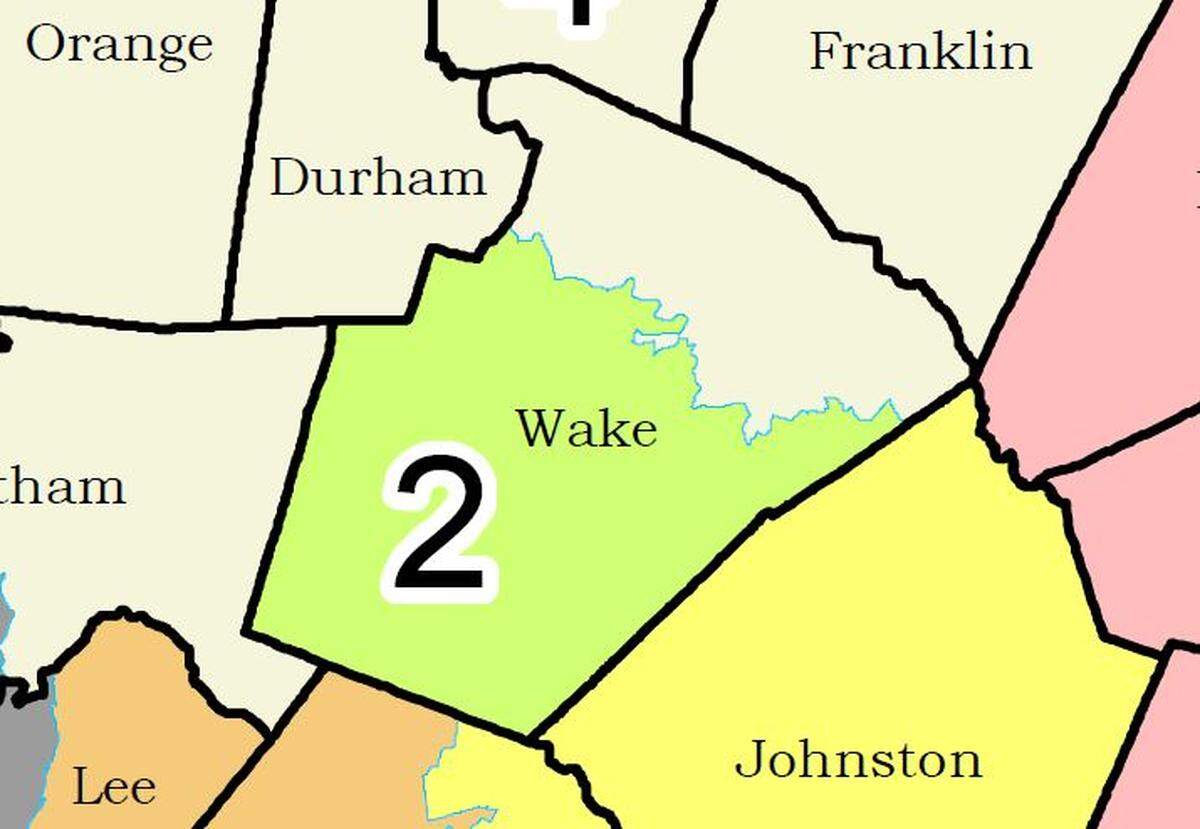
North Carolina’s new congressional map turned the 2nd District from a reliably Republican seat into a heavily Democratic one, prompting the incumbent Rep. George Holding to leave Congress and attracting high-profile challengers to the race.
Voters in the Wake County district will choose between four Democrats during the March 3 primary with the winner being a favorite to flip the seat, rated a likely Democratic seat by outside rating groups. Democrats Monika Johnson-Hostler, Ollie Nelson, Deborah Ross and Andy Terrell are competing for the nomination.
Republican Alan Swain and Libertarian Jeff Matemu do not have primaries and will be on the November ballot.
Holding defeated Linda Coleman in 2018 to win re-election in a district that included parts or all of Franklin, Harnett, Johnston, Nash, Wake and Wilson counties. But when state lawmakers redrew North Carolina’s congressional districts in late 2019, at the urging of a state court citing partisan gerrymandering, the 2nd district was reshaped to only include Wake County.
Holding opted not to run for re-election in the new-look district.
The district’s voters are younger than in most of the state’s other districts, according to voter data compiled by Michael Bitzer, chairman of the politics department at Catawba College. Less than a quarter of registered voters are Baby Boomers while 31% are millennials and another 11% are Generation Z.
“Any representative is going to have to understand the district’s dynamics,” Bitzer said. “Whenever the lines change, it becomes incumbent upon either the current member or any potential new members to figure out, ‘What is this district like and what can I bring to it?’”
Monika Johnson-Hostler
Johnson-Hostler, 44, entered the race in August, before state lawmakers redrew the districts and when it was assumed that Holding would be the Republican nominee.
“I’m running based on the reasons to run, not on who I’d be running against,” Johnson-Hostler said. “The first and largest reason is because the people of District 2 deserve to have a representative who was listening to them.”
A member of the Wake County Public Schools board and executive director of the North Carolina Coalition Against Sexual Assault, Johnson-Hostler said education and health care are two of her top issues.
Growing up poor in Thomasville as the child of a single parent, she said, “public education was the absolute foundation for the trajectory of the rest of my life.”
Johnson-Hostler attended two public HBCUs (Fayetteville State for undergrad and NC Central for her master’s degree) and said she still carries student loan debt.
She said that while discussions about college affordability are important at the federal level, she also wants to engage in conversations about access to good early childhood education.
“We have the brilliance to talk about both,” she said.
Ollie Nelson
Nelson is the associate minister at St. Paul Freewill Baptist Church in Richlands. He served in the Marines and is a member of the Onslow County Democratic Party.
On his campaign Facebook page, Nelson said his top issues are creating jobs, reforming the voting process in North Carolina and investing more in the state’s coastal areas. Nelson wrote that he would model himself after Rep. Maxine Waters, a California Democrat, citing her determination as a model.
In another post, Nelson outlined changes he would like to implement in education, especially for children with disabilities and special needs. And he said he would fight for former Marines and their dependents who drank contaminated water at Camp Lejeune from 1957 to 1987.
Nelson tried to run in the Democratic primary in Eastern North Carolina’s 3rd District during last year’s special election there, but ran into issues with his paperwork, WNCT reported.
House candidates are not required to live in the district they represent.
Andy Terrell
Terrell, who turns 33 at the end of January, interned in the Obama administration and resigned from the British-American Business Council to run for Congress. The organization works with British businesses to open offices in North Carolina.
Terrell, from Hickory, would be the first openly gay person elected to Congress from North Carolina. There are currently seven openly gay members of the House of Representatives, none from any Southern state.
“Growing up as a gay kid, I never thought it’d be possible to represent my state and community in a body like Congress,” said Terrell, who is married.
He said the recent municipal elections in Wake County showed a “desire for generational diversity and fresh new leadership for North Carolina.”
Two openly gay people were elected to the Raleigh City Council, including 28-year-old Jonathan Melton.
Terrell said the redrawn 2nd District has an average age of 35 with a strong tech and entrepreneurial presence, “which dovetails with my background.” The state’s three Democratic representatives in the U.S. House are 72 or older.
“Our party is supposed to be reaching out to young people, talking on the issues that matter to us and trying to get us out to vote. It would behoove us to put someone on the ballot that can speak to those issues with authority,” he said.
Terrell said his late mother’s cancer treatments and medical bills nearly led his family into bankruptcy. That experience, he said, made him an advocate for universal medical coverage and pushed him into the race.
Deborah Ross
Ross, 56, served as the state director of the American Civil Liberties Union in the 1990s and represented parts of Wake County in the statehouse for a decade. Ross lost a 2016 challenge to incumbent Republican Sen. Richard Burr.
Ross said her long history in Wake County, where she has lived for more than 30 years, makes her well equipped to serve the new district.
“I’ve been an active member of this community,” she said. “It’s a district where I feel like our values are the same. I understand the needs of a growing community. I’ve seen all the new folks who have come in. I live in the middle of it.”
Ross, who also worked at GoTriangle, said the area’s infrastructure needs are a top priority. She said she would bring a lot of expertise to Congress.
“How do we pay for the needs of a growing community? We used to have better ways of doing it. Congress has pretty much abandoned them,” Ross said.
She cited renewable energy and voting rights as other top issues.
“I feel like I understand the needs of senior citizens and I do so much work with millennials. I feel like actually the age I am is a really good age for understanding the diverse needs of the district,” Ross said.
Ross raised more than $300,000 in less than a month after entering the race in early December, her campaign said.
An internal polling memo, released by the campaign to The News & Observer, showed Ross with a commanding lead in the race (40% to a combined 9% for the other three candidates) and in name recognition. The poll surveyed 501 Democratic primary voters in the 2nd District from Jan. 7-12 including 64% who were contacted on cell phones. It has a 4.4% margin of error.
For more North Carolina government and politics news, listen to the Domecast politics podcast from The News & Observer and the NC Insider. You can find it on Megaphone, Apple Podcasts, iHeartRadio, Stitcher or wherever you get your podcasts.
This story was originally published January 23, 2020 at 11:54 AM with the headline "These are the Democrats who will try to turn this NC district blue in the 2020 election."