NC Senate moves forward Medicaid bill tightening oversight, restoring some access
AI-generated summary reviewed by our newsroom.
- House Bill 59 gives the state more power to terminate NC Medicaid providers’ enrollment
- The bill moving in the Senate closes provider network for autism therapy services
- Provision added in committee would restore Medicaid access for some residents
North Carolina senators are advancing a bill dealing with Medicaid that would increase state oversight of providers and tighten controls on services for children with autism.
It also includes a provision that would restore access to Medicaid to some immigrants who were swept up in cuts approved earlier this year.
Sen. Benton Sawrey, a Clayton Republican who chairs healthcare committees, said during a committee hearing Wednesday that House Bill 59 includes provisions suggested by the state Department of Health and Human Services and law enforcement partners “in order to strengthen our Medicaid program integrity and compliance issues.”
The bill passed the health committee on Wednesday and rules committee on Thursday, both times with limited debate. The Senate Rules Committee is where bills go before making their way to the floor. Should the Senate pass it, the House would then have to take it up.
The “other big piece” of the bill is closing the networks for peer support, community support and Applied Behavior Analysis therapy services, or ABA, which uses positive reinforcement to help children with autism build communication, social and daily living skills, he said.
“I do think the closing network is in the best interest of making sure that our local providers are still able to get those services to the patients needed and that we’re mindful of our tax dollars being spent in Medicaid as that environment becomes more challenging,” he said.
Reining in costs and increasing oversight of the federal-state health care program that insures more than 3 million low-income or disabled North Carolinians has been a focus of lawmakers in the GOP-led legislature in recent months as they work behind closed doors to draft a budget that is a year late.
Medicaid funding is both state and federal
Leaders in both the House and the Senate have said they expect to pass a budget by the end of this month. Medicaid, while largely funded by the federal government, still requires billions in state funding. Medicaid expenditures by the state have risen from $3.9 billion in fiscal year 2021 to $6.1 billion in fiscal year 2025, DHHS previously told The News & Observer.
The bill, a rewritten version of a previously passed House bill, gives the state more mechanisms to remove or block providers and more authority over how Medicaid managed care plans, which administer Medicaid in North Carolina, run their provider networks.
That includes allowing the state to deny or terminate a provider’s Medicaid enrollment if the provider’s license is suspended, revoked or restricted by its licensing board.
The bill carves out certain services that would always have to run on a closed network, meaning managed care plans could pick and choose which providers to include rather than having to accept all qualified providers. That would apply to ABA services, which have been a focus of lawmakers after a sharp rise in spending on these services.
In April, Attorney General Jeff Jackson, a Democrat, and DHHS Secretary Devdutta Sangvai, appointed by Democratic Gov. Josh Stein, were required to testify before lawmakers on Medicaid fraud. They made the case that they were on top of the problem and delivering results, while acknowledging room for improvement and making requests of the legislature, including funding for a data-mining position in the attorney general’s office.
House Bill 59 also includes a provision, added as an amendment in the health committee, that would restore Medicaid access to the roughly 27,000 lawfully residing immigrants affected by cuts in an earlier Medicaid bill.
April’s Medicaid bill
The provision cutting Medicaid access to some immigrants was originally included in a 33-page Medicaid funding bill lawmakers passed earlier this year.
On April 21, the first day lawmakers returned to session, lawmakers announced an agreement to provide an additional $319 million in Medicaid funding — money that DHHS and Stein had requested for months to keep the program afloat.
That funding had been held up as Republican lawmakers in both chambers were unable to reach an agreement among themselves last year and also failed to strike a deal with the Stein administration on additional Medicaid funding to cover a projected shortfall.
One of the most controversial provisions in that April bill was the provision eliminating state-funded Medicaid coverage for some immigrants, which drew sharp criticism from Democrats.
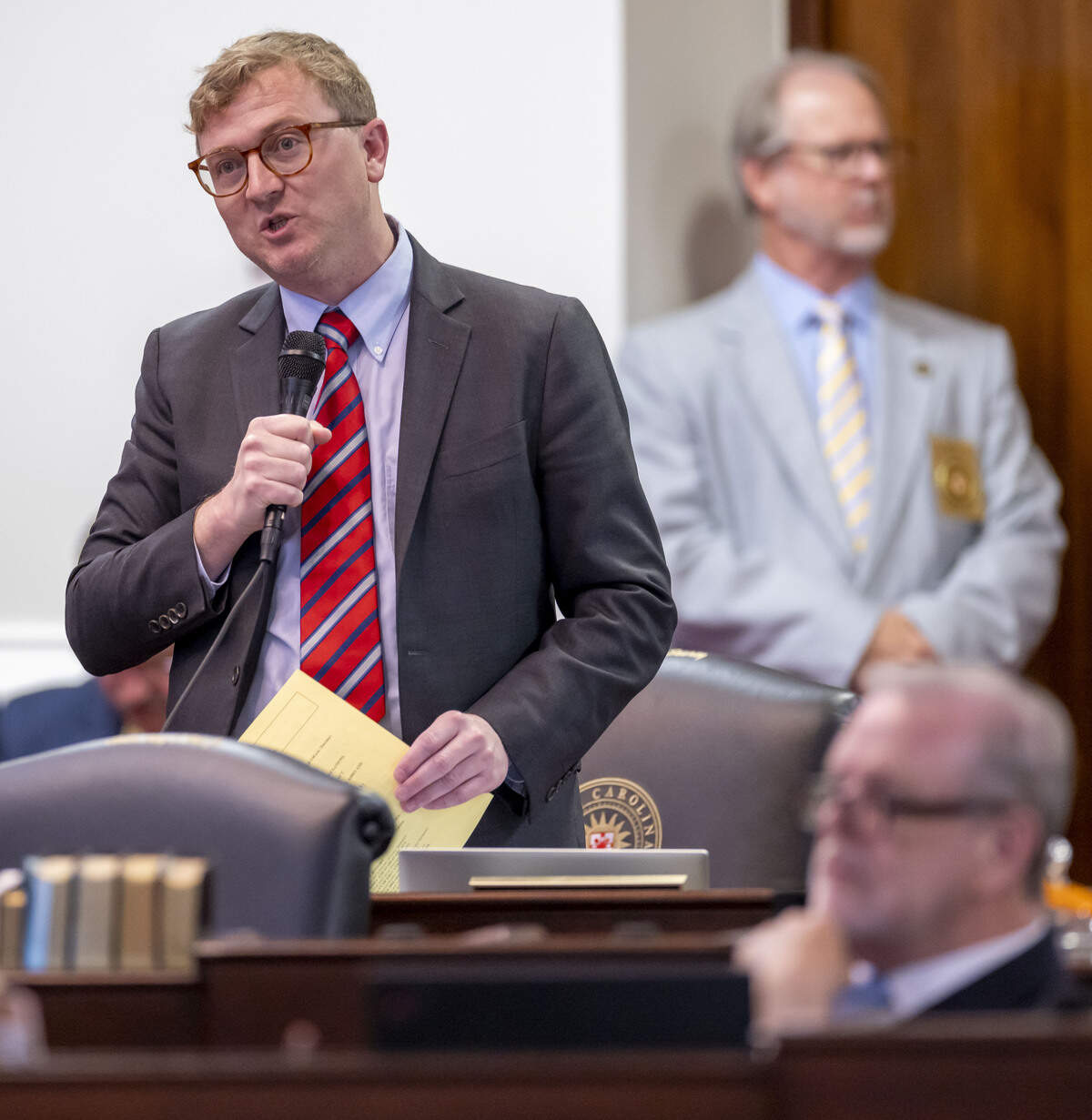
Sen. Natalie Murdock, a Durham Democrat, called it “cruelty” during a Senate session. Sawrey replied to her that in attempting to align state law with federal law, lawmakers asked attorneys to make changes to do so. “No change, intention was contemplated at all to take these people off of Medicaid.”
“We’re going to continue to look at the issue and continue to have conversations about this extremely technical, complex issue with respect to Medicaid eligibility,” Sawrey said at the time.
When Stein signed the April bill into law, he lauded the additional money but flagged the immigration provisions and said his administration was in conversations on getting it fixed. DHHS also previously shared an email with The N&O where it requested lawmakers cut it and other provisions.
On Wednesday, Summer Tonizzo said in an emailed statement on behalf of DHHS that it “continues to work with state lawmakers to ensure efforts protect and strengthen access to care for all North Carolinians. We appreciate our partners at the NC General Assembly for their consideration of the technical amendment to clarify and keep over 27,000 North Carolinians enrolled in lifesaving NC Medicaid coverage.”
The Medicaid deal from April also included several other provisions, including ones aligning the state with new federal Medicaid requirements taking effect Jan. 1, 2027, under rules Congress passed to enact President Donald Trump’s agenda.
It also increased oversight of Medicaid, including by setting aside $500,000 for the state auditor to review North Carolina’s Medicaid program and NCWorks Career Centers, which help connect job seekers with employers. Stein had requested a similar amount in a budget proposal for the Medicaid Investigations Division within the state Department of Justice, run by Jackson, who also asked for funding for a data-mining position during the fraud hearing.
That April bill also included new restrictions on ABA service delivery, including additional limits on telehealth services, requirements for more in-person oversight, and caps on treatment hours without state approval.
This story was originally published June 18, 2026 at 10:20 AM with the headline "NC Senate moves forward Medicaid bill tightening oversight, restoring some access."