Eliminate the federal Department of Education, these Republican NC lawmakers say
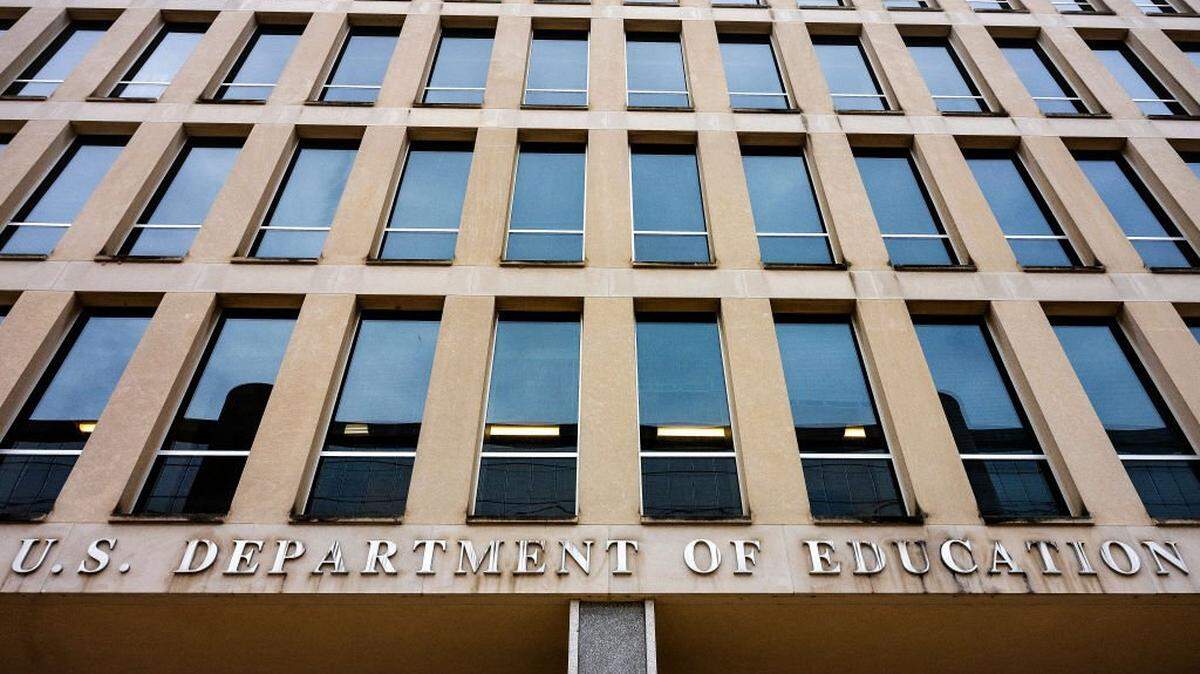
State lawmakers are advancing a symbolic measure calling for Congress to eliminate the U.S. Department of Education. House Republicans say doing away with the agency would cut back on wasteful spending and give the state more control over education.
The resolution, House Joint Resolution 1030, aligns with President Donald Trump’s focus on cutting back on federal spending, especially in education, in his second term. Eliminating the department, according to the resolution, would allow local communities that are “best positioned to develop the curriculum and policies” to have greater administrative authority.
Trump has tasked his education secretary, North Carolina native Linda McMahon, the co-founder of World Wrestling Entertainment, with taking steps toward dismantling the department. But Congress, which created the agency in 1979, would have to vote in order to eliminate it. A bill to eliminate the department was introduced in Congress in January 2025 by Republican Rep. Thomas Massey of Kentucky but never received any votes.
At the state level, the resolution moved forward Tuesday with a vote in the House Education Committee and headed to the Rules Committee, which determines whether it will get a floor vote.
The resolution justifies the department’s elimination with the 10th Amendment, which designates powers not explicitly given to the federal government to states. Education is not a constitutional responsibility that is designated for the federal government to carry out, the resolution notes.
Resolutions do not enact law, but simply state an official position of a legislative body. Joint resolutions represent both the House and the Senate and must be approved by both chambers.
Rep. Brian Biggs, a Randolph County Republican and one of the bill’s primary sponsors, said that with the Department of Education and North Carolina’s State Board of Education, the education system has “two principals.”
“Do we need more bureaucracy? Do we need two principals?” Biggs said in the committee meeting. “We need one person guiding the boat.”
Several representatives raised questions about the resolution, especially Democrats. Rep. Brandon Lofton, a Mecklenburg County Democrat, voiced concern about the resolution’s “lack of specificity.”
“We’ve made statements about cutting down the waste, overspending and streamlining,” Lofton said. “But I don’t think I’ve heard of an actual substantive answer about what exactly the department’s doing today that tomorrow, if Congress enacted what we’re asking them to do, they would no longer do.”
Reps. Biggs and David Willis, a Union County Republican, assured the committee that this resolution does not advocate for the removal of federal funding like Title I and Pell grants. The resolution, they say, addresses bureaucracy that takes away from potential funding for North Carolina.
The resolution states that despite billions in annual funding, reading scores have seen little change since the 1990s. But Democratic Rep. Marcia Morey of Durham said that those metrics were only able to be included in the resolution because of data collection by the Department of Education.
“How will we know how well North Carolina does in relation to other states in terms of test scores, funding, truancy?” Morey told The News & Observer. “I think the Department of Education gives a good barometer of where states fall in comparison with each other and what we need to do better.”
Willis said that the data that the North Carolina Department of Public Instruction collects is sufficient for the state to understand its educational progress and compare itself to other states.
Biggs said that by eliminating the department, federal funds for education would be funneled out of the Department of the Treasury. This, Willis said, would eliminate federal workers who are “soaking up dollars that have no need.”
This story was originally published June 3, 2026 at 9:55 AM with the headline "Eliminate the federal Department of Education, these Republican NC lawmakers say."