How Wake says heightened ICE operations lowered high school graduation numbers
AI-generated summary reviewed by our newsroom.
- Wake County leaders say enforcement likely lowered graduation numbers.
- The school system reported an 11% absence rate during the enforcement surge.
- Wake County English learner enrollment fell by about 3,000 students this school year.
Wake County school leaders are warning that increased federal immigration enforcement has led to a drop in high school graduation numbers this school year.
Attendance dropped sharply in North Carolina schools, including in Wake County, when the Trump administration ramped up immigration operations in the state. That impact is being felt now as thousands of Wake County seniors are preparing to graduate in the next few weeks.
“We’re still working through those graduation numbers this year, but I absolutely know that that has had an impact,” Wake County Superintendent Robert Taylor told reporters on Thursday. “When we look at attendance for those students that have been affected by immigration standards and things that they’ve put in place, it has caused their attendance to dip, and we also saw the graduation rate decline in that area as well.”

Last year, Wake County had an overall 4-year graduation rate of 90.7%. But it was lower for several individual student groups, including 79.5% for Hispanic students and 67.9% for English learners.
How much those graduation rates may fall will be reported this summer by the state Department of Public Instruction. State Superintendent Mo Green has said DPI may put an asterisk by this year’s state graduation numbers if there’s a significant drop.
Attendance dropped during immigration actions
The Trump administration has increased federal immigration enforcement actions since taking office in January 2025. The nation has seen a drop in foreign-born migration since then.
Attendance dropped sharply in several North Carolina school districts last fall when federal immigration agents began an operation in Charlotte that moved to the Triangle. At one point, Durham Public Schools saw 30% of students stay home during the enforcement surge.
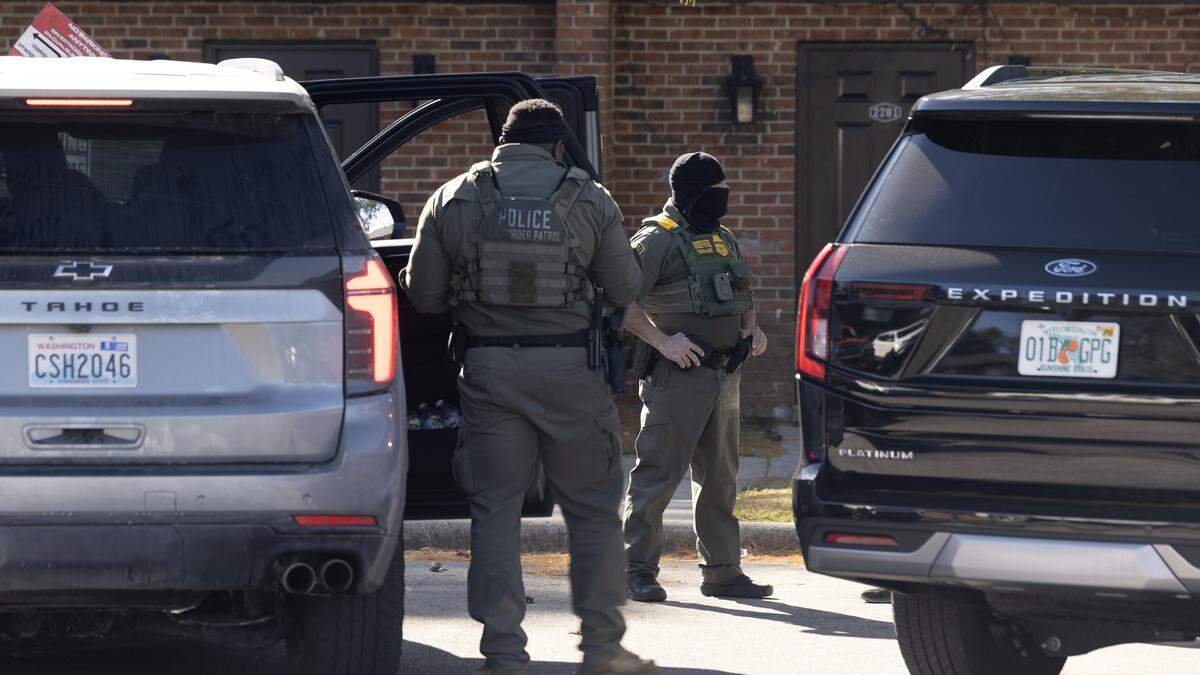
The attendance drop wasn’t as large in Wake County. But Wake reported a higher than normal absence rate of 11% during the enforcement surge.
The Wake County school system attributes part of its enrollment drop this school year to federal immigration policy,
This school year, Wake County’s English Language Learner population dropped by 3,000 students — the first significant decline in a decade. The statewide ELL headcount dropped by 15,513 students.
One of the things that families would mention all the time was whether it was safe to send their kids to school, according to Emanuel Gomez-Gonzalez of Siembra NC, a statewide organization that supports people targeted by ICE.
“The heightened period of activity in November during the Border Patrol operation — that was incredibly disruptive when students are in this stage of their academic career,” Gomez-Gonzalez said in an interview Friday. “That type of disruption can be felt through the rest of the year, and it’s not surprising to see it in the results for graduation numbers or enrollment numbers.”
‘A right to attend school’
School districts tried to reassure families that schools would be a safe space for their students. The U.S. Supreme Court ruled in 1982 that public schools can’t deny admission to students based on their immigration status.
That point was emphasized by Taylor during his remarks at the graduation press conference.
“We want everybody to understand that any student that is in our community has a right to attend school,” Taylor said. “It is our responsibility as a school district to give them the full breadth of what we offer in K-12 instruction, and they have that as a right, and we do nothing to police that. So, we hope that that is respected, and our kids are given the opportunity to come to school and freely participate.”
The efforts to reassure families who may not be in the country legally has drawn complaints from some conservatives.
“Wake County Public Schools in North Carolina just sent a message to parents authorizing illegal aliens’ absences due to ICE activity, and promising that teachers will provide at home lessons for illegal aliens,” Libs of TikTok, a popular far-right social media account, posted in November on X during the Border Patrol surge.
Gomez-Gonzalez said the people cheering the drop in graduation numbers are being supported by a federal government that believes some children don’t deserve an education in the U.S.
“Some people in our communities are comfortable voicing their rejection of other people who live in our communities,” Gomez-Gonzalez said. “It is not a normal thing to wish bad on your neighbors. That’s not a normal generally acceptable thing.”
This story was originally published May 26, 2026 at 5:20 AM with the headline "How Wake says heightened ICE operations lowered high school graduation numbers."