Judge dismisses suit against Raleigh over 27-story building near Glenwood-Brooklyn
AI-generated summary reviewed by our newsroom.
- Judge Somers dismissed the suit on May 13.
- The rezoning allows a building up to 27 stories on a 2.6-acre lot.
- Judge Somers ruled the suit failed to state a claim upon which relief may be granted.
A Wake County judge has dismissed a lawsuit challenging a December city of Raleigh rezoning that allows for a building of up to 27 stories on a lot near the Glenwood-Brooklyn neighborhood and downtown.
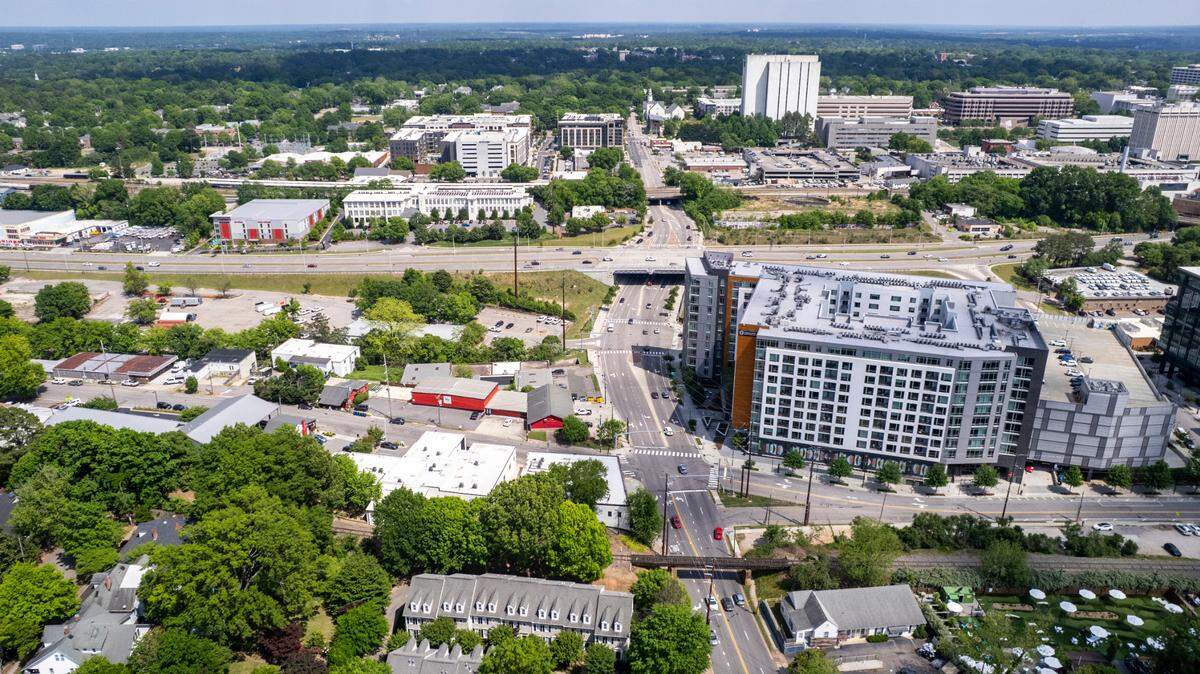
Neighbors opposed the rezoning, primarily focusing on the potential building’s height — more than twice as tall as a 12-story building housing apartments and a Publix grocery store across the street. The rezoning affected a 2.6-acre lot at the northeast corner of Peace and West streets.
The first floor of the proposed building will have retail and commercial space, and market-rate apartments are planned for the remaining floors, The News & Observer previously reported.
Nearby residents Roy Attride III, Connie Upchurch and David Knight sued the city in December to overturn the rezoning.
As of Wednesday afternoon, the residents’ attorney, Kevin Hornik, had not responded to messages left over the phone and email.
What were neighbors arguing?
Neighbors argued there were flaws in the process and called it illegal “spot zoning.”
A spot zoning is when the government changes an area’s zoning in a way that contrasts significantly with its surroundings.
In North Carolina, local governments must have a reasonable basis for spot zoning, retired UNC-Chapel Hill law professor David Owens wrote in 2023.
The same developers tried to rezone the property to allow for up to 30 floors in 2023, but the council denied the proposal at the time.
This time the developers offered the city $1.2 million for its affordable housing fund and reduced the allowed number of floors.
The suit argued that the rezoning request hadn’t substantially changed from before, and that therefore the city’s approving it was “arbitrary.”
The over-70-page suit also alleged numerous flaws in meeting procedures that neighbors said affected the validity of the council’s decision.
Why was it dismissed?
The city rebutted many of the assertions made in the lawsuit, including that the rezoning should even be considered spot zoning.
In its motion to dismiss, the city also said that even if the decision did constitute spot zoning, the council did give a reason for rezoning the area, meaning it wouldn’t be illegal.
City Council members cited a need for more housing across the city in approving the rezoning, The N&O reported at the time.
The council had to grant a special waiver to accept the rezoning application before the expiration of a two-year waiting period required after rejecting a proposal for the same property from the same developer.
The suit argued that the waiver was “quasi-judicial,” or similar in nature to the process of a court with hearings and witnesses and weighed based on the city’s already established rules and regulations. The suit argued that proper quasi-judicial proceedings were not followed and hearings to provide evidence didn’t happen.
However, the city maintained that decision was not quasi-judicial, and that it was a policy decision by the council, not requiring those kinds of procedures.
Ultimately, Wake County Superior Court Judge Clayton Somers dismissed the suit, writing in his order on May 13 that the suit failed to “state claim upon which relief may be granted.”
Essentially, that means that even if everything alleged in the suit is true, there’s no law violated or legal remedy for the situation, according to Cornell University’s Legal Information Institute.
This story was originally published May 20, 2026 at 2:27 PM with the headline "Judge dismisses suit against Raleigh over 27-story building near Glenwood-Brooklyn."