
NC insurance commissioner accused of sending ‘uncomfortable’ texts to ex-staffer
AI-generated summary reviewed by our newsroom.
- April Taylor gave The News & Observer texts she says came from Causey's personal cell.
- Causey said he texted Taylor but did not recall any inappropriate remarks.
- Taylor filed whistleblower complaints in February and went public after leaving in March.
After 10 years as a state probation officer, a dangerous job with low pay and high turnover, April Taylor saw an opportunity to start a new career with the N.C. Department of Insurance.
Taylor’s great-uncle was a big supporter of Mike Causey, who was again seeking the insurance commissioner’s office in 2016 after falling short four times earlier. This time, Causey won, and the following year, he offered Taylor a job as a regional director covering roughly 15 counties in the central part of the state.
Her pay jumped more than 25% to nearly $52,000, and she traded meeting felons for insurance agents and fire chiefs.
But she was going to have to deal with a side of Causey’s personality that she said left her uncomfortable.
She left in March, after eight years with the department. During that time, she said Causey sent her text messages that she found inappropriate. The texts are on her iPhone, and she provided them to The News & Observer.
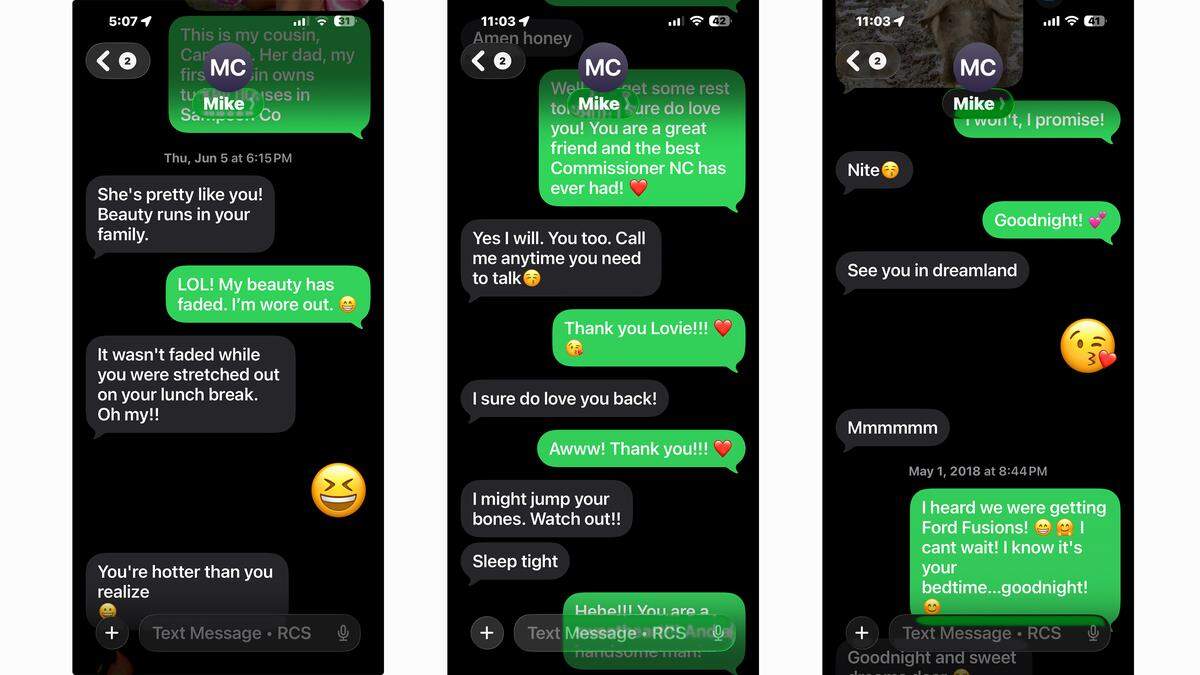
“I might jump your bones. Watch out!!!,” Causey texted her on the early evening of April 26, 2018. He followed it with a heart emoji.
“You’re hotter than you realize,” followed by a grin emoji and a large flame emoji, after 6 p.m. on June 5, last year.
“Just don’t let me catch you in the room alone,” followed by a crying and laughing emoji, three months later.
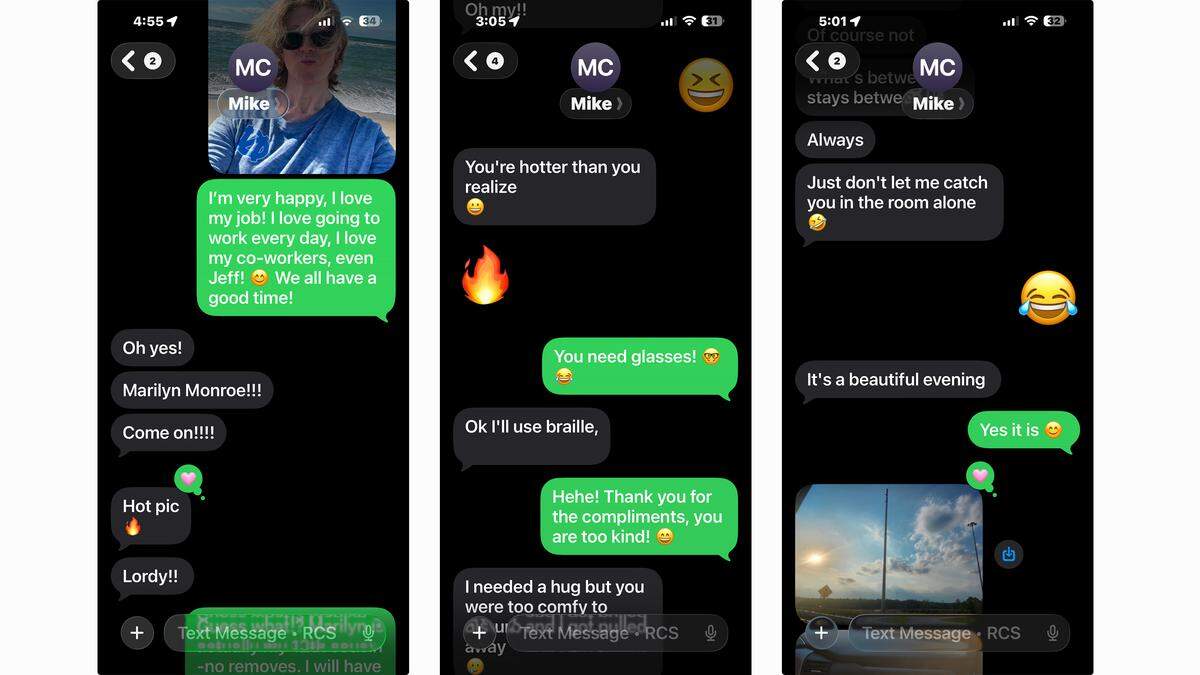
Causey ended at least five text conversations, one shortly before he hired Taylor and four after, with “See you in dreamland.” The most recent was Sept. 4. Initially, a month after he was elected, he told her “see you in NCDOI dreamland.”
The number from where the texts originated is Causey’s personal cell, Taylor’s phone showed. When an N&O reporter called the number, Causey picked up.
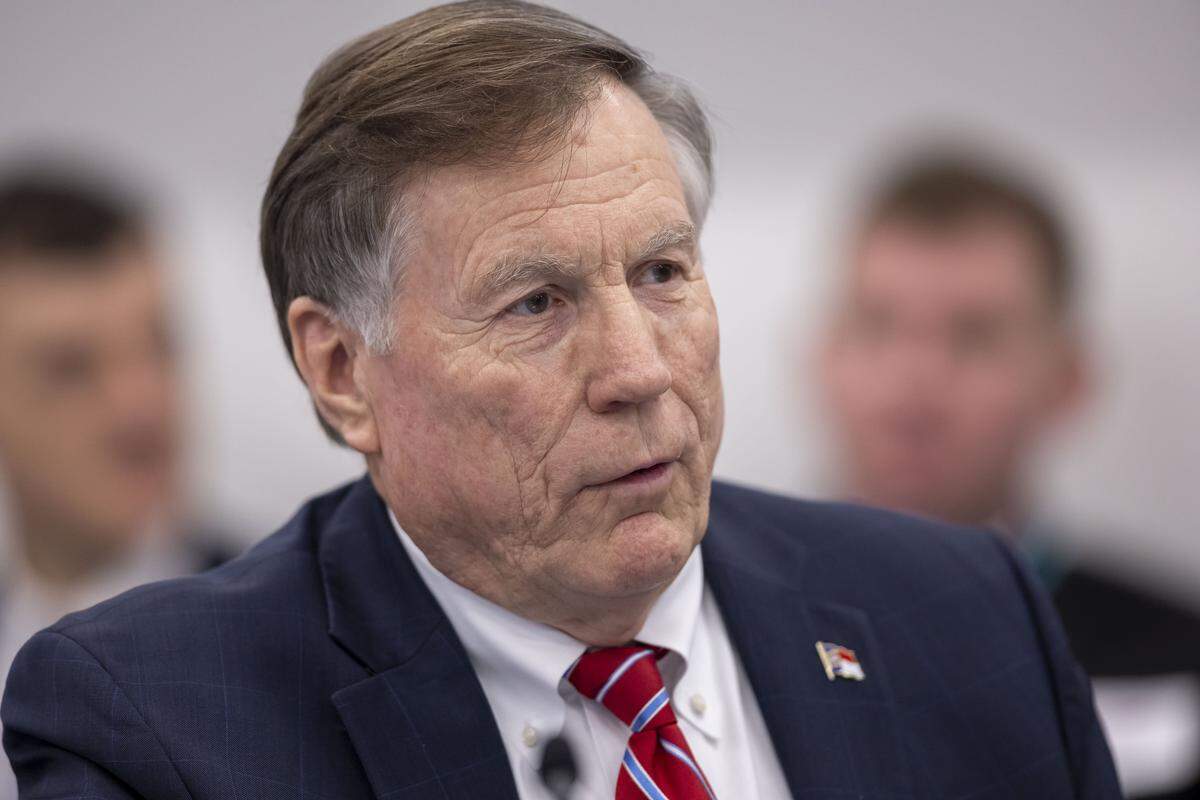
What Mike Causey says about text messages
He acknowledged texting with Taylor to discuss her work, but he said he had no memory of sending any of the comments or emojis regarding her appearance or expressing a sexual interest.
“I don’t have any recollection of it,” said Causey, a Guilford County Republican now in his ninth year in office. “I remember she was having some issues in the past, and would send me some things, some personal things, and I recall responding something. I don’t remember what. But she, she was having a lot of issues. I’ll put it that way, and I was concerned about her.”
Taylor had left the department after raising concerns about procedures that weren’t followed, and a difficult work environment that she said Causey seemed unwilling to do anything about.
Causey did not agree to a reporter’s request to look at his phone. The N&O subsequently filed a public records request for all texts between Causey and Taylor. Department spokesman Barry Smith said Tuesday that messages were being reviewed and would be provided “as promptly as possible pursuant to the Public Records Act.”
Taylor never chastised Causey for the texts or reported them to personnel officials, she said. She often responded to the texts with flattery and appreciation.
“Hehe!!! You are a sweetheart!!! And a handsome man!” she texted in response to his “might jump your bones” comment.
Privately, she felt otherwise, Taylor said.
“There was a few text messages that made me feel uncomfortable,” she said. “There was a couple of them that made me feel a little violated. Like, wow, you know you’re a married man, that’s kind of crossing the line.”
BEHIND THE STORY
MOREA News & Observer reporter met with April Taylor three times to review text messages on her phone after she had sent several screenshots. The long string of text messages to and from Causey’s personal cellphone go back to 2016. The reporter called that number. Causey answered.
The reporter had Taylor scroll through all the messages, and swipe several on the cellphone’s screen to the left. That exposes the timestamps for each message.
The text messages include photos that Causey sent of himself and his whereabouts. In some texts, he discussed state business.
Causey has not disputed texting Taylor, but said he does not recall sending her inappropriate messages.
On May 11, The N&O requested Causey provide his texts with Taylor. The department is working on the request, a spokesman said this week.
Fear of retaliation
Taylor said she feared making Causey mad by pushing back on the comments. She also said she feared being retaliated against.
“So I was just like, OK, I’ll just, you know, laugh at his little comments and just go along with it,” she said.
At times, she initiated the flattery. “I want to do everything I can to get you re-elected! I adore you and look up to you,” she said in a text message on Feb. 3, 2020.
Both have long been married. Each denied being in a sexual relationship with the other. Taylor said Causey often hugged her tightly in a way she found uncomfortable, and sought to kiss her “a couple times.”
One of the text exchanges reflects that.
“I saw a good opportunity to grab a hug,” he texted on June 6.
She responded with a big laughing face emoji, then texted: “and a kiss!” followed by a smiling emoji wearing sunglasses.
“Even better,” he texted back. “Lordy.”
Causey flatly denied initiating any inappropriate contact.
“I never asked her ever for a hug,” he said. “She asked me a couple of times she could give me a hug.”
As for kissing? “Totally false,” Causey said.
Inappropriate texts
Experts on sexual harassment said the texts that Taylor says came from Causey are beyond what is acceptable discourse for an employer with an employee. They were commenting on the substance of the texts, and not whether they came from Causey.
“I think most (human resources) professionals would view this with horror, not only because it’s potentially at least a lawsuit waiting to happen,” said Eric Fink, an Elon University professor who specializes in employment law. “But even if it’s not, it’s just not, you know, it’s not right.”
Durham attorney Kerry Sutton specializes in sexual harassment cases. “None of these are appropriate in a professional relationship,” she said. “Not a single one of them.”
Whether the texts would be grounds for a successful sexual harassment lawsuit would depend on the circumstances surrounding them, the experts said. But the texts indicate an abnormal relationship that also could potentially create problems for other employees.
“If there’s any kind of imbalance of power, it doesn’t matter, you don’t do that at work,” Sutton said. Taylor has reached out to attorneys about a possible whistleblower lawsuit, she said.
Causey has had two known previous stumbles involving women.
Shortly after he first took office in 2017, he apologized for sharing a post on his Facebook page that made fun of overweight women who took part in women’s marches across the country after President Donald Trump began his first term. WRAL first reported the post.
And, for several years leading up to his first run for office in 1992, he was in court dealing with a child support case involving a woman who was not his wife.
At first, Taylor, 50, attributed Causey’s comments about her appearance to his age — he’s 75 — and an insecurity about his appearance, she said. But as time went on and the comments faded when she gained weight and grew when she slimmed down, she said she felt like he viewed her as a “piece of property.”
“When I was overweight I rarely heard from him,” Taylor said.
Political hires
The insurance commissioner is a member of the Council of State. The insurance department decides insurers’ rate requests, investigates insurance-related complaints and licenses insurance agents, adjusters and bail bond agents.
Taylor said she was one of many political hires Causey made when he took office in 2017. The N&O previously reported that he had hired several people with political or personal connections to regional director positions that hadn’t previously existed. Taylor was one of them, assigned to an area in the central part of the state.
He moved regional offices out of three urban centers in the state — Charlotte, Asheville and Wilmington — and into more rural areas controlled by Republicans. He also added more offices, which resulted in hiring more directors.
Taylor’s texts at that time show Causey practically guaranteed her a job, despite the fact that she had no experience in insurance matters.
“You may write your own job description,” Causey texted her on June 22, 2017.
“Yeah right!” Taylor responded. “Lol!!!”
“You can,” he replied. “Want to make you happy.”
Causey, in the interview, didn’t dispute hiring Taylor despite her lack of experience in insurance matters. He said it wasn’t needed for that position.
As a regional director, Taylor and others were told to fill out weekly activity reports. The N&O has previously requested those reports and found that some of Causey’s regional directors filed few. But Taylor regularly filed detailed weekly reports. They totaled more than 260 pages.
Concerns in department
She said she sought a change in jobs within the department after four years of driving around her regional district, meeting insurance agents, and serving as an advance person for events that Causey would attend. At her request, in December 2021, she transferred to the department’s Archdale office, which houses much of its bail bond regulatory division. She worked as an analyst, a position that made use of her experience as a probation officer and her master’s degree in criminal justice.
That’s when things began to go south, she said. Men greatly outnumbered women in the office, and many of those employees were former Guilford County sheriff’s deputies or local police officers, she said. It felt to her like a “good ol’ boy” network.
After she reported that some staff in Raleigh were not obtaining required information as they approved the renewal of bail agents’ licenses, Taylor found herself isolated from her co-workers, she said. She texted Causey that her supervisors had stopped handing her cases of complaints against bail agents to work.
In November 2021, her husband caught COVID-19 and nearly died. He spent three months in the hospital, some of it in an induced coma. But some in the Archdale office weren’t taking the pandemic seriously, she said. One co-worker walked in during that time saying she had tested positive. Taylor said her husband’s brush with death triggered the post-traumatic stress disorder she first experienced from a traumatic childhood.
Taylor said she also suffers from misophonia, a sometimes debilitating neurological condition that in her case is caused by intermittent noises. She suspected some of her co-workers were intentionally toying with devices to emit sounds that would irritate her.
She complained in texts to Causey about the lack of professionalism and her co-workers’ treatment. Causey’s responses suggested he was trying to help her, but she saw little change and suspected he favored them over her. Her supervisors criticized her for not following the chain of command, she said.
By the end of 2025, she began to feel that Causey had betrayed her.
Causey said in the interview that Taylor had been doing a “great” job in the bail bond division. She was making a salary of $70,384.
“I was proud of her,” he said. “I got good reports. And I know she had had some issues with co-workers. I understand that, but they were bending over backwards trying to accommodate her many, many requests for special treatment.”
In February, Taylor began filing several of what she described as “whistleblower” complaints about the bail agent licensing, the treatment she received from co-workers and instances where she said Causey was using state resources for campaign purposes. She submitted the complaints to the State Bureau of Investigation, state auditor, State Ethics Commission and several state lawmakers. She did not include the texts between her and Causey. All she received, she said, was an acknowledgement of her complaint from the state auditor’s office.
That’s when she decided to go public, reaching out to The N&O and other media.
“I am unemployed, and I know God’s going to get me through this. My career is probably over with the state because I’ve blown the whistle, and that’s fine,” Taylor said. “But I want this man exposed.”
Data editor David Raynor contributed to this report.
BEHIND THE STORY
MOREA News & Observer reporter met with April Taylor three times to review text messages on her phone after she had sent several screenshots. The long string of text messages to and from Causey’s personal cellphone go back to 2016. The reporter called that number. Causey answered.
The reporter had Taylor scroll through all the messages, and swipe several on the cellphone’s screen to the left. That exposes the timestamps for each message.
The text messages include photos that Causey sent of himself and his whereabouts. In some texts, he discussed state business.
Causey has not disputed texting Taylor, but said he does not recall sending her inappropriate messages.
On May 11, The N&O requested Causey provide his texts with Taylor. The department is working on the request, a spokesman said this week.
This story was originally published May 20, 2026 at 10:04 AM with the headline "NC insurance commissioner accused of sending ‘uncomfortable’ texts to ex-staffer."