NC lawmakers are back in session next week. See how much they made in 2025.
AI-generated summary reviewed by our newsroom.
- Lawmakers get base pay, monthly expense allowance, session per diem and weekly mileage.
- North Carolina pay is low vs national average; base salary unchanged since the 1990s.
- Lawmakers may claim travel and per diem between sessions with leadership approval.
The 2026 session is set to begin on Tuesday.
And once more, lawmakers, who often hold jobs outside their political office, will be spending long hours in the halls of the General Assembly.
For that work, all lawmakers receive a base salary of at least $13,951 a year and a monthly expense allowance of at least $559, regardless of whether they are in session. On top of that, when in session, lawmakers are paid a $104 daily allowance (often called per diem) and a weekly travel payment.
They can also receive extra travel or per diem payments between sessions when representing the General Assembly elsewhere.
Here’s a look at how much lawmakers make across these different sources of funding.
Base salary and monthly expense allowance
All lawmakers receive a base salary of just under $14,000, with leadership paid more. This is subject to taxes.
Other state employees in the legislature are paid according to rates set by the General Assembly, and their salaries are significantly higher than lawmakers’, with the median salary in 2025 at $52,000.
According to the National Conference of State Legislatures, in 2025 the average salary of a state lawmaker was just under $50,000.
This figure is separate from other payments lawmakers nationally may receive, such as per diem, mileage reimbursements and other allowances.
That places North Carolina toward the lower end of lawmaker salary payments. Pay for lawmakers in the state hasn’t been updated since the 1990s.
Monthly expense allowances range from $559 to $1,413 for the Senate leader and speaker of the House.
Pay for meals and travel during session
North Carolina has a part-time legislature, meaning that lawmakers are not in session year-round.
When they are in session, lawmakers, in addition to the salary and expense allowance, receive an extra $104 for every day they spend in Raleigh to cover expenses such as meals and lodging. That pay is provided for each calendar day of the session, totaling $728 per week. If a lawmaker lives 50 miles or less from the Capitol, this pay is taxable.
Lawmakers do not need to file any documents to receive it, but if they don’t want the pay, they must notify the General Assembly Financial Services Office.
Lawmakers also get a weekly travel allowance during sessions of 29 cents per mile for one round trip between their home and the Legislative Building, regardless of how many trips they actually make. This is also taxable for those who live 50 miles or less from the Capitol, according to the General Assembly website.
Other pay
Beyond their regular pay, lawmakers can also receive money between sessions — in the form of a travel allowance and the per diem for expenses — for work in Raleigh or elsewhere representing the General Assembly. For travel outside the state, they can also opt to have lodging reimbursed up to a limit if they provide a receipt. They must get approval from leadership for this pay. Lawmakers can also be reimbursed for registration fees.
State law does not delineate what type of registration fees that encompasses. The News & Observer has reached out to the Financial Services Office at the General Assembly for clarity.
Lawmakers also have to file a reimbursement form to receive payments outside of session. The N&O requested those forms in late February but has not received them yet.
However, The N&O received a database, through a records request, showing all payments — apart from base salary and expense allowances — for all 120 House and 50 Senate members. That includes per diem, travel allowances, and payments made between sessions.
The data provided is grouped into the following categories:
- “Subsistence taxable and non-taxable non-recurring” (provided in or out of session)
- “Subsistence taxable and non-taxable recurring” (provided during session)
- “Travel taxable and non-taxable non-recurring” (in or out of session)
- “Travel taxable and non-taxable recurring” (during session)
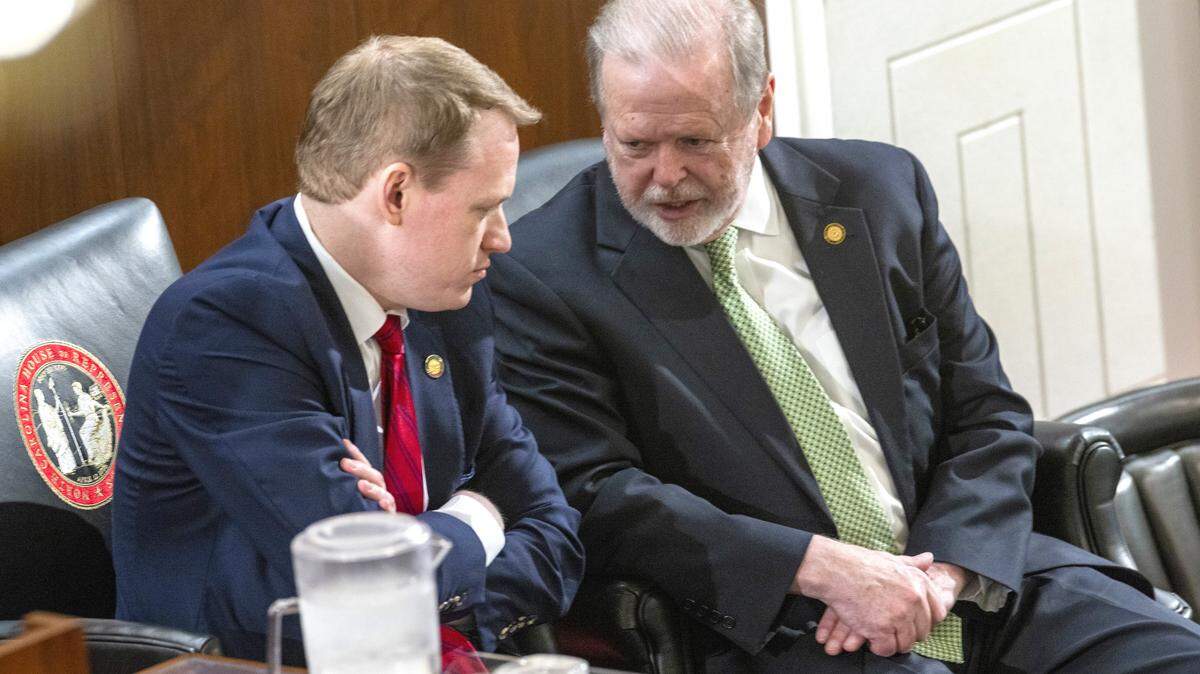
The highest-paid lawmaker across these categories was Senate leader Phil Berger, a Republican who lives in Eden and who was paid $37,270, with over $21,000 coming from non-recurring payments for subsistence and travel.
Speaker of the House Destin Hall, a Republican who lives in Granite Falls, was paid $23,068, with over $7,000 coming from non-recurring payments.
Senate Democratic Leader Sydney Batch, who lives in Apex, was paid $17,000 across all payment types.
House Democratic Leader Robert Reives, who lives in Goldston, was paid $20,676.
Beyond the money they earn for their work at and representing the General Assembly, state law also allows lawmakers to use campaign funds to pay for expenses related to holding office or running for office.
This story was originally published April 15, 2026 at 5:00 AM with the headline "NC lawmakers are back in session next week. See how much they made in 2025.."