
With Helene money caught in red tape, NC is ground zero for calls to reform FEMA
Today, the entirety of Canton’s town hall can be walked through in less than a minute.
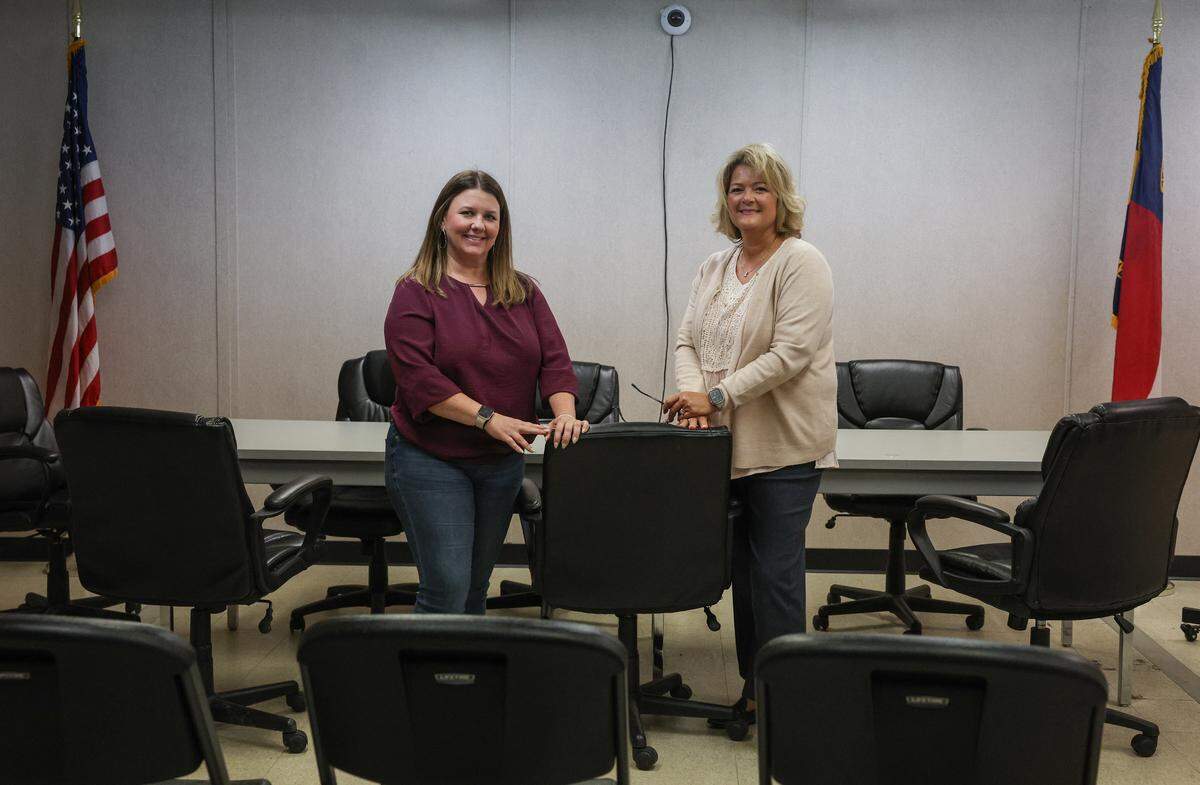
In the middle of a field of gravel, not far from the heart of downtown, Canton’s town hall sits inside a tin, triple-wide trailer.
The town’s departments are squeezed into tight quarters where the floor creaks with each step and thin walls make no conversation truly private. The town — just west of Asheville — now has council meetings in a small boardroom in the center of the trailer which takes up most of the space.
The town’s manager, Lisa Stinnett, would love to hire for more positions, but “we have nowhere to put them,” she said.
When the remnants of Tropical Storm Fred flooded Canton’s town hall and police department in 2021, the town spent more than $1 million on temporary trailers to house them, with FEMA assuring them reimbursement would follow. Four years and another major storm later, the money still hasn’t arrived. On top of that, Canton is also waiting on FEMA’s repayment for more than $300,000 spent clearing debris after Helene.
With an economy battered by the closure of the town’s paper mill in 2023 and a budget of $17.5 million, Canton can’t borrow and spend its way into recovery, its mayor Zeb Smathers said. They need federal support, Smathers said, but the system is broken.
“The current way that we handle disasters at the federal level cannot sustain itself,” he said.
Nearly a year after Helene killed 108 people and caused severe damage to communities across Western North Carolina, several municipalities are still waiting to be reimbursed for funds spent on recovery efforts made weeks after the storm. As of Sept. 4, the state was waiting on $64 million — an improvement from the $115 million North Carolina was due before Gov. Josh Stein put pressure on the federal government last month.
The FEMA reimbursement process has always been notoriously slow. But local and state leaders say recent measures meant to mitigate waste and fraud in the federal government have made this historically slow process even slower – causing funds already green-lighted by FEMA to sit for months before making their way to the state.
This, combined with pre-existing issues with FEMA – webs of red tape and a revolving door of guidance – contribute to a lack of efficiency plaguing the organization and fears of major delays to the recovery process, leaders say.
Western North Carolina leaders want reform at the federal disaster agency that would ensure other communities that face disasters don’t have the same experience.
Smathers said state politicians from both sides of the aisle have advocated for change to the system, but they can only do so much.
“They are running up against a system that is not producing for the people and giving us the resources and respect that we need,” he said.
What’s the holdup?
In his 23-year career in emergency management, Don Campbell said the FEMA reimbursement system is the most bureaucratic process he’s ever encountered.
Make no mistake, FEMA has always been slow, said Campbell, the chief of staff for North Carolina Emergency Management. North Carolina is still closing out projects from Hurricane Matthew nearly a decade ago. And 20 years later, cities across the South are still waiting on funding from Hurricane Katrina.
But additional layers of approval from U.S. Secretary of Homeland Security Kristi Noem and the Department of Government Efficiency are causing even more delays, Campbell said.
Normally, communities hit by disaster would only have to wait for their reimbursement claims to be approved by FEMA – a process that typically takes months. Now, because of a new layer of approval introduced by Noem in June, all contracts and grants over $100,000 awarded by Department of Homeland Security agencies — such as FEMA — have to be signed off by her personally before release.
After municipalities waited months for their reimbursement claims to make it through the laborious FEMA approval process, their requests were sent to Noem’s desk pending her signoff — and were sitting there for months, Campbell said.
In an Aug. 29 press release, FEMA denied that Noem’s review has slowed the process, and said the approval process became 126% faster since Trump took office.
“By personally reviewing every grant and mission assignment over $100,000, Secretary Noem is returning accountability to a federal government that has long needed it,” the release said.
Once funds received signoff from Noem, they ran into another hurdle: DOGE, Campbell said. Earlier this year, DOGE introduced the “Defend the Spend” program, which requires payment justification from the recipient and the awarding agency.
“Even though it had already gone through all of the 30 rounds of FEMA approvals ahead of time, (Defend the Spend) was a whole new set of having to sort of relitigate the entire project completely over,” Campbell said. “For quite some time, we had (funds for) projects that were waiting to be physically sent to the state of North Carolina ... that were sitting for 30 to 90 days. And normally that takes 24 to 48 hours, prior to (this) process.”
President Donald Trump, meanwhile, has called for addressing disaster funding problems by ending FEMA and giving more responsibility to states. His administration’s cuts have already shrunk the agency’s staff. More than 180 former and current FEMA employees signed a letter accusing Trump and Noem of undermining the organization’s capabilities and ignoring mandated responsibilities.
‘Plenty of blame to go around’ for delays
These efforts from Noem and DOGE are part of what the Trump administration says are efforts to eliminate fraud and waste in the federal government.
Tony McEwen is the Carolinas director for the American Flood Coalition, which advocates for flood resilience policy on the local, state and federal level. While McEwen said he recognizes the need to mitigate wasteful spending, there have to be ways to do so in an efficient manner, he said.
“You don’t want to waste taxpayer resources by setting up a situation that’s vulnerable to fraud,” he said. ”But you also don’t want to set up a situation where you’re wasting taxpayer resources because you’re not getting resources to communities in an expedited manner. There’s waste and misuse of resources on both sides of that equation.”
In April, U.S. Rep. Chuck Edwards sent a 62-page report to Trump and the FEMA Review Council that detailed ways to make FEMA more efficient. Edwards, a Henderson County Republican, says he believes the Trump administration has taken his recommendations to heart.
As for the slow reimbursement rate, Edwards said the blame can be pointed in several directions.
“Every time a municipality brings one of these specific cases to me, I start digging underneath why the reimbursement might be lacking,” he said in an interview with the Charlotte Observer. “In some cases, it’s because of the failure of that very municipality to adequately address the questions of FEMA. In some cases, the reimbursement is lacking because of the state response. In some cases, it’s the sheer volume of the claims that are being made of FEMA. There are lots of entities that are involved, and there’s plenty of blame to go around.”
In July, Edwards introduced the FEMA Reform Act, which aimed to reinstate the Building Resilient Infrastructure and Communities program that the Trump administration has attempted to end. Edwards says restoring and reforming the program would ensure rural communities have more equitable access to funding meant to protect against disasters. This bill advanced out of a House committee in September.
Edwards said rather than funds flowing through FEMA, he wants to see Congress appropriate funds to the state through a block grant and allow North Carolina to handle the application process.
“I have far more confidence in the state’s ability to administer this type of funding than I do with the federal government,” he said.
Tired of broken promises
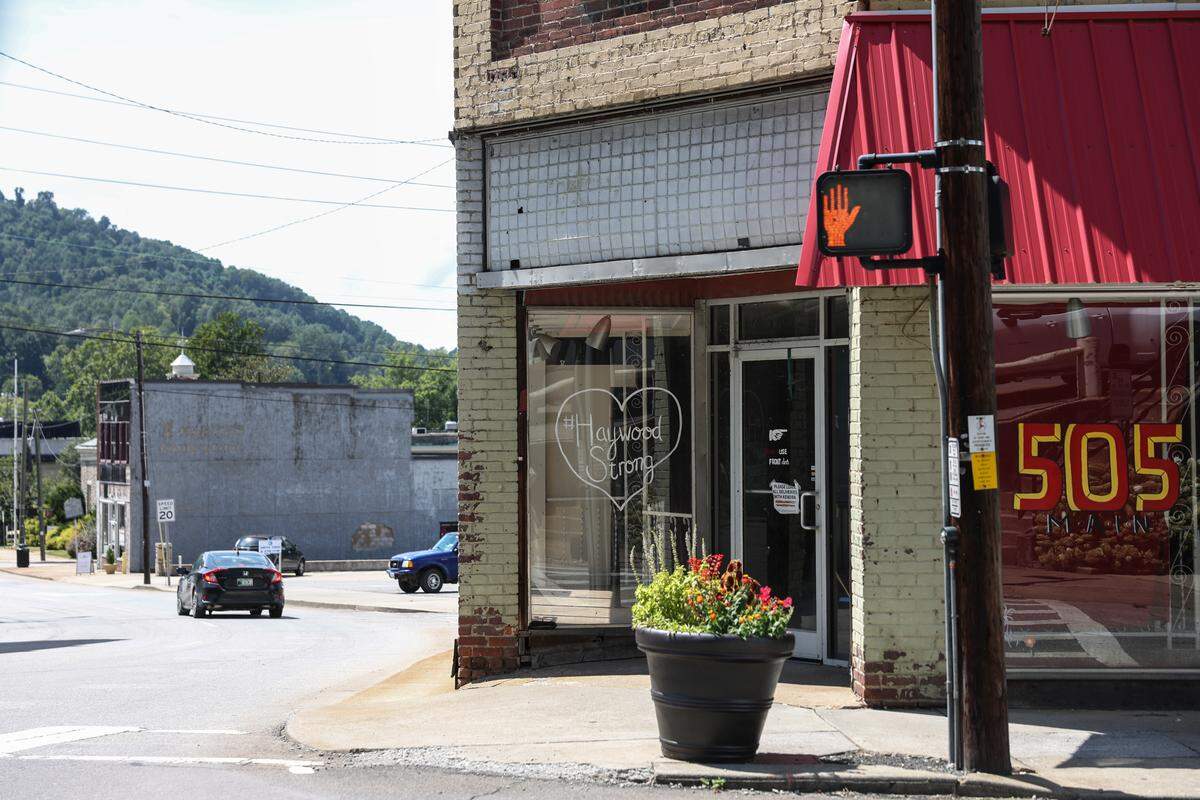
This is the second time in recent history that the town of Canton was guided through the aftermath of natural disasters by someone bearing the Smathers name.
In 2004, Smathers’ father, Pat, was mayor when Hurricanes Frances and Ivan hit Western North Carolina just nine days apart. Back then, his father saw a system riddled with communication issues and a muddied paperwork process.
Twenty-one years later, the younger Smathers has a front-row seat to the same problems that he says haven’t changed.
Town staff recalls paperwork being sent back from FEMA because it excluded hyper-specific details such as the ingredients of chemicals used to do mold remediation on flooded buildings. And since Helene, the city has experienced a revolving door of FEMA project managers to help them navigate the agency’s process. Canton is now on its seventh project manager, the town manager said.

Smathers disagreed with Edwards that the federal government should send disaster funds to the states. Without a system of delivery, “You’re just kicking the can to the states,” Smathers said.
The culture and communication of FEMA needs to change, he said, to a system that operates with kindness and empathy and doesn’t deny people because “they forget to dot an I or cross a T.”
“The last thing you need when you’re literally picking your life up is some bureaucratic clipboard,” Smathers said.
In April, the American Flood Coalition sponsored a trip for the mayors and county leaders of the hardest hit areas in Western North Carolina to meet with officials from FEMA and the Trump administration. It allowed leaders to advocate for ways to make FEMA more efficient and for swift reimbursement.
McEwen said his organization gives credit to the Trump administration for being open to ideas on how to bring change to FEMA. One desired change he’s heard from communities grappling with the FEMA process is a need for upfront funding.
When contemplating FEMA reform, he said, Western North Carolina must be at the table.
“This can’t be something that’s done behind closed doors,” he said. “The lived experiences from those on the front lines of Hurricane Helene have to be at the table for this once-in-a-generation, or once-in-a-multi-generation, opportunity to reform FEMA.”
Canton residents “deserve better than excuses and delays,” Smathers said.
They’ve weathered the COVID-19 pandemic, Fred, the mill closure and now Helene.
”I’m tired for a lot of reasons,” Smathers said, “but I’m just tired of the broken promises.”
This story was originally published September 9, 2025 at 8:00 AM with the headline "With Helene money caught in red tape, NC is ground zero for calls to reform FEMA."