
Medicaid coverage is at risk. How Charlotte woman said it saved her life
AI-generated summary reviewed by our newsroom.
- Charlotte, NC woman credits Medicaid with enabling life-saving cancer treatment.
- House Republicans propose Medicaid changes that may drop 260,000 in NC.
- Proposed work rules and provider tax cap risk millions losing Medicaid access.
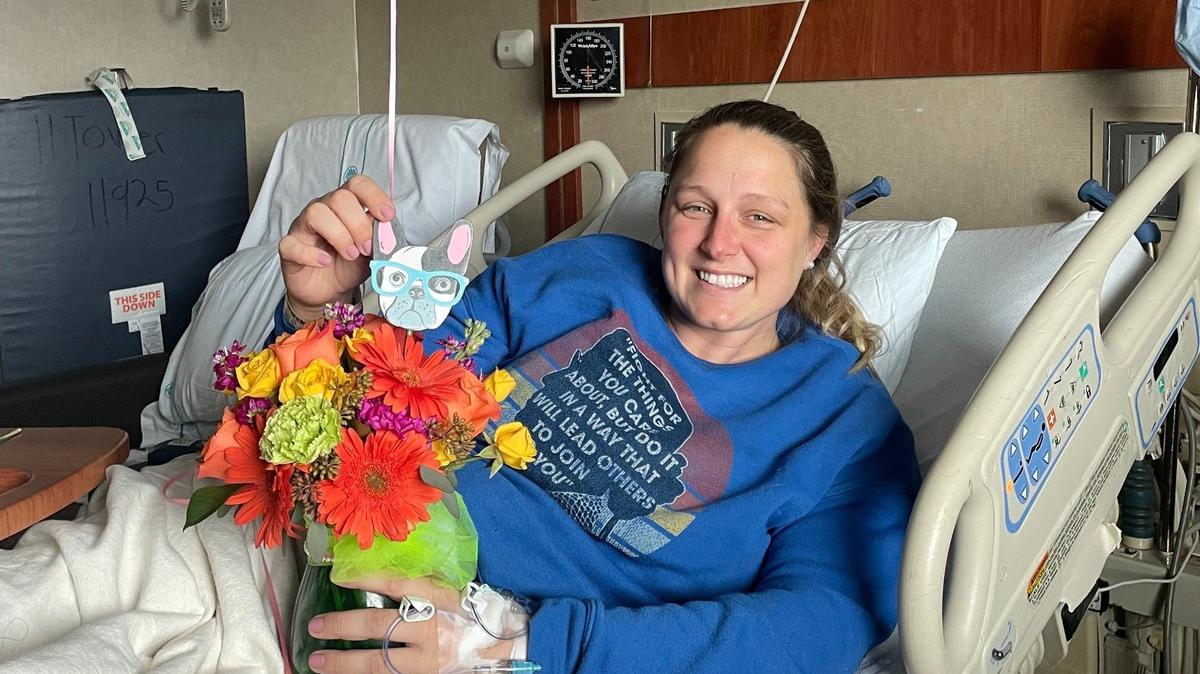
Carrie Klamut wasn’t aware that a tumor was growing inside her colon as she was laid off from a nonprofit.
It was Stage 3 cancer.
Her symptoms began soon after the layoff, but she put off seeing a doctor for a year because she no longer had health insurance.
The layoff came abruptly after spending 12 years working for nonprofits, and she never expected to stay unemployed long.
But a year later, after enrolling in Medicaid, she had a colonoscopy and learned the truth.
“I was one positive lymph node away from being diagnosed with Stage 4,” Klamut said, adding that doctors treated the disease as if it was in fact at the most severe stage. “If I had let it go even further, it would have been catastrophic.”
Today, she’s both employed and cancer-free. And she credits Medicaid with saving her life.
After learning about changes proposed by U.S. House Republicans to the Medicaid program that could cost 260,000 people in North Carolina their health care coverage, she chose to share her colon cancer story.
She teamed up with The American Cancer Society, where she worked the first 11 years of her career, to tell the story.
Changes to Medicaid
Last month, House Republicans put Medicaid coverage for an estimated 10.3 million people at risk when they approved the One Big Beautiful Bill Act.
Republican supporters contend that the changes they propose ensure that the program is used by the people it was created for.
The three main changes House Republicans want to make are to ensure immigrants who are in the United States without legal authorization can’t enroll; create work requirements to be on the program; and prevent federal funding from being used for gender transition care.
The work requirements would force adults 18-64 to either work, volunteer or go to school 80 hours a month or do a combination of the three.
Opponents say that work and enrollment requirements have been shown to cause confusion for people trying to sign up, and they cost money for states to implement.
The bill also fails to renew provisions from the Inflation Reduction Act of 2022, putting another 16 million people at risk of losing health care coverage, which includes 470,000 people in North Carolina.
And senators proposed last week to add even more work requirements and to limit a provider tax from 6% to 3.5%. That would impact many states that use such a tax to supplement the state’s portion of Medicaid coverage.
Senators argue this would save federal money and close a loophole, but opponents say it will send states scrambling to figure out how to fund the program.
And neither the Senate nor the House is done revising the bill.
Medicaid a ‘safety net’ in unemployment
Klamut said Republicans’ proposals are in direct conflict with everything she believes about taking care of people.
“I was so reluctant to accept that I needed Medicaid for health insurance because I didn’t want to be a burden on the system, and I cannot buy into the narrative that people who are on Medicaid are doing so because it’s a way to game the system,” Klamut said. “I can’t buy into it because that’s not what I’ve experienced.”
After Klamut’s layoff, she assumed she’d land somewhere fairly quickly.
But that didn’t happen.
She kept herself busy by freelancing and consulting.
She fostered 100 dogs over the course of the year.
She volunteered with Second Harvest Food Bank and the Society of St. Andrew, working in farm fields to help harvest crops for people in need that would otherwise go to waste.
“I was always a productive member of society,” Klamut said. “I just wasn’t receiving a paycheck.”
Because of her volunteer work, she may have qualified for Medicaid even under the more restrictive rules being considered now.
And she was applying to dozens of jobs, networking and consulting with connections trying to find something.
Anything.
Klamut said interviews weren’t coming.
And when they did, she said, they would go on for about three or four months only for the company to freeze the position.
“I kept thinking that a job was right around the corner,” Klamut said, “and I never anticipated that I would still be looking for a job a year later.”
Throughout that year, she had resisted signing up for health care through either Medicaid or the Affordable Care Act.
“I think in my upbringing, I felt like I had resources, and I had the means to care for myself and provide for myself and I had worked at the time 11 or 12 years straight in the nonprofit sector,” Klamut said. “It wasn’t so much, I didn’t necessarily want to accept a handout. It’s just so hard for me to accept that I needed one and that I could possibly be taking away from someone else who needed one.”
She eventually realized that her situation is one of the reasons that social safety net programs like Medicaid exist, she said: “Not everyone is in the same place that they can be at all times throughout their entire lives.”
Medicaid journey
It wasn’t until late 2023, during open enrollment, that Klamut went to sign up for health insurance, believing she would be eligible for a low-cost Affordable Care Act plan. She was shocked she qualified for Medicaid.
“It was a surprise, honestly, and it was such a relief at the same time, because it’s not something that I anticipated,” Klamut said. “And then sure enough, two months later, I’m scheduling a major abdominal surgery because I have Stage 3 colon cancer.”
The thought of cancer had been in the back of her mind as her bathroom habits and bowel movements had changed through the past year, and she remembers vocalizing it to a friend months before the diagnosis.
But she didn’t see blood, so she assumed there was no cancer.
“That just wasn’t true,” Klamut said.
It wasn’t until she had Medicaid that she made her first appointment.
Cancer journey
This was January 2024.
And it was too late.
Before the doctor could see her, she was rushed to the emergency room. Her symptoms became too severe to withstand on her own. And it was the first time she did see blood.
Doctors stabilized her and scheduled her for an appointment with a general practitioner the next day. That doctor made an appointment for a colonoscopy — weeks away.
Another emergency room visit took place, but cancer wasn’t suspected.
During prep for her colonoscopy it was even suggested she might be able to skip the procedure and use the prep itself as a potential quick fix to a yearlong problem.
She didn’t take the advice and moved ahead with the exam.
As she was being readied for the procedure the doctor assured Klamut she wasn’t expecting to find anything.
“Sure enough, I come out of anesthesia, she walks up to me within three minutes and says, ‘Well it seems like you expected this, but it’s very likely you do have colon cancer, and here’s what I found,’” Klamut said, “and she showed me all the images, and it was a six-centimeter tumor that had been growing.’”
There were also polyps obstructing her colon.
She couldn’t imagine worse timing.
She had built up sick leave at her last job. They would have been flexible allowing for treatments.
Now she was without disposable income because she used her savings on her mortgage and other bills during her year without employment.
“Medicaid covered everything,” Klamut said. “It covered the surgery, it covered all of the diagnostics. The surgery. I was in the hospital for four days, and six months of chemo.”
She said she can’t think about what would have happened if Medicaid wasn’t available to her.
“I do know I would have delayed care,” Klamut said — realizing, out loud, as she said it, that she then might not be doing the interview.
This story was originally published June 24, 2025 at 5:00 AM with the headline "Medicaid coverage is at risk. How Charlotte woman said it saved her life."
