Court reinstates NIH pandemic research grants for Duke, UNC. But for how long?
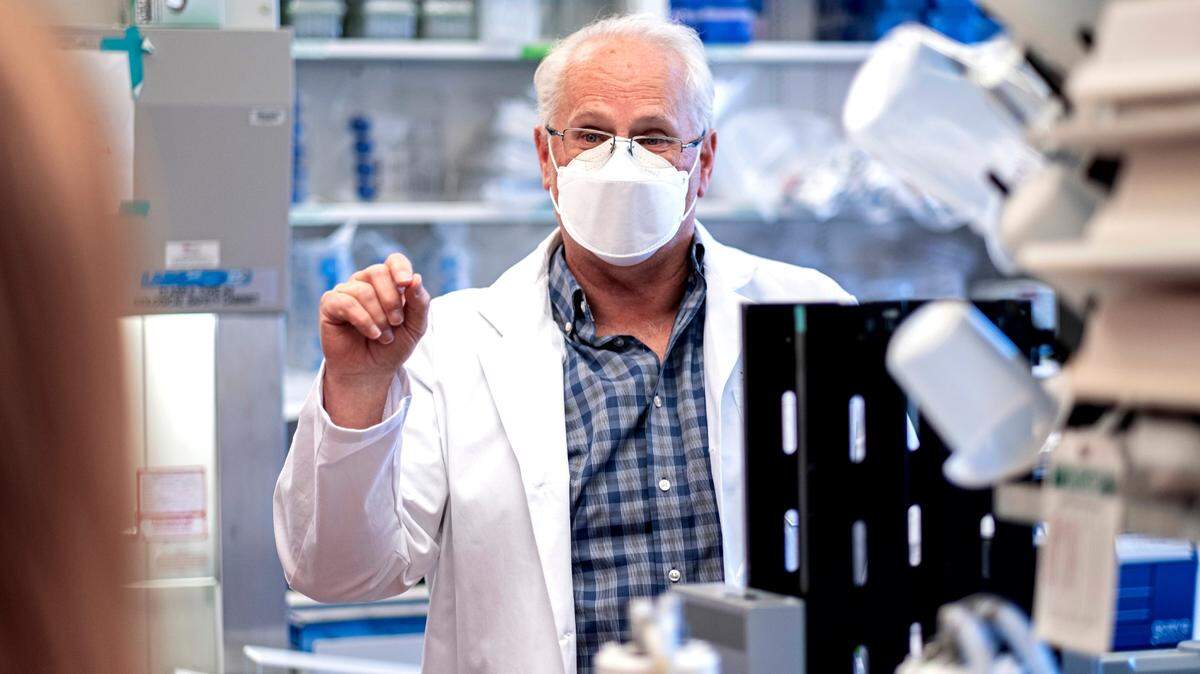
The federal government last month canceled three grants supporting Dr. Ralph Baric’s lab at the University of North Carolina-Chapel Hill.
Baric has studied coronaviruses for four decades, and his trio of active awards centered on pandemic preparedness and response. Each fell victim to sweeping Trump administration cuts affecting $11 billion directly and indirectly related to COVID-19 research.
“These grant funds were issued for a limited purpose: to ameliorate the effects of the pandemic,” the government wrote in a letter terminating one of Baric’s awards, which The News & Observer obtained. “Now that the pandemic is over, the grant funds are no longer necessary.”
However, these canceled awards, along with a handful of others at UNC and Duke University, have since been revived by a court order blocking the government’s terminations of pandemic-related research grants.
This temporary injunction came after 23 states, including North Carolina, sued the U.S. Department of Health and Human Services and its secretary, Robert F. Kennedy Jr., over the cancellations. North Carolina Attorney General Jeff Jackson called the cuts “unlawful” and estimated the Trump administration’s decision cost the state more than $230 million.
In an April 3 ruling, District Court Judge Mary McElroy of Rhode Island wrote that the plaintiffs “made a strong showing that the sudden, blanket termination of $11 billion — likely based on misinterpretations of federal law — was neither reasonable nor reasonably explained.”
McElroy’s order only applies to grants canceled on or after March 24 “for reasons related to the end of the COVID-19 pandemic” and the injunction only lasts 14 days. McElroy is scheduled to reassess the order during a hearing Thursday.
UNC and Duke researchers told The N&O this week they have regained access to funding through previously terminated awards, allowing them to resume incurring science-related expenses.
Duke and UNC together accounted for more than half the nearly $2 billion North Carolina institutions received last year from NIH, which is the nation’s largest public funder of medical research. The amount of undistributed money in pandemic-related awards varies according to the government’s list of initially canceled grants.
For example, the reinstated Duke grant titled “Design and Development of a Pan-betacoronavirus Vaccine” has nearly $7 million left while one Baric award for the North Carolina Seronet Center for Excellence only shows $83,600 remaining. Overall, Duke confirmed three grant reinstatements, and UNC confirmed four.
What NIH termination letters said
In its termination letters last month, NIH acknowledged its choice to immediately end awards was unique.
“Although ‘NIH generally will suspend (rather than immediately terminate) a grant and allow the recipient an opportunity to take appropriate corrective action before NIH makes a termination decision,’ no corrective action is possible here,” read the letter canceling one of Baric’s grants. “The premise of this award is incompatible with agency priorities, and no modification of the project could align the project with agency priorities.”
McElroy’s order did not reinstate NIH grants the Trump administration stopped due to their focus on gender identity, sexual orientation or racial communities. This decision ended awards at Duke, UNC-Chapel Hill, UNC-Charlotte, Wake Forest University and the Durham-based nonprofit RTI International.
“This award no longer effectuates agency priorities,” the government wrote in its letter terminating a UNC-Chapel Hill award that studied substance use among “sexual and gender minority” children. “Research programs based on gender identity are often unscientific, have little identifiable return on investment, and do nothing to enhance the health of many Americans. Many such studies ignore, rather than seriously examine, biological realities. It is the policy of NIH not to prioritize these research programs.”
In a March 20 email, UNC-Chapel Hill spokesperson Cat Long said the government halting active grants had “previously been an uncommon action.”
This story was originally published April 16, 2025 at 5:17 PM with the headline "Court reinstates NIH pandemic research grants for Duke, UNC. But for how long?."