Legal cannabis products are sold near schools. Should NC ban sales to those under 21?
Dabney Ferris said she has now been sober from THC products for 764 consecutive days. Her addiction began in high school at age 15, she said, when peer pressure led her to start using vapes to fit in.
“Getting my fix on THC was pretty easy. All I needed was some cash and a ride. I’d simply walk into a smoke shop underage, ask for a cart or a vape, hand the man the cash, and walk out like I was shopping at the grocery store,” Ferris said on Wednesday.
“It kept changing me. I can’t reverse the damage, but I can try to help keep someone else safe,” she added Wednesday during a press conference at the North Carolina General Assembly.
THC (tetrahydrocannabinol) is the primary psychoactive compound in cannabis, with delta-9 THC driving the “high” typically tied to marijuana.
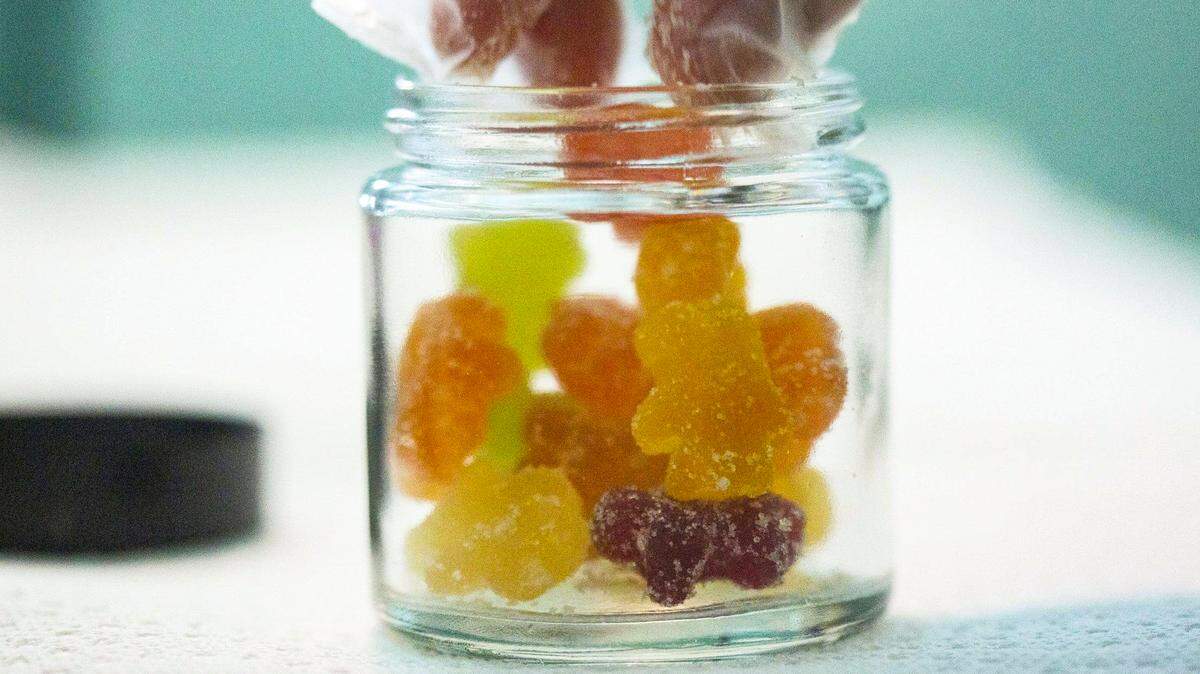
Many other THC variants and cannabis compounds are legal in North Carolina if they qualify as hemp, defined as containing less than 0.3% delta-9 THC. North Carolina fully legalized hemp sales in 2022.
Lawmakers warn this has sparked a surge in unregulated cannabis products harming kids. They are now intensifying efforts to rein in hemp in the state through a bill titled “The Protect Children from Cannabis Act.”
This bill would ban the sale of hemp and hemp-derived products to anyone under 21 and impose rules on their sale in the state.
“There is a market that is taking advantage to create intoxicating products under a law that was never designed to allow that, and we want to keep those out of the hands of minors,” said Republican Rep. Allen Chesser, a bill sponsor representing Nash County.
License would be required
Speaking on regulations within the bill, Chesser, a former law enforcement officer, said, “to have a tightly controlled market, it must be enforceable.”
Licensing requirements within the bill serve that purpose, he said. Law enforcement officers, “they’re not chemists. They can’t go out and test something on the side of the road and tell you what the THC content is just by looking at it,” he said.
The bill would require a state-issued license to sell hemp products and grant the North Carolina Alcoholic Beverage Control Commission authority to enforce sales laws, issue permits, conduct inspections, and impose sanctions with assistance from the Alcohol Law Enforcement agency. Permit fees would be $2,000 per location, capped at $50,000 for businesses with 25 or more locations or delivery services.
ALE enforces the state’s alcohol, lottery and tobacco laws, while the NC ABC Commission oversees the ABC system.
Violations to the law may result in fines or license revocation, and sales to anyone under 21 would be a Class 2 misdemeanor.
THC use
According to the Journal of the American Medical Association, 11% of high school seniors report using a different type of THC known as delta-8 — which the Food and Drug Administration has flagged for safety concerns.
Numerous studies have found that teen cannabis use is linked to adverse effects on learning, memory, and attention; changes in brain development; and the development of cannabis use disorder and other psychiatric disorders, like depression, psychosis, and suicidality, according to the National Institutes of Health (NIH).
Sheriff Jeff Crisco of Stanly County — a rural county of roughly 65,000 people east of Charlotte — said that this school year, his office seized 130 hemp products across high schools and middle schools.
“That doesn’t sound like a lot, but in perspective, it is. It’s middle school kids. There needs to be regulations,” he said.
Sheriff Christopher Thomas of Onslow County said the Eastern North Carolina county is roughly 700 square miles, has 200,000 people and has over 80 vape shops.
“I have 30 vape shops within half a mile of a school. I have 13 within 1,000 feet of a school. I have 15 within 500 feet of a school. I have one intersection in my county that has a school on one corner and a vape shop on the other three,” he said.
This isn’t the only bill filed this session to regulate hemp-derived products, with Senate Bill 265 also aiming to establish a framework for their sale and distribution. House Bill 328 seeks to ban hemp products on school grounds. Neither have passed either chamber so far.
In the 2024 North Carolina legislative session, several bills were also introduced to regulate hemp-derived products, including House Bill 563 and Senate Bill 521. Those bills did not pass into law. The former died in the House after the Senate linked the proposed legalization of medical marijuana to it.
The former died in the House after the Senate linked the legalization of medical marijuana to it.
Last year lawmakers passed legislation creating a vaping registry that only allows federally authorized vaping products to be sold in North Carolina. This made most vaping products illegal because few have been authorized by the FDA, The News & Observer previously reported.
“There is huge interest in recognition of this problem,” said Republican Rep. Timothy Reeder, another bill sponsor.
Over the next weeks and months, Reeder said he expects lawmakers to coalesce on a final bill.
This story was originally published April 10, 2025 at 7:30 AM with the headline "Legal cannabis products are sold near schools. Should NC ban sales to those under 21?."