Bipartisan bill directing schools to ban phones during classes clears NC Senate
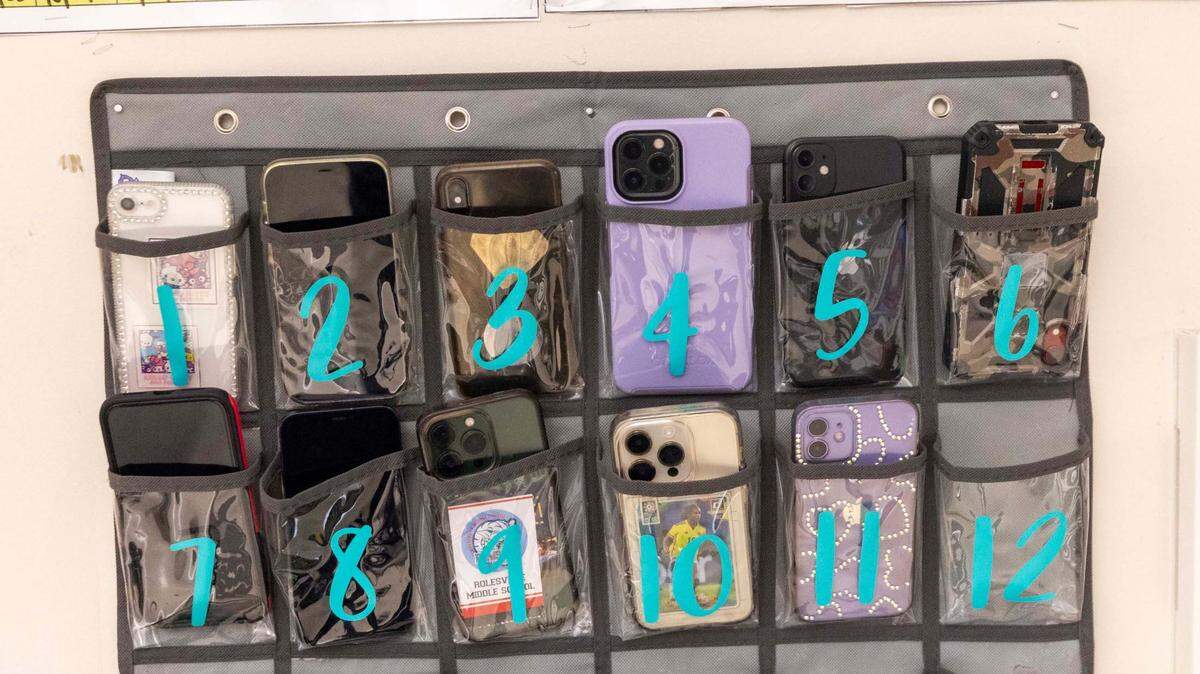
The North Carolina Senate passed bipartisan legislation Tuesday directing schools to ban the use of cellphones, laptops and other wireless devices during classes, with a series of exceptions including educational use.
Senators voted 41-1 to approve Senate Bill 55 and send it to the House, where lawmakers have advanced a bill of their own.
The Senate’s bill requires school boards and charter schools to create their own policies on wireless devices that, at a minimum, prohibit students from using, displaying, or having any “wireless communication device” turned on during classes.
School boards would be responsible for establishing consequences for violating the policy, which could include confiscation and disciplinary measures as prescribed by each school’s code of student conduct.
The policies adopted by school boards would be required to allow cellphone use if allowed by a teacher for educational purposes, or for use in the event of an emergency, or if required for a student’s individualized education program or section 504 plan, or to manage a student’s health care.
The House’s bill is less restrictive and only covers cellphones, unlike the Senate’s bill, which covers tablet and laptop computers as well.
Two lawmakers who joined forces on this bill, GOP Sen. Jim Burgin, one of the bill’s three primary sponsors, and Democratic Sen. Jay Chaudhuri, the Senate Democratic whip, previously filed legislation last year to study the impact of phones in schools.
Chaudhuri said after Senate Bill 55 was filed last month that in today’s society, the ubiquity of smartphones and other electronic devices has led to “a collective action problem where we’ve created a phone-based childhood as opposed to a phone-free childhood.”
Supporters of the bills to restrict phone use in schools point out that at least 19 states have already passed laws banning phones in schools, or recommending local school districts to enact their own restrictions, according to an analysis by Education Week.
In North Carolina, 77 of the state’s 115 school districts have adopted their own policies on cellphone use, according to the N.C. School Boards Association.
The efforts by lawmakers to address cellphone and wireless device use in classrooms comes at a time when schools across the state, and in some cases, even within the same school district, have been handling cellphone use with a variety of different policies, The News & Observer previously reported.
In Wake County, for example, officials have been working on updating their phone policy to address variations within individual schools that handle phones differently.
During Tuesday’s floor debate, Chaudhuri said that restricting cellphone use during classes may also help with efforts to reduce bullying in schools.
The bill passed after Republicans voted down two amendments proposed by Democrats seeking to clarify that devices could continue to be used “during noninstructional time,” such as in between classes, and that devices don’t need to be shut off during class.
This story was originally published March 4, 2025 at 4:31 PM with the headline "Bipartisan bill directing schools to ban phones during classes clears NC Senate."