Wake judge dismisses GOP challenge of 65,000 votes in NC Supreme Court election
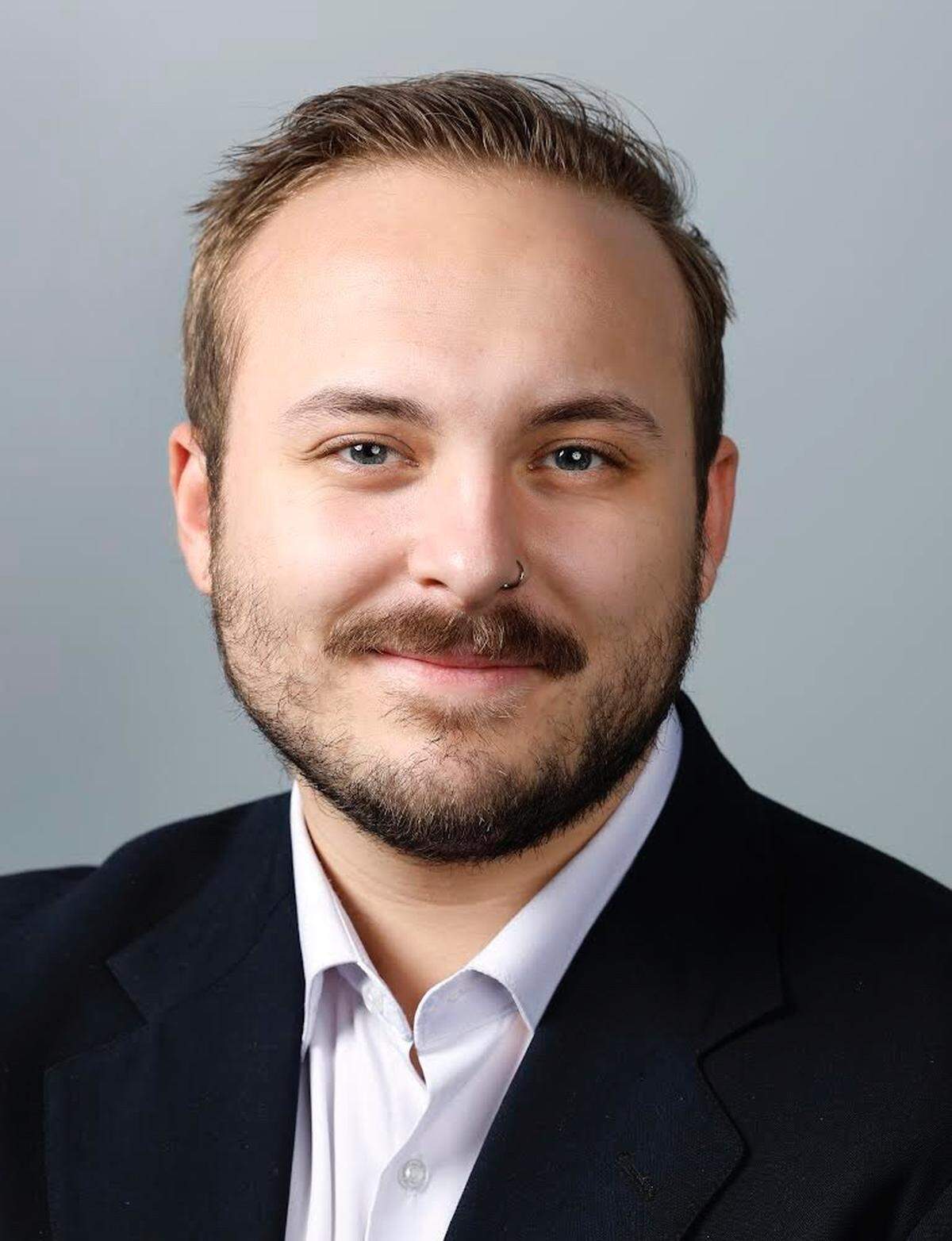
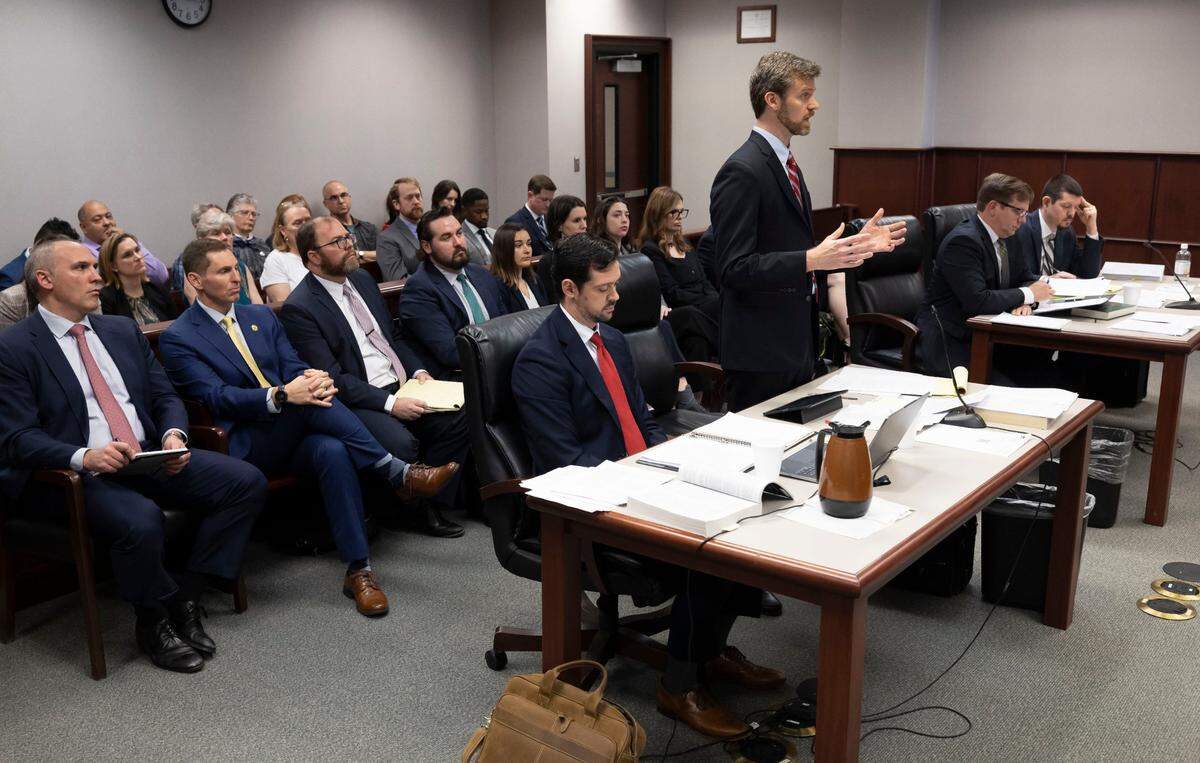
A Wake County Superior Court judge on Friday rejected Republican Jefferson Griffin’s attempt to throw out 65,000 ballots cast in November’s Supreme Court election.
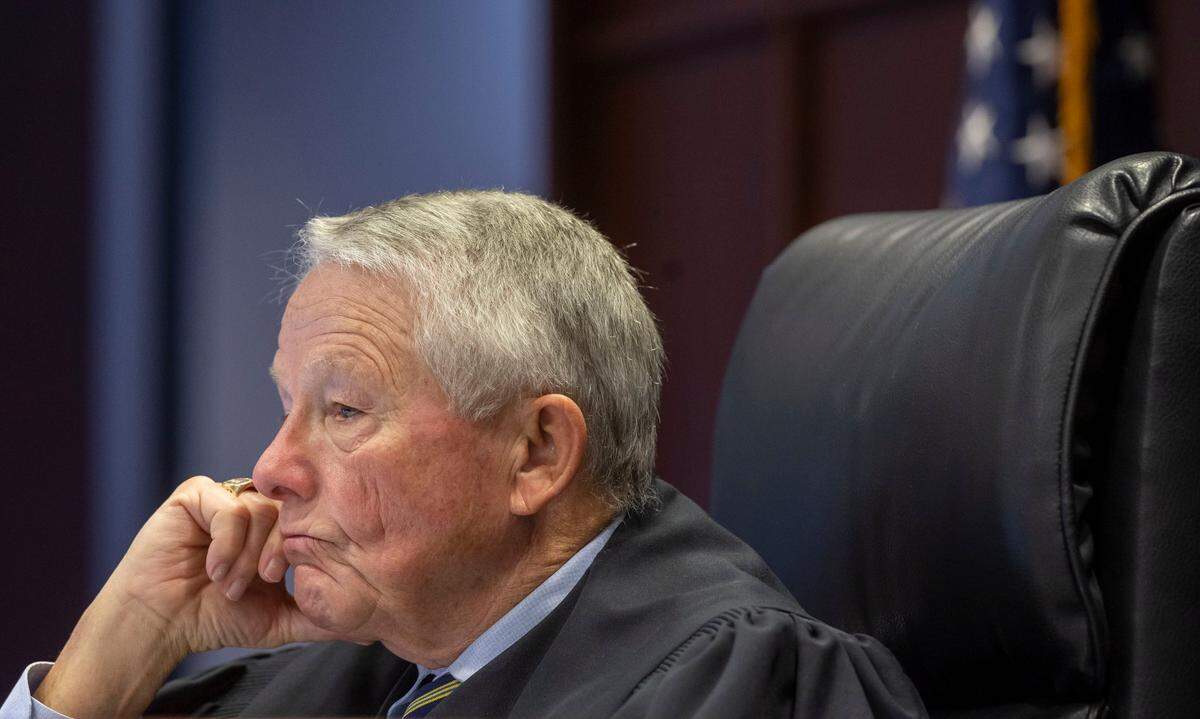
Affirming the decision of the State Board of Elections, which dismissed all of Griffin’s protests in December, Judge William Pittman wrote that the board’s decision “was not in violation of constitutional provisions, was not in excess of statutory authority or jurisdiction of the agency, was made upon lawful procedure, and was not affected by any other error of law.”
Griffin is likely to appeal Pittman’s ruling to the North Carolina Court of Appeals, which is dominated by Republican judges. In a statement, NC GOP Communications Director Matt Mercer said the party “will continue to support Judge Griffin in his pursuit of election integrity.”
Griffin, who trails Democratic incumbent Allison Riggs by 734 votes following two recounts of the results, has challenged tens of thousands of ballots using untested legal theories in a battle that has now persisted three months past the election.
Friday’s hearing marked the beginning of a new phase of arguments, after both sides spent months arguing over whether the case should be heard by state or federal courts. Griffin won that battle — for now — with the 4th Circuit U.S. Court of Appeals agreeing to give state courts jurisdiction over the matter.
That process began in Wake County before Pittman, who ruled against similar arguments to the ones Griffin is making in an offshoot lawsuit last month.
Attorneys for Riggs and the State Board of Elections argued that Griffin is trying to rewrite election rules after the fact in his own favor — throwing out tens of thousands of votes in the process from voters who did nothing wrong.
“That kind of retroactive disenfranchisement is fundamentally unfair, anti-democratic, and it violates state law,” Raymond Bennett, Riggs’ lawyer, said.
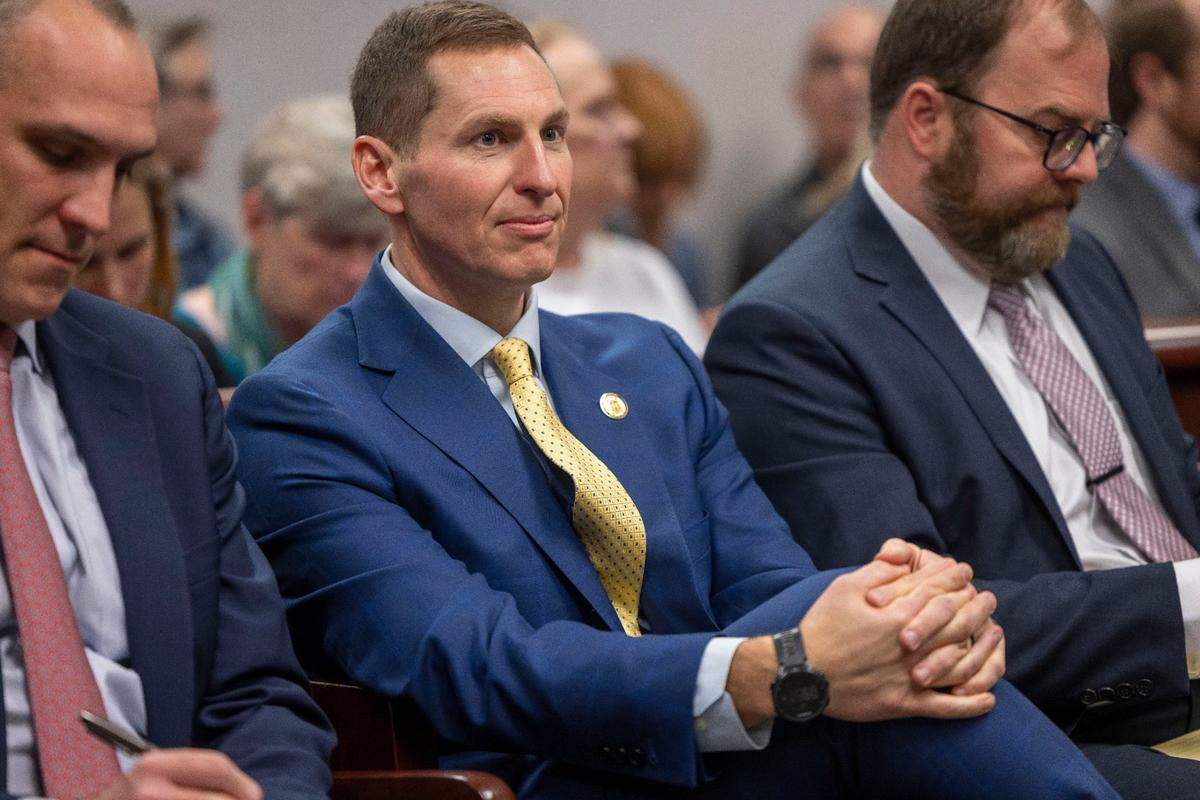
Griffin’s attorneys, however, argued that they seek a proper implementation of state election laws and contend that there is precedent for nullifying votes after an election.
“There’s a valid justification for protecting the integrity of the election,” Craig Schauer, Griffin’s lawyer, said.
The dispute could ultimately end up before the North Carolina Supreme Court — the very body Griffin aims to join.
The state’s high court, which has a 5 to 2 Republican majority, already ruled in Griffin’s favor last month, blocking the State Board of Elections from certifying Riggs as the winner in the race while his case plays out. But, the court later ruled that Griffin had erred by trying to bring his case directly to the Supreme Court instead of starting in Wake County.
Nevertheless, the Supreme Court left its previous order blocking certification in place and several Republican justices authored opinions hinting that they may ultimately agree with Griffin’s challenges.
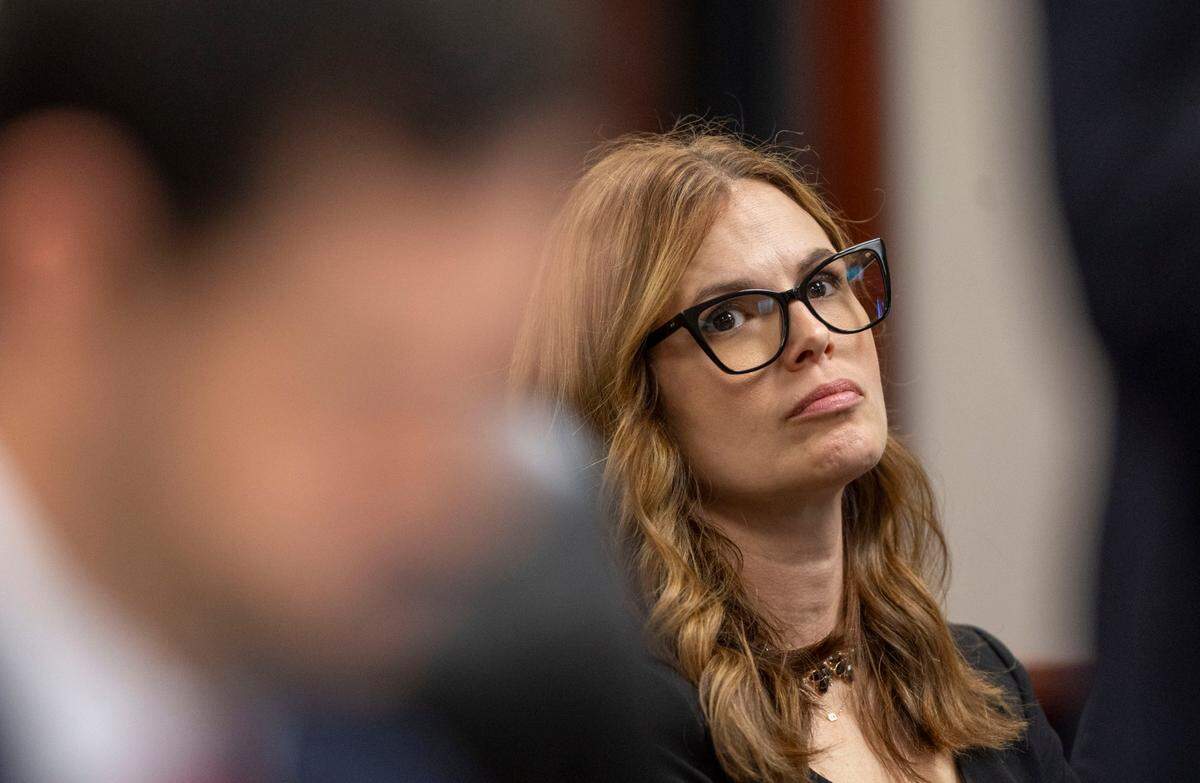
While the case continues, Riggs remains on the high court — though she has recused herself from Griffin’s case.
Though the state has jurisdiction now, there’s still a possibility that the case could return to federal courts if certain legal issues aren’t resolved. Riggs and the board said that they plan to seek federal review if they ultimately lose at the state level.
The case has drawn national attention, as critics warn that Griffin’s challenges — if successful — could form the playbook for overturning election results across the country. Friday’s hearing also drew dozens of protesters, some of whom have had their votes contested in the case.
Speaking outside the courthouse, Riggs said she was grateful for the court’s consideration and pledged to continue “standing up for the 65,000 voters whose constitutional rights would be infringed by the relief sought in this case.”
Griffin declined to comment, saying the state’s Code of Judicial Conduct prohibits him from doing so.
The arguments
Griffin’s case targets three categories of voters, many of whom have been participating in North Carolina elections for decades without issue. The largest group of challenged voters are those who don’t have a Social Security number or driver’s license number attached to their registration records.
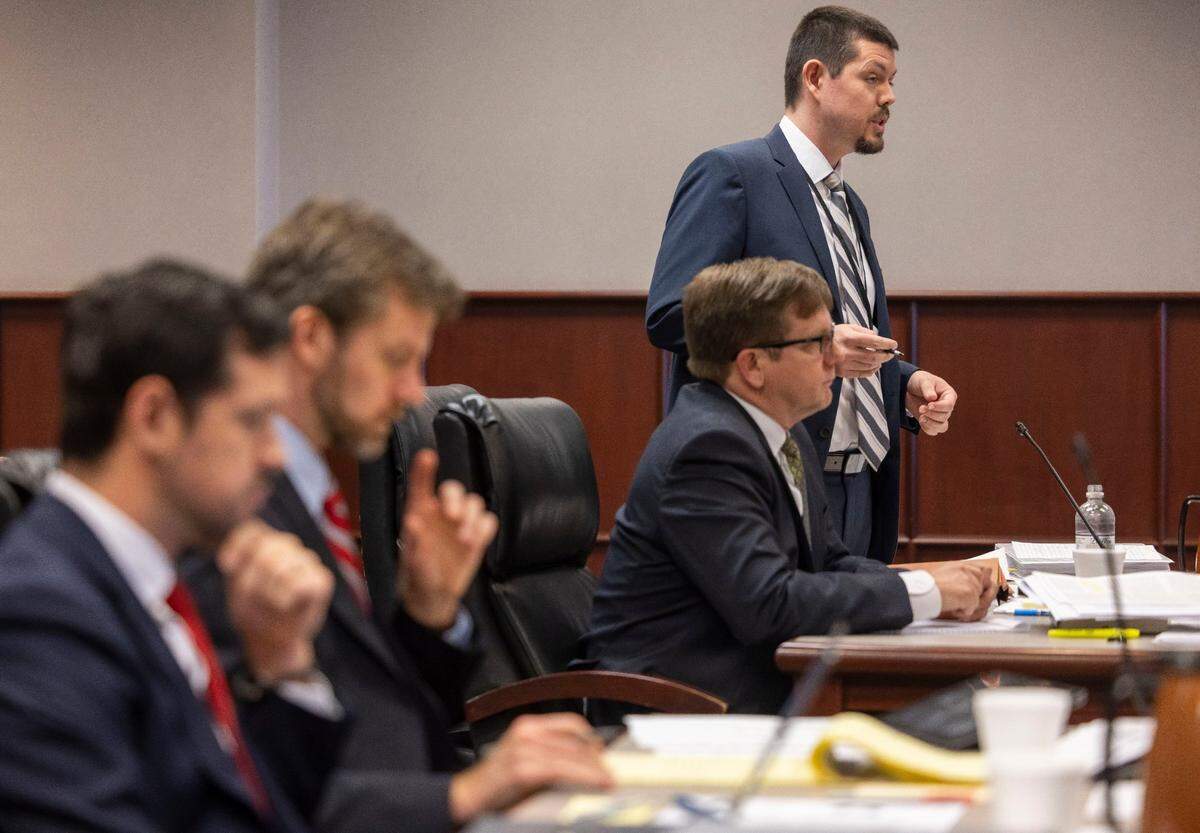
Terence Steed, an attorney representing the State Board of Elections, said there are a number of reasons for this discrepancy — many of which are not the fault of the voter. It could be due to clerical errors when election workers inputted registration information or matching errors with the national Social Security database, which can happen when a person changes their last name.
“There is an interlocking and overlapping web of security and reliability built into our election system and it would be entirely inequitable to disenfranchise voters based upon what at most would be technical errors,” Steed said.
Steed and Bennett also noted that Griffin has still not produced any evidence that any of the voters challenged in this group actually lacks the qualifications to vote.
But Schauer argued that, nonetheless, state law requires voters to provide the missing information and only be registered once it is received.
Griffin also targets military and overseas voters who cast absentee ballots without providing a voter ID — even though the State Board of Elections approved a specific exemption to the ID requirement for these voters. Griffin challenged over 5,000 voters for this reason, all of whom resided in counties that lean heavily Democratic.
One of the military voters who had her vote challenged was Capt. Rebecca Lobach, a Durham native and Army soldier who was killed last week in Washington when the helicopter she was co-piloting collided with a plane.
Griffin’s lawyers argued that, while the law doesn’t specifically require it, the General Assembly never intended to exempt overseas voters from the voter ID requirement.
But attorneys for Riggs and the board pointed out that Griffin and the Republican Party had plenty of time to challenge the exemption before the election and never did so.
The last group of targeted voters are what Griffin terms “Never Residents.” They are the adult children of North Carolina residents who currently live abroad. This could include the children of military members, government workers or missionaries.
“These people haven’t resided in our state or our country for any amount of time,” Troy Shelton, one of Griffin’s lawyers, said. “They haven’t been residents here for a single day of their lives.”
Attorneys for the board noted that state law explicitly allows these voters to participate in North Carolina elections. The law in question has been in place for over a decade and passed the legislature unanimously.
Even if the court chose not to consider the merits of these claims, Riggs and the board argue that procedural issues prevent the court from throwing out the votes. For one, it is longstanding court precedent to avoid changing election rules close to an election — or after it happens, they said.
Past that, attorneys argued that Griffin did not adequately notify the challenged voters of his protests. Affected voters received postcards in the mail addressed to their name “or current resident” which had a QR code linking to a lengthy online page that contained hundreds of separate protest files.
“I’m better informed by junk mail that I receive at my house than by this notice,” Steed said.
Protesters converge outside courtroom
Protesters denounced Griffin’s monthslong campaign to overturn the election results at a news conference outside the courthouse.
“This is the case that Trump would have brought if he hadn’t quite won in North Carolina,” Ann Webb, policy director at Common Cause NC, a voting rights group, said. “... This is important for all of us to be following, and it has implications not only for all North Carolina voters — but voters all across the country.”
Several voters who had their ballots challenged also spoke out, including Denise Carman, an election official in Chatham County who has been registered to vote in North Carolina for over 20 years.
“I help people vote and make sure that the elections are run smoothly and cleanly in that county, and I’m proud of that work,” she said through tears. “I feel strongly that the way that this entire situation has been handled is not in the intent or the understanding of the laws as they are.”
Rachel Arnold, a voter who has lived in Guilford County since 2009, said she retrieved her original voter registration paperwork and found that she actually had provided her driver’s license number — even though Griffin challenged her vote saying that she did not.
“This is absolutely an attempt to steal the right of people to act in their best interests,” Arnold said. “No one should be turning a blind eye to this, because at any moment, it could be your vote, your candidate, your values that are on the line.”
Next weekend, Common Cause will hold rallies across the state in opposition to Griffin’s challenges. The Raleigh event will be held on Monday, Feb. 17 at noon at the State Capitol.
This story was originally published February 7, 2025 at 5:00 AM with the headline "Wake judge dismisses GOP challenge of 65,000 votes in NC Supreme Court election."