Federal appeals court considers NC GOP challenge of 65,000 votes in Supreme Court election
A federal appeals court heard arguments Monday in North Carolina’s monthslong battle over the results of November’s state Supreme Court election.
Jefferson Griffin, the Republican candidate for the high court, has sought to invalidate more than 65,000 ballots cast in the race after appearing to lose to Democratic incumbent Allison Riggs by 734 votes.
Two recounts of the results affirmed Griffin’s narrow loss, but he argues that the state improperly interpreted state law by allowing certain voters to participate in the election.
Monday’s arguments at the 4th Circuit U.S. Court of Appeals were largely procedural and centered on whether the case should be decided by state or federal courts. The court did not immediately issue a decision, but its ruling could be crucial in determining whether the results of the race are ultimately overturned.
Earlier this month, the North Carolina Supreme Court, which has a 5 to 2 Republican majority, declined to immediately take up Griffin’s case. But in their order, several justices hinted they may ultimately agree with the Republican’s challenge to the election results.
The arguments
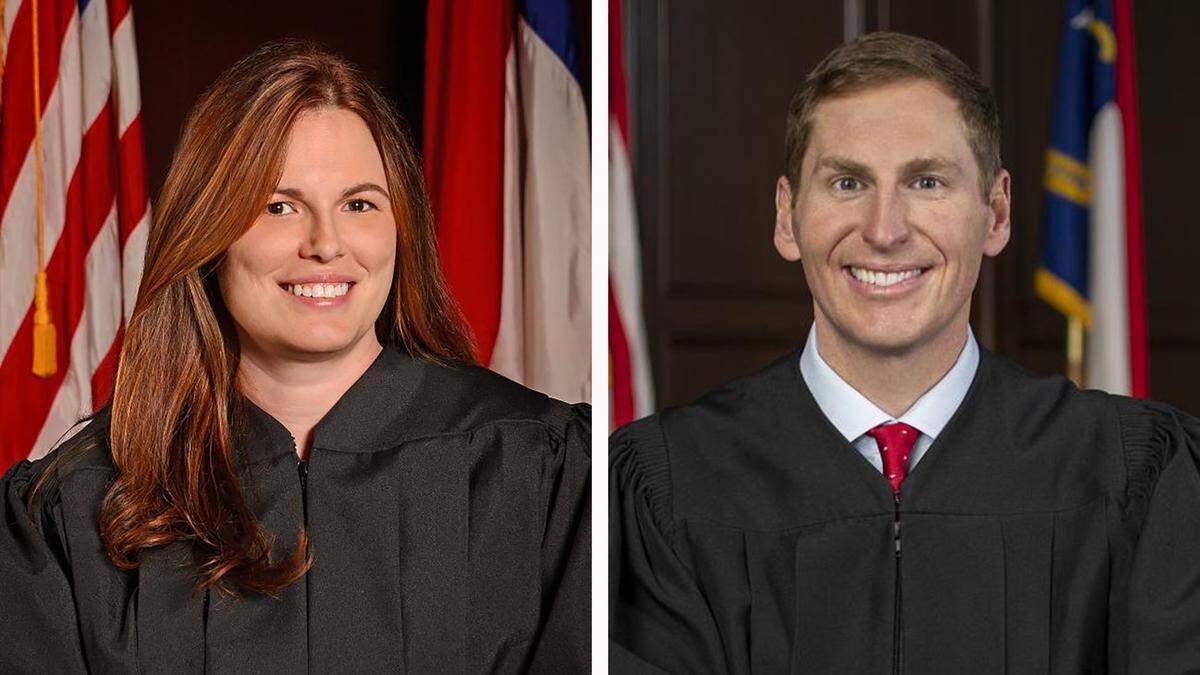
Monday’s arguments primarily revolved around complicated appellate law procedures governing the interplay between state and federal courts. At one point, noticing the dozens of attendees who’d come to witness the hearing, Judge Paul Niemeyer remarked that he couldn’t believe so many people had shown up for such a procedural case.
Judges spent much of the hearing questioning attorneys on both sides about whether the court would have the authority to reverse any decisions made by the state Supreme Court — or whether it would even be practically possible to force the state to give the federal courts full jurisdiction.
William Thompson, an attorney representing Griffin, argued that Monday’s proceedings were moot given last week’s order from the state Supreme Court, which sent the case to a lower state court.
Thompson said that the most the federal courts could do at this point would be to ask the state Supreme Court “Will you please send me the case back?” To which the Supreme Court would respond “’What case? It’s already been dismissed,’” he said.
Attorneys for the State Board of Elections and Riggs, however, pointed out that the state Supreme Court left intact an order blocking the state from certifying a winner in the race — continuing to exercise some jurisdiction over the case.
Further, Riggs and the State Board of Elections argued that Griffin’s challenges implicate national election laws and should therefore be handled by federal courts.
In its opening brief to the court, the board wrote that it “refused to accede to petitioner’s astonishing request to retroactively disenfranchise these voters, in part because doing so would violate numerous federal civil rights laws.”
The board also noted that Griffin’s challenges only apply to voters who cast their ballots early or by mail — a group which tends to lean Democratic. This unequal treatment of different types of voters violates the Equal Protection Clause of the 14th Amendment, they argued.
In his brief, however, Griffin called the case a “paradigmatic example of a dispute that presents difficult questions of uncommonly important state laws that are best resolved by a state court system.”
The panel of judges hearing Monday’s case did not indicate when they would issue a decision, but their ruling could bring some clarity to a dispute which has grown increasingly complex since it began in November.
After having his challenges rejected by the State Board of Elections, Griffin appealed the board’s ruling directly to the North Carolina Supreme Court — a break from the appeals procedure laid out in state law, which calls for such arguments to begin in Wake County Superior Court.
The State Board of Elections immediately moved the case to federal court, but U.S. District Judge Richard E. Myers, an appointee of President Donald Trump, sent the case back to state court.
The Supreme Court then issued an order blocking the state from certifying Riggs as the winner while Griffin’s legal battles played out.
When the high court later ruled that Griffin erred by attempting to fast-track his case directly to the Supreme Court, they nevertheless kept the previous order in place — preventing the state from determining a victor.
Since then, the case has proceeded simultaneously in state and federal courts — though the 4th Circuit’s ruling could ultimately consolidate the dispute to one jurisdiction.
Democrats slam Griffin for trying to ‘overturn a free and fair election’
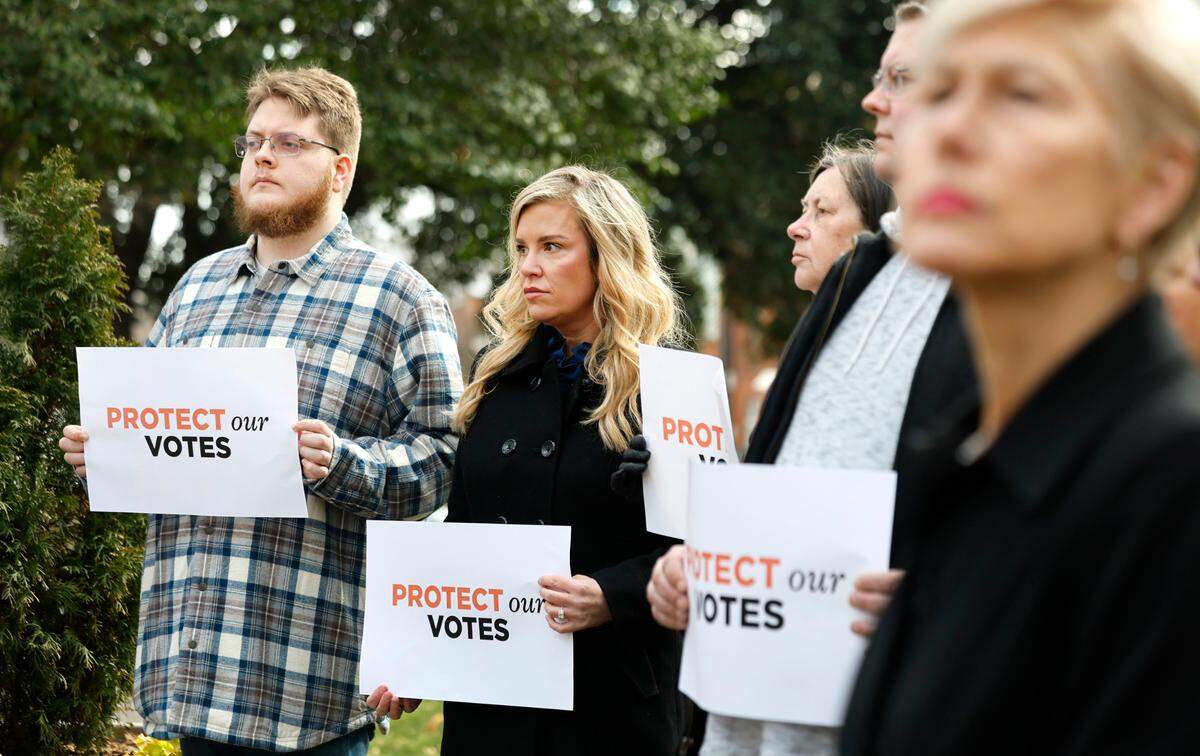
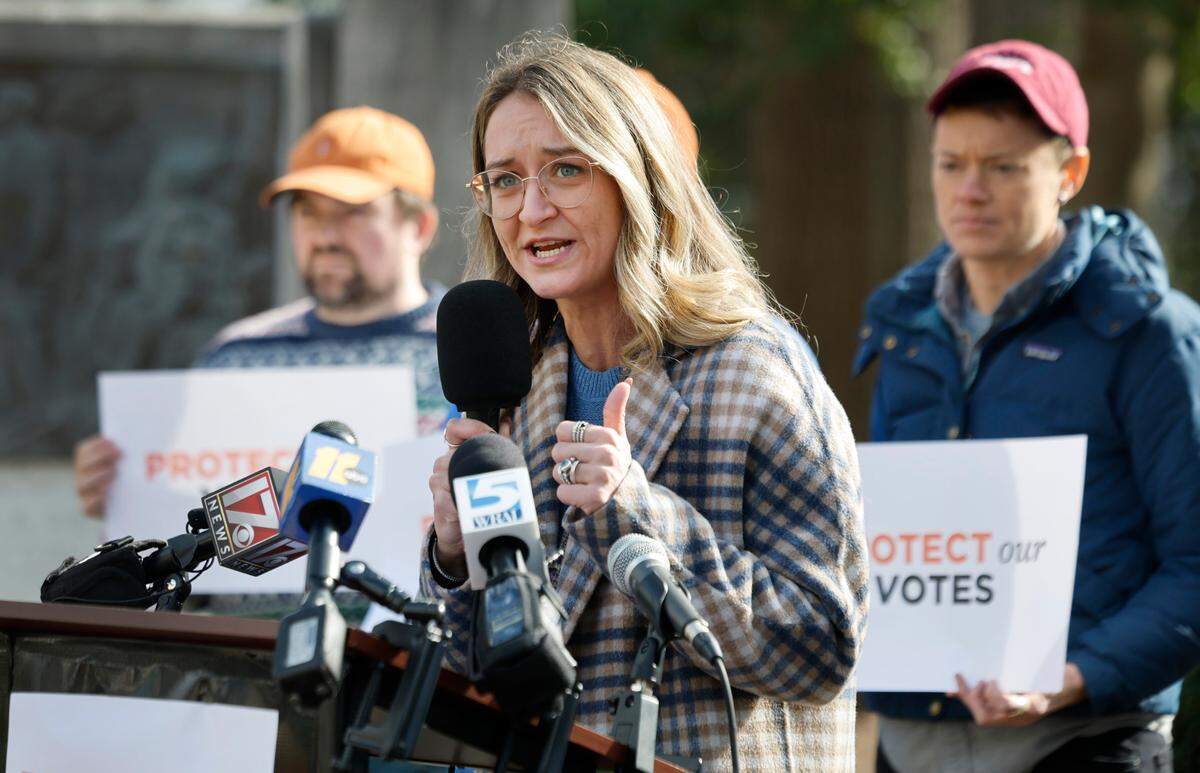
Ahead of arguments in the federal appeals court Monday, Democrats and voters whose ballots are being challenged slammed Griffin’s efforts to have ballots excluded after the election.
“What we are witnessing in North Carolina is nothing less than a blatant attempt to overturn a free and fair election,” said U.S. Rep. Deborah Ross during a news conference Monday morning in front of the N.C. Supreme Court.
Ross said that Riggs had won her election to retain her seat on the high court “fair and square,” with two recounts confirming her victory.
She said Republicans challenging the result in court were “shamelessly working to disenfranchise voters retroactively, brazenly manipulating their way to a victory they didn’t earn, and that they don’t deserve.”
N.C. Democratic Party Chair Anderson Clayton said Griffin’s efforts to challenge the election result “are not becoming of a sitting judge, they’re actions of a sore loser.”
“He doesn’t care that voters rejected him from serving in the highest court in our state, and his efforts are not rooted in reality,” Clayton said.
Voters and activists also packed the courtroom in Richmond, later carrying signs saying “she won” outside the courthouse.
“We are excited about the opportunity to keep fighting,” Clayton told attendees after the hearing. “We’re gonna let this process play out and we know that the decision hopefully will be in our favor.”
This story was originally published January 27, 2025 at 12:55 PM with the headline "Federal appeals court considers NC GOP challenge of 65,000 votes in Supreme Court election."