
Congress to vote on disaster relief package months after Helene devastated Western NC
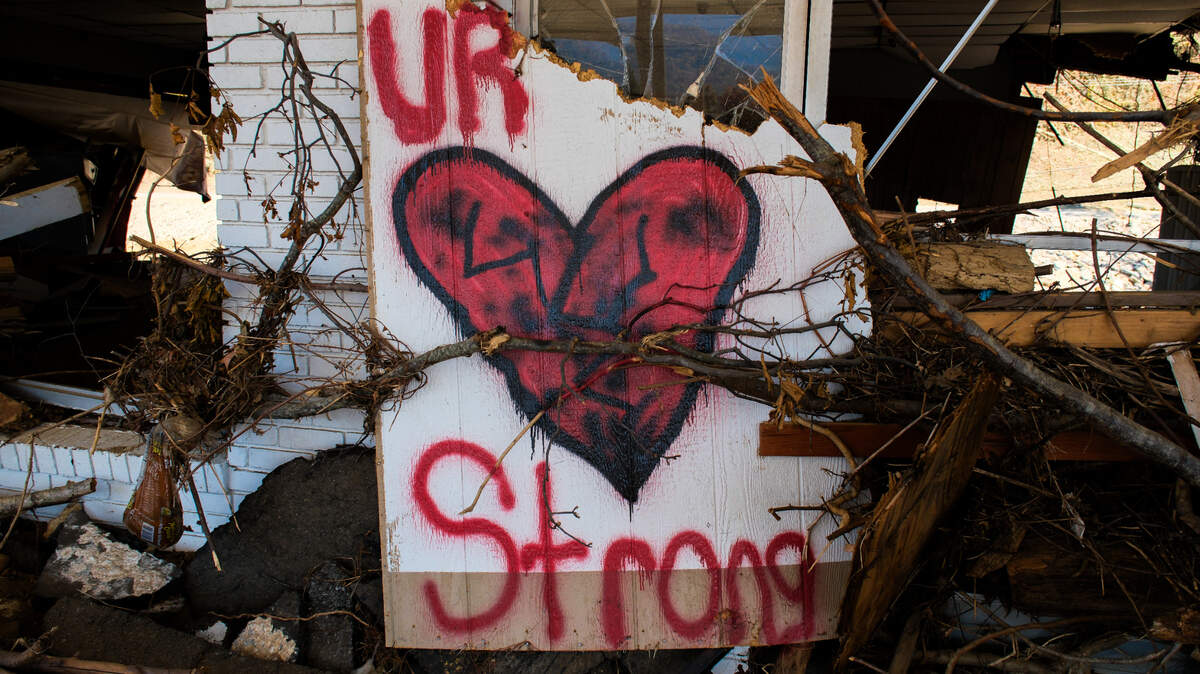
After months of waiting, Congress released a bill Tuesday night that offered a glimmer of hope to Western North Carolinians that disaster relief might be coming.
House Speaker Mike Johnson unveiled a continuing resolution, intended to keep the government funded through March 14, that includes more than $100 billion in disaster relief funding.
If the resolution passes the House and Senate and is signed by the president, it will be the first disaster relief package passed since 2022.
And it is much needed, top lawmakers say.
“We had, as we say, as described, the Acts of God,” Johnson said, speaking to reporters Tuesday. “We had these massive hurricanes, as you know, in the late fall, Helene and Milton, and other disasters. We have to make sure that the Americans that were devastated by these hurricanes get the relief they need. So we are adding this disaster relief package and that’s critically important.”
But the bill drew criticism on Wednesday from incoming President Donald Trump, threatening its chances in the Republican-controlled House.
Trump and Vice President JD Vance said in a statement on Vance’s social media account that the bill should be stripped of “giveaways” to Democrats and combined with an increase in the U.S. borrowing limit. “Anything else is a betrayal of our country,” they wrote.
What’s in the bill?
Specific to North Carolina, the bill makes funding available through the Federal Emergency Management Agency for repairing private roads damaged by Helene, regardless of their condition prior to the storm.
The bill tackles disasters from 2023 and 2024 more broadly and earmarks money to several agencies from FEMA to the Department of Transportation to the Environmental Protection Agency. It funds efforts to ensure drinking water is clean, small businesses are reimbursed and audits can be done on the handling of Helene relief.
The package provides $29 billion to FEMA and replenishes the Small Business Administration with $2.2 billion for disaster relief loans. The SBA ran out of funding after Helene and Milton.
It also provides $30.8 billion to the Agriculture Department to help farmers with loss of revenue, quality or production and $2 billion in assistance for loss of livestock, along with several other earmarks.
The push for disaster relief
North Carolina’s congressional delegation has been pushing for disaster relief since Helene devastated Western North Carolina on Sept. 27.
North Carolina officials report 103 deaths and billions of dollars in damages to farms, businesses, infrastructure and more. The Federal Emergency Management Agency has confirmed 73,700 homes have been damaged. But assessments are still underway.
And while members of Congress were warned that the storm was coming, instead of staying in Washington to help, they flew home early to be with their own constituents and campaign ahead of the Nov. 5 election.
That left victims of Hurricane Helene without help from their federal representatives for more than a month.
And when Congress returned, relief still wasn’t passed.
Last month, President Joe Biden urged Congress to pass a $100 billion disaster relief aid package and highlighted the urgent need.
Johnson, a Republican from Louisiana, and North Carolina’s lawmakers worked to make disaster relief part of the stopgap. But they faced backlash from other members, like ultraconservatives in the House Freedom Caucus, who urged their colleagues not to give another cent to the Biden administration and to wait for Trump to take office.
Republican Rep. Chuck Edwards said one House Freedom Caucus member went as far as calling victims of Hurricane Helene “coastal elites” despite the storm hitting a portion of Appalachia, a mountainous area that, while it has pockets of wealth, is largely made up of low-income communities. Edwards pushed back, defending his constituents in far-western North Carolina.
Government shutdown?
Bringing aid to North Carolina and other regions affected by disasters will be one of the last measures taken up in the 118th Congress, which has been known for gridlock and as the least effective in history.
The House is set to wrap up on Thursday, though if its members follow their rule not to vote on legislation until 72 hours after its release, the earliest they can vote is Friday evening.
And Johnson is facing opposition not only from the Freedom Caucus but other Republicans who feel that he put too much in the bill that also includes $10 billion in aid for farmers, money to help repair the Francis Scott Key Bridge in Maryland, allowing year-round ethanol sales and cost-of-living increases for members of Congress.
The Senate was scheduled to end its own session Friday, but is now beholden to the House’s schedule.
If Congress does not pass the resolution, the government could shut down at midnight Friday. If it appears that the measure will likely pass the Senate, there is typically a buffer period built in to keep the government running while the Senate wraps up its vote.
“We’re going to take care of these obligations and get this done,” Johnson told reporters Tuesday. “And then we’re going to go to work in a unified government in the 119th Congress. It begins in January.”
Republicans will have control of the House, Senate and White House starting next month.
This story was originally published December 18, 2024 at 12:05 PM with the headline "Congress to vote on disaster relief package months after Helene devastated Western NC."
