Here’s a list of new North Carolina laws that take effect on New Year’s Day
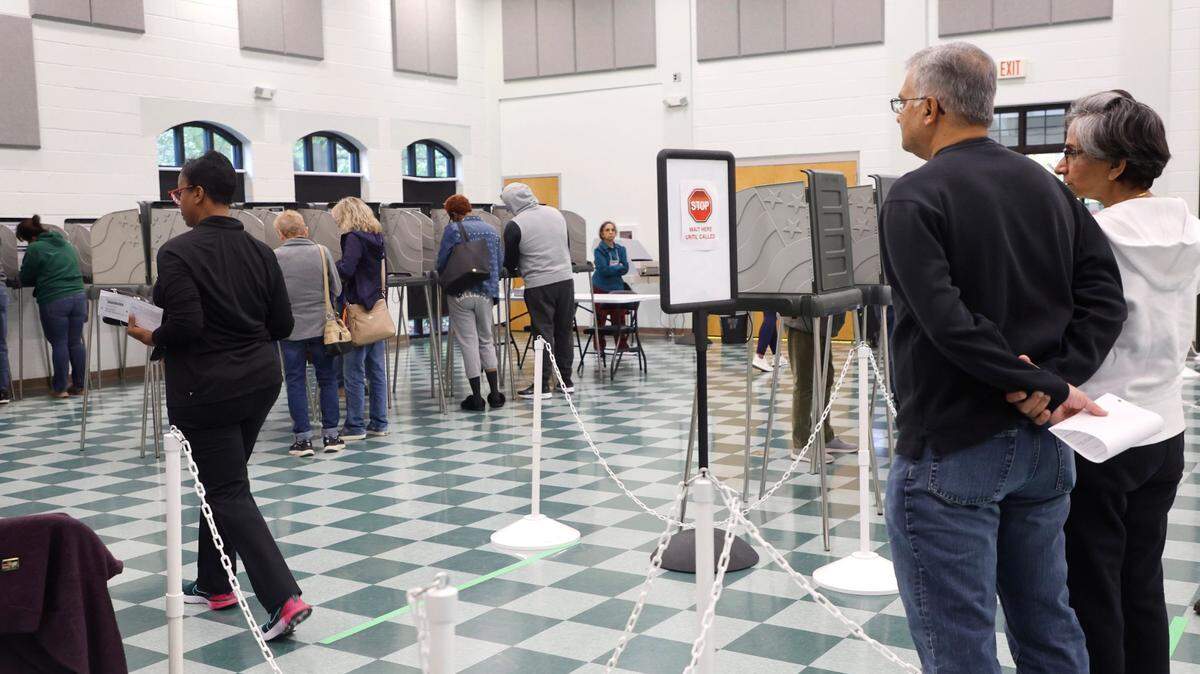
North Carolina lawmakers passed many new laws this year. Several are set to take effect on Jan. 1, including changes for voters, teenagers learning to drive, people who access adult websites, and more.
Here’s the full New Year’s list.
Teen driver’s license changes
Senate Bill 157: “Limited Provisional License Modification.”
Starting Jan. 1, teens who obtain a limited learner permit, which allows them to drive under the supervision of a parent or guardian, will have to keep it for nine months before seeking a limited provisional license.
The limited provisional license allows teens older than 16 to drive unsupervised between 5 a.m. and 9 p.m. Previously, to obtain this license teens had to wait six months.
Age verification on pornographic sites
House Bill 8: “Various Statutory Changes.”
Going into effect is a section requiring age verification on pornographic websites. Websites will need to verify users in North Carolina are over the age of 18 through a commercially available database or “another commercially reasonable method for age and identity verification,” according to the bill.
These sites will not be allowed to keep users’ identifying data. Users will be able to sue sites if information is retained in violation of the law. Parents or guardians whose minor was allowed to access porn will also be able to sue.
Another section of the bill requires the UNC System’s Board of Governors to establish a commission to study alternatives to the current accreditation process. An interim report on the commission’s efforts to recruit people it describes as “stakeholders” to participate in this study is due by Jan. 1 with findings due to the legislature by Sept. 1.
Election laws changes and lawsuits
Senate Bill 747: “Elections Law Changes.”
Most provisions in this expansive new elections law will take effect in the new year, barring any injunction from the courts.
The law, which Republicans passed in a party-line vote this year includes a variety of what are called “election integrity” measures by the conservative groups pushing for them. Arguably the most notable change is the elimination of the three-day grace period for receiving absentee ballots. Now, all mail-in ballots will need to be received by 7:30 p.m. on Election Day for them to be counted.
The new law also makes several changes to same-day registration. Voters registering and voting on the same day during in-person early voting will need to show proof of residence and a photo ID and cast a retrievable ballot. One notice will then be sent to the voter’s address; if it is returned as undeliverable, then the voter will not be registered and their ballot will be thrown out.
Partisan poll observers will also be given more power under the new law. A maximum of three observers from each party will be allowed at each voting place. These observers will be allowed to take notes, listen to conversations between voters and election workers, move about the voting enclosure and take photos before and after voting ends. They will not be allowed to take photos of voters or see their ballots.
At least three lawsuits are currently challenging this law, two of which are seeking a preliminary injunction to block parts of the law from taking effect. On Dec. 28, a federal judge heard oral arguments on the motion for an injunction.
Another major elections law, Senate Bill 749, was set to take effect on Jan. 1 but has been temporarily blocked by a superior court.
This law would drastically restructure state and local election boards, taking all appointment power away from the governor and giving it instead to legislative leaders.
Currently, election boards have a 3-2 majority of the governor’s party, meaning they currently all have a Democratic majority. Under the new law, these boards would have an equal number of Republicans and Democrats, raising concerns about potential deadlocks on major votes.
A three-judge panel granted plaintiffs a preliminary injunction last month to prevent the law from going into effect, though a higher court could reverse this.
Abortion law changes
Senate Bill 190: “Dept. of Health and Human Services Revisions.”
This law makes various changes to health codes, with the part going into effect in the new year requiring practitioners to prescribe codeine cough syrup electronically.
But another section of the bill that has already gone into effect caused a stir. In late June, just one week before the state’s new 12-week abortion ban took effect, GOP lawmakers through SB 190 eliminated language in the abortion bill. The deleted language had stated physicians providing drugs for medication abortions needed to verify that the gestational age for a developing fetus “is no more than 70 days,” or 10 weeks.
GOP lawmakers said this amendment was meant to clarify that medication abortions are lawful through 12 weeks. This was a point of contention in a lawsuit before a court allowed the 12-week ban to go into effect on July 1.
Late local government audits
Senate Bill 299: “Reimburse Late Audit Costs with Sales Tax Revenue.”
The part of the law going into effect allows the Local Government Commission — which provides oversight to more than 1,100 local governments – to withhold a small portion of sales tax distributions from local governments that submit audits more than a year late. The amount withheld would be equivalent to 150% of the cost of the required audit.
This bill was vetoed by Democratic Gov. Roy Cooper, but his veto was overridden by the Republican-led legislature. The bill also had support from both Republican State Treasurer Dale Folwell and Democratic State Auditor Beth Wood.
Protections for people addicted to drugs and alcohol
House Bill 415: “Stop Addiction Fraud Ethics Act of 2023.”
The entire law goes into effect in January. It establishes new laws for advertising and marketing materials for substance use disorder treatment providers and facilities.
This includes requiring people be provided with accurate information on the length of the stay at the facilities and a summary of any relationships between the treatment center and the publisher of the ads.
Debt collection requirements
Senate Bill 477: “Amend Business Corporation Act/Business Opportunity Disclosures.”
Sections going into effect delineate what has to happen before entering a judgment against a debtor.
In debt collection cases where the claim is based on credit card debt, this law specifies which authenticated business records are accepted, including an itemized accounting of the basis for an interstate charge, the date an account was opened and more. If a debt buyer fails to provide proper documentation, the motion for default judgment or summary judgment would be denied and any favorable judgments for them would be voided.

Hike in electric vehicle registration fees
Sections of the state budget take effect with the New Year, including a provision that requires an increase in registration fees for fully electric vehicles from $140.25 to $180.00.
The fee will be adjusted for inflation every four years, starting next July 1, The News & Observer reported. On July 1, it’s expected to go to $214.38 a year, according to the legislature’s Fiscal Research Division.
Also taking effect is the implementation of a new $90 fee for plug-in hybrid vehicles, which use both electricity and gas. This fee will be adjusted for inflation next summer, to an estimated $107.
Both fees are on top of the $38.75 that all passenger vehicles pay the DMV each year.
Other new state laws
▪ Sections of Senate Bill 615: “Adoption Law/Notary Changes/ Guardianship Rights.”
▪ Sections of Senate Bill 409: “Various Changes to Criminal and Civil Laws.”
▪ House Bill 627: “On-Site Wastewater Rules Implementation.”
▪ Sections of House Bill 600: “Regulatory Reform Act of 2023”
▪ Sections of House Bill 181: “Unclaimed Property Division Changes.”
▪ House Bill 203: “Department of State Treasurer Technical Corrections.”
▪ House Bill 201: “Retirement Administrative Changes Act of 2023”
▪ Sections of House Bill 125: “NC Health & Human Services Workforce Act.”
This story was originally published December 21, 2023 at 1:42 PM with the headline "Here’s a list of new North Carolina laws that take effect on New Year’s Day."