
NC’s openly LGBTQ legislators seek to find a balance when the political becomes personal
North Carolina’s proposed Parents’ Bill of Rights is giving Rep. Deb Butler flashbacks to House Bill 2.
That was the state’s so-called “bathroom bill” that, among other things, prohibited transgender people from using the bathroom that corresponds with their gender.
Now, North Carolina is considering House Bill 755 that, if passed, would ban sexual orientation or gender identity from being included in curriculum for kindergarten through third grade. It also would require school staff to notify parents if their child changes their name or pronouns.
“HB2 cost us a lot reputationally, it cost us a lot economically, and you hurt the people of North Carolina with that,” said Butler, of New Hanover County. “And now you’re going to do it again? Y’all are slow learners.”
For Butler and four other members of the state legislature who are openly LGBTQ, the proposed legislation is more than policy. It’s personal.
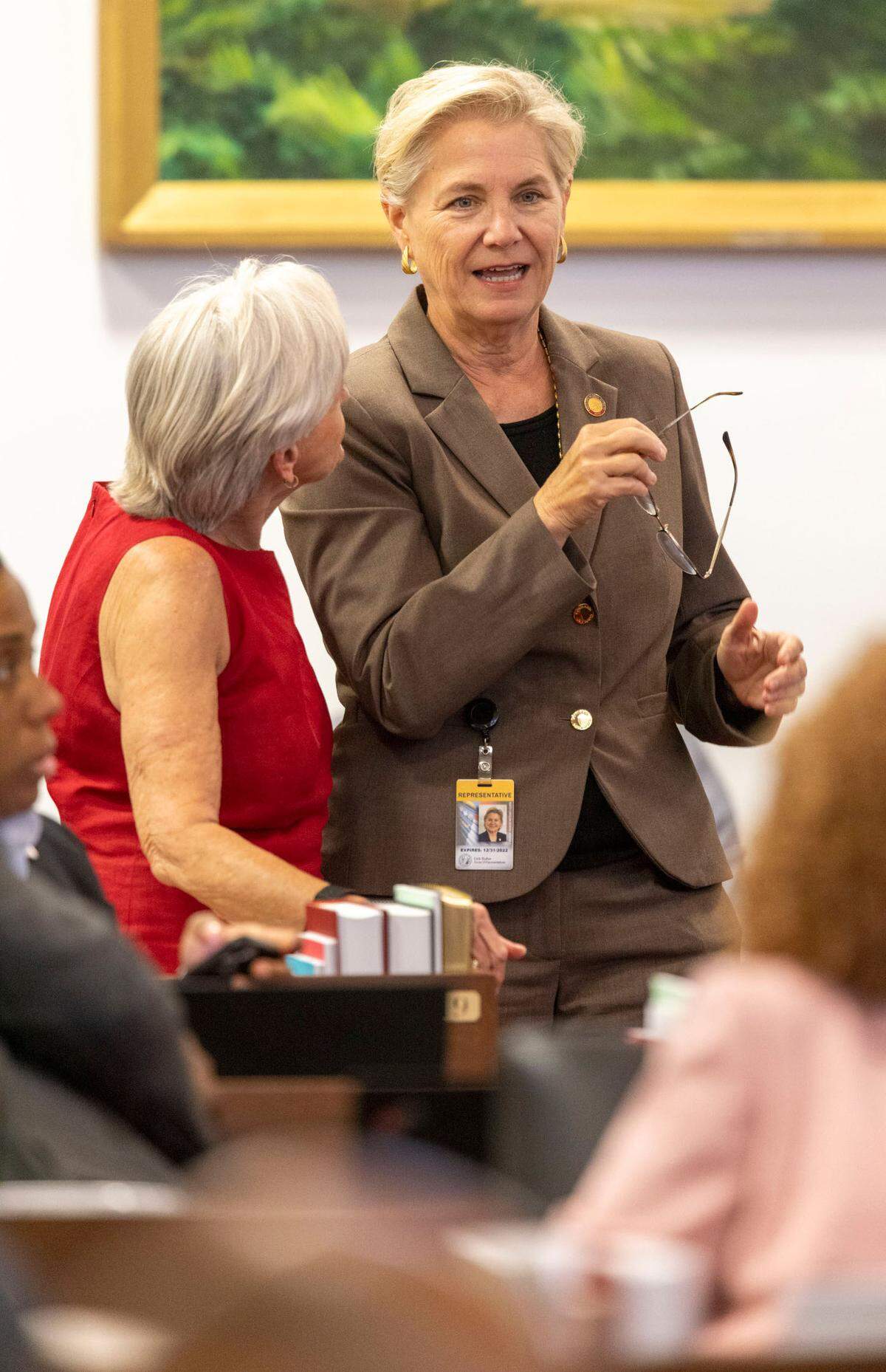
These lawmakers are all Democrats and members of the state House of Representatives. Some were elected as openly gay candidates. Others have come out while in office, and another still was outed. They are lawyers, office managers, real estate developers and a former Olympic swimmer.
While they tend to vote along party lines, they don’t necessarily vote as a bloc, or see themselves as a special sub-group of the legislature. Some also would rather not focus on their private lives.
But when it comes to HB 755, or as they call it, North Carolina’s “Don’t Say Gay” bill, they’re firmly united in condemning the bill and opposing its passage.
“It’s a political messaging bill that has no purpose,” said Rep. Marcia Morey of Durham. “And that’s what makes me angry.”
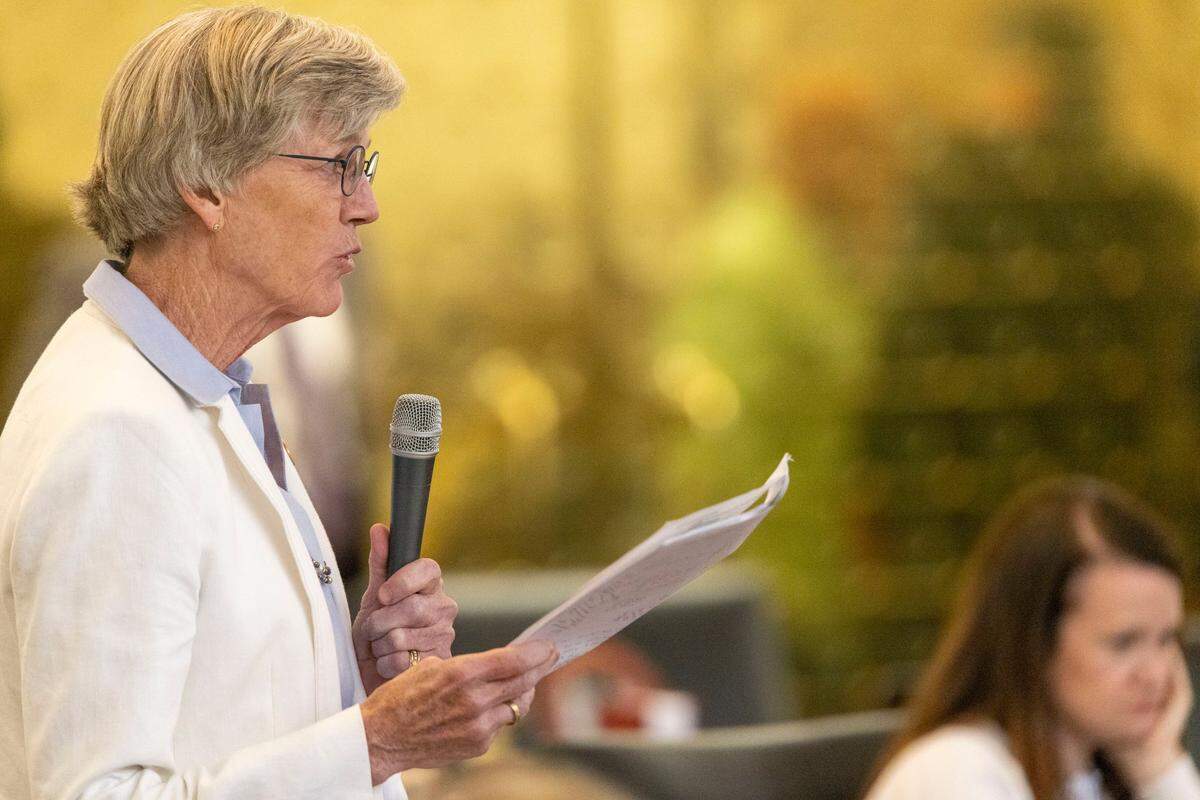
The bill follows similar Republican legislation out of Florida, Ohio and several other states that have drawn criticism and debate.
N.C. Sen. Deanna Ballard, a Republican from Watauga County and the bill’s lead sponsor, said discussion about sexual orientation or gender “has no place in the K-3 curriculum.” She defended the bill by saying that it would not prohibit teachers with same-sex partners or children with same-sex parents from discussing their families.
But critics argue that the bill would force children to come out before they are ready, potentially putting them into contentious situations with their parents. They say the bill comes at a time when mental health for kids, and particularly LGBTQ youth, is particularly fraught.
HB 755 passed the state Senate with unanimous support from Republicans and one Democrat — Sen. Ben Clark, who is running for U.S. Congress. The House has still not voted on the legislation, and Speaker Tim Moore suggested to reporters last week that he was unlikely to try to move it forward during the short session, which is expected to end by July 1.
Democratic Gov. Roy Cooper has indicated he will veto the bill if it comes to his desk — which could only be overturned if a handful of Democrats joined Republicans in voting for it.
The News & Observer spoke with all five out members of the legislature about their experiences as members of the LGBTQ community and how that intersects with their work in the General Assembly.
Working with the majority
Butler was sworn into the state legislature in 2017 amid the push to repeal HB2. The backlash to the law had been disastrous. The NCAA pulled out of hosting championship events in the state, Paypal abandoned plans to expand into North Carolina, and several other companies moved their operations elsewhere or were reluctant to come to North Carolina. An analysis from the Associated Press found that HB2 eventually cost the state over $3.7 billion.
A coffee mug on Butler’s desk reads “I will not yield, Mr. Speaker,” a reference to her now-viral speech on the House floor in 2019. On Sept. 11, House Democrats were told that no votes would be taken during the session, so many were absent from the chamber.
But when the session began, Speaker Tim Moore called a vote to overturn Cooper’s veto of the state budget. Butler rose and gave an impassioned speech, refusing to yield her time as she decried the Speaker’s decision to hold a vote when most of the minority party was not present.
“If this is the way you believe democracy works, then shame on you,” she said during the speech.
Since then, Butler says her relationship with the Republican leadership has been less than ideal. But she stressed that her sexuality is not the cause of that tension.
When Butler’s wife died unexpectedly in 2018, the House adjourned in her honor. She said this was a poignant and important moment, but she finds it difficult to square with Republicans’ actions in 2022.
“I really was touched by it,” she said. “But then at the same time, now you’re going to bring forward this legislation… that would hurt children who are potentially struggling with their sexuality. So how you do those two things sort of baffles me.”
Rep. Allison Dahle of Raleigh stressed that while current issues are personal as an LGBTQ legislator, they can’t get in the way of doing the job.
“It is really hard to work with some folks that voted for HB2 and voted against the people that you love, care about and cherish,” she said. “But on the flip side, when you’re in a political arena, you really have to compartmentalize and you have to put that away to work on the next thing, because you’re working for the people.”
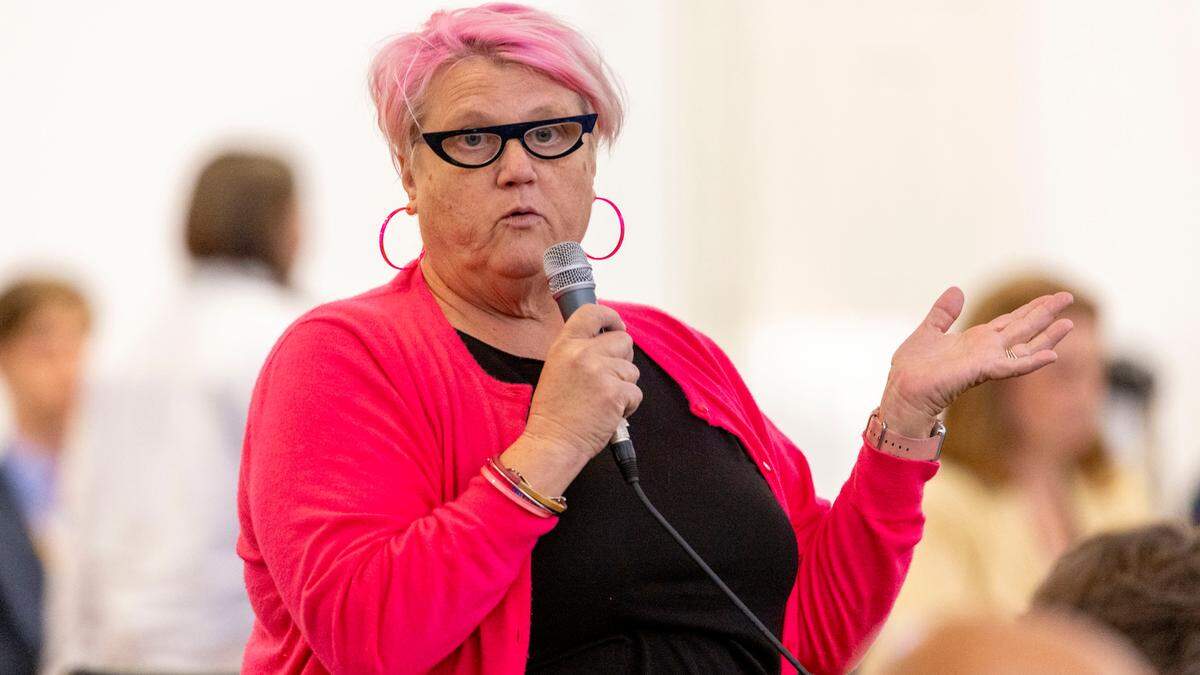
Dahle, who currently has pink hair and tends to incorporate bright pink into most of her outfits, has become known as a skilled inter-party mediator in the House. In 2020, Dahle, along with two Republicans and another Democratic co-sponsor, were able to broker a deal for safer elections during the COVID-19 pandemic.
The bill, which passed 105-14 with bipartisan support, made absentee voting easier by extending the deadline for county boards to approve absentee applications, creating an online portal for voters to request one and appropriating funds to the State Board of Elections to respond to COVID-19.
Being out and in office
Butler and Dahle had been openly gay from the beginning of their careers in politics, but other state legislators had to contend with making their sexuality public after being elected.
Rep. Cecil Brockman of High Point started his political career in 2011 as a legislative assistant for then-Rep. Marcus Brandon, one of the first openly gay members of the state legislature. Brockman said Brandon, who was at the time the only openly LGBTQ state lawmaker, became a target of fellow legislators because of his sexuality, with other members assuming he was weak.
“So when I became a legislator, I thought, ‘There’s no way there’s no way in hell that I’m gonna be open about who I am,’” said Brockman, who was elected to the state House in 2014.
But then, HB2 became law, and shortly thereafter, Rep. Chris Sgro — the only remaining openly gay member of the legislature after Brandon left office in 2015 — announced he was stepping down to go work for the Human Rights Campaign.
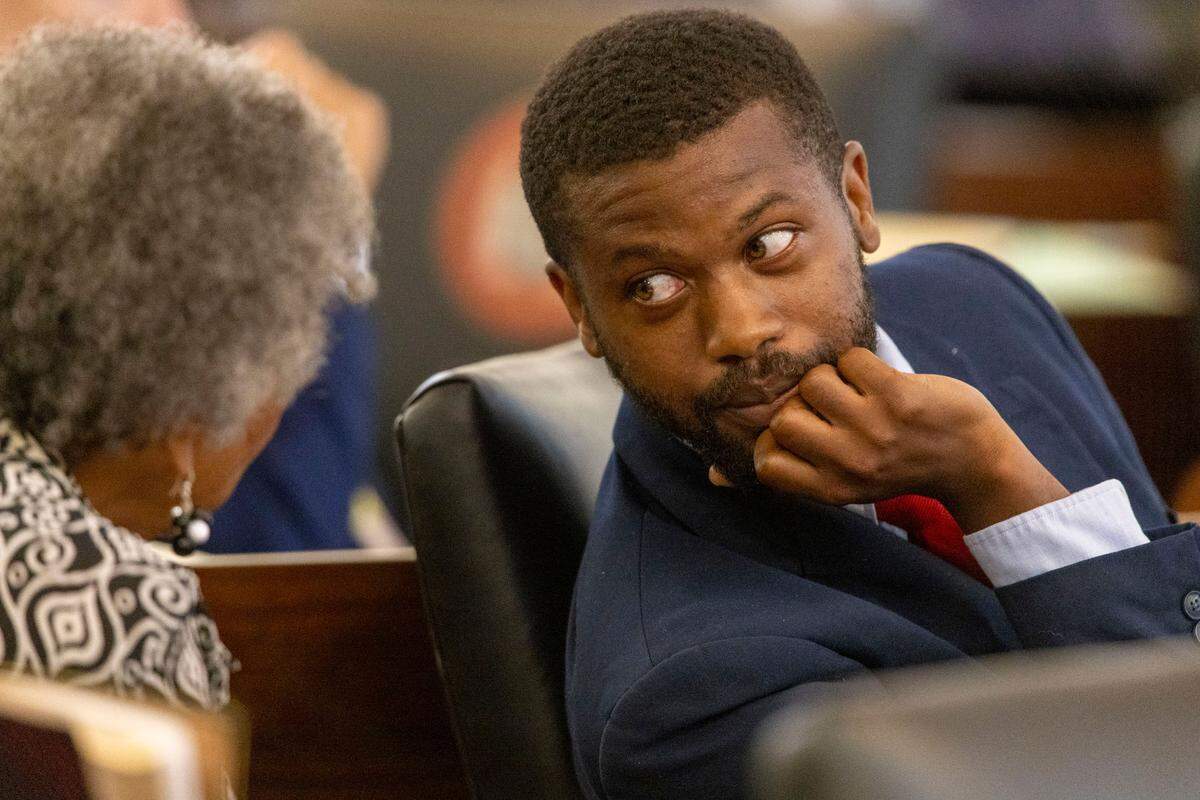
“We didn’t have any out, open people,” Brockman said. “And I just thought, I’ve got to do something. I’ve got to come out. I’ve got to be true to who I am.’”
Brockman gave an interview to the Greensboro News & Record where he came out as bisexual, making him — for a short period of time — the only openly LGBTQ N.C. state legislator.
Morey also came out when she joined the state House, though not necessarily by her choosing. In 2017, Morey was appointed to fill a vacancy in the House. She was an interesting appointment for many reasons — she’d spent 18 years as a district court judge, during which time she granted North Carolina’s first-ever same sex adoption in 2005. She had also competed in the 1976 Summer Olympics in Montreal as a swimmer.
However, the fact about Morey that caught the attention of Equality NC, a statewide LGBTQ advocacy group, was that she’s gay. Soon after her appointment, Equality NC released a statement heralding Morey as an LGBTQ lawmaker.
The only problem? Morey wasn’t out yet.
“No one ever talked to me, no one ever asked me,” she said. “It was just there, put out on the internet.”
Morey said she’s a private person, a quality that was important to her during her 18 years as a district court judge in North Carolina. During that time, judgeships were still nonpartisan offices, and Morey found it important to keep her personal life and opinions far away from her job.
Morey remains a private person, and she said her sexuality isn’t something she finds particularly relevant to her career as a legislator. She makes no secret of her identity and support for the community, but she said it isn’t what defines her as a lawmaker.
“You may talk to some others that are much more in the forefront of being in the LGBTQ community — more power to them, that’s great,” she said. “But just me — I think my identity is probably as a former judge or, I get more attention for being an Olympic swimmer than I do anything else.”
Legislative Battles
While Moore acknowledged that HB 755 is unlikely to become law, he suggested to reporters that Republicans may have a super-majority capable of overturning the governor’s veto when they return for the long session next year.
Brockman criticized the portion of the bill that requires school staff to notify parents if their child changes their pronouns or name.
“It’s still hard to come out,” he said. “There’s still parents who will disown their children, because of the fact that they love who they love, or them just identifying from something different than what people understand.”
A 2022 report from The Trevor Project, a suicide prevention organization that advocates for the LGBTQ community, found that 28% of LGBTQ youth had experienced homelessness or housing instability. A study from the same organization in 2021 found that 42% of LGBTQ youth had seriously considered suicide.
Last year, near the fifth anniversary of HB2’s passage, Democratic lawmakers introduced a slate of bills aimed at stopping LGBTQ discrimination and eliminating the remnants of HB2.
Dahle introduced HB 452, which would have banned conversion therapy — a widely-discredited practice in which physicians or psychologists attempt to change a person’s sexual orientation or gender identity.
Rep. Vernetta Alston of Durham introduced HB 450, which would have instituted a statewide non-discrimination statute, similar to those that have passed in cities like Raleigh, Durham, Greensboro and Chapel Hill, that included sexual orientation and gender identity as protected categories.
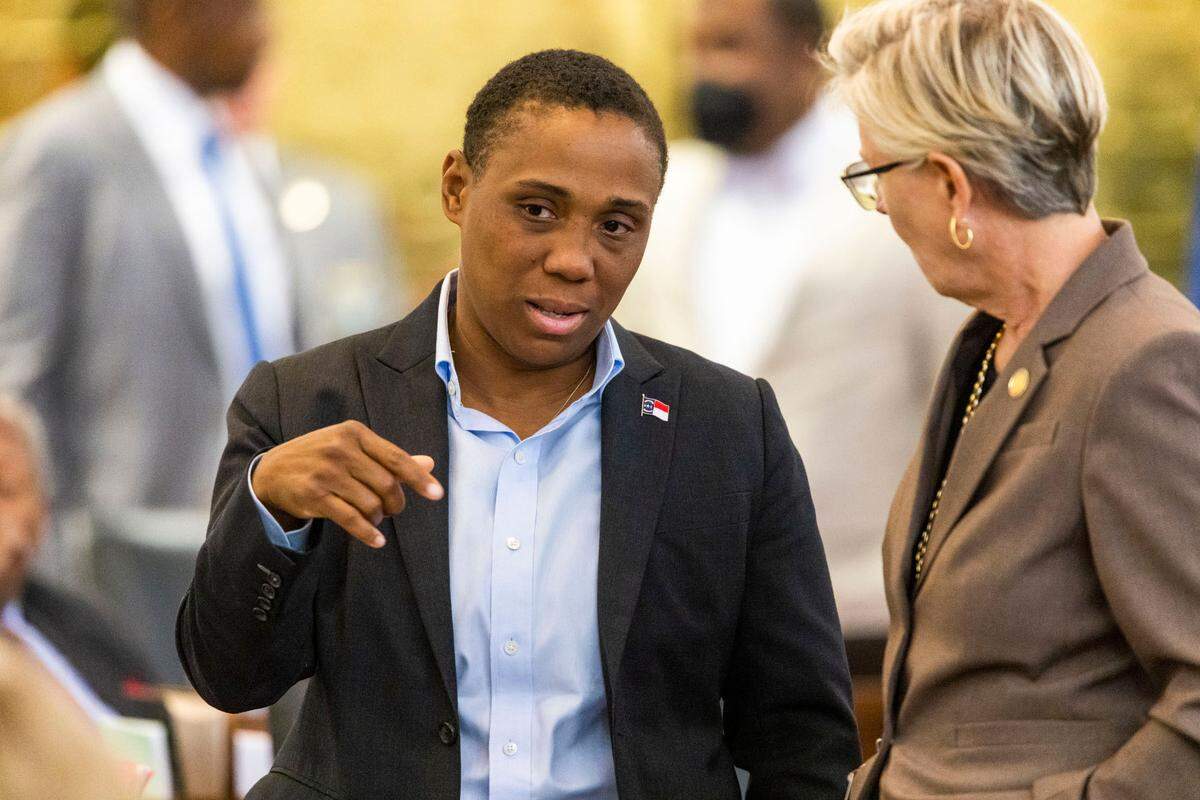
In total, Democrats introduced four bills to stop LGBTQ discrimination. None of them made it out of committee.
“We think that that bill along with the other three that we filed really speak to what the values of people in North Carolina hold,” Alston said. “It’s unfortunate that we didn’t even get to have substantive debate here in the legislature.”
Although Alston’s bill didn’t make it, she did have success in another endeavor to advance the LGBTQ community. In 2020, she worked with Cooper to have Dec. 6 be officially proclaimed as “Gender Expansive Parents Day.”
While Mother’s Day and Father’s Day already exist, Alston wanted to have a day to celebrate parents who identify outside the gender binary, meaning those that don’t identify as male or female.
“I want those parents to feel seen for their work, for the commitment and the time that they invest in their children,” she said.
While the fate of the Parents’ Bill of Rights is unknown, the lawmakers who spoke to the N&O said they’re still shaken at how far it has come.
“When these types of issues arise, it hits us a little bit harder,” Brockman said.
This story was originally published June 23, 2022 at 12:42 PM with the headline "NC’s openly LGBTQ legislators seek to find a balance when the political becomes personal."
CORRECTION: This story has been updated to clarify that House Bill 755 would ban instruction on sexual orientation or gender identity in the curriculum for kindergarten through third grades. Discussion would be permitted.