
Tillis emphasizes red flag incentives, mental health access in proposed gun compromise
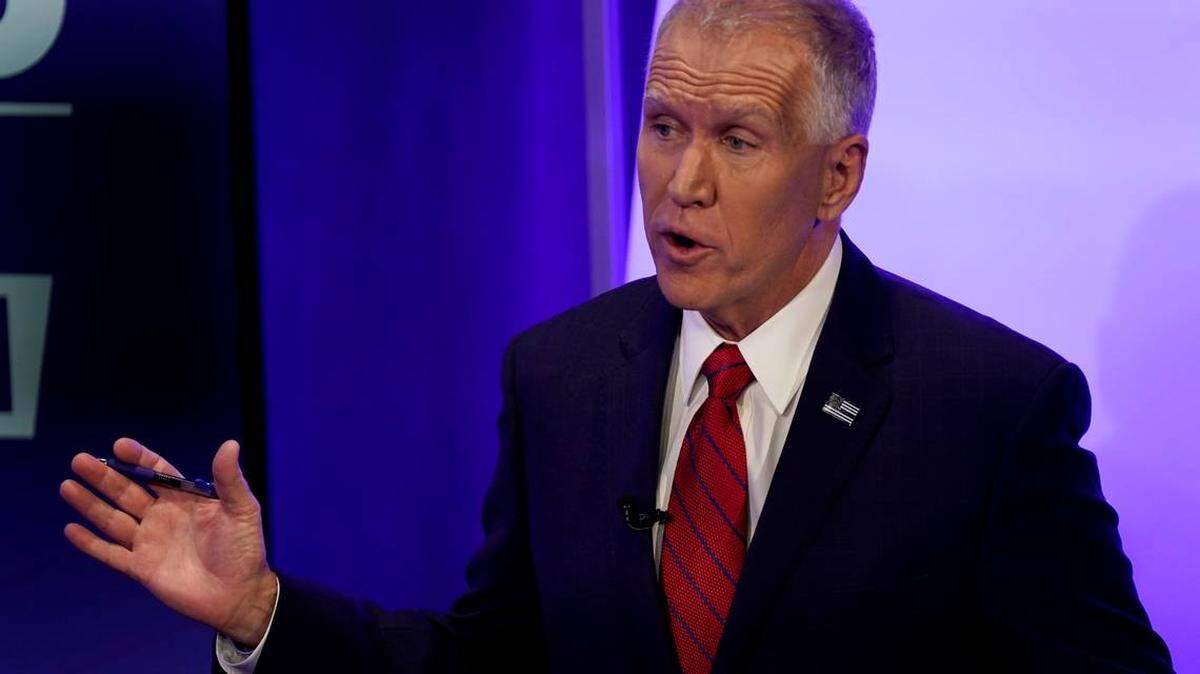
A bipartisan agreement in the U.S Senate could encourage North Carolina’s state lawmakers to tackle changes to gun laws and expand mental health resources for their constituents.
U.S. Sen. Thom Tillis announced Sunday that he, Sen. Richard Burr and eight other Republicans reached an agreement with 10 Democrats on the framework for a bill aimed at reducing mass shootings throughout the country. That bill is now being drafted.
“Families are scared, and it is our duty to come together and get something done that will help restore their sense of safety and security in their communities,” Tillis said in a written statement Sunday. “Our plan increases needed mental health resources, improves school safety and support for students, and helps ensure dangerous criminals and those who are adjudicated as mentally ill can’t purchase weapons.”
Tillis worked with four of his colleagues to find gun reform compromises since a shooting on May 24 at an elementary school in Uvalde, Texas, left 19 children and two adults dead. The other lawmakers were Sens. Chris Murphy, a Democrat from Connecticut; John Cornyn, a Republican from Texas; and Krysten Sinema, a Democrat from Arizona.
Tillis spoke for six minutes with The News & Observer Tuesday about the framework of the bill and its potential impact on North Carolina as he walked from a Republican luncheon at the Capitol to his office.
Tillis said North Carolina doesn’t participate in two pieces of the legislation: a pilot program aimed at expanding mental health services and having a red-flag law.
Tillis said he has not spoken with North Carolina lawmakers about the framework he helped create but hopes to begin those conversations over the weekend.
Behavior health
Tillis told the N&O that the largest component of the bill will focus on expanding a behavioral health center model, making investments to increase access to mental health and suicide prevention programs and crisis and trauma intervention and recovery support services.
“I believe, a couple of years down the road, after we enact this, we’re going to be able to measure one of the most impactful things we’re doing here is a national response to behavioral health,” Tillis said.
In 2014, Sens. Roy Blunt, a Republican from Missouri, and Debbie Stabenow, a Democrat from Michigan, introduced legislation that allowed states to expand community mental health and addiction services by funding those programs through Medicaid instead of relying solely on grants. Ten states were selected for the Certified Community Behavioral Health Clinic program, but North Carolina was not among them.
Tillis said when he worked in the state house — he last served as House speaker — he spent a lot of time looking at this program.
Certified Community Behavioral Health Clinics are required to offer around the clock crisis services, outpatient mental health and substance abuse treatment, immediate screenings, risk assessments and diagnoses and then offer care coordination through emergency rooms, law enforcement and veterans groups.
The U.S. Department of Health and Human Services has found that patients treated at the clinics had 63% fewer emergency department visits, spent 60% less time in jails and had a nearly 41% decrease in homelessness.
“That’s enormously positive,” Tillis said.
Stabenow and Blunt filed a new bill last year that would expand the program nationwide. After the shooting in Uvalde, which followed a grocery store mass shooting in Buffalo, New York, the lawmakers urged their colleagues to make it part of the gun legislation.
That happened Sunday.
“If you take a look at the transformational impact this has, it will not only help what we’re doing but it’s going to help the broader community so that’s number one and the largest part of the bill,” Tillis said.
The bill will also invest in increasing access to mental and behavioral health services through telehealth; and expand mental health and supportive services in schools for early identification and intervention programs.
Red flag laws
One of the more controversial pieces of legislation in the framework is the red flag law.
Red flag laws vary by state but the overarching goal is to keep guns out of the hands of people deemed a threat to themselves or others. Usually this is accomplished by allowing a family member, friend or law enforcement agency to petition a judge to remove firearms from someone who poses a threat.
Quinnipiac University recently found that 83% of people they polled support police or family members being able to petition a judge to take guns from a person who may be a risk to themselves or others.
But many argue that the law could be used to bully or harass someone for no apparent reason. And Tillis said several states have overreached with implementation and not allowed for due process.
Not all states have red flag laws, and North Carolina House Speaker Tim Moore and Senate Leader Phil Berger indicated last week that they weren’t interested in one.
North Carolina’s Democrats made a plea for a red flag law to be passed last week and have introduced more then 10 guns laws since 2016 but those bills have always stalled before reaching the House floor, the N&O previously reported.
Tillis said his colleagues determined a red flag law should not be a federal mandate and should be left “entirely up to the state.”
However, this new bill would help by offering grants to encourage states to rein in laws that overstepped, and allow other states to implement red flag laws and have the funding to do so.
Minors’ crimes
The Uvalde shooter’s ability to buy a gun despite his past behavior and concerns from family members raised concerns about whether 18-year-olds should be allowed to buy weapons.
The framework includes an added investigative period to review juvenile and mental health records, including state and local law enforcement databases, before someone under the age of 21 can purchase a gun. That includes looking at whether a minor committed a crime that had they committed as an adult would have prevented them from owning a gun.
“You can’t treat an 18-year-old like they’re a day old, if there is a meaningful criminal conviction that would have disqualified them if they were 18 years old or committed the crime on their birthday,” Tillis said.
He added that lawmakers are trying to understand the juvenile records system including expungements and sealed documents. Typically, juvenile records are protected and sometimes expunged, or erased, so that crimes committed when someone was young doesn’t continue to haunt them as an adult.
Tillis said his colleagues are also looking at a court’s determination on juvenile’s mental health statuses. Tillis said when someone attempts to buy a gun there are an alloted number of days to research whether that person has been flagged as a risk with additional days to determine if that risk should disqualify them from buying the weapon.
He said that when it comes to minors, they need to be looking at whether it was two teens who got into a dumb fight or whether it was someone who assaulted their partner.
“That’s the level of scrutiny that we’re trying to get to,” Tillis said. “I think the more we explain it to people the more reasonable people believe it is.”
Other pieces of the framework
The new framework includes other key pieces of legislation aimed at preventing violent crimes.
The senators are looking to crack down on people who purchase guns illegally on behalf of someone else, or criminals who evade licensing requirements by purchasing guns through third party dealers.
The bill will also include the boyfriend clause which expands people who are disqualified from owning or purchasing a gun because of domestic abuse from not only a married partner but someone in a romantic or intimate relationship.
If someone is convicted of domestic violence abuse and is subject to a domestic violence restraining order, their name will be included on the FBI’s national background check for people who have been disqualified from purchasing a gun.
The framework also includes investments to help institute safety measures in and around elementary and middle schools, support school prevention efforts and train school personnel and students.
It’s not clear when the final draft of the compromise gun bill will be completed and submitted to the Senate, though some say optimistically it could come as early as this week.
“Our plan saves lives while also protecting the constitutional rights of law-abiding Americans,” Tillis said in his written statement. “We look forward to earning broad, bipartisan support and passing our commonsense proposal into law.”
This story was originally published June 15, 2022 at 2:44 PM with the headline "Tillis emphasizes red flag incentives, mental health access in proposed gun compromise."
